

TL;DR:
- Unhurried dives in Bali improve safety, extend dive time, and provide richer wildlife encounters.
- Taking patience and a relaxed pace enhances mental calm, reduces stress, and fosters genuine underwater discovery.
There is nothing quite like the feeling of dropping beneath Bali’s warm, clear water and finding yourself face to face with a sea turtle or a cluster of vibrant nudibranchs. But if you have ever been on a large, hurried group dive, you know how quickly that sense of wonder can be replaced by stress. You are rushing to keep up, your breathing is ragged, and you miss half of what is actually down there. Bali’s reefs and wrecks deserve more than a frantic swim-through. Here are seven key benefits of choosing unhurried dives, and why a slower, more intentional approach makes every minute underwater count.
Key Takeaways
| Point | Details |
|---|---|
| Reduces stress and fatigue | Unhurried dives have proven physiological benefits, lowering both physical stress and post-dive tiredness. |
| Enhances safety and enjoyment | Slower dives improve awareness, breathing control, and make wildlife encounters more rewarding. |
| Supports learning and community | Small-group, relaxed diving means more tailored guidance and stronger diver connections. |
| Easier dive planning in Bali | With the right checklist, it’s simple to find providers specialising in small, slow-paced Bali dives. |
Why pace matters: The science behind unhurried dives
Dive pace is not just about comfort. It has a measurable effect on your body, your gas consumption, and how you feel when you surface. When you push through the water quickly, your muscles work harder, your heart rate climbs, and you breathe more frequently. That means your tank empties faster, your body accumulates more fatigue, and the quality of each dive drops with every breath you rush.
Research has shown that repeated hyperoxic dives can measurably worsen subsequent exercise performance, with respiratory and metabolic variables changing across repeated exposures. In plain terms: if you hammer through multiple dives at pace, your body pays for it. Your respiratory quotient shifts, your breathing efficiency drops, and fatigue builds in a way that is hard to reverse simply by resting on a boat between dives.
“Pacing your dives is not a beginner’s compromise. It is the most efficient way to extend bottom time, protect your body, and absorb everything the reef has to offer.”
Unhurried dives change this entirely. When you move slowly and deliberately, your oxygen consumption drops, your buoyancy improves naturally, and your muscles stay relaxed. You spend more time at depth with more gas in your tank, and you surface feeling refreshed rather than exhausted. If you want practical guidance on how to apply this underwater, our reef diving tips cover the essentials for Bali’s unique conditions.
Key physiological benefits of a slower pace:
- Lower air consumption, meaning longer bottom times
- Reduced muscle fatigue across multiple dives in a single day
- Better buoyancy control, which protects both you and the reef
- More stable heart rate and breathing rhythm throughout the dive
- Faster physical recovery between dives, allowing you to enjoy more of them
Now that you know what is at stake, let’s examine how the science supports a slower approach when it comes to your mental state underwater.
Deeper peace of mind: Lowered stress and anxiety
With the physical science addressed, let’s focus on the often neglected mental health side of diving. Anxiety is one of the most common reasons divers end a dive early, and it is almost always connected to breathing. When you feel rushed, your breathing becomes shallow and quick. That pattern triggers a stress response in your nervous system, which makes the anxiety worse, which makes you breathe faster still. It is a cycle that ruins dives and, in serious cases, creates genuine safety risks.
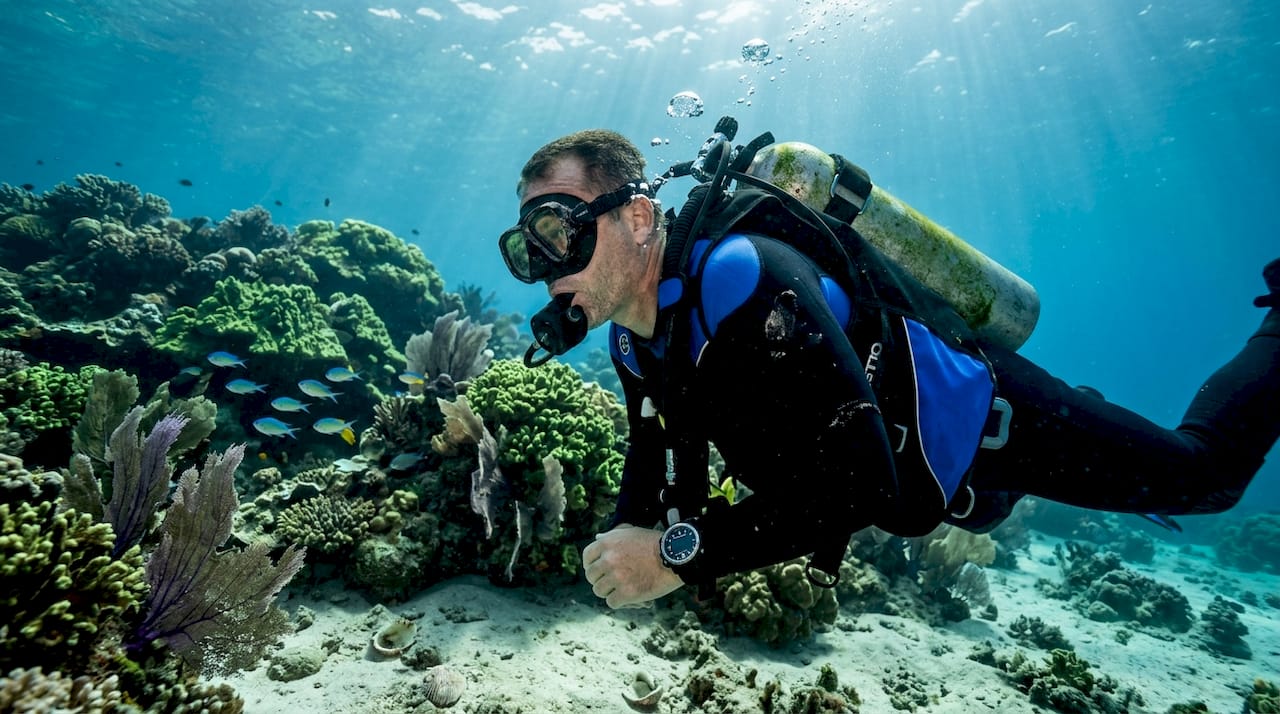
The good news is that the reverse is equally true. Controlled breathing is directly tied to physiological stress regulation, meaning that when you slow your exhale and breathe with intention, your body genuinely calms down. Unhurried dives create the environment where this becomes easy rather than effortful.
Pro Tip: If you ever feel nervous or unsettled on a dive, stop moving entirely. Hover neutrally, take three slow, deliberate breaths focusing on a long exhale, and let your heart rate settle before continuing. This simple technique works every time and is far more effective than trying to push through anxiety.
Mental benefits of unhurried diving:
- Reduced baseline anxiety before and during dives
- Greater sense of control and confidence, especially for newer divers
- Lower mental workload, so you can focus on actually enjoying the experience
- Better decision-making, as a calm mind processes information more clearly
- Improved enjoyment and post-dive satisfaction overall
Practising good dive site etiquette also feeds into this mental calm. When everyone in the group understands the pace and respects the environment, the collective energy underwater becomes genuinely relaxed, and you feel it.
More to enjoy: Enhanced safety and wildlife encounters
Let’s see how these calmer dives directly impact what you see and how safe you feel. Safety in diving is deeply connected to communication and group awareness. In a large, fast-moving group, it is easy to lose sight of your buddy, miss a hand signal from your guide, or drift away from the group without anyone noticing immediately. Slow down, and all of that changes.
Calmer breathing patterns are foundational for maintaining control and avoiding anxiety-driven cycles that can compromise your judgement underwater. When every diver in the group is moving at a relaxed pace, communication is clearer, spatial awareness improves, and the guide can give proper attention to each person. That is a fundamentally safer experience.
Hurried vs. unhurried dive outcomes:
| Factor | Hurried dive | Unhurried dive |
|---|---|---|
| Air consumption | High, tank empties quickly | Low, longer bottom time |
| Marine life sightings | Disturbed, animals flee | Calm, natural behaviour observed |
| Group communication | Difficult, frequent gaps | Clear, easy to maintain |
| Diver fatigue | Significant after 2 dives | Minimal across multiple dives |
| Safety awareness | Reduced by pace and anxiety | Heightened through calm and focus |
| Overall satisfaction | Often mixed or disappointing | Consistently high |
Wildlife encounters improve dramatically when you slow down. Bali’s reefs are home to a remarkable range of creatures, from shy frogfish tucked into coral heads to curious reef sharks patrolling the sandy bottom. These animals are attuned to water movement and exhaust bubble patterns. A slow diver who moves with intention and minimal fin kick is essentially invisible to them.
A step-by-step approach to maximising wildlife sightings on an unhurried dive:
- Establish neutral buoyancy before approaching any area of interest
- Approach slowly from the side, never directly head-on
- Pause and hover at a comfortable distance, allowing animals to settle
- Breathe slowly and minimise fin movement when close to marine life
- Signal your guide or buddy quietly using agreed hand signals rather than tapping or splashing
- Take your time observing before moving on. There is no rush
Pro Tip: Ask your dive guide before the dive to point out cleaning stations on the reef. These are spots where small fish clean parasites from larger animals, and they attract incredible activity. Hovering quietly nearby for a few minutes is one of the most rewarding experiences Bali’s reefs offer.
Being part of a safe Bali dive community that prioritises these principles makes the difference between a forgettable dive and one you will talk about for years.
Personalised experiences: Small groups and focused diving
Those group dynamics change completely when you slow down. Here’s how Bali’s best dives deliver personal attention. The size of your dive group and the pace of the dive are closely linked. Larger groups require faster turnovers, more standardised briefings, and less time for guides to address individual needs. Small groups, by contrast, create space for genuine interaction, learning, and the kind of personal attention that transforms a good dive into a great one.
At Bali Dive Cove, our dive courses are built around this principle. Slower-paced group dives consistently improve satisfaction rates for guests, because every person gets real attention rather than being moved along with the crowd. Whether you are working on a specific skill, trying to spot a particular species, or simply building your confidence, a small, unhurried group gives your guide the bandwidth to actually help you.
How group size affects the dive experience:
| Group size | Guide attention per diver | Pace flexibility | Skill development | Overall experience |
|---|---|---|---|---|
| 8 or more | Limited | Low | Minimal | Standardised |
| 4 to 6 | Moderate | Moderate | Moderate | Good |
| 2 to 3 | High | Fully flexible | Excellent | Outstanding |
There is also a social dimension to this that many divers underestimate. Small, slow-paced groups build real camaraderie. You share the same discovery of a tiny nudibranch on a coral head, exchange excited looks behind your masks, and debrief over coffee about what you each noticed. These shared moments create connections that large, rushed groups simply cannot replicate. Discover why the Bali dive resort advantages of a local, family-run operation make such a meaningful difference to this experience.
Benefits of diving in small, relaxed groups:
- More personalised guidance and immediate feedback from your instructor or guide
- Freedom to pause and investigate points of interest without the group moving on
- Greater confidence for nervous or newer divers
- Richer social experience and shared memories
- Flexibility to adjust the dive plan based on what the group discovers
Making the most: Practical tips for choosing unhurried dives in Bali
Ready to try it? Here is exactly how to find and book the best unhurried dives in Bali. Not all dive operators are created equal when it comes to pace and group dynamics. Some prioritise volume, running multiple large groups through the same sites at set times. Others, particularly local family-run operations in areas like Amed, build their entire model around quality and genuine guest experience. Knowing what to ask before you book makes all the difference.
The guest experience improvements associated with unhurried dive packages are well-documented, and you can feel the difference from the very first briefing. A relaxed operator takes time to understand your experience level, your goals for the dive, and any concerns you might have. That conversation alone tells you a great deal about what the dive will be like.
How to choose the right dive operator for unhurried diving:
- Ask directly about maximum group sizes. If the answer is more than six, consider whether that suits your preferred pace
- Ask how long each dive typically runs. A quality, unhurried dive should allow 50 to 70 minutes at depth, not a rushed 35 minutes
- Ask whether the schedule is flexible. Operators who run to rigid timetables often prioritise turnover over experience
- Look for operators who offer site-specific briefings tailored to conditions, not a generic introduction for all groups
- Check whether guides have deep local knowledge of the specific sites, not just general open water experience
- Read recent reviews with a focus on comments about pace, attention, and whether guests felt rushed
Pro Tip: When enquiring with a dive centre, ask them to describe a typical morning dive in their own words. An operator who loves what they do will light up talking about it. One who is focused on volume will give you a schedule. That answer tells you everything you need to know.
Choosing beginner-friendly Bali dive sites with a knowledgeable local guide who keeps the group small and the pace gentle is the single best upgrade you can make to your Bali diving experience.
Our perspective: Why ‘slowness’ is the overlooked key to unforgettable dives
Here is something that surprises a lot of divers when we say it out loud: the most experienced divers we guide almost always choose the slowest pace. They are not taking their time because they are tired or cautious. They are taking their time because they know that the best moments underwater only reveal themselves to those who wait for them.
There is a common assumption that skills and experience translate into doing more, covering more ground, and diving harder. In reality, the progression most divers make over years of experience is the opposite. They learn to move less, breathe more slowly, and look more carefully. An experienced diver hovering over a patch of rubble for ten minutes is not wasting time. They are finding the pygmy seahorse that everyone else swam past.
This is why we believe ‘unhurried’ is not a concession for beginners or nervous divers. It is actually the most sophisticated way to dive. Local Bali dive expertise reinforces this view consistently. Our guides, with over 16 years of experience on Amed’s reefs, will tell you the same thing. The divers who see the most are not the fastest swimmers. They are the ones who have learned that patience is the most powerful tool in the water.
Speed underwater is largely an illusion of productivity. You cover more distance, yes, but you see less, you remember less, and you come back with fewer stories worth telling. Slowing down feels counterintuitive at first, especially if you are used to busy, fast-paced group dives. But once you experience a genuinely unhurried dive, with a small group, a knowledgeable guide, and no reason to rush, it is very difficult to go back.
Ready to experience relaxed diving in Bali?
If this article has you imagining a dive where you actually have time to notice things, to breathe properly, and to come back to the boat feeling genuinely restored rather than worn out, then you are already thinking the right way.
At Bali Dive Cove, we have built everything around this philosophy. Small groups, patient guides, and dive courses and relaxed dive packages designed to give you the best possible experience at your own pace. Whether you are brand new to diving or working towards your next certification, we would love to show you what Amed’s reefs look like when there is no rush. Get in touch and we will help you find the perfect dive for where you are right now.
Frequently asked questions
What are the main health benefits of unhurried dives?
Unhurried dives support better breathing and stress regulation, reducing fatigue and anxiety, and repeated rushed exposures can worsen respiratory performance across multiple dives. Slowing down protects both your body and your enjoyment.
How do slower dives affect wildlife encounters in Bali?
Slow, deliberate movement disturbs marine animals far less, allowing them to behave naturally, and calmer breathing reduces your underwater noise and bubble pattern so wildlife stays close. You will spot creatures that hurried divers never even notice.
Is unhurried diving suitable for beginners?
Absolutely. Beginners gain the most from relaxed dives because they have the space to build confidence, practise skills, and receive personalised guidance. Slower-paced group dives consistently improve satisfaction and skill development for first-time and early-stage divers.
What should I look for in a dive centre for relaxed diving?
Prioritise centres that keep groups small, offer flexible schedules, and clearly value experience over volume. Ask about typical group sizes, dive durations, and how guides adapt to individual needs, as these details reveal whether the operator genuinely shares the unhurried approach.
