


TL;DR:
- Researching Amed’s reefs beforehand enhances your experience by understanding their complex ecology and marine life diversity. These reefs, built by coral polyps and supported by symbiotic algae, face threats from human activity and environmental stress, emphasizing responsible diving practices. Early, slow dives with proper buoyancy control allow for exceptional encounters with turtles, nudibranchs, sharks, and vibrant fish, revealing the true richness of this protected Bali ecosystem.
If you are researching Amed’s reefs before your trip, you are already ahead of most visitors who arrive with little idea of what lies beneath the surface. Amed reefs explained properly go far beyond “there are nice corals.” These are living, breathing ecosystems shaped by millions of years of geological activity, teeming with marine life that rivals some of the most celebrated dive destinations in South East Asia. Whether you are a first-time snorkeller, a certified diver, or an underwater photographer chasing the perfect shot, understanding what Amed’s reefs actually are will transform how you experience them.
Key takeaways
| Point | Details |
|---|---|
| Reefs are living animals | Coral polyps build Amed’s reefs over decades; touching them causes instant, lasting damage. |
| Dry season offers best visibility | April to October gives 15 to 30 metres of visibility, ideal for diving and photography. |
| Sites suit all levels | From Jemeluk’s shallow gardens to Bunutan’s drift dives, Amed caters to beginners and advanced divers alike. |
| Early mornings are best for photos | Light and water conditions before 10 AM deliver the clearest, most photogenic dives. |
| Conservation is everyone’s job | Choosing responsible dive operators and following reef etiquette protects Amed’s ecosystem for future generations. |
What are Amed reefs? Formation, structure, and ecology
Most people picture coral as rock or plant life. It is neither. Coral is made up of tiny animals called polyps, each one secreting a calcium carbonate skeleton that, over hundreds of years, accumulates into the reef structures you see today. Amed’s reefs are part of the Coral Triangle, widely recognised as the global centre of marine biodiversity, and they reflect that status in their sheer variety of coral formations and species density.
The Amed reef ecosystem relies on a remarkable partnership. Inside each coral polyp live microscopic algae called zooxanthellae. These algae photosynthesise to produce energy that fuels coral growth in waters that would otherwise be too nutrient-poor to support such complex life. When this relationship breaks down, typically due to rising sea temperatures, corals bleach and die. That is why reef health is so closely tied to both global and local conditions.
What makes Amed’s coral formations particularly interesting is the variety. You will find:
- Hard corals including brain coral, staghorn, and table coral forming the structural backbone of the reef
- Soft corals such as sea fans and gorgonians that wave gently with the current, providing shelter for smaller species
- Barrel sponges growing to impressive sizes, especially at sites like Bunutan Reef
- Encrusting corals covering rocky surfaces and creating microhabitats for nudibranchs and shrimps
Reef growth is not guaranteed. Biological accretion and erosion must stay in balance. Tourism pressure, boat anchors, and careless finning can tip that balance toward deterioration faster than most visitors realise.
Pro Tip: When you enter the water, check your buoyancy before you get close to anything. A single misplaced fin kick can destroy coral that has taken 20 years to grow.
Marine life in Amed’s reefs
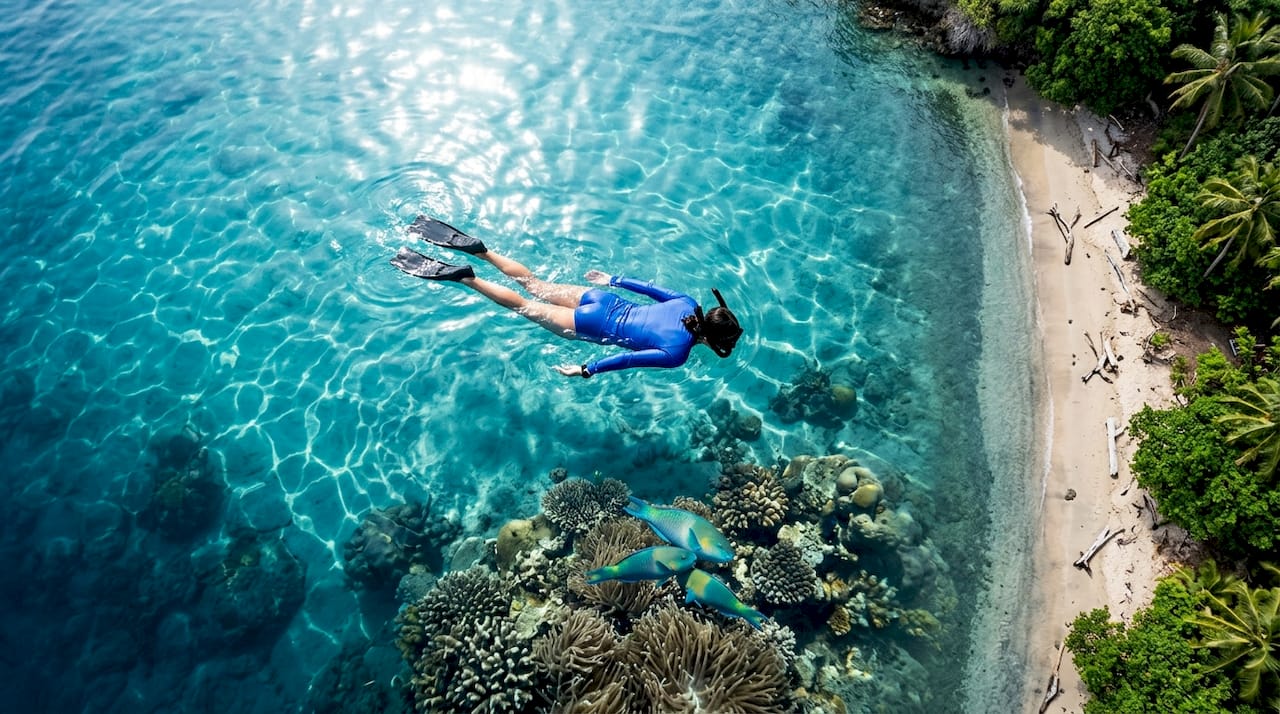
Amed marine life is genuinely diverse, and that word gets overused in dive marketing. Here, it means something specific. Within a single dive, you can reasonably expect to encounter species across multiple trophic levels, from the microscopic critters hiding in coral crevices to the larger pelagics drifting past the walls.
The most reliably spotted residents include:
- Green sea turtles, often resting on coral ledges or grazing on algae, particularly around Jemeluk Bay where turtles and bumphead parrotfish are regular sightings along the wall
- Nudibranchs in extraordinary variety, the technicolour sea slugs that macro photographers travel specifically to photograph
- Octopus, frequently tucked into reef crevices and surprisingly easy to spot once you know what to look for
- Bumphead parrotfish, a larger and more dramatic species than the common parrotfish, audible as they crunch on coral
- Reef sharks, including whitetip reef sharks that occasionally patrol the deeper sections of the wall dives
- Schools of fusiliers and anthias, the bright, fast-moving fish that create that classic “wall of colour” effect in photos
What distinguishes the Amed reef ecosystem from more heavily dived sites elsewhere in Bali is the relative calm. Fewer boats and lower visitor numbers than the south of the island mean that animal behaviour is less disturbed. Turtles here often let you approach to a respectful distance without darting away, which makes for genuinely special encounters.
Top dive and snorkelling sites around Amed
Understanding individual sites matters because they are not all the same experience. Here are the key locations, organised by what you will find there:
-
Jemeluk Bay is the heart of Amed diving and the most accessible site for all levels. A shallow coral garden drops to a wall reaching nearly 40 metres, meaning beginners can enjoy the garden at 5 to 10 metres while more experienced divers explore the dramatic drop-off. Explore the Jemeluk Bay dive site and you will also find the famous underwater statues at 3 to 5 metres depth, an otherworldly experience for snorkellers.
-
Bunutan Reef sits just along the coast and offers a very different character. Drift diving with barrel sponges and large sea fans makes this a site for more advanced divers comfortable with reading currents. The coral coverage here is dense and colourful, and the current brings in nutrients that attract a good range of larger fish.
-
The Japanese Wreck is a small but rewarding dive, particularly for macro lovers and beginners. The wreck sits at a manageable depth and is encrusted with soft corals and home to a rotating cast of small species. It is also a short swim from shore, making it one of those sites where you wonder why more people are not talking about it.
-
The Pyramids near Jemeluk are cone-shaped artificial reef structures designed to encourage coral colonisation. They have become a hotspot for nudibranchs, cuttlefish, and other macro subjects, offering something fresh even for divers who have done Jemeluk Bay multiple times.
| Site | Best for | Depth range | Skill level |
|---|---|---|---|
| Jemeluk Bay | Coral gardens, turtles, wall dives | 3 to 40 metres | All levels |
| Bunutan Reef | Drift diving, sea fans, barrel sponges | 10 to 30 metres | Intermediate to advanced |
| Japanese Wreck | Macro life, beginners, history | 3 to 12 metres | All levels |
| The Pyramids | Macro photography, artificial reef | 5 to 18 metres | All levels |
Shore entry is straightforward at most Amed sites, though the black sand and small pebble beaches require water shoes if your feet are sensitive. Boat dives give you access to spots further along the coast and are worth booking for sites like Bunutan where drift conditions can vary by entry point.
Tips for diving, snorkelling and underwater photography
Getting the most from Amed’s reefs is as much about timing and preparation as it is about experience level. The dry season from April to October brings the best visibility, often reaching 15 to 30 metres, and the calmest surface conditions for shore entries. The wet season still offers viable diving with 10 to 15 metres of visibility and noticeably quieter sites, which suits adventurous divers who prefer a less crowded experience.
For underwater photography specifically, timing within the day matters enormously. Before 10 AM is the golden window for natural light and water clarity. Afternoon winds chop up the surface, which reduces light penetration and makes camera stabilisation harder. Early dives also mean you are in the water before the day-trippers arrive, giving you cleaner compositions without fins and bodies in the background.
A few habits that protect the reef and improve your experience at the same time:
- Practise buoyancy control in a pool or shallow sandy area before you dive over coral
- Keep fins horizontal and avoid flutter kicks near the reef, which disturb sediment and damage growth
- Never rest on or hold onto coral, even for a moment, even if it looks like rock
- Use a reef-safe sunscreen or, better yet, wear a rash vest instead
- Keep a respectful distance from turtles and other large animals. One to two metres is the accepted standard
Pro Tip: For macro photography, bring a wet lens dioptre for close-up shots of nudibranchs and shrimps. Macro photography thrives around Amed’s artificial reef zones where small creatures congregate in numbers you rarely find on natural reef alone.
Conservation and the challenges facing Amed’s reefs
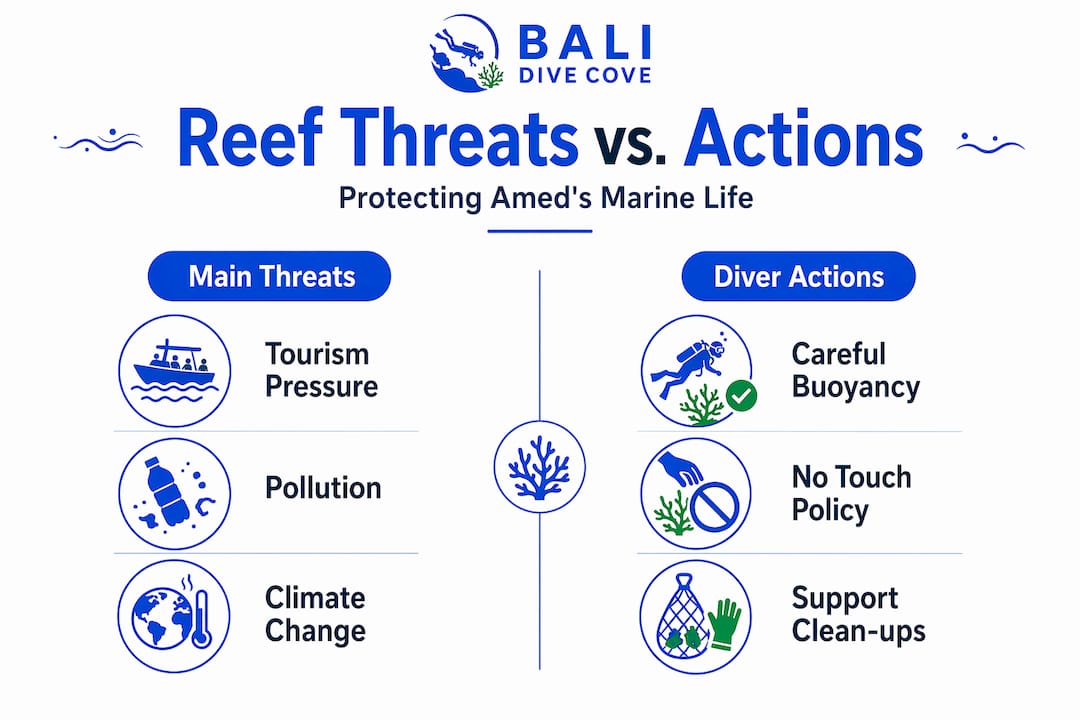
Amed’s reefs face real pressure. Tourism numbers have grown steadily, and not all visitors understand the consequences of casual reef contact. Corals broken in seconds can take decades to grow back. Standing on a reef head or grabbing a coral branch to steady yourself is not a minor inconvenience for the reef. It is potentially permanent damage.
“The reef doesn’t know the difference between an accidental kick and a deliberate one. Both have the same result. Educating divers before they enter the water is the single most effective conservation tool we have.”
Local dive operators in Amed, including Balidivecove, run regular reef clean-ups and work with guests on pre-dive briefings that cover marine life interaction etiquette. These briefings are not box-ticking exercises. They are the reason the reefs around Jemeluk have maintained their vitality despite increased visitor numbers.
| Threat | Impact | What divers can do |
|---|---|---|
| Accidental reef contact | Coral breakage, algae colonisation | Practise buoyancy; keep fins clear of the reef |
| Anchoring damage | Structural reef destruction | Choose operators using mooring buoys |
| Sunscreen chemicals | Coral bleaching | Switch to rash vests or reef-safe products |
| Feeding marine life | Disrupted behaviour patterns | Never feed fish or other animals |
Seasonal conditions also affect reef health. The wet season brings freshwater runoff and temporarily reduced salinity near the shore, which stresses corals. Responsible dive operators adjust entry points during these periods to minimise additional pressure on already-stressed sections.
My honest take on diving Amed’s reefs
I have been guiding divers in Amed for years, and what still surprises me is how consistently people underestimate this place before they get in the water. They expect it to be “nice but not Komodo.” After their first dive, the conversation changes.
What I have learned is that Amed rewards patience. The divers who slow down, who hover above the Pyramids and wait, are the ones who find the flamboyant cuttlefish or the tiny pygmy seahorse tucked against a gorgonian. The ones rushing from point to point miss everything. In my experience, the reef gives most to those who ask least of it.
I am also direct with guests about fragility. Touching coral is not a grey area. I have watched sections of reef at Jemeluk change over time, and the difference between a well-briefed group and a poorly guided one is visible. That is why at Balidivecove we keep groups small and spend proper time on the briefing. It is not just about safety. It is about leaving the reef better than you found it, dive after dive.
If you are visiting Amed to see the reefs, go early, go slowly, and listen to your guide. The reef will give you something you did not expect if you let it.
— Matt
Explore Amed’s reefs with Balidivecove
Balidivecove is a family-run PADI 5-Star Dive Resort based right here in Amed, operating since 2018 with instructors who have over 16 years of local diving experience. Whether you are brand new to scuba or a certified diver looking to explore Jemeluk, Bunutan, and beyond, we have something for you. Our small-group approach means you get genuine personal attention, not a conveyor-belt dive experience. Browse our full range of dive courses for all levels or check out our East Bali dive packages that cover Amed’s best reef and wreck sites. We would love to show you what this coastline is really capable of.
FAQ
What are Amed reefs made of?
Amed’s reefs are built by coral polyps, tiny marine animals that secrete calcium carbonate skeletons over hundreds of years, forming complex structures that host thousands of species.
When is the best time to dive Amed’s reefs?
The dry season from April to October offers the best conditions with visibility reaching up to 30 metres, though the wet season can still offer excellent diving at quieter, more affordable sites.
Are Amed’s reefs suitable for beginners?
Yes. Sites like Jemeluk Bay’s shallow coral garden and the Japanese Wreck are accessible to beginners, while more advanced divers can explore the wall dives and drift sites like Bunutan Reef.
What marine life can I expect to see in Amed?
Amed marine life includes green sea turtles, nudibranchs, octopus, bumphead parrotfish, whitetip reef sharks, and large schools of reef fish, with sightings varying by site and season.
Is underwater photography good in Amed?
Amed is excellent for underwater photography, particularly for macro subjects around the Pyramids artificial reef. Shooting before 10 AM gives you the best natural light and water clarity for quality results.
