

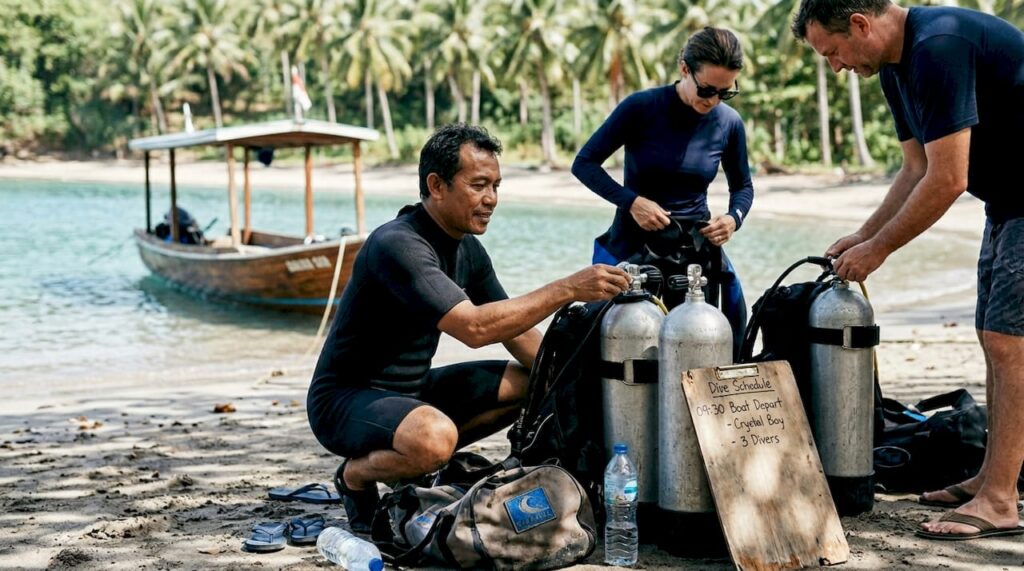
Most people planning a diving holiday in Bali picture crowded boats, rushed briefings, and a generic underwater tour that feels more like a conveyor belt than an adventure. The reality, when you connect with the right people, is completely different. Bali’s dive community provides safe, personalised dive experiences for every level, from nervous first-timers taking their first breaths underwater to seasoned divers chasing strong currents at Nusa Penida. This guide walks you through who makes up that community, how they keep you safe, what they do for Bali’s reefs, and how to choose the experience that fits you perfectly.
Key Takeaways
| Point | Details |
|---|---|
| Community collaboration | Local dive centres, family-owned resorts, and NGOs work together to deliver safe, personalised diving in Bali. |
| Safety and expertise | Small groups and certified local guides maximise safety and enjoyment for all skill levels. |
| Conservation leadership | Tourists can join coral planting and cleanups, supporting Bali’s marine ecosystem alongside professionals. |
| Tailored experiences | The Bali dive community offers flexible, skill-appropriate guidance and training for families, beginners, and advanced divers. |
What is the Bali dive community?
The Bali dive community is far more than a collection of dive shops lining the beach. It is a living network of local dive centres, family-owned resorts, conservation NGOs, and dive tourism in Bali operators who work together to protect the reefs and welcome visitors. The Bali dive community comprises local dive centres, family-owned resorts, and conservation NGOs, each playing a distinct and valuable role.
Here is a quick look at who is involved and what they bring:
- Local dive centres run daily guided dives, PADI courses, and equipment hire, forming the backbone of the visitor experience.
- Family-owned resorts offer a more intimate setting, with PADI-certified instructors who know the local reefs inside out and genuinely care about your progress.
- Conservation NGOs such as Ocean Gardener lead coral restoration projects, run educational workshops, and partner with dive centres to involve tourists directly.
- Freelance dive guides bring hyper-local knowledge of specific sites, currents, and seasonal conditions.
What makes this network special is the collaboration. Family-run resorts share reef data with NGOs. Dive centres train guides in conservation practices. The result is a community that nurtures local expertise, supports sustainable tourism, and creates a far richer experience for you as a visitor.
Safety and personalisation: small-group diving and expert guides
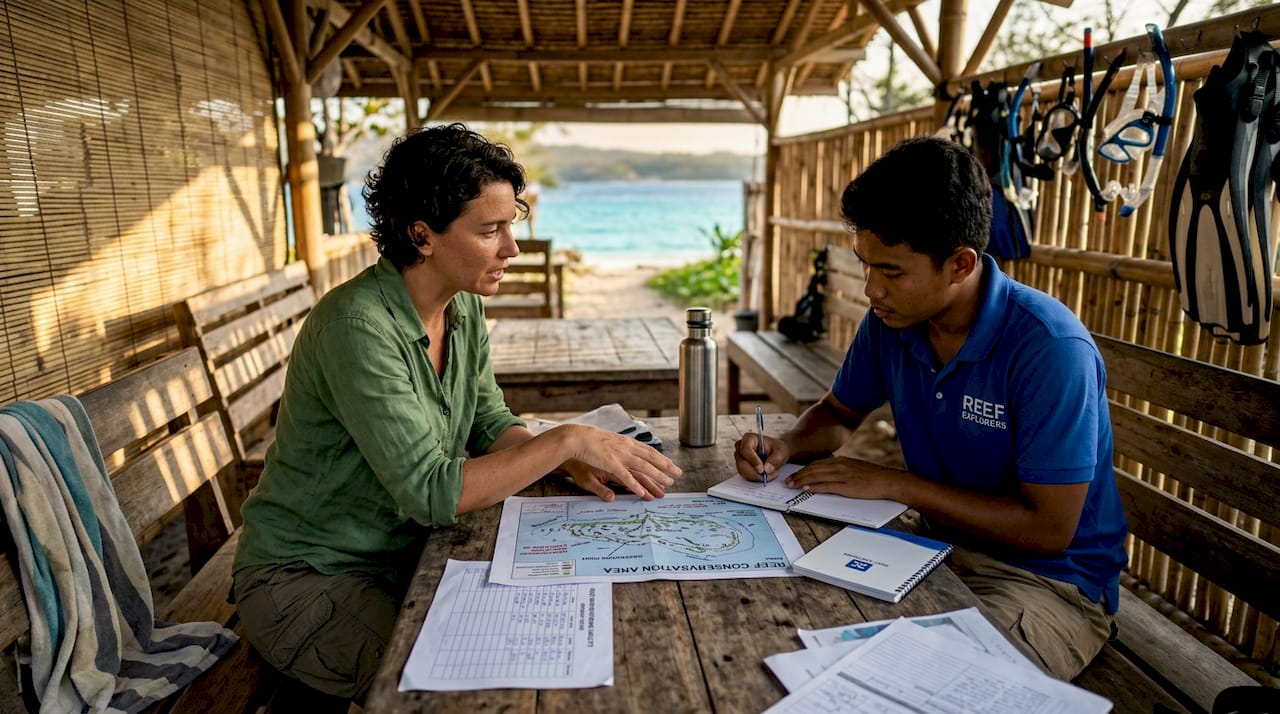
One of the biggest advantages of booking with a community-rooted dive operation is the attention you receive in the water. Family-owned resorts like Bali Dive Cove and Lotus Bungalows offer small-group dives with a maximum of four divers per guide, personalised instruction, and flexible scheduling that suits families and mixed-ability groups alike.
At Bali Dive Cove, our lead instructors bring over 16 years of experience diving Amed’s reefs, wrecks, and seasonal conditions. That depth of knowledge means we can read a site before you even enter the water, adjusting the plan if currents shift or visibility drops.
Here is how small-group diving compares to larger commercial operations:
| Feature | Small-group dive (max 4) | Large commercial group (8+) |
|---|---|---|
| Personal attention | High | Limited |
| Pace flexibility | Tailored to slowest diver | Fixed pace |
| Safety monitoring | Constant, close contact | Spread thin |
| Communication | Clear, two-way | One-way briefing |
| Beginner comfort | Excellent | Variable |
For nervous divers or complete beginners, a private guide option removes the pressure of keeping up with a group entirely. You set the pace. You ask the questions. You stop to watch the nudibranch for as long as you like.
Choosing the right dive format comes down to a few simple steps:
- Assess your certification level and comfort honestly before booking.
- Ask the dive centre about maximum group sizes and guide-to-diver ratios.
- Check whether the operation offers beginner-friendly Bali dive sites with calm, shallow entry points.
- Confirm that guides hold current importance of certified guides credentials and local site knowledge.
- Ask about flexible scheduling, especially if you are travelling with children or mixed-ability companions.
Pro Tip: If you are diving as a family with mixed experience levels, ask your resort to split the group by skill for at least one dive. Beginners get a calmer, shallower experience while advanced divers explore deeper sections, and everyone enjoys the dive more.
For further guidance on Lotus Bungalows diving safety standards and eco-friendly practices, it is worth reading how other community-led operations approach diver welfare.
Conservation and education: dive community’s environmental impact
Beyond safety and enjoyment, Bali’s dive community brings genuine conservation and educational opportunities to your holiday. This is not just a feel-good add-on. It is a core part of what makes diving here meaningful.
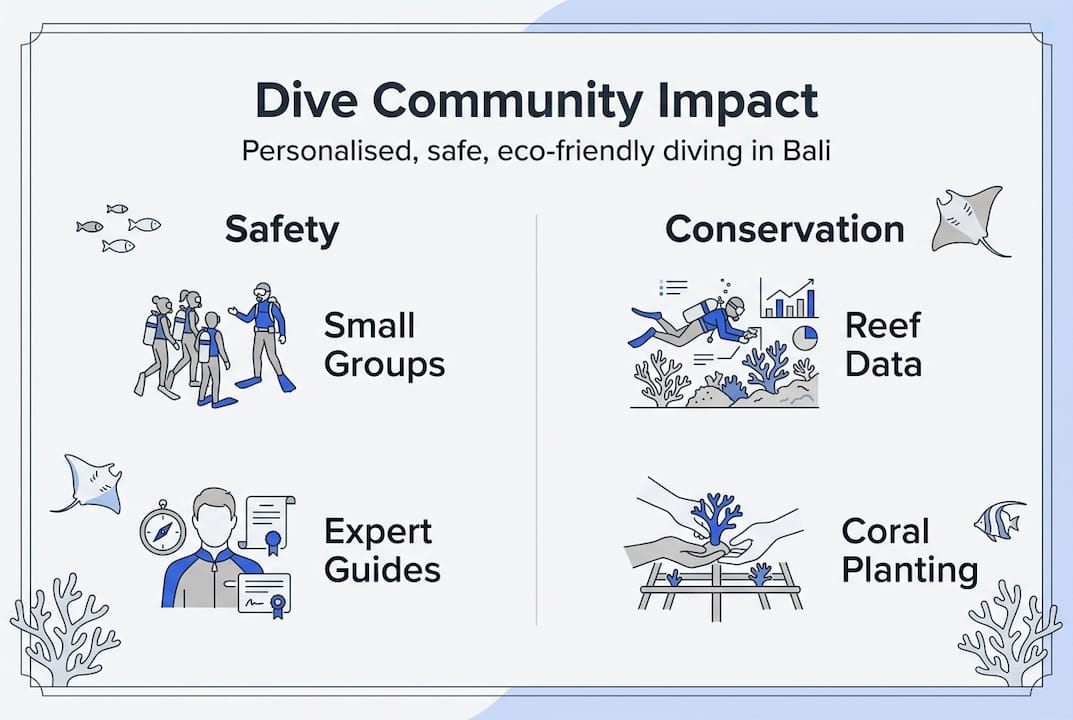
The dive community supports conservation through partnerships with NGOs, involving tourists in coral planting, cleanups, and education, with over one million corals planted collectively across Bali’s reefs. That is a remarkable number, and it reflects years of coordinated effort between dive centres, resorts, and organisations like Ocean Gardener.
You can get involved in several ways:
- Coral planting sessions where you help attach coral fragments to reef structures under expert supervision.
- Underwater cleanups that combine a guided dive with active reef care.
- Marine ecology briefings that teach you to identify species, understand reef health, and recognise signs of bleaching.
- Eco-certified dive centres holding Green Fins or PADI Eco Centre status, which signals a commitment to responsible practices.
The results speak for themselves. Impact Dives have shown empirical success, including a 52% coral cover increase at monitored sites. Annual conservation assessments track progress and keep dive centres accountable.
“Sustainable diving is not about doing less. It is about diving smarter, with people who understand the reef and want to protect it for the next generation.”
Here is a snapshot of conservation outcomes across community-led programmes:
| Programme | Key activity | Measured outcome |
|---|---|---|
| Ocean Gardener coral restoration | Coral fragment planting | 1 million+ corals planted |
| Impact Dives | Monitored reef dives | 52% coral cover increase |
| Green Fins certification | Eco-practice audits | Reduced diver impact |
| Annual reef assessments | Biodiversity surveys | Ongoing reef health data |
For a broader perspective on what sustainable diving lessons look like over decades of practice, PADI’s own research offers compelling reading. Connecting your holiday to responsible dive tourism is one of the most rewarding choices you can make as a visitor.
Choosing the right dive experience: balancing skill, site, and community
Now that you understand the community’s breadth, the practical question is: which experience is right for you? Bali’s dive sites range from gentle, shallow reefs perfect for first-timers to powerful open-water channels that challenge even experienced divers.
Beginners prefer shore dives in Amed and Tulamben due to calm conditions and minimal currents. These sites offer easy entry, excellent visibility, and a treasure trove of tiny critters including nudibranchs, pygmy seahorses, and juvenile reef fish. The famous USAT Liberty Wreck in Tulamben sits just 30 metres from shore and starts at a depth of only five metres, making it one of the most accessible wreck dives in the world.
For advanced divers, Nusa Penida delivers a completely different experience. Strong currents, dramatic drop-offs, and the chance to encounter manta rays and oceanic sunfish make it genuinely thrilling. However, busy sites like Liberty Wreck require solid buoyancy control, and Nusa Penida’s currents demand experience and a guide who knows the tidal windows.
Here is a simple breakdown to help you choose:
- Complete beginners: Amed shore dives, Tulamben bay, calm macro sites with a private guide.
- Newly certified divers: Liberty Wreck, Amed reef systems, guided group dives with small ratios.
- Intermediate divers: Candidasa, Padang Bai, drift dives with experienced guides.
- Advanced divers: Nusa Penida, Crystal Bay, Manta Point, with expert local guides who know the currents.
Pro Tip: Check diving forums and recent reviews before committing to a site. Community-driven platforms give you honest, up-to-date conditions that no brochure will tell you. For shore diving in Bali, recent traveller feedback is especially useful for understanding current visibility and marine life activity.
If you are unsure, ask your dive centre directly. A good operation will always recommend the safe sites for beginners over pushing you somewhere beyond your comfort level. The guided dive benefits go well beyond navigation. A knowledgeable guide spots the creatures you would miss, reads the conditions in real time, and makes the whole experience richer.
Plan your Bali diving with trusted community-led resorts
Connecting with the right dive community makes every part of your Bali holiday better. You dive safer, learn more, and come home with experiences that stay with you long after the tan fades. At Bali Dive Cove, we have been welcoming divers of all levels to Amed since 2018, keeping groups small, communication clear, and every dive unhurried.
Whether you are ready to explore our Bali dive packages, take your first steps with one of our dive courses in Bali, or simply browse all Bali dive sites to find the right fit, we are here to help you plan something genuinely memorable. Reach out to our team and let us match you with the experience that suits your level, your pace, and your sense of adventure.
Frequently asked questions
How does the Bali dive community ensure safety for tourists?
Bali dive centres and family-owned resorts use small groups, certified instructors, and flexible schedules to tailor safe dive experiences for tourists of all levels. The combination of local knowledge and low diver-to-guide ratios makes a significant difference in the water.
Can beginners join Bali conservation projects during their holiday?
Yes, tourists including beginners can participate in coral planting, cleanups, and educational activities through dive community NGO partnerships. No advanced certification is required for most conservation activities, just enthusiasm and a willingness to learn.
What are the best Bali dive sites for nervous or beginner divers?
Amed and Tulamben shore dives offer calm conditions with minimal currents, making them ideal for novices seeking comfort and confidence in the water. The Liberty Wreck is a particular favourite for its shallow entry and extraordinary marine life.
How can advanced divers benefit from the Bali dive community?
Advanced divers gain access to expert-guided challenging sites like Nusa Penida, with opportunities to join conservation dives and buoyancy masterclasses led by instructors with deep local knowledge. The community also connects experienced divers with seasonal encounters such as manta rays and oceanic sunfish.
