What is the USAT Liberty Wreck?
The USAT Liberty Wreck is Bali’s most famous dive site and one of the most accessible wreck dives in the world. Resting just metres from shore in Tulamben, this 128 meter long wreck offers a dramatic yet beginner-friendly underwater experience.
Originally a World War II cargo ship, the Liberty was torpedoed in 1942 and later pushed onto the beach. A volcanic eruption in 1963 shifted the wreck back into the sea, where it now lies across a gentle slope and fully encrusted in coral growth.
Why dive at the USAT Liberty Wreck?
The USAT Liberty wreck offers something for everyone. Shallow sections begin at around 5 metres, making it suitable for training dives and newly certified divers, while deeper areas provide structure exploration and dramatic swim-throughs for more experienced divers.
The wreck is now a thriving artificial reef. Hard and soft corals cover the structure, attracting large schools of fish and pelagic visitors. Each section of the wreck feels different, so repeat dives always reveal something new.
It’s a dive we never get tired of. Whether it’s your first wreck dive or your fiftieth, the Liberty consistently delivers.
What can you see at the USAT Liberty Wreck?
Marine life around the Liberty Wreck is diverse and often spectacular. The wreck has become a thriving artificial reef, with coral growth covering much of the structure and providing shelter for a huge range of species. Divers regularly encounter:
- A mix of hard and soft corals covering the wreck structure
- Hawksbill turtles
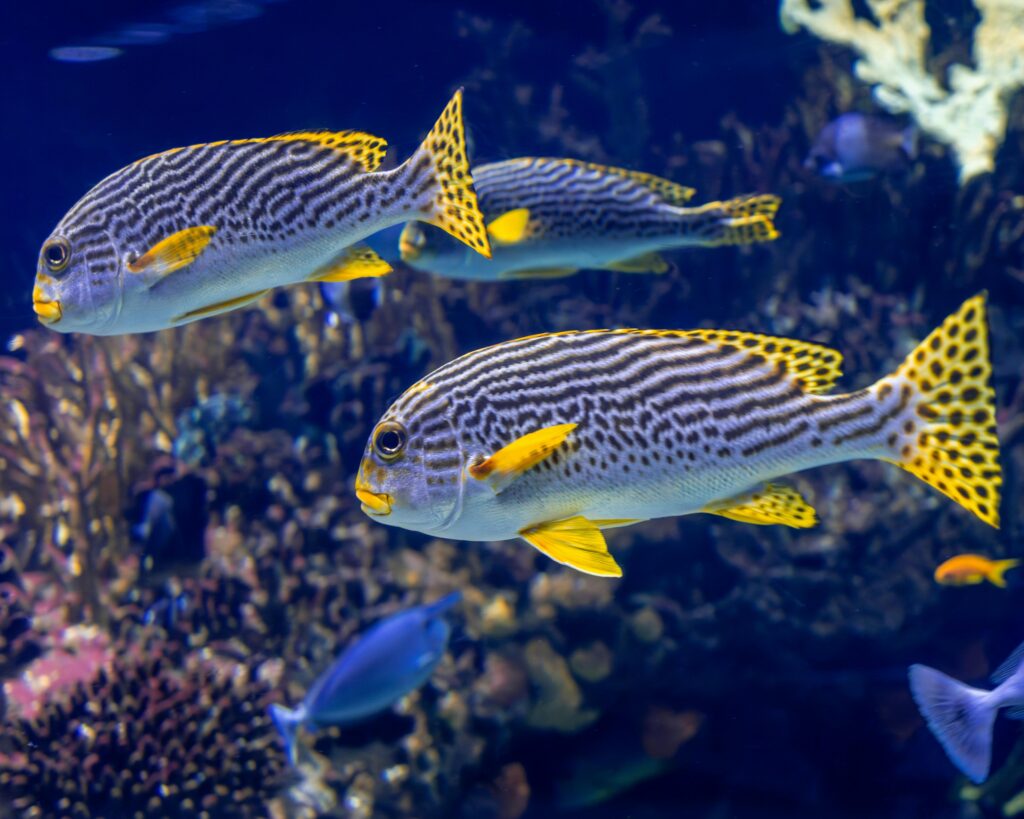
- Schools of sweetlips sheltering beneath overhangs
- Napoleon wrasse and large groupers
- Barracuda and giant trevally
- Reef sharks occasionally passing through
- Moray eels peering out from within the metal framework
- Nudibranchs and other macro life
- The usual reef residents including damselfish, anemonefish, surgeonfish, wrasse and parrotfish
The Liberty often comes alive with schooling fish weaving through and around the structure, while turtles are frequently seen exploring the surrounding reef. There is also plenty to look for at a slower pace, with smaller critters hiding among the coral, metalwork and crevices.
Because the wreck stretches across a large area and covers a range of depths, different parts of the site can offer very different marine life encounters from one dive to the next.
It remains one of the highlights of diving in Bali, both for the scale of the wreck itself and the amount of life that has made it home.
Typical Dive Day Setup
At Bali Dive Cove, we usually plan two dives on the USAT Liberty wreck. The first dive normally focuses on the outer sections of the wreck, giving you time to get familiar with its size, layout and marine life.
After a surface interval, the second dive usually explores more of the middle sections of the wreck. Swim-throughs are always optional, and we choose the route according to your certification, experience, buoyancy, comfort and the conditions on the day.
You can dive the Liberty at our normal morning start time, but sunrise is our favourite time to dive the wreck because it is usually quieter, the visibility can be better before the site gets busy, and the surface conditions are often calmer.
If you’re deciding whether the early start is worth it, read our guide: Diving the USAT Liberty at Sunrise: Is the Early Start Worth It?
The Liberty is regularly used for Open Water training dives, Advanced Open Water deep and wreck dives, and speciality courses. We also run Discover Scuba Diving sessions here when conditions allow.
Frequently Asked Questions