

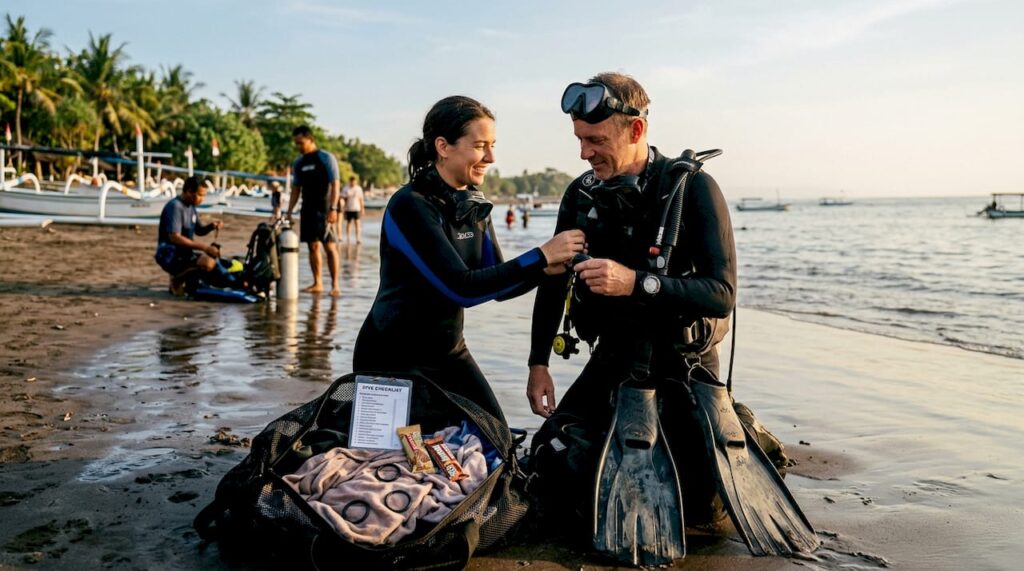
TL;DR:
- Buddy diving enhances safety, marine life viewing, and shared underwater experiences.
- Proper pre-dive checks and communication are vital for safe dives in Bali’s dynamic conditions.
- Selecting a compatible dive buddy and mastering key skills ensures enjoyable and secure Bali dives.
Many holidaymakers arrive in Bali believing that diving solo offers the ultimate freedom underwater. In reality, Bali’s vivid reefs, unpredictable currents, and rich marine life make the buddy system not just sensible, but genuinely transformative. Whether you’re taking your first breaths beneath the surface near Amed or exploring the famous USAT Liberty wreck in Tulamben, understanding buddy diving will shape every moment of your experience. This article covers what buddy diving is, how it works across Bali’s dive sites, how to choose the right partner, and the key skills that will make every dive safer and far more enjoyable.
Key Takeaways
| Point | Details |
|---|---|
| Buddy system basics | Buddy diving means two divers monitor each other for safety and support throughout the entire dive. |
| Why it matters in Bali | Bali’s strong currents and changing conditions make buddy diving essential for all holidaymakers. |
| Smart buddy selection | Choose a buddy with matching skill and dive goals to avoid mishaps and enjoy underwater adventures together. |
| Essential skills | Practise BWRAF checks, clear communication, and problem-solving techniques with your buddy before every dive. |
| The Bali advantage | Diving with a buddy in Bali leads to safer, more memorable marine experiences compared to solo attempts. |
What is buddy diving?
Buddy diving is the scuba diving practice of two divers descending, exploring, and ascending together to enhance safety through mutual monitoring and assistance. It is the cornerstone of recreational diving worldwide, and it holds even greater importance when you’re diving in a destination as dynamic as Bali.
“The buddy system exists not to restrict your freedom underwater, but to multiply it. Two sets of eyes, two air supplies, and two minds working together create a dive experience that is richer and far safer than going it alone.”
At its core, buddy diving means you and your partner keep each other in sight, watch each other’s air levels, communicate using hand signals, and stand ready to assist if something goes wrong. It is a partnership built on trust, awareness, and preparation.
In Bali’s dive community, currents can shift without warning, visibility can drop suddenly, and the excitement of spotting a mola mola or a hawksbill turtle can briefly distract even experienced divers. Having a buddy beside you keeps both of you grounded and accountable.
The top benefits of buddy diving include:
- Safety net: Your buddy can respond to an out-of-air emergency, a cramp, or a buoyancy problem far faster than any boat crew above.
- Shared problem-solving: Gear malfunctions are easier to address when two people are involved.
- Marine life spotting: Two divers see more than one. Your buddy might notice the octopus you almost swam past.
- Shared joy: Pointing out a cluster of nudibranchs or a passing reef shark to someone who truly shares your excitement is one of diving’s great pleasures.
A common misconception is that solo diving gives you more control and flexibility. In Bali’s dive environment, the opposite is true. Solo divers face real risks with no immediate backup, and they often miss the collaborative wonder that makes Bali diving so special.
How the buddy system works in Bali
Now that you know what buddy diving means, let’s see how it plays out in Bali’s amazing yet demanding dive sites.
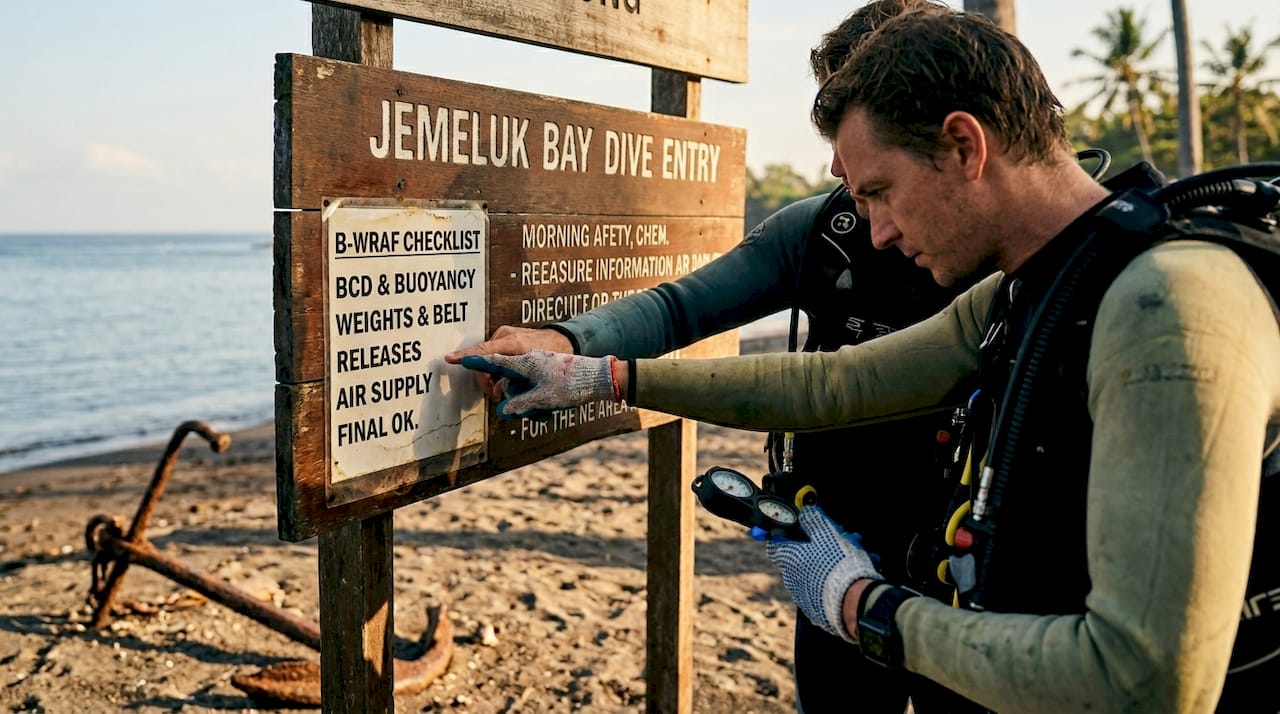
Every buddy dive in Bali begins with a BWRAF pre-dive check, which is especially emphasised here due to strong currents and variable visibility. BWRAF stands for BCD, Weights, Releases, Air, and Final okay. You and your buddy run through each item together before you enter the water, confirming that all gear is functioning and that you both understand the plan.
| Dive location | Common challenge | Key buddy protocol |
|---|---|---|
| Amed | Mild to moderate current, macro life | Stay within arm’s reach, slow movement |
| Tulamben | Surge near wreck, low visibility corners | Frequent signal checks, torch signals |
| Nusa Penida | Strong currents, open water conditions | Tight formation, pre-agreed abort signal |
| Menjangan | Light current, clear visibility | Relaxed pacing, buddy photography support |
A typical buddy dive in Bali follows this sequence:
- Complete the BWRAF check together on the boat or shore.
- Agree on a maximum depth, dive time, and turn-around air pressure.
- Enter the water and descend together, equalising at the same pace.
- Swim within comfortable visual distance, ideally close enough to share an air regulator if needed.
- Monitor each other’s air gauges regularly, signalling levels at agreed intervals.
- Ascend together, perform your safety stop side by side, and surface within reach of each other.
Pro Tip: Use the pre-dive checklist for Bali to make BWRAF second nature. Combine it with solid gear maintenance tips and you’ll enter every dive with genuine confidence.
For divers keen to elevate their buddy skills, the PADI Rescue Diver course is widely recommended. It teaches you to anticipate problems, assist a distressed diver, and manage emergencies calmly, turning you from a passive buddy into an active safety asset.
Choosing your ideal dive buddy
Understanding the system is one thing, but success hinges on picking the right buddy.
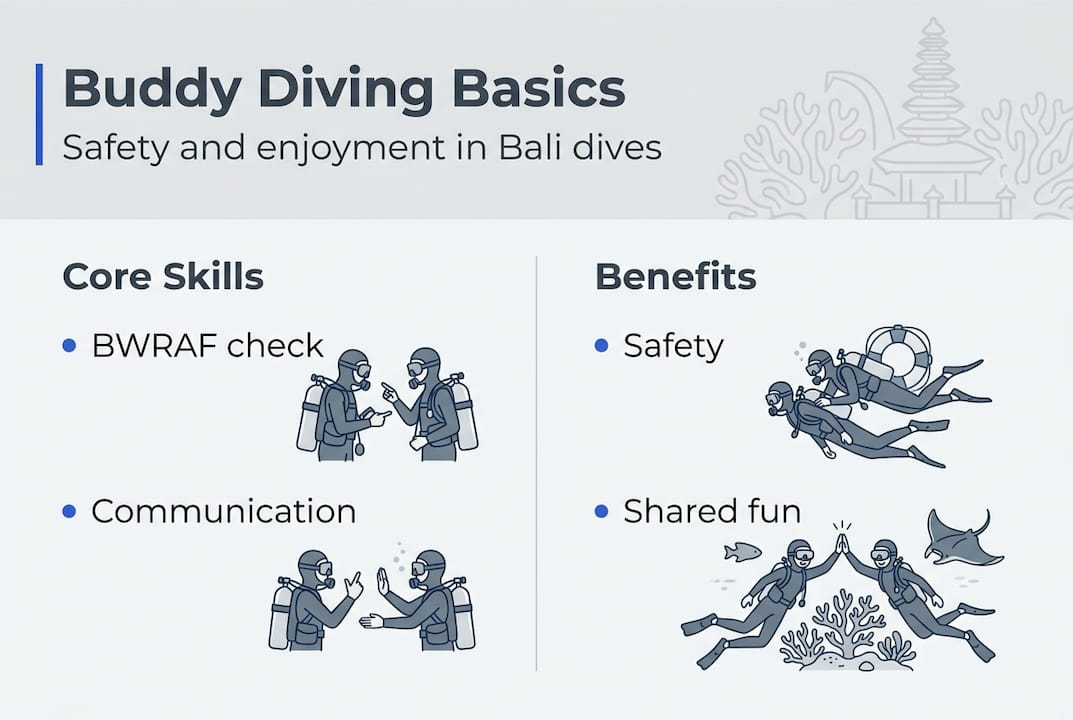
In Bali, your buddy choice can genuinely shape the quality of your dive. Mismatched experience levels create awkward pacing, and a distracted or unprepared partner can undermine even the best dive plan. Consider these options carefully:
| Buddy type | Advantages | Considerations |
|---|---|---|
| Friend or partner | Familiar communication, shared goals | Must both hold appropriate certifications |
| Local dive guide | Deep site knowledge, reads conditions well | Communication style may differ, discuss signals |
| Instabuddy (stranger) | Convenient when no one else is available | Requires thorough pre-dive briefing, risk of mismatch |
For Bali holidaymakers, the ideal is to pair with a similar experience buddy, practise BWRAF every dive, and agree on signals and a plan pre-dive. This not only prioritises safety in currents but also enhances the joy of sharing marine life sightings in real time.
The concept of the ‘instabuddy’ is worth addressing honestly. Many dive operators will pair you with another guest if you arrive without a partner. This is common and often works well, but avoid instabuddies if mismatched. A large gap in experience, a different dive style, or poor communication can create friction and reduce safety. If you do dive with an instabuddy, invest extra time in the pre-dive briefing.
Key things to agree on before every Bali dive:
- Maximum depth and bottom time
- The signal for “I’m low on air” and the agreed turn-around pressure
- What to do if you become separated (surface after one minute, agreed upon before descent)
- Any specific marine life you’d like to find, so you’re both watching with shared purpose
Your dive preparation workflow should always include a five-minute buddy briefing, even with a familiar partner. It takes almost no time and prevents the most common sources of confusion underwater.
Crucial buddy diving skills every Bali diver should master
Of course, even with the perfect partner, success comes down to shared skills and habits.
Bali’s conditions reward divers who are prepared and penalise those who are not. Strong currents at sites like Nusa Penida or Crystal Bay can separate an inattentive buddy pair within seconds. Practising these five habits consistently will keep you both safe and in control:
- Conduct the full BWRAF check every single dive. Never skip it, even on your fifth dive of the trip. The buddy check catches issues that familiarity can make you overlook, such as a partially open tank valve or an unfastened weight belt.
- Review hand signals before descent. Agree on the signals for “low air”, “problem”, “turn around”, and “I’ve found something cool”. Different training agencies use slightly different conventions, so always confirm.
- Monitor your buddy constantly. Not just glancing over every few minutes. Develop the habit of checking their position, body language, and air gauge every 30 to 60 seconds.
- Practise air sharing. Know exactly where your buddy’s alternate air source (octopus) is clipped, and do a slow-water air-sharing drill at the start of a trip if you haven’t practised recently.
- Run through separation and problem drills. Agree beforehand what you’ll do if you lose sight of each other, if a current pulls one of you away, or if a piece of gear fails.
Pro Tip: A focused five-minute pre-dive chat is your single most powerful tool underwater. It removes ambiguity, aligns expectations, and lets you troubleshoot dive issues before they become real problems.
Mastering rescue and assistance techniques is genuinely empowering. When you know how to tow a tired diver, manage a panicked buddy, or share air smoothly, you dive with a calm confidence that improves your own enjoyment as much as your partner’s safety.
The real secret to unforgettable Bali buddy dives
Many divers approach the buddy system as a box to tick before they get on with the real diving. After years of guiding divers through Amed’s reefs and Tulamben’s wreck, we’d argue that thinking misses the point entirely.
The best dives we’ve witnessed have almost always been shared ones. Not just shared in the sense that two people were present, but genuinely collaborative, where both divers were actively looking out for each other and pointing out wonders along the way. A nudibranch spotted alone is a private pleasure. The same creature shared with an attentive buddy, and celebrated with an enthusiastic okay signal, becomes a memory you’ll both talk about over dinner.
The BWRAF check, often treated as a chore, is actually a ritual that builds trust. Running through it with someone is a quiet agreement that says, “I’ve got you.” That foundation of care is what separates a good dive from a truly memorable one. We encourage every diver who comes to us to invest in dive training in Bali not just to improve skills, but to deepen the connection with their buddy and with the underwater world.
Enhance your Bali diving experience with expert guidance
If you’re ready to put buddy diving into practice, Bali Dive Cove can help you dive smarter and safer.
At Bali Dive Cove, a PADI 5-Star Dive Resort in Amed, we run small-group guided dives and Bali dive courses designed around real buddy skills. From the PADI Rescue Diver course to introductory Discover Scuba sessions, every programme we offer builds the confidence and awareness that the buddy system demands. Our dive packages are flexible enough to suit solo travellers, couples, and small groups alike. Get in touch with us to plan your perfect Bali diving holiday, and let’s make sure every dive you take is a safe, joyful, and truly unforgettable one.
Frequently asked questions
What is the main purpose of buddy diving?
Buddy diving enhances diver safety and enjoyment by ensuring two divers monitor and assist each other throughout the entire dive, from descent to surfacing.
How do I choose the right dive buddy in Bali?
Pick a partner with similar experience and dive goals, discuss your full plan beforehand, and avoid mismatched instabuddies where possible for the safest and most enjoyable experience.
What is BWRAF in buddy diving?
BWRAF is the standard pre-dive safety check covering BCD, Weights, Releases, Air, and Final okay, always completed with your buddy before entering the water.
Can I dive solo in Bali if I am certified?
Solo diving is not recommended for most Bali dive sites. Pair with a buddy for safer, more rewarding dives, particularly where currents and changing visibility are common.
