


TL;DR:
- Slow-paced diving in Bali enhances comfort, safety, and connection with marine life by encouraging calm breathing and careful buoyancy. It extends dive time, reduces physical exertion, and promotes genuine underwater exploration, especially in relaxed environments like Amed. This approach is ideal for beginners and those seeking a mindful, enriching experience beneath the surface.
Bali offers an extraordinary range of dive experiences, from high-octane drift dives through strong currents to mellow reef explorations where time seems to slow alongside the fish. But with so many operators, sites, and itineraries to choose from, picking the right pace for your dive can feel overwhelming. Slow-paced diving is quietly gaining popularity among those who want more than a tick-box underwater tour. It is about genuine tranquillity, personal attention, and truly seeing what lies beneath the surface. This article walks you through the real benefits of a slower approach, with practical tips and expert insights grounded in Bali’s best dive locations.
Key Takeaways
| Point | Details |
|---|---|
| Gentle pace boosts comfort | Slow-paced diving lets you breathe easier, control buoyancy better, and truly relax underwater. |
| Reduces health risks | Moving calmly cuts the risk of CO2 build-up and keeps you safer from overexertion and hypercapnia. |
| Better air efficiency | With less strain and more efficient buoyancy, your air lasts longer and dives are more enjoyable. |
| Setting matters | Choosing tranquil Bali spots like Amed supports the best slow-paced dive experience with small groups and relaxed schedules. |
| Skill and safety go together | Pairing slow pace with buoyancy mastery ensures relaxation, safety, and satisfaction on every dive. |
Why slow-paced diving changes your underwater experience
Slowing down beneath the surface is not simply a matter of style. It fundamentally changes what you feel, see, and take away from every dive. When you move at a gentle, unhurried pace, your breathing naturally deepens and steadies, which is the cornerstone of great buoyancy control and overall comfort underwater.
Relaxed, low-exertion diving supports calmer breathing and easier buoyancy trim, because breathing rate and CO2 management are tightly linked to how stable you feel underwater. Put simply, the calmer you breathe, the more effortlessly you float. Rushing disrupts this rhythm and can leave you kicking harder, using more air, and enjoying far less.
“Diving invites a shift to rhythmic breathing as an anchor of attention. Excess tension and overthinking link directly to faster fatigue and worse buoyancy and air consumption.” — PADI’s transformation framework
Slow diving also sharpens your focus. When you are not chasing your guide or worrying about catching up, you notice the tiny nudibranch nestled on a coral head, the reef octopus changing colour in the shadow of a boulder, and the way the sunlight filters through the water in shifting beams. The Amed diving highlights page gives a sense of just how much is on offer when you take the time to look closely.
Key shifts you will notice when diving at a slower pace:
- Breathing becomes rhythmic and almost meditative, reducing anxiety and physical fatigue
- Buoyancy corrections feel natural rather than frantic, because you have time to make small adjustments
- Marine life is less disturbed, allowing you to observe natural behaviour up close
- Your air lasts longer, which means more time at depth enjoying the reef
- Stress dissolves faster, particularly for newer divers still building confidence
Choosing unhurried dives in Bali is not about going on an easier dive. It is about going on a smarter one.
Health and safety benefits of slower dives
Building on those experience-driven advantages, let’s focus on slow-paced diving’s proven effects on health and safety. This is where the evidence becomes particularly compelling, especially for divers who may not yet realise how much physical exertion influences underwater wellbeing.
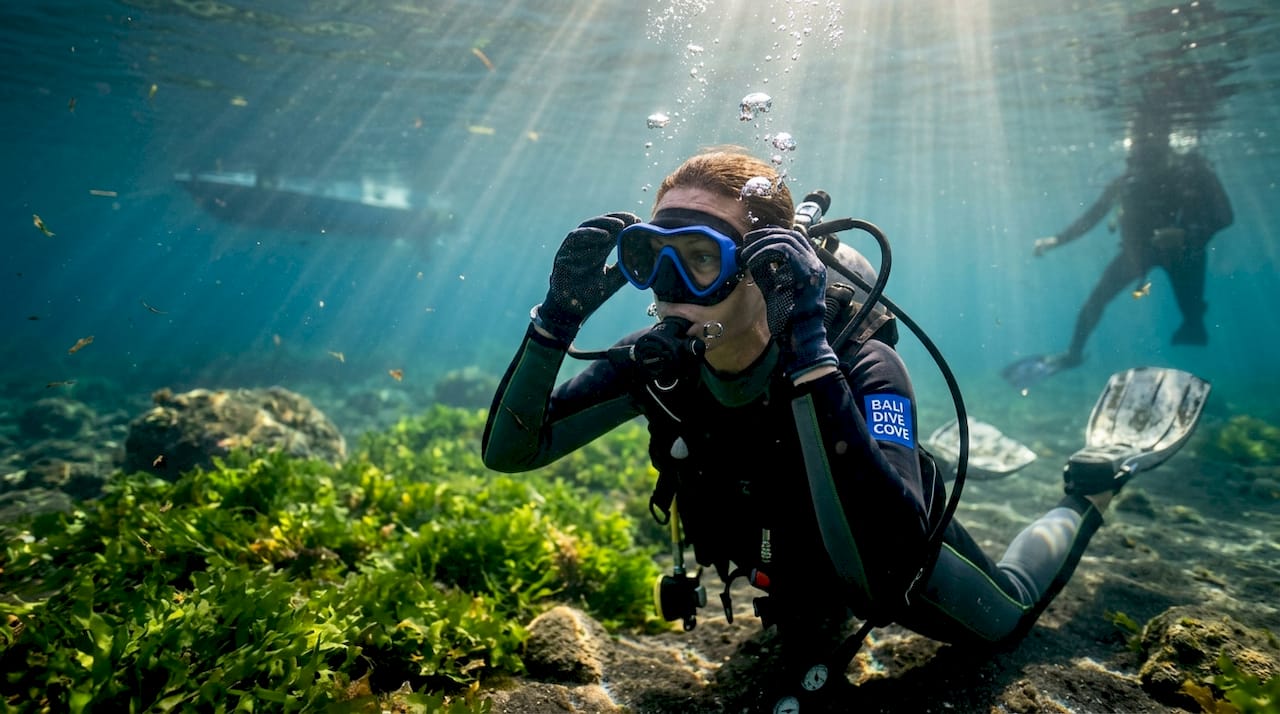
When you push hard underwater, your muscles produce more carbon dioxide (CO2) as a byproduct. CO2 build-up, known as hypercapnia, can cause headaches, dizziness, breathlessness, and in serious cases, blackout. Overexertion and poor buoyancy increase your workload and CO2 output, while a relaxed pace keeps those levels manageable and safe.
There are practical steps you can take on every dive to protect yourself:
- Never skip or hold your breath to save air. Skipping exhalations to conserve gas is one of the most dangerous habits in recreational diving and significantly raises CO2 retention risk.
- Focus on long, steady exhales. Fully emptying your lungs before inhaling is more effective than breathing fast and shallow.
- Use your fins efficiently. Small, smooth fin strokes from the hip reduce effort. Frantic or constant kicking wastes energy and raises your breathing rate unnecessarily.
- Stop and hover if you feel breathless. There is no shame in pausing. A 30-second hover allows your body to recover and rebalance before you continue.
- Check in with your guide. A good dive guide who knows you and your pace will spot early signs of overexertion before you do.
Pro Tip: If you ever feel like you cannot catch your breath underwater, signal your buddy or guide immediately and ascend slightly to a shallower depth. Do not push through breathlessness. Rest, breathe slowly, and let the sensation pass before continuing.
The beauty of diving in Amed is that the sites are largely gentle and accessible, meaning the environment itself encourages a slower pace. Amed’s famous USS Liberty wreck and its surrounding coral gardens are perfect for low-exertion exploration, making them brilliant training grounds for building healthy dive habits from the very first entry.
Key statistic: Divers who maintain a relaxed exertion level throughout a dive not only reduce their CO2 risk but also extend bottom time, improving the overall quality and value of every single dive. Safety and enjoyment, it turns out, pull in exactly the same direction.
How buoyancy mastery and slower movement improve efficiency
Enhanced health and safety are just part of the equation. Efficiency and dive duration are also hard-won benefits of the slower approach, and they are closely tied to one skill: buoyancy mastery.
Buoyancy mastery methodology, including hovering, breathing-driven corrections, and deliberate movement, naturally aligns with slow-paced diving by minimising finning, drag, and sudden depth changes. When you are neutrally buoyant and moving with intention, you are essentially gliding. You use minimal energy and your tank lasts noticeably longer.
Here is how slow movement and buoyancy work together to improve your dive:
- Hovering over the reef instead of resting on it protects delicate corals and keeps silt from billowing up and ruining visibility
- Breath-controlled fine-tuning means using small inhales and exhales to rise or sink slightly, rather than pumping your BCD (buoyancy compensator device) constantly
- Deliberate, measured fin kicks reduce drag and lower your overall air consumption noticeably
- Pausing to observe is not wasted time. Stationary hovering burns almost no air and rewards you with extraordinary wildlife sightings
Compare the two approaches side by side:
| Factor | Slow, deliberate diving | Fast, high-exertion diving |
|---|---|---|
| Air consumption | Lower, longer dives | Higher, shorter dives |
| Buoyancy stability | Easy to maintain | Harder to control |
| Marine life interaction | Closer, calmer encounters | Wildlife retreats quickly |
| Physical fatigue | Minimal | Often significant |
| CO2 risk | Low | Higher with poor technique |
| Enjoyment depth | Rich and detailed | Can feel rushed |
Pro Tip: Practise hovering in open water before a reef dive. Breathe in slowly until you rise a few centimetres, then exhale fully until you sink back. Repeat until you can hold your depth within half a metre using breath alone. This single skill will transform your diving efficiency.
Whether you are scuba diving with Bali Dive Cove for a guided reef dive or working through your Open Water Course in Amed, buoyancy practice is woven into every session. There is a reason we prioritise it from the very first confined water session.
The Bali effect: Why the right setting makes slow diving special
Seeing how Bali’s dive locations shape the experience, it’s time to clarify why the right destination genuinely enhances a slow-paced approach. Not all Bali dive regions are created equal when it comes to pace and atmosphere.
East Bali and Amed are known for having a slower pace and more low-key schedules, which directly supports the slow-diving experience through relaxed day flow and fewer rush conditions. Compare that to some of the busier dive hubs in Bali where boats depart on tight schedules and groups can be large and varied in ability.
Here is a quick overview of how East Bali’s settings compare:
| Feature | East Bali (Amed) | Busier Bali dive hubs |
|---|---|---|
| Group sizes | Small, often 2 to 4 divers | Sometimes 8 or more |
| Schedule flexibility | Relaxed and personalised | Often time-driven |
| Dive sites | Calm reefs, walls, and wrecks | Varies, includes high-current sites |
| Surface conditions | Generally calm | Can be choppy and busy |
| Beginner suitability | Excellent | Variable |
The benefits of unhurried dives multiply when your environment supports them. Amed’s shallow bays, vibrant coral gardens, and the iconic USAT Liberty wreck at Tulamben create a canvas perfectly suited to slow, attentive exploration.
Choosing where you dive matters as much as how you dive. The Amed and Liberty Classic dive combination is a wonderful example of this. You get shallow macro diving alongside a historically significant wreck, all in conditions that reward patience and calm exploration.
When booking your dives, look for these signals that the operator values a slower pace:
- Small group sizes of four divers or fewer per guide
- Flexible departure times rather than rigid back-to-back schedules
- Guides who ask about your experience and comfort before every dive
- Briefings that are thorough and adapted to the group’s skill level
- Sufficient surface intervals between dives
Slow-paced vs fast diving: Which is best for you?
After covering the unique Bali context, let’s draw clear lines between slow and faster-paced approaches so you can make the most informed choice for your next trip.
Both styles have their place, and neither is universally superior. The key is matching the approach to your goals, experience, and the specific dive site.
Slow-paced diving suits you if:
- You are a beginner building confidence and skill
- You want to spot macro life such as nudibranchs, pygmy seahorses, or ghost pipefish
- You prefer to extend your dive time and reduce physical fatigue
- You value safety margins and careful buoyancy practice
- You are diving for relaxation and genuine connection with the underwater world
Fast-paced or current-assisted diving may suit you if:
- You are an experienced diver comfortable in strong drift conditions
- You are photographing pelagics or wide-angle subjects in open water
- The dive site specifically calls for it, such as a drift dive through a channel
“Slowing down is beneficial only if it does not lead to unsafe behaviour. Do not attempt to reduce gas consumption by skipping exhalations. CO2 retention risk can outweigh any perceived air-saving.”
There is also an important nuance worth knowing. Slow pace paired with poor buoyancy can actually increase drift and imbalance for divers who are not yet neutrally buoyant. Relaxing without the underlying skill to support it may cause more minor corrections and disruption than a confident, slightly more active diver would create. The takeaway is clear: slow pace and buoyancy skill should always be developed together.
If you are still working on those foundations, the Open Water Course in Amed is the ideal place to build them properly, at a pace that suits you.
Why the true benefit of slow-paced diving goes beyond relaxation
Here at Bali Dive Cove, we have guided divers of all backgrounds over many years, and one pattern stands out clearly. The guests who get the most out of every dive are rarely the fastest or the most technically decorated. They are the ones who slow down, breathe well, and stay curious.
Slow-paced diving is often marketed as a lifestyle choice or a preference for tranquillity. And while that is true, we believe it sells the approach short. Slowing down is fundamentally a safety technique. It lowers your CO2 risk, extends your no-decompression limits, and gives you time to notice potential hazards before they become problems. It keeps you inside a comfortable safety margin on every dive.
There is also something more personal at work. When you are not rushing, you are genuinely present. You notice the tiny details, the way a lionfish holds perfectly still against a coral branch, the sudden darkening of the water as a school of fusiliers passes overhead. You start to understand the underwater world in a way that rushed dives simply do not allow.
Small-group diving amplifies all of this. When your guide knows your name, your comfort level, and your goals, every dive becomes a tailored experience rather than a conveyor-belt tour. That personal attention accelerates your learning, builds real confidence, and leaves you with memories worth talking about for years.
The uncomfortable truth is that many divers return from group tours feeling vaguely disappointed without knowing why. They saw the sites, ticked the boxes, but the experience felt thin. Slow-paced diving in a small, attentive group is the antidote to that feeling. It is not just a gentler version of the same thing. It is a fundamentally richer form of the sport.
Ready to experience slow-paced diving in Bali?
If the benefits described above sound like exactly what you are looking for, the good news is that Bali Dive Cove is set up precisely to deliver them. Based in Amed, East Bali, we run small-group dives with experienced instructors who have over 16 years of in-water knowledge of these reefs and wrecks.
Whether you want to join a relaxed guided fun dive, work through a PADI certification, or simply explore Amed’s extraordinary underwater scenery at your own pace, we have something for you. Take a look at our dive packages in Bali to find the right fit, browse our Bali dive sites for inspiration, or check out our full range of dive courses in Bali if you are ready to build new skills. We would love to share the water with you.
Frequently asked questions
What makes slow-paced diving different from standard dive tours?
Slow-paced diving prioritises gentle movement, calm breathing, and minimal exertion to improve comfort, safety, and enjoyment. Unlike some standard tours that follow tight schedules, rhythmic, unhurried diving reduces fatigue and supports better buoyancy throughout the dive.
Is slow-paced diving safe for beginners?
Yes, and it is often the best approach for beginners, but it works best when paired with proper buoyancy training. Without that foundation, slower movement without buoyancy competence can increase drift and make position control harder rather than easier.
Does slow diving help with air consumption?
Absolutely. By moving with intention and maintaining a steady breathing rhythm, slow diving minimises drag and finning effort, which directly extends your air supply. Deliberate, hovering-based movement is one of the most effective ways to make your tank last longer.
Are there risks to going too slow during a dive?
Yes, particularly if you attempt to reduce air use by holding your breath or skipping exhalations. Skipping exhalations raises CO2 retention risk significantly, and the health consequences can be serious. Always maintain natural, regular breathing regardless of your pace.
Which Bali regions are best for slow-paced diving?
East Bali and Amed are widely recognised for their relaxed dive schedules, smaller group operations, and calm underwater conditions, making them ideal for divers who want a genuinely unhurried experience.
