


Bali’s coral reefs have long been celebrated as some of the most biodiverse in the world, drawing thousands of divers each year to their vibrant, teeming waters. But here’s something that might surprise you: dive tourism, when done right, is now one of the most powerful forces for reef restoration in the region. Far from being purely a threat, travellers are actively helping to rebuild what was lost, through coral planting, reef monitoring, and choosing operators who put conservation first. Dive conservation in Bali involves large-scale coral restoration and genuine traveller participation, and this guide will show you exactly how to be part of it.
Key Takeaways
| Point | Details |
|---|---|
| Diving can aid reefs | Travellers who join conservation make a real difference to reef health in Bali. |
| Proven restoration methods | Nurseries, artificial reefs, and community involvement result in dramatic coral recovery. |
| Join or support recovery | You can help by choosing responsible operators, supporting hands-on projects, or following best eco-practices. |
| Choose wisely for impact | Booking with the right dive centre amplifies your personal and environmental benefits. |
Why coral reefs need our help
To understand why your choices matter when diving in Bali, it helps to know what coral reefs actually contribute and what threatens them most. Bali’s reefs are not just beautiful backdrops. They support an extraordinary range of marine life, from nudibranchs and pygmy seahorses to reef sharks and manta rays. They also underpin local livelihoods, providing food, income from tourism, and coastal protection for fishing communities across the island.
Unfortunately, these ecosystems are under serious pressure. Climate change causes bleaching events that can wipe out entire reef sections in a matter of weeks. Overfishing removes the fish that keep algae in check, allowing it to smother coral. Disease, including Stony Coral Tissue Loss Disease (SCTLD), spreads rapidly through stressed reef systems. And tourism itself, when poorly managed, adds to the damage. High tourism has contributed to coral cover declines in Nusa Penida, one of Bali’s most visited dive areas.
The key threats to Bali’s reefs include:
- Rising sea temperatures causing coral bleaching
- Destructive fishing practices and overfishing
- Poor water quality from coastal development
- Unmanaged dive tourism and physical reef contact
- Coral disease spreading through weakened ecosystems
“Reefs that are actively managed and restored show dramatically faster recovery than those left unprotected. The difference between a managed and unmanaged site can be the difference between a thriving reef and a rubble field.”
The good news is that reef health improves significantly when local projects step in. If you’re new to diving in Bali, exploring beginner-friendly dive sites that are well managed is a great way to start on the right foot. You can also look into Earthwatch expeditions that combine reef monitoring with hands-on restoration work.
How does dive conservation work in Bali?
Understanding the value of reefs, how is conservation actually put into practice around Bali’s busiest dive spots? The answer involves a combination of science, community effort, and tourist participation that is more accessible than most people realise.
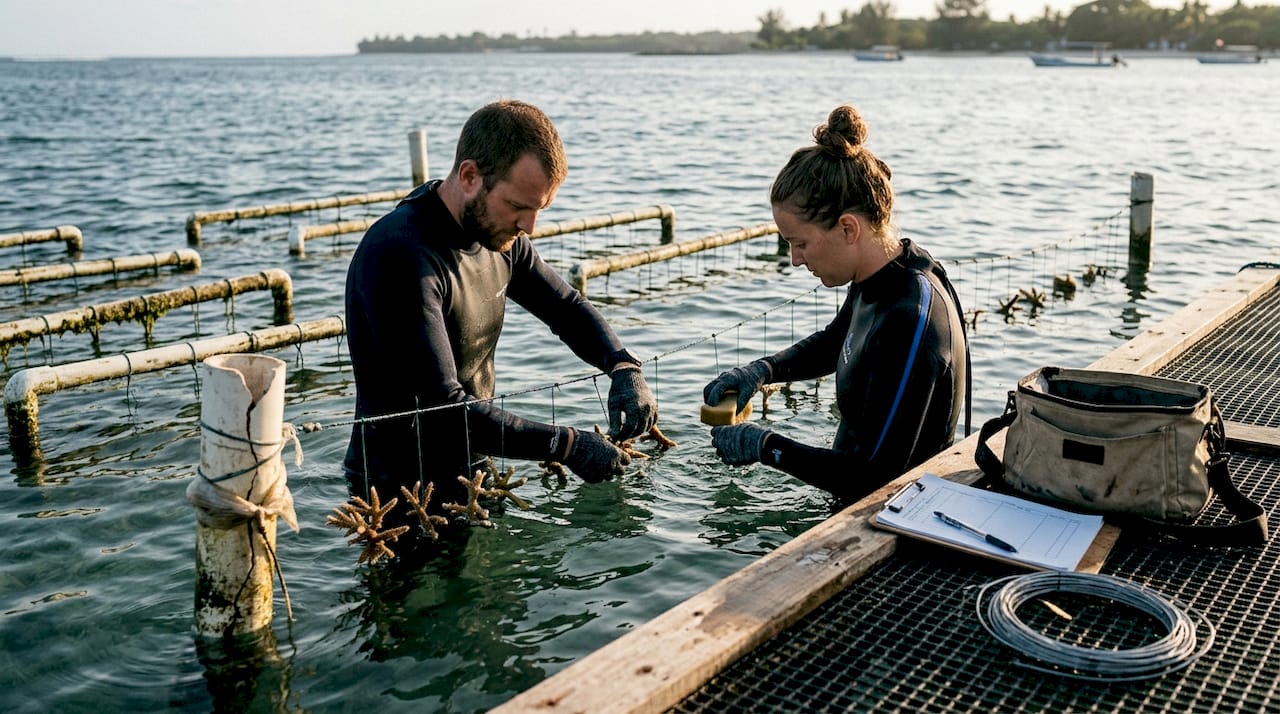
Organisations like Ocean Gardener and Earthwatch use coral nurseries, artificial reef structures, and volunteer planting programmes to rebuild damaged areas. Coral fragments are grown in underwater nurseries until they are strong enough to be transplanted onto degraded reef sections. Artificial reef structures, often made from steel or concrete, provide new surfaces for coral to colonise and help stabilise loose rubble that would otherwise prevent regrowth.
Here is how the main conservation methods compare:
| Method | How it works | Traveller involvement |
|---|---|---|
| Coral nurseries | Fragments grown underwater, then transplanted | Planting and monitoring sessions |
| Artificial reefs | Structures placed on rubble to create habitat | Guided dives and species surveys |
| Reef monitoring | Regular surveys tracking coral and fish health | Volunteer data collection |
| Education programmes | Teaching divers sustainable practices | Courses and workshops |
One of the most inspiring examples of what’s possible comes from a site in Nusa Penida that was once little more than rubble. Through sustained restoration work, it was transformed to 52% coral cover, with fish diversity improving significantly alongside it. That kind of result doesn’t happen by accident. It takes consistent effort, funding, and people willing to get involved.
If you want to participate, here’s how a typical conservation dive experience unfolds:
- Attend a briefing on reef ecology and the specific restoration project
- Complete a skills check or refresher dive to ensure safe buoyancy control
- Join instructors underwater to plant coral fragments or collect survey data
- Debrief on what you observed and how it contributes to long-term monitoring
- Receive a record of your contribution to the project
Pro Tip: Before joining any conservation dive, ask the operator how they track outcomes. Reputable programmes will have data on coral survival rates and fish counts, not just a feel-good experience.
For a broader look at dive tourism in Bali and how it’s evolving, it’s worth reading up before you book.
Measuring impact: Successes and ongoing challenges
It’s clear conservation can make reefs healthier, but what do results and real-world data tell us about its impact and limitations?
The numbers are genuinely encouraging. Live coral cover in Gilimanuk Bay increased 3.5 times between 2020 and 2024, with certain restored areas now showing up to 52% healthy coral cover. Artificial reef sites such as Tianyar in East Bali now host diverse marine life and have improved coastline stability for local fishing communities. These are not small wins.
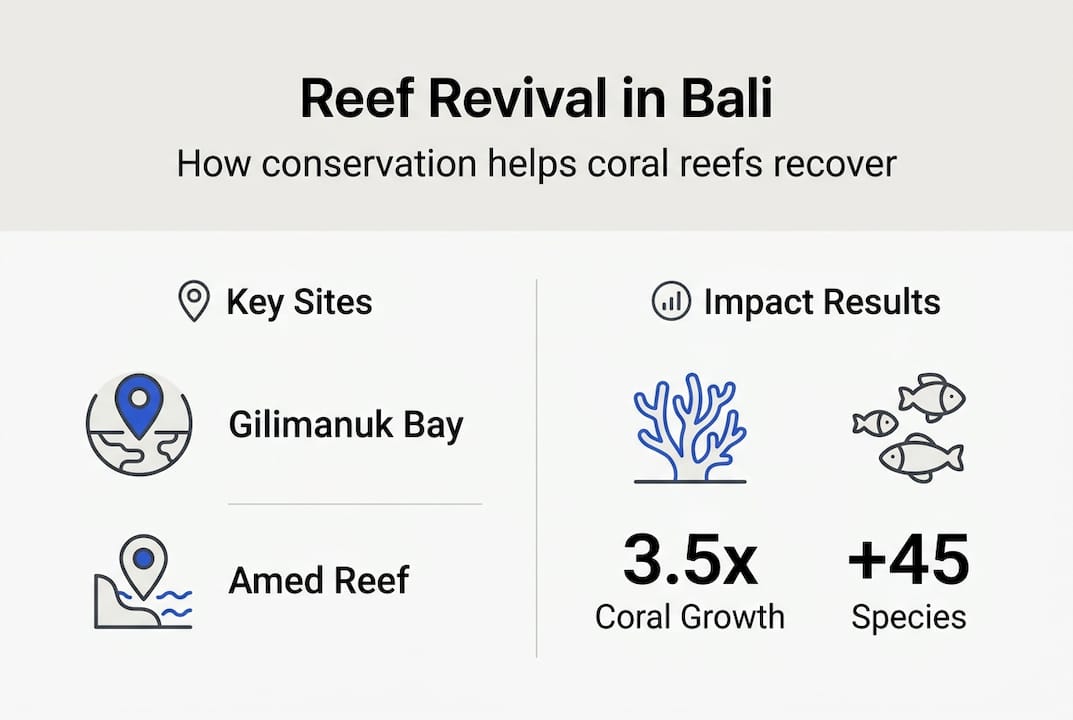
| Site | Before restoration | After restoration |
|---|---|---|
| Gilimanuk Bay | Low, fragmented cover | Up to 52% live coral cover |
| Nusa Penida (managed) | Rubble-dominated | Thriving reef with fish diversity |
| Tianyar artificial reef | Bare seabed | Diverse marine habitat |
However, challenges remain. Sites with high tourist pressure, poor water quality, or active SCTLD outbreaks still struggle to recover, even with intervention. Environmental factors like strong currents, heavy sedimentation, and elevated phosphate levels from agricultural runoff can slow or reverse progress. Ocean Gardener and similar organisations are transparent about these limitations, which is part of what makes their work credible.
For a deeper look at how dive tourism intersects with reef health, the data paints a nuanced but ultimately hopeful picture.
Joining in: How you can dive sustainably and make a difference
Knowing conservation efforts work best with community and tourist support, how can you make the biggest positive impact during your time in Bali?
The most important step is choosing the right operator. Book with resorts or dive centres that actively run or fund reef restoration projects. Ask directly: do they support any conservation programmes? Do they limit group sizes to reduce reef pressure? Do their guides enforce a no-touch policy? These questions matter. Travellers are increasingly willing to pay for conservation packages that include active participation, and operators are responding.
You can also join dedicated programmes through organisations like Ocean Gardener or Earthwatch, where your dive trip includes coral planting or reef monitoring as part of the itinerary. If you’re just starting out, a beginner’s guide to scuba diving will help you build the skills you need before joining a conservation session. For those planning a longer stay, scuba holidays in Bali can be structured around conservation activities from start to finish.
Here are the core habits every eco-conscious diver should practise:
- Master your buoyancy before diving near coral (this is the single biggest factor in reef damage from divers)
- Use reef-safe sunscreen, or better yet, wear a rash vest instead
- Never touch, stand on, or collect anything from the reef
- Keep fins away from the seabed to avoid stirring up sediment
- Report any coral bleaching or damage you observe to your dive guide
Pro Tip: Follow sustainable diving guidelines before your trip. Even small habits, like how you enter the water or position your camera, can make a real difference to reef health over time.
Cost, value, and what travellers should expect
Thinking about joining a conservation dive? Here’s what to expect in terms of cost, what you’ll get, and where your contributions go.
Conservation experiences in Bali range widely. A short coral planting workshop might be added to a regular dive day for a modest fee, while a full week-long expedition with Earthwatch involves a more significant investment that covers accommodation, expert supervision, and all materials. Ocean Gardener courses range from $80 to $1,599, with certified instruction and hands-on fieldwork included at every level.
Here’s what your money typically supports:
- Local staff wages for marine biologists, dive guides, and community coordinators
- Nursery maintenance, including coral fragment care and structure upkeep
- Reef monitoring equipment and data management
- Educational materials and diver training
- Community outreach and local fishing family support
What you can expect to receive in return:
- Basic dive gear and all necessary equipment
- Expert supervision from qualified marine conservation instructors
- A genuine, hands-on role in fieldwork rather than passive observation
- A deeper understanding of reef ecology that will change how you dive forever
- A certificate or record of your contribution
For more inspiration and practical advice, the Bali diving blog covers everything from site guides to conservation updates.
Planning your dive holiday: Conservation-friendly options in Bali
As you plan your adventure, choosing the right dive centre can make all the difference for Bali’s reefs and your own experience.
At Bali Dive Cove, we’re a family-owned PADI 5-Star Dive Resort based in Amed, East Bali, and we’ve been guiding divers through these waters since 2018. Our instructors bring over 16 years of experience and a genuine passion for the reefs we dive every day. We keep our groups small, our communication clear, and our dives unhurried, so you can focus on what matters.
We know Amed’s reefs, wrecks, and conditions intimately, and we can point you towards lesser-known, well-managed sites that offer incredible encounters with minimal ecological impact. Whether you’re looking for dive packages that take you to the best spots in East Bali, or dive courses that build your skills and confidence underwater, we’re here to help you make the most of your time in the water. Diving with purpose feels different. Let us show you why.
Frequently asked questions
What is the main goal of dive conservation in Bali?
Dive conservation focuses on restoring coral reefs, increasing marine biodiversity, and encouraging sustainable tourism practices that protect rather than deplete Bali’s underwater ecosystems.
Can travellers actively participate in coral restoration?
Absolutely. Through organisations like Ocean Gardener and Earthwatch, tourists can join coral planting sessions, reef monitoring surveys, and educational workshops during their dive holiday.
How effective are Bali’s reef restoration projects?
Very effective in managed sites. Restored reefs can reach up to 52% live coral cover, a dramatic improvement from the rubble-dominated conditions seen before intervention.
What simple steps make my diving more eco-friendly?
Master your buoyancy, choose reef-safe sun protection, and book with operators who support restoration. Following sustainable diving practices before your trip will set you up well.
Do conservation courses cost much more than regular dives?
Ocean Gardener courses start from $80, making hands-on conservation accessible for most travellers, with more immersive week-long expeditions available for those who want to go deeper.
