

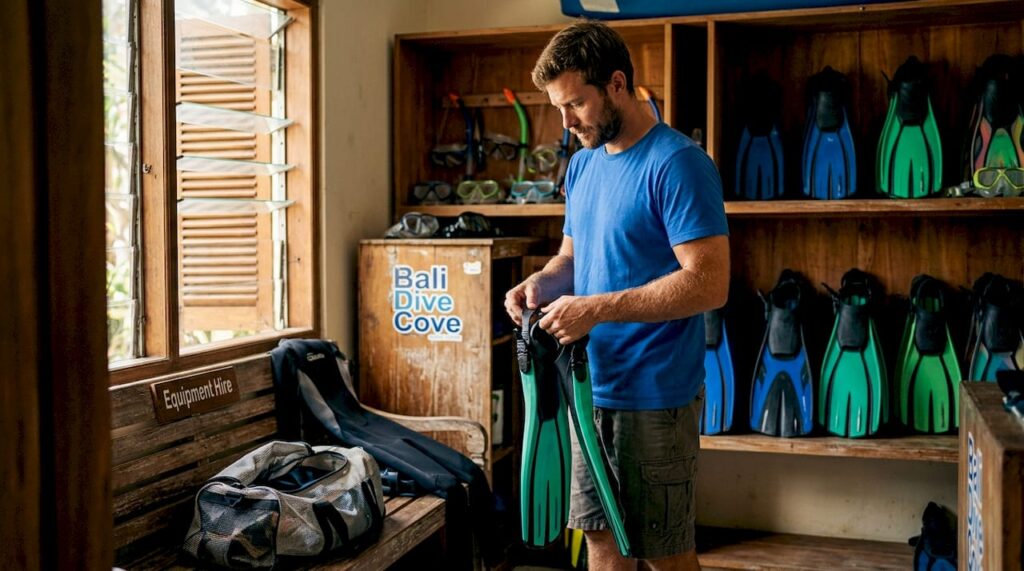
TL;DR:
- Properly fitted fins suited to site conditions improve comfort, efficiency, and safety during Bali dives.
- Open-heel with booties are ideal for rocky, surge-heavy sites, while split fins excel in calm waters.
- Local advice and on-water testing are key to choosing the best fins for Bali’s diverse diving environments.
Grab the wrong pair of fins before a dive in Bali and you’ll feel it within minutes. Your legs burn, your air drains faster than expected, and that effortless glide you imagined quickly turns into a slog. Many divers assume all fins are essentially the same, but that simply isn’t true, and the difference matters far more in Bali’s varied conditions than it would in a calm swimming pool. From the volcanic black sand shores of Amed to the surge around Liberty Wreck in Tulamben, your fins are doing a lot of important work. This guide breaks down the key fin types, explains how each one performs underwater, and helps you choose the right pair for wherever your Bali diving adventure takes you.
Key Takeaways
| Point | Details |
|---|---|
| Fin type impacts comfort | Open-heel and full-foot fins offer different advantages based on entry type and water conditions. |
| Split vs. paddle efficiency | Split fins save effort and air, while paddle fins excel in challenging currents but require more stamina. |
| Match fins to Bali sites | Choose your fins according to entry type, expected currents, and your own diving experience. |
| Test fit and maintenance | Always test fit and regularly inspect your fins to avoid blisters and prevent gear failure during dives. |
Understanding dive fin types and why they matter
Now that we’ve set the stage, let’s clarify which fin types are available and what makes each unique in Bali’s context.
There are two main fitting styles and two main blade styles to understand. Getting clear on both will save you a lot of guesswork when you’re standing in a dive shop or checking your scuba gear rental in Bali options.
Fitting styles:
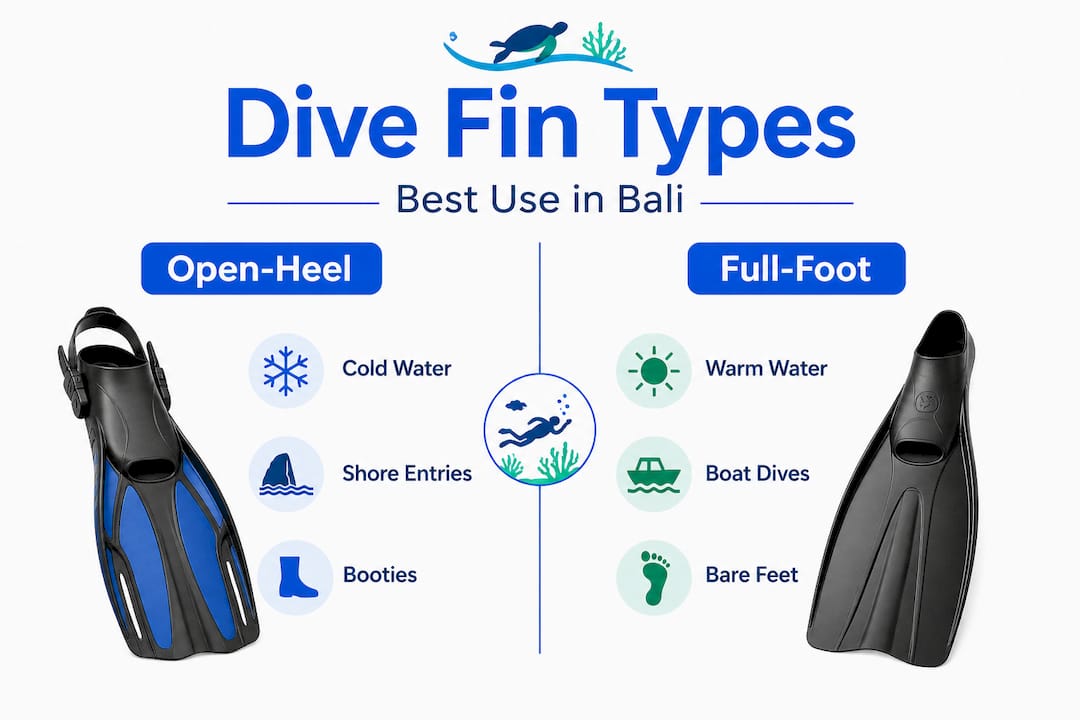
- Open-heel fins have an adjustable strap at the back and are worn with dive booties. They’re the most widely used style among recreational and technical divers. According to How to Choose Dive Fins, open-heel fins offer versatility for boat dives and rocky entries, while full-foot fins are lighter and suited to barefoot wear in warm water, though they risk blisters if poorly fitted and offer no protection on rough terrain.
- Full-foot fins slip on like a shoe with no strap. They’re lighter, more compact for travel, and work beautifully for warm-water shore dives where the entry is sandy and gentle.
Blade styles:
- Paddle fins (also called blade fins) are solid and stiff, moving water with raw power. They’ve been the standard choice for decades and still dominate many dive operations.
- Split fins have a cut running down the centre of the blade, which channels water differently and mimics a propeller action. They require less effort per kick but perform differently under pressure.
Here’s a quick comparison to make your decision easier:
| Feature | Open-heel fins | Full-foot fins | Paddle fins | Split fins |
|---|---|---|---|---|
| Best for | Boat dives, rocky entries | Sandy shore dives, travel | Currents, power | Calm dives, air conservation |
| Footwear needed | Dive booties | None (barefoot) | Either style | Either style |
| Weight and pack size | Heavier, bulkier | Lighter, compact | Varies | Varies |
| Effort per kick | Moderate | Moderate | High | Low |
| Versatility | High | Moderate | Moderate | Moderate |
Pro Tip: Choose open-heel fins for rocky boat entries common around Amed and Tulamben. If you’re heading to a calm, sandy-entry site and travelling light, full-foot fins are a perfectly sensible choice, but always check the conditions in advance.
Your diving preparation tips should include researching the entry type at each site before committing to one fin style for the whole trip.
How fin design impacts movement underwater
Once you know the fin types, it’s essential to understand how their shape and structure influence your underwater movement.
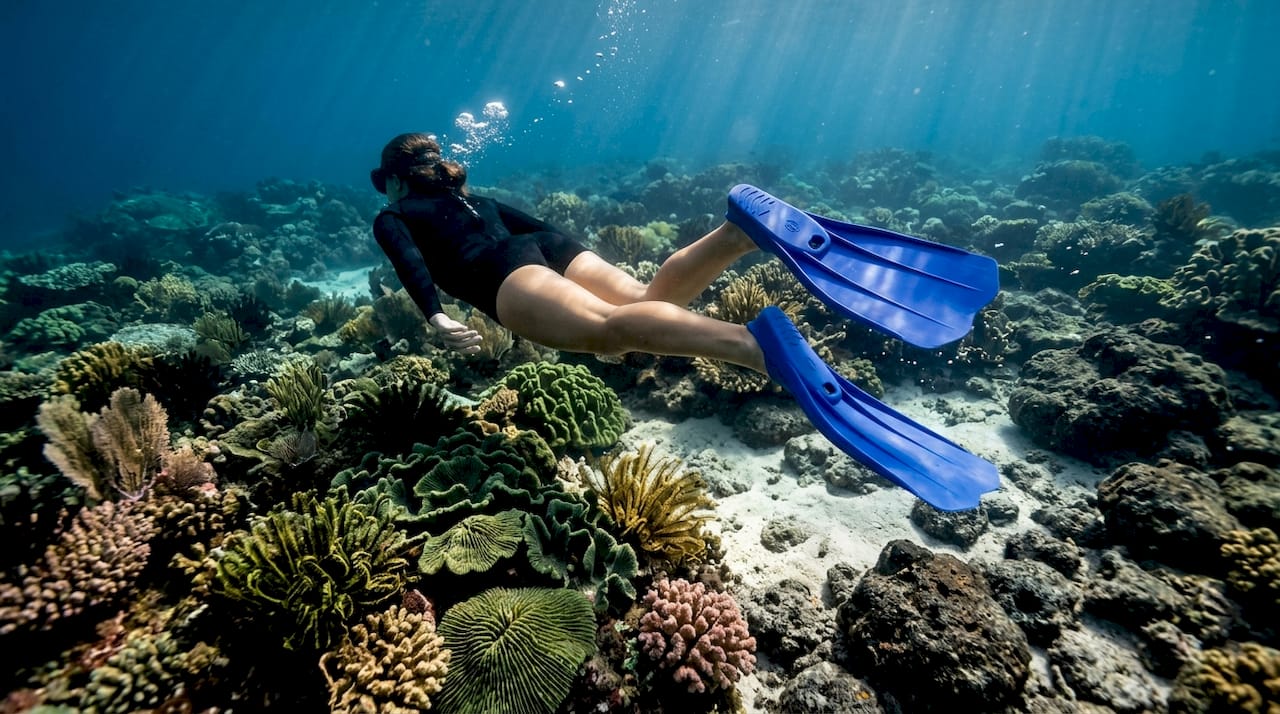
Your fin blade directly shapes how you kick, how much energy you burn, and how long your air lasts. This is especially relevant in Bali, where you might drift lazily along a coral garden in the morning and then push against a mild current to reach a wreck in the afternoon.
There are two primary kicking techniques used in recreational diving:
- Flutter kick is the most natural, alternating leg motion most beginners learn first. It works with all fin types and is ideal for open-water swimming.
- Frog kick mimics the motion of a frog’s legs, sweeping outward and then drawing back in a smooth arc. It’s popular with experienced divers because it reduces sediment disturbance near reefs and is far more efficient inside wrecks or caves.
As The Ultimate Guide to Scuba Fins explains, flutter kick suits all fins for straight travel, frog kick pairs best with stiffer paddle fins for power and control in confined spaces like wrecks, and split fins perform well during relaxed flutter but lose their advantage in currents or technical manoeuvres.
The energy difference between paddle and split fins is significant. Research cited by What Makes Split Fins Different shows that split fins reduce kicking effort by 30 to 60 percent through propeller-like water channelling, which directly reduces air consumption and leg fatigue. University of Buffalo studies have supported these findings. Paddle fins, by contrast, deliver superior raw thrust in current situations but accelerate muscle fatigue over longer dives.
Here’s how that breaks down in real performance terms:
| Metric | Paddle fins | Split fins |
|---|---|---|
| Effort per kick | High | Low to moderate |
| Air consumption | Higher | Lower (up to 60% less effort) |
| Performance in currents | Excellent | Poor |
| Ideal kicking style | Flutter and frog | Flutter |
| Wreck and cave use | Good (with frog kick) | Not recommended |
“The fin you choose doesn’t just move you through water, it shapes the quality of your entire dive. Match the fin to the environment, not just your preference.”
Here’s a numbered guide for matching your kicking technique to Bali’s specific conditions, which is useful for dive preparation for beginners and experienced divers alike:
- Calm reef and coral garden dives (Amed, Jemeluk Bay): Flutter kick with split fins for easy, low-effort exploration.
- Mild current drift dives (Nusa Penida): Flutter kick with paddle fins for better directional control and push.
- Wreck dives (Liberty Wreck, Tulamben): Frog kick with paddle fins to stay stable, avoid kicking up silt, and manoeuvre precisely.
- Strong current sites (Crystal Bay, Manta Point): Paddle fins only; split fins simply cannot generate the thrust needed to hold position or navigate safely.
- Shore dives with easy access: Either fin type works; choose based on comfort and what fits best.
Matching fins to Bali’s dive conditions and your experience level
With these mechanics in mind, let’s apply the knowledge directly to the real conditions and diving experiences you’ll find across Bali.
Bali is not a one-condition destination. The island offers everything from tranquil bays perfect for first-time divers to surge-heavy open-ocean sites that demand physical fitness and the right equipment. Matching your fins to the site and your skill level isn’t just about performance, it’s a genuine safety consideration.
Bali’s main dive condition types and the best fin for each:
- Sandy shore entries with calm water (Amed’s house reef, Jemeluk): Full-foot fins are comfortable and practical here. No booties needed, easy to put on at the water’s edge.
- Boat dives with ladder or giant stride entries (Tulamben, Menjangan): Open-heel fins with booties give you grip on deck and a more secure fit when jumping in.
- Rocky or volcanic shore entries (many sites around East Bali): Open-heel fins with booties are essential. Bare feet on volcanic rock is genuinely painful and potentially dangerous, as full-foot fins are unsafe for rough terrain.
- Current-exposed sites (Nusa Penida, Candidasa): Paddle fins for power and control. Split fins reduce effort significantly in calm water but are not the right tool for strong currents.
- Macro and muck diving (Amed’s sand flats): Any well-fitting fin works here; the priority is precision over power.
By experience level:
- Beginners: Prioritise comfort and ease. Open-heel fins in a medium stiffness work well for learning, as they’re forgiving and adjustable. Split fins are a great choice for beginners in calm conditions because they reduce leg strain and make controlled breathing easier.
- Intermediate divers: A stiff paddle fin rewards developing technique and prepares you for more demanding sites. You’ll notice the difference when you hit your first proper current.
- Experienced divers: You likely already know your preference, but consider keeping a second pair or renting locally for specific site conditions. When choosing a Bali dive resort, ask whether quality fins are available to rent and what styles they stock.
Good dive gear maintenance in Bali also plays a role in performance. Salt water, tropical humidity, and UV exposure degrade fin materials faster than you might expect.
Pro Tip: Always try fins in actual water before relying on them for a serious dive. Fit changes with swollen feet after a flight, different bootie thickness, and warm salty water. What feels perfect in a shop can feel completely different underwater.
Avoiding common mistakes when selecting dive fins
Even knowledgeable divers can make basic mistakes. Here are the major traps to avoid when selecting your fins.
The top mistakes divers make with fin selection:
- Choosing the wrong size. Fins that are too long create unnecessary drag and increase fatigue. Fins that are too short reduce thrust. A snug, comfortable fit with no heel slippage is what you’re aiming for.
- Using full-foot fins on rocky shores. This comes up repeatedly because it’s a genuinely common error in Bali. The lack of sole protection on full-foot fins makes rocky volcanic entries uncomfortable and risky. Full-foot fins are not designed for rough terrain, and it shows immediately when you try to negotiate a black-sand slope covered in loose rock.
- Ignoring strap condition on open-heel fins. Buckle straps and rubber spring straps degrade in tropical conditions. A snapped strap mid-dive is an inconvenience at best and a safety issue at worst. Check your straps before every dive.
- Overestimating your fitness level when choosing blade stiffness. Stiff, powerful fins sound appealing, but if you’re not conditioned for them, your legs will cramp long before the dive is over. Start with a medium-stiffness blade and build up.
- Buying fins without testing them in water. Comfort on land tells you very little. A quick test in a pool or shallow water before your trip to Bali will save a lot of frustration.
- Neglecting maintenance between dives. Rinse your fins in fresh water after every dive, store them flat or hanging, and avoid leaving them in direct sunlight for extended periods. Proper dive fin maintenance advice extends the life of your equipment significantly.
“Your fins are your engine underwater. A poorly fitted or poorly maintained fin is like driving a car with a flat tyre. You’ll get somewhere, but not comfortably, not efficiently, and not safely.”
The good news is that all of these mistakes are entirely avoidable with a small amount of preparation and honest self-assessment before you arrive in Bali.
The surprising truth most divers miss about fins and Bali diving
With the major dos and don’ts covered, let’s bring local experience to centre stage and rethink what really matters with dive fins in Bali.
Here’s the honest truth from years of diving Amed’s reefs and wrecks: the endless online debate about which fin brand or model is “the best” is largely missing the point. We’ve seen experienced divers show up with premium split fins worth several hundred dollars struggle at Tulamben, while a beginner in a mid-range pair of open-heel paddle fins glided through the dive with ease. The difference wasn’t the brand. It was fit and suitability for the conditions.
Bali’s dive sites demand adaptability. Amed in the morning can be glassy and calm, and a drift site by the afternoon. No single fin excels everywhere. What matters far more than the model printed on the blade is how the fin fits your foot, how it responds to your natural kicking style, and whether it’s appropriate for the specific site you’re entering that day.
This is exactly why local knowledge matters so much. Our instructors at Bali Dive Cove have been diving these waters for over 16 years, and our advice on gear selection is always grounded in the actual conditions you’ll face, not manufacturer marketing. The Bali diving community insights you gain from speaking to local dive professionals are genuinely worth more than any product review written from a desk.
Renting quality fins locally is also a smarter strategy than many divers realise. It frees up your luggage, lets you try different styles across different sites, and means you’re always using equipment that’s been checked and maintained. Don’t discount it.
Get the most from your Bali dive: courses, gear, and expert guidance
For those ready to upgrade their dive experience, Bali Dive Cove offers comprehensive support for gear selection and world-class diving opportunities.
At Bali Dive Cove, fin selection is something we talk through with every student and guest before they enter the water. Whether you’re joining one of our dive courses in Bali as a complete beginner or booking a guided experience as a certified diver, we make sure you’re using equipment that suits your body, your ability, and the specific site conditions of the day.
Our instructors will help you understand how different fins feel underwater and guide you toward the right choice for your dives. If you’re ready to explore Amed’s reefs, visit Liberty Wreck, or discover East Bali’s extraordinary marine life, take a look at our Bali dive packages and get in touch. We’d love to help you make every dive count.
Frequently asked questions
Should I bring my own fins to Bali or rent locally?
Both options work well. Bring your own fins for a guaranteed perfect fit, or rent quality fins locally to save luggage space and adapt to different site conditions across Bali.
Is there a risk in using full-foot fins for Bali shore dives?
Full-foot fins suit warm, easy-entry sandy sites, but they offer little protection on rocky volcanic shores and can cause blisters if not properly fitted. Choose open-heel fins with booties for rough terrain.
Are split fins good for all Bali dive sites?
Split fins are excellent for relaxed, calm-water dives, but split fins fail in currents and advanced manoeuvres. For Bali’s stronger current sites, paddle fins offer the control and thrust you need.
How does fin choice affect air consumption during dives?
Split fins reduce kicking effort by up to 60 percent through their propeller-like water channelling, which directly lowers air consumption and leg strain, particularly on calm, longer dives.
