

TL;DR:
- Underwater hand signals are essential for safety, connection, and confidence during dives.
- Mastering core signals like “OK,” “problem,” “ascend,” and “out of air” is crucial before diving.
- Practice and clear pre-dive briefings help prevent misunderstandings and increase dive safety.
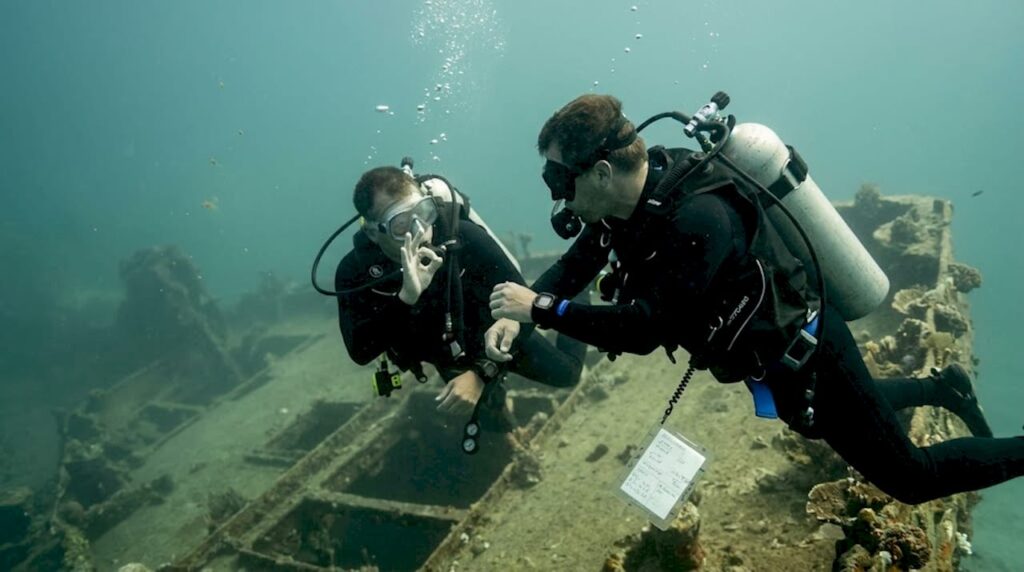
Underwater hand signals might seem like a simple wave or thumbs up, but they are far more than that. They are the language that keeps you and your dive group safe, connected, and confident beneath the surface. Many divers heading to Bali underestimate just how much clear communication matters once you are six metres down, surrounded by vibrant corals and unable to say a single word. This guide will walk you through the core signals, the more advanced ones used in Bali’s varied dive conditions, and how to practise them so they feel second nature before you even hit the water.
Key Takeaways
| Point | Details |
|---|---|
| Core signals matter | Mastering the essential dive signals is vital for every diver’s safety and enjoyment. |
| Adapt to context | Always clarify signals with your group and adapt for Bali’s unique dive sites and conditions. |
| Practice breeds confidence | Regular on-land practice of signals makes real dives smoother and less stressful. |
| Communication is safety | Open, humble pre-dive communication often matters more than memorising every gesture. |
Why underwater communication matters
Diving in Bali is an extraordinary experience. You might find yourself hovering above the famous USAT Liberty wreck in Tulamben, drifting past a reef wall in Nusa Penida, or exploring the black sand slopes of Amed. Each of these environments brings its own conditions: shifting currents, variable visibility, and groups of divers spread across a wide area. In these moments, your ability to communicate clearly with your buddy and guide is not just convenient, it is essential.
Voice is simply not an option underwater. Hand signals, torch signals, and tank-banging fill that gap. They allow you to share critical information quickly, whether you are running low on air, spotting a manta ray, or signalling that something feels wrong. Accurate dive signals help prevent incidents and increase diver confidence, particularly for those still building their underwater experience.
For novice divers especially, knowing what signals mean reduces anxiety. When your guide gives you the “OK” signal and you know exactly what to return, that small exchange builds trust and keeps the group cohesive. For safer Bali dive adventures, clear communication is one of the most powerful tools you have.
Here is why signals matter so much in practice:
- They replace verbal communication entirely in an environment where speaking is impossible
- They allow rapid sharing of safety information such as air levels and emergencies
- They help guides manage groups across distances and in low visibility
- They reduce misunderstandings that can lead to panic or separation
- They reinforce good dive site etiquette in Bali, keeping divers respectful and aware of one another
“Clear underwater communication is one of the most overlooked skills in recreational diving, yet it is one of the most important for group safety and enjoyment.”
Now that we have seen why communication below the surface is far from trivial, let us look at what those signals actually mean.
Core dive signals every diver should know
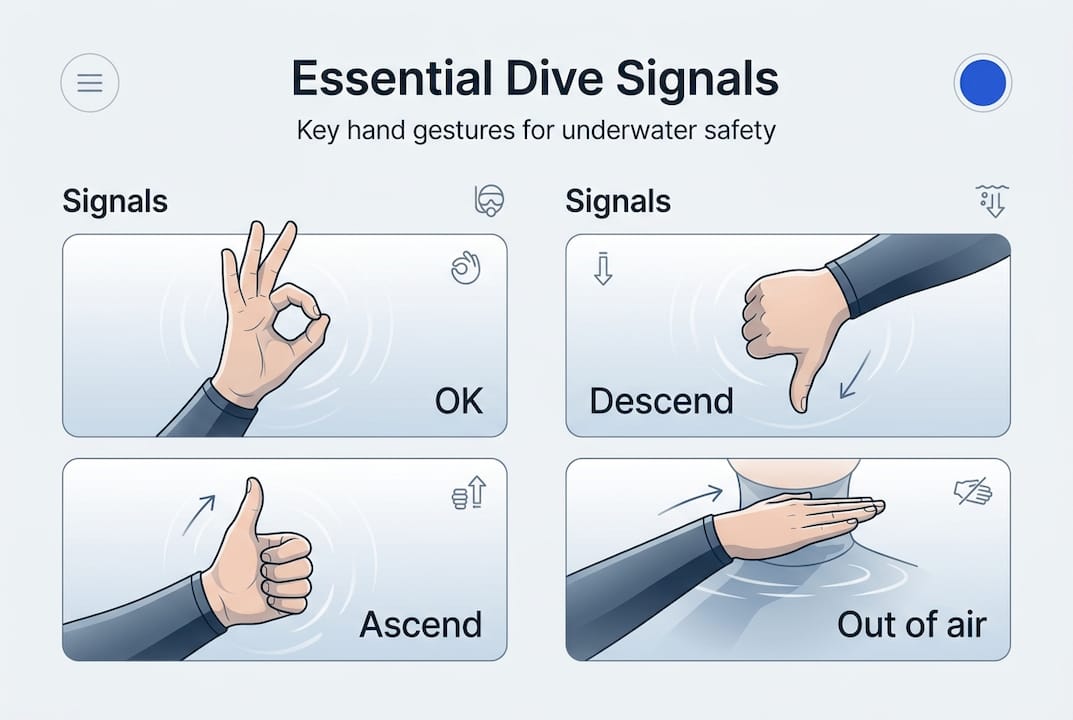
A set of core hand signals is universally recognised among divers, and learning them before your Bali trip will make every dive smoother and more enjoyable. These are the signals you will use most often, from the moment you descend to the moment you surface.
| Signal | Gesture | When to use it |
|---|---|---|
| OK | Circle with thumb and forefinger | Confirming you are fine, responding to guide |
| Problem | Flat hand rocked side to side | Something feels off or uncomfortable |
| Ascend | Thumb pointing upward | Time to go up |
| Descend | Thumb pointing downward | Going deeper |
| Out of air | Flat hand drawn across throat | Emergency, need air immediately |
| Stop | Open palm facing out | Pause and wait |
| Come here | Beckoning motion with full hand | Follow me or come closer |
| Look | Two fingers pointing to eyes | Pay attention to something specific |
| Low on air | Fist tapped on chest | Air is getting low, not yet critical |
| Level off | Flat hand held horizontal | Stay at this depth |
Each of these signals has a specific purpose, and using them correctly can make the difference between a relaxed dive and a stressful one. For example, the “problem” signal is often misread by newer divers as the “OK” signal because both involve hand movement. The key difference is intent and shape: a rocking flat hand means something is wrong, while the circle gesture means all is well.
Dive groups sometimes develop their own shorthand for pointing out wildlife or directing attention to a particular reef feature. That is perfectly natural and adds a fun, personal layer to group diving. However, the essential safety signals should never be improvised. Always clarify signal meanings during the pre-dive briefing, especially if you are joining a new group or diving with a guide for the first time.
Our Bali dive courses cover all core signals as part of every programme, so you will never feel lost when your instructor signals something important.
Pro Tip: During your pre-dive briefing, run through every signal you might need on that specific dive. Do not assume everyone in the group uses the same version of each gesture.
Beyond the basics: interpreting advanced and situational dive signals
While the basics serve most recreational dives, Bali’s more challenging environments call for a broader vocabulary. Sites like the current-swept waters around Nusa Penida or the atmospheric night dives along Amed’s reefs require signals that go beyond the standard set. Explore the full range of Bali dive sites and you will quickly see why adaptability matters.
Divers may use lights or slates for non-standard signals, especially in technical or night dives where visibility is limited and hands may be occupied. A torch can be used to draw circles in the water for “OK”, or swept side to side to signal a problem. A writing slate allows you to communicate anything that cannot be expressed with a gesture.
Here are some situational signals worth knowing before your Bali dives:
- Strong current signal: A sweeping arm movement in the direction of the current, often followed by a thumbs up to ascend if conditions are unsafe
- Equalisation problem: Pointing to the ear and shaking the head, used when descending if pressure is causing discomfort
- Out of air buddy breathing: Pointing two fingers at your eyes, then at your buddy, then at your regulator, indicating you need to share air
- Night dive torch signal: Slow circular motion with the torch for “OK”, rapid side-to-side sweep for “problem”
- Surface signal: Crossed arms above the head when on the surface to indicate you need assistance
Wreck diving adds another layer of complexity. Inside confined spaces, visibility can drop suddenly and hand signals become harder to read. Our PADI Wreck Diver course covers the specific communication techniques used in overhead environments, including line signals and torch protocols.
Pro Tip: On complex dives such as night dives or wreck penetrations, use a slate or pre-agreed light signals to communicate anything beyond the standard set. Agree on these before you enter the water, not during the dive.
How to practise and master dive signals before your Bali trip
Practising signals on land helps eliminate confusion underwater, and the good news is that you can do this almost anywhere. A few focused sessions before your trip will mean the signals feel instinctive rather than something you have to think about mid-dive.
Here is a practical approach to building your signal fluency:
- Mirror practice: Stand in front of a mirror and run through each signal slowly, checking your hand shape matches the correct gesture
- Buddy quizzes: Sit with your dive buddy and take turns showing signals at random, testing whether you both interpret them the same way
- Scenario role-play: Act out common dive situations such as low air, spotting wildlife, or needing to ascend, using only signals to communicate
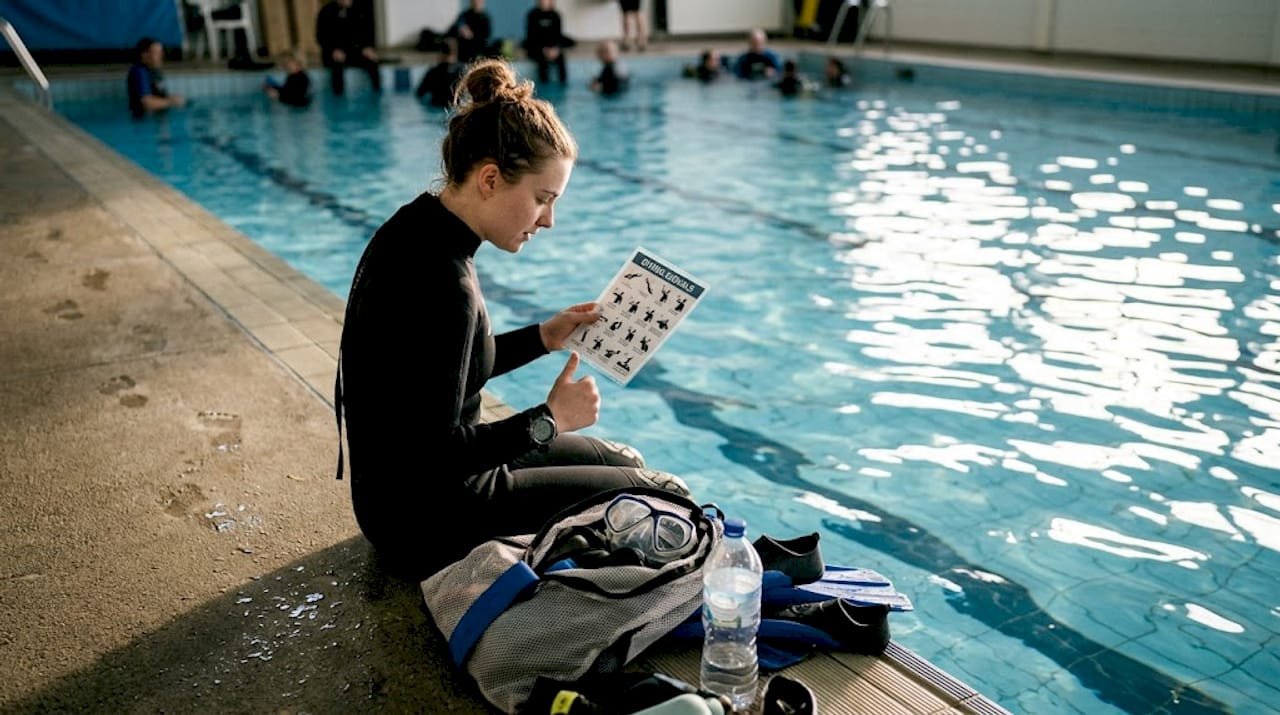
- Flashcard drills: Use printed or digital signal cards to test recognition speed, aiming to identify each signal within two seconds
- Pre-dive recap: At the dive centre before each new location, run through any site-specific signals your guide introduces
“The divers who feel most comfortable underwater are rarely the ones who have dived the most. They are the ones who prepared the most carefully before getting in the water.”
Carrying a signal slate or a small waterproof reference card clipped to your BCD (buoyancy control device) is also a smart move, especially on your first few dives in a new location. It gives you a quick visual reference without disrupting the dive.
When organising Bali group dives, it is worth scheduling a short signal review as part of your group preparation. It takes five minutes and can prevent a great deal of confusion later. For a broader look at what to expect, the Bali dive tourism overview is a useful starting point for planning your trip.
Keep these tools handy:
- Waterproof signal slate and pencil
- Laminated signal reference card
- Surface marker buoy with line
- Dive torch for low-visibility or night conditions
The truth most guides won’t tell you about dive signals
Here is something we have learned after years of guiding divers through Amed’s reefs and wrecks: even experienced divers misread signals. It happens more often than anyone likes to admit. Two divers with hundreds of logged dives between them can still interpret the same gesture differently, especially when adrenaline is running high or visibility is poor.
The real lesson is not about memorising a longer list of signals. It is about the conversation you have before you get in the water. A thorough pre-dive briefing, where everyone agrees on what each signal means in the context of that dive, is worth more than any amount of technical knowledge. Humility matters here. Asking “what does this signal mean to you?” is not a sign of inexperience. It is a sign of good site etiquette and group communication.
The divers who stay safest are not always the most technically skilled. They are the ones who communicate openly, check in often, and never assume their buddy interpreted a signal the same way they did. That mindset, more than any specific gesture, is what keeps a dive group safe and relaxed.
Ready to put your new dive skills to use in Bali?
Now that you understand the language of the deep, there is no better place to practise it than beneath Bali’s warm, clear waters. At Bali Dive Cove, we make sure every diver, from first-timers to seasoned explorers, feels confident and prepared before they descend.
Our experienced instructors cover dive signals thoroughly in every briefing, and our small group approach means you always get the personal attention you need. Whether you want to discover Bali dive courses, explore dive packages tailored to your level, or simply view top Bali dive sites to plan your adventure, we are here to help you make the most of every dive. Get in touch and let us help you plan a safe, unforgettable Bali diving experience.
Frequently asked questions
What are the most important dive signals for beginners?
Beginners must master signals for “OK”, “problem”, “ascend”, “descend”, and “out of air” before their first dive. These five cover the most critical safety situations you are likely to encounter, and universally recognised signals ensure your guide and buddy always understand you.
Are Bali dive signals different from international standards?
Generally, Bali dive centres follow the same core signals as PADI and other international standards. That said, always clarify any local variations with your guide during the briefing, as international diving standards form the foundation but individual guides may have small adaptations.
How can I practise dive signals before my trip?
Practise on land with a buddy, use flashcards, or run through scenario role-plays to build muscle memory. Practising on land before you travel means signals feel automatic rather than something you have to recall mid-dive.
What do I do if someone in my group doesn’t understand a signal?
Pause, use the “problem” or “attention” signal, and communicate the meaning slowly using gestures or a slate. If there is genuine confusion, it is always safer to ascend together and clarify at the surface rather than continuing with uncertainty.
