

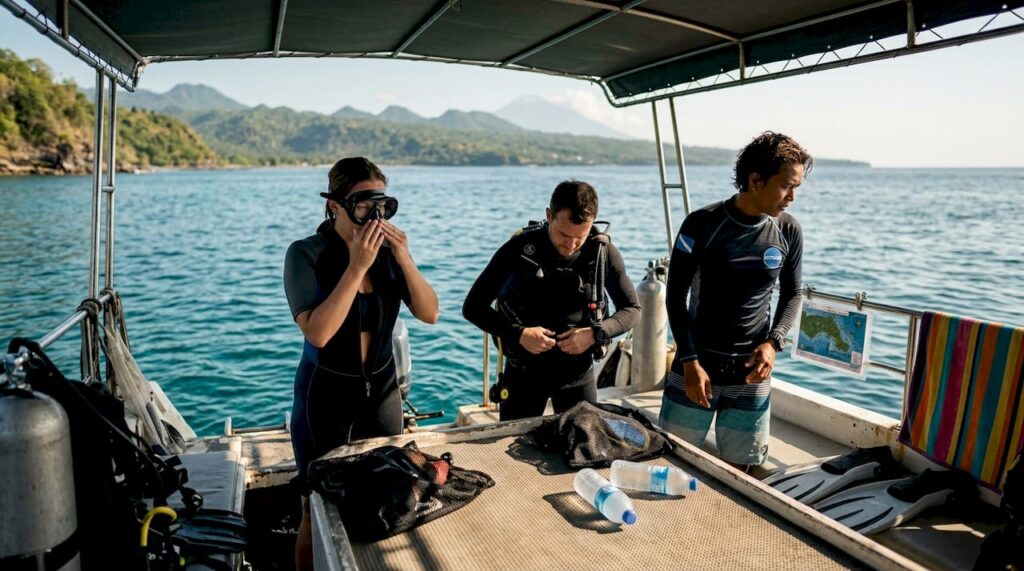
Many divers assume etiquette is simply about being polite on the boat or waiting your turn at the entry point. In Bali, though, the stakes are much higher than that. Correct dive site etiquette here is what keeps fragile coral ecosystems intact, protects iconic species like manta rays, and ensures every diver in the water returns safely to the surface. Bali’s reefs and wrecks attract thousands of divers each year, and without a shared code of behaviour, the pressure on these underwater environments becomes very real. Whether you’re planning your first dive in Amed or heading to Nusa Penida for a manta encounter, understanding proper etiquette will genuinely transform your experience.
Key Takeaways
| Point | Details |
|---|---|
| Respect marine life | Always observe, never touch or chase wildlife to protect Bali’s reefs and creatures. |
| Follow local codes | Bali and Nusa Penida enforce unique rules to safeguard divers and the environment. |
| Be punctual and prepared | Arriving early and organising your kit helps the whole group and crew. |
| Practise safe gas planning | Use the Rule of Thirds for your air supply to ensure a safe return from every dive. |
| Promote positive group dynamics | Working collaboratively and courteously enhances everyone’s dive experience. |
Understanding the basics of dive site etiquette
With the importance of etiquette established, let’s break down the key principles every diver should follow. At its core, dive site etiquette is built on three pillars: safety, environmental protection, and courtesy. These aren’t separate concerns. They’re deeply connected, and ignoring any one of them affects the others.
Good etiquette emphasises safety, environmental stewardship, and respect for crew and fellow divers in equal measure. This means arriving prepared, listening during briefings, managing your gear responsibly, and being genuinely considerate of everyone sharing the water with you.
Here are the foundational principles every diver should practise:
- Punctuality: Arriving on time shows respect for the crew, the divemaster, and your fellow divers who are ready to go.
- Gear management: Keep your equipment organised and avoid cluttering shared spaces on the boat or at the entry point.
- Briefing attention: Pay close attention during the pre-dive briefing. The divemaster shares critical information about currents, depth limits, and marine life.
- Underwater courtesy: Give other divers space. Crowding a creature or a feature is frustrating for everyone and stressful for the animal.
- Crew respect: Treat the boat crew and divemasters with the same respect you’d want yourself. They work hard to make your dive safe and enjoyable.
“Good dive etiquette isn’t just good manners. It’s the foundation of a safe, enjoyable, and sustainable diving culture.”
Being part of the Bali dive community means accepting a shared responsibility for the reefs and the people you dive alongside. The best divers aren’t necessarily the most experienced. They’re the ones who are mindful, prepared, and considerate every single time they enter the water.
Pro Tip: Before every dive, do a quick buddy check using the BWRAF acronym: BCD, Weights, Releases, Air, Final check. It takes two minutes and can prevent serious problems underwater.
Boat and pre-dive etiquette: setting the right tone
Once you’re clear on the core values, it’s time to look at how etiquette begins before you even enter the water. The boat ride and pre-dive preparation set the tone for the entire experience, and small habits here make a significant difference.
Arrive early for every dive to respect the schedule and the crew who have prepared the boat and equipment. Being late delays everyone and creates unnecessary stress before a dive that should be calm and focused.
Follow these steps to get your pre-dive routine right:
- Arrive at least 15 minutes early. This gives you time to sign any paperwork, meet your divemaster, and settle in without rushing.
- Double-check your gear before boarding. Stow equipment neatly on the boat and avoid blocking walkways or other divers’ kit.
- Listen to the full briefing without interruption. Save questions for the end, unless something is genuinely unclear and urgent.
- Follow the entry order directed by the crew. Jumping in out of sequence can create collisions or separate buddies at the worst moment.
- Respect boat rules. Some operators ask you not to eat certain foods, use certain areas, or move equipment without permission. Follow these without question.
Tipping is a meaningful part of dive culture in Bali. Here’s a quick guide:
| Service | Suggested tip |
|---|---|
| Divemaster (half day) | $5 to $10 USD |
| Divemaster (full day) | $10 to $20 USD |
| Boat crew | $5 to $10 USD per person |
| Instructor (course) | 10 to 15% of course price |
Tipping isn’t mandatory, but it’s a genuine way to show appreciation for people who work hard to keep you safe. If you’re planning scuba holidays in Bali, building tipping into your budget is a thoughtful touch.
Pro Tip: Keep your tip money in a small, dry envelope in your bag so it’s ready at the end of the dive. Fumbling for cash on a rocking boat is awkward for everyone.
Responsible diving underwater: safety, environment, and boundaries
With everyone briefed and ready, let’s look at the etiquette that matters most once you’re beneath the surface. Underwater behaviour is where etiquette has its greatest impact, both on safety and on the health of Bali’s reefs.
Neutral buoyancy and a controlled frog kick are essential for avoiding silting up the seabed or accidentally damaging coral. A single careless fin kick can destroy years of coral growth. Practising your buoyancy before visiting sensitive sites like Bali’s Liberty Wreck in Tulamben is genuinely worthwhile.
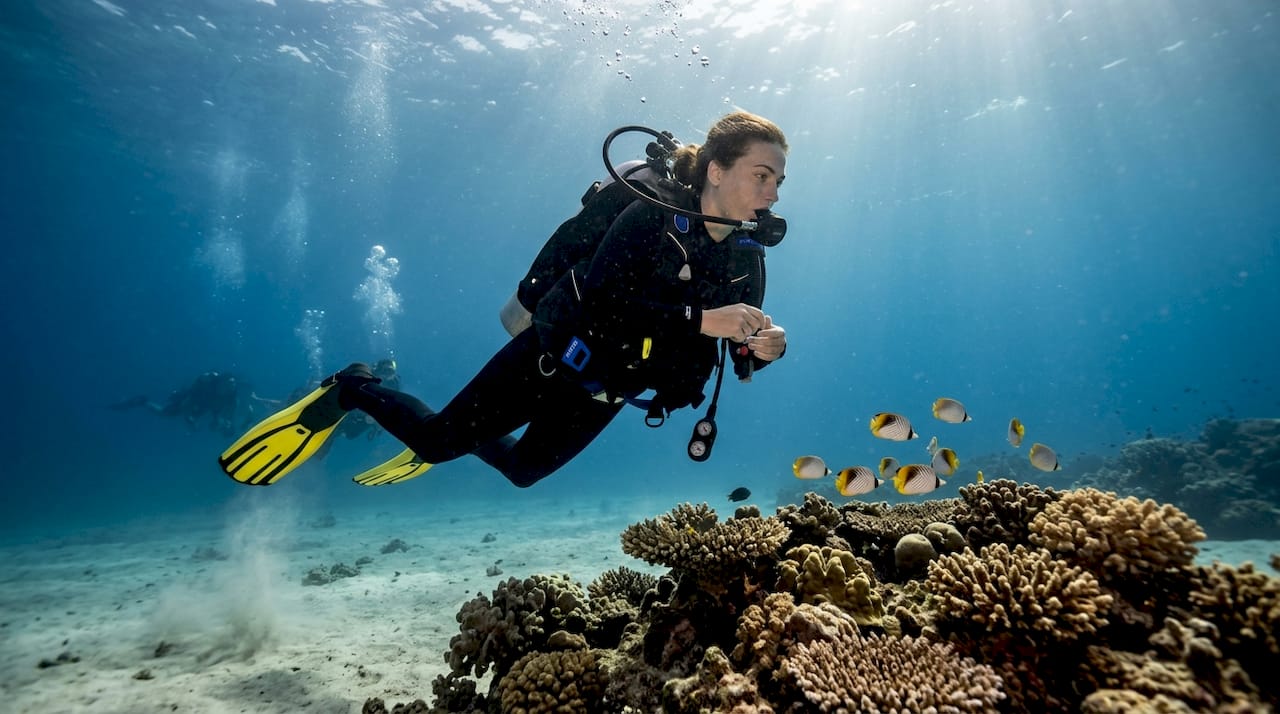
Here’s a comparison of responsible versus harmful underwater behaviour:
| Responsible behaviour | Harmful behaviour |
|---|---|
| Observe marine life from a distance | Touching or chasing animals |
| Use frog kick near the reef | Flutter kick that silts the bottom |
| Share the view, wait your turn | Crowding creatures or blocking others |
| Deploy SMB before surfacing | Surfacing without signalling |
| Follow the divemaster’s route | Straying from the group |
Never touch, chase, or feed marine life, no matter how tempting it might be. Feeding fish disrupts natural behaviour and can cause real harm to ecosystems. Touching coral, even briefly, introduces oils and bacteria that damage the living polyps.
Key underwater etiquette rules to follow:
- Stay with your buddy at all times and check in regularly with hand signals.
- If you become separated, deploy your SMB (surface marker buoy) and ascend slowly and safely.
- Give interesting creatures space. If a nudibranch or turtle has an audience, wait your turn rather than pushing to the front.
- Avoid touching the reef for balance. If your buoyancy needs work, that’s what dive courses are for.
“Every diver who helps restore reefs through responsible behaviour is contributing to a legacy that future generations will thank them for.”
Learn more about scuba diver etiquette to build good habits before your Bali trip.
Bali and Nusa Penida: unique local codes and critical marine rules
Some sites in Bali demand specialised knowledge, especially when it comes to marine protection. Here’s what sets the region apart from other dive destinations.
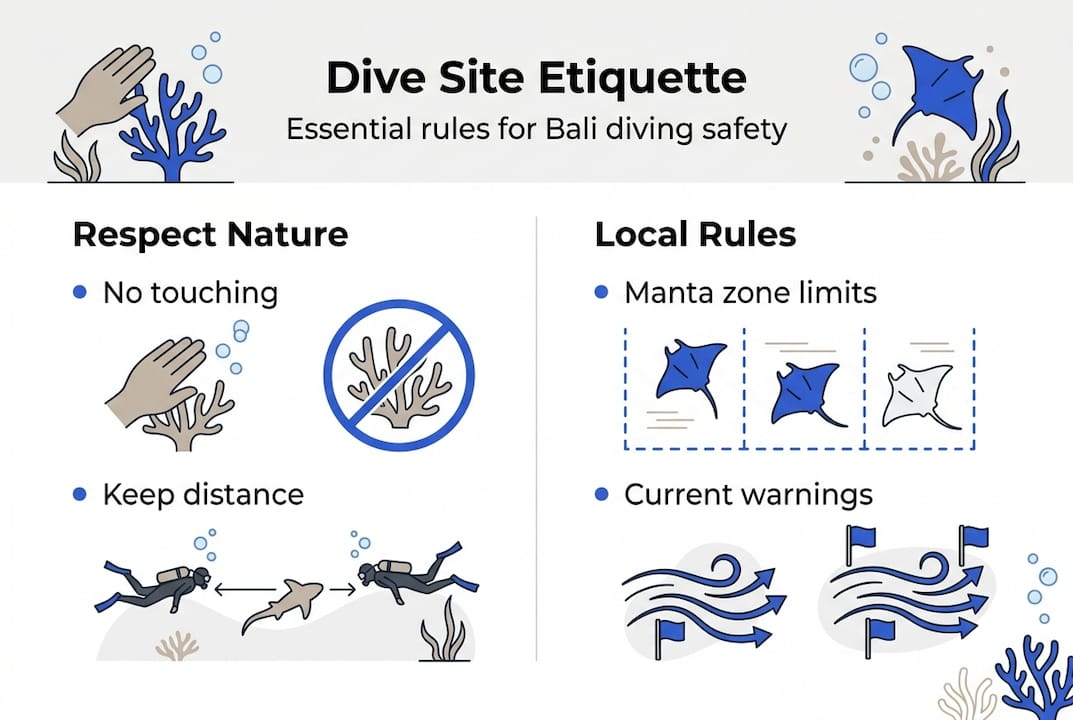
Nusa Penida is one of the world’s most celebrated manta ray dive sites, and it comes with a strict manta ray code that every diver must follow. These rules exist because manta rays are vulnerable to stress and harassment, and cleaning stations are critical to their health.
The rules for manta ray encounters at Nusa Penida are clear:
- Maintain at least 3m distance from mantas at all times.
- Never enter a cleaning station, which is the area where mantas hover to have parasites removed by small fish.
- Do not block a manta’s path or swim directly beneath one.
- No flash photography, as it startles the animals and disrupts their natural behaviour.
- Remain calm and move slowly. Sudden movements cause mantas to leave the area entirely.
Did you know? Boats must stay 50m from manta cleaning stations in the Nusa Penida Marine Protected Area. This regulation protects the sites from boat noise and anchor damage.
Beyond mantas, Bali’s stronger current sites require additional safety awareness. Sites like Crystal Bay and Manta Point can have powerful, unpredictable currents. Always follow your divemaster’s guidance on dive site selection based on your experience level. Choosing the right site for your skills isn’t a limitation. It’s smart diving.
Pro Tip: At manta sites, stay low and still rather than hovering above the cleaning station. Mantas are far more likely to approach calm, patient divers than those who are active and noisy.
Gas management, safety protocols, and post-dive courtesy
Beyond the dive itself, etiquette carries through to finishing safely and winding down with the group. Gas management and safe surfacing are where personal safety and group responsibility overlap most directly.
The Rule of Thirds is a widely used gas planning method, particularly valuable on longer or more demanding dives. The Rule of Thirds divides your gas supply into three equal portions: one third for the outward journey, one third to return, and one third held in reserve for emergencies.
| Gas portion | Purpose |
|---|---|
| First third | Outward journey |
| Second third | Return journey |
| Final third | Emergency reserve |
Follow these steps for a safe and courteous end to every dive:
- Signal your gas level to your buddy and divemaster at regular intervals using standard hand signals.
- Begin your ascent at the agreed depth and time. Don’t push the limits because you’re enjoying the dive.
- Complete your safety stop at 5 metres for 3 to 5 minutes on every dive, regardless of depth.
- Surface with your SMB deployed so the boat crew can see you clearly.
- Help your buddy and fellow divers back onto the boat before removing your own gear.
Post-dive courtesy matters too. Help rinse and stow shared equipment, share your experience positively during the debrief, and avoid loudly criticising other divers’ behaviour in front of the group. If you noticed something concerning, speak privately to the divemaster. Exploring dive courses is a great way to sharpen these skills in a structured environment.
Pro Tip: Always note your starting tank pressure before the dive. Knowing your exact baseline makes the Rule of Thirds far easier to apply accurately underwater.
Why etiquette in Bali diving is non-negotiable: our take
Most guides focus on the rules themselves. What they rarely discuss is the social dynamic that makes etiquette actually work in practice: peer accountability.
At Bali Dive Cove, we’ve seen firsthand that the divers who uphold the highest standards are rarely the ones who’ve memorised every rule. They’re the ones who’ve absorbed a sense of shared ownership over the reefs and the diving experience. When one diver in a group behaves responsibly, it quietly encourages everyone else to do the same. That ripple effect is far more powerful than any briefing.
Bali’s underwater world is a shared legacy. The vibrant corals at Amed, the mantas of Nusa Penida, the Liberty Wreck covered in life. These exist for every diver who comes after you. Following dive conservation tips is one thing. Becoming someone who actively models good behaviour and gently encourages it in others is something altogether more valuable. Don’t just follow the code. Help carry it forward.
Ready to dive Bali with the experts?
Knowing the rules is one thing. Diving with a team that lives them every day is another. At Bali Dive Cove, our small-group approach means you get real attention, clear communication, and guides who genuinely care about the reefs we dive together.
Whether you’re looking to sharpen your skills through our dive courses, explore the region through our Bali dive packages, or simply find the right site for your experience level across our Bali dive sites, we’re here to help you dive safely, responsibly, and with a huge smile on your face. Come and see why divers from around the world choose Amed as their base for exploring Bali’s extraordinary underwater world.
Frequently asked questions
What is the most important dive site etiquette in Bali?
Observing without touching marine life and following all local rules is the most critical etiquette practise in Bali, protecting both fragile ecosystems and the animals that live within them.
How much should you tip dive crew in Bali?
A standard tip is $5 to $10 per dive, or 10 to 15% of the dive price, as a genuine way to recognise the crew’s hard work and care.
What is the Rule of Thirds in scuba diving?
The Rule of Thirds means splitting your gas supply into three equal portions: one for the outward journey, one to return, and one kept as a safety reserve.
Are there special etiquette rules for manta ray diving in Nusa Penida?
Yes. Divers must stay at least 3m from mantas, never block their path or enter cleaning stations, and avoid flash photography to prevent stressing these protected animals.
What should you do if separated from your dive group in Bali?
Deploy your SMB immediately, ascend slowly and safely, and signal to the boat crew from the surface so the team can locate you quickly.
