

TL;DR:
- Bali primarily uses aluminium 12L tanks for ease and corrosion resistance.
- Tank size and valve type affect dive duration and equipment compatibility.
- Advanced tanks like steel or composite are limited, mainly for technical dives.
Most divers arriving in Bali for the first time assume that a scuba tank is simply a scuba tank. You grab one, strap it on, and head underwater. In reality, the tank you use can quietly shape your entire dive, affecting how long you stay down, how well you float at the surface, and how comfortable you feel throughout. Bali’s warm, clear waters are forgiving, but understanding the basics of dive tank types means you can focus on the vibrant corals and curious reef fish rather than wrestling with buoyancy. This guide walks you through everything you need to know before you splash in.
Key Takeaways
| Point | Details |
|---|---|
| Aluminium dominates Bali | Most recreational dives in Bali use aluminium 12L (AL80) tanks for reliability and comfort. |
| Size impacts dive time | Tank capacity affects how long you can stay underwater, with bigger tanks suited to more advanced dives. |
| Valve compatibility matters | Ensure your regulator matches local tank valves—most Bali tanks use yoke fittings. |
| Proactive communication | Always inform your dive centre about any special tank needs or equipment preferences in advance. |
Core scuba tank materials explained
Now that you understand the importance of tank choice, let’s explore the core materials used for dive tanks and how they affect your underwater experience.
The primary tank materials used in recreational scuba diving are aluminium and steel, each offering a distinct set of characteristics that suit different divers and conditions. A third option, composite or carbon fibre, exists but remains relatively rare in Bali. Knowing what each material brings to the water helps you make a far more informed decision before your dive day arrives.
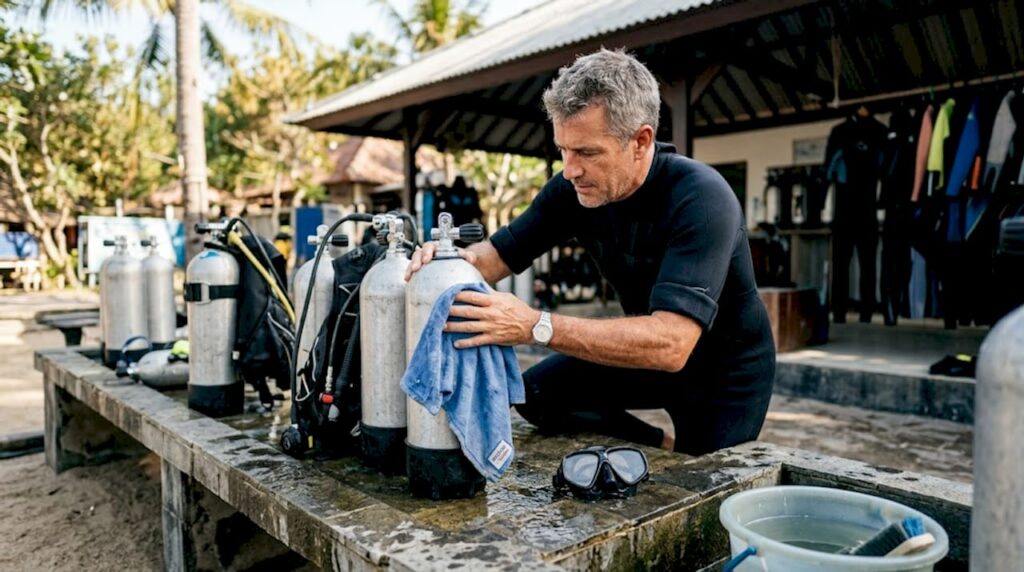
Aluminium tanks are the most common choice across Bali’s dive centres. Made typically from 6061-T6 aluminium alloy, they are lightweight, resistant to saltwater corrosion, and affordable to maintain. The trade-off is that they become positively buoyant when nearly empty, meaning you may need a little extra weight at the end of a dive to stay comfortably neutrally buoyant. For most warm-water recreational dives around Amed, this is a minor consideration that experienced guides will help you manage.
Steel tanks are tougher, hold more gas for the same volume, and remain negatively buoyant throughout the dive. This consistency makes them popular for technical diving and colder-water destinations. However, steel is heavier to transport, more prone to internal rust if not properly maintained, and less common in Bali’s busy tourism market. You will encounter them occasionally for speciality or technical dives, but they are not the standard for day trips.

Composite and carbon fibre tanks are engineered for ultra-low weight and very high pressure. Composite tanks offer impressive capacity in a lighter package, but they come at a significantly higher cost and require careful inspection protocols that make them impractical for most Bali rental fleets. Saltwater environments also demand extra vigilance with composite materials, so their limited presence in Bali’s dive centres is understandable.
Here is a quick comparison to help you see the differences at a glance:
| Feature | Aluminium | Steel | Composite/Carbon fibre |
|---|---|---|---|
| Weight | Light | Heavier | Very light |
| Buoyancy when empty | Positive | Negative | Varies |
| Corrosion resistance | Excellent | Moderate | Good |
| Cost | Affordable | Moderate | High |
| Common in Bali | Yes | Rarely | Very rarely |
Key benefits of aluminium tanks for Bali diving:
- Widely available at all dive centres in Amed and across Bali
- Compatible with standard scuba equipment rentals
- Low maintenance costs in tropical, saltwater conditions
- Easy for new divers to handle on the boat and in the water
- Consistent performance across Bali’s popular reef and wreck sites
If you are bringing your own gear, reviewing gear maintenance in Bali before your trip will help you avoid saltwater-related surprises.
Pro Tip: For most Bali dives, an aluminium 12L/AL80 tank offers an excellent balance of buoyancy control and comfort, and is the format you will find at nearly every local dive centre.
Sizing up: Tank capacities for different divers
With materials covered, it is important to select the right tank size and capacity for your next Bali adventure.
Tank size directly affects how long you can stay underwater, and that matters whether you are on your first-ever dive or your hundredth. The volume of a tank is measured in litres, and the common sizes range from 3 to 7 litres for backups and junior divers, 10 to 12 litres for standard recreational dives, and 15 litres or more for deeper or longer technical excursions.
In Bali, the aluminium 12L (also known as AL80) is the bread-and-butter tank for recreational divers. At a relaxed breathing rate, this size typically delivers between 45 and 60 minutes of bottom time at shallow to moderate depths, which suits the majority of Amed’s reef dives perfectly. Beginners naturally breathe a little faster due to excitement, so your first few dives may be slightly shorter. That is completely normal and improves quickly with experience.
Here is a general guide to expected tank sizes and their typical uses:
| Tank size | Best for | Approximate dive time |
|---|---|---|
| 3 to 7L | Junior divers, backup/pony tanks | Short or safety use |
| 10 to 12L (AL80) | Recreational adults, fun dives | 45 to 60 minutes |
| 15L and above | Technical or deep dives | 60 to 90+ minutes |
How to estimate your dive time based on your tank:
- Confirm your tank size and starting pressure with your dive guide before entering the water.
- Note your breathing rate from previous dives if you are a certified diver.
- Calculate your surface air consumption (SAC) rate using your last dive’s data.
- Discuss target depths with your guide, as depth directly increases air consumption.
- Always plan to surface with at least 50 bar remaining as your safety margin.
Thorough preparation for your first Bali dive includes confirming tank specifications with your chosen centre, not just on the day.
Pro Tip: Always confirm the tank size with your Bali dive centre before you arrive. Larger or specialist tanks may need to be arranged in advance, especially at smaller operations.
Valve types and compatibility: Yoke vs DIN
Beyond capacity, the valve connection can impact your overall dive experience and equipment compatibility.
The valve is the fitting at the top of your tank that connects your regulator to the air supply. There are two main types used in recreational diving, and knowing which one your regulator supports can save you from a frustrating surprise on dive day.
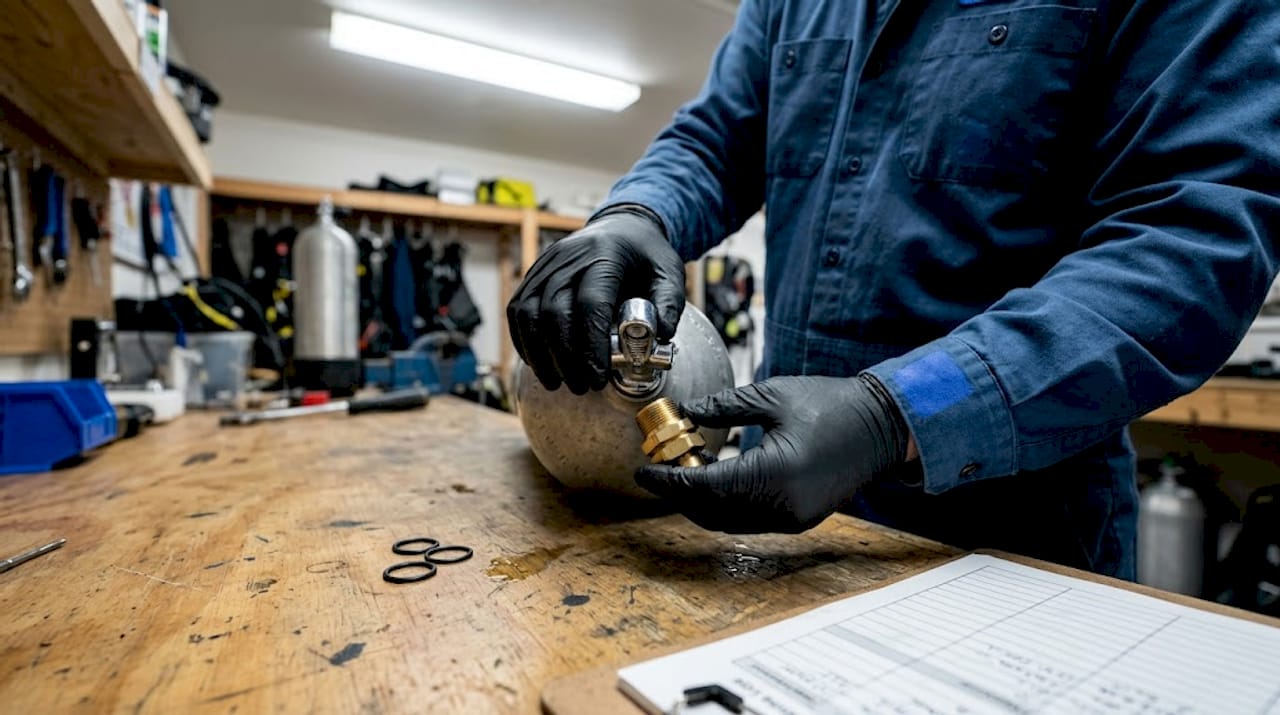
Yoke and DIN valves differ in both design and pressure rating. A yoke valve, also called an A-clamp, sits over the tank valve and is secured with a clamp. It supports a maximum working pressure of around 232 bar and is straightforward to attach and release. DIN connections use a threaded fitting that screws directly into the valve, making them more secure at higher pressures of up to 300 bar or beyond. DIN fittings are common in European diving and technical applications.
In Bali, yoke valves dominate. Most rental equipment is built around the yoke standard because it is simple, quick to rig, and widely compatible. If you are travelling with your own regulator that features a DIN first stage, the good news is that adapters are available at many centres, but you should not rely on that assumption.
Here is what to keep in mind regarding valves when planning your Bali trip:
- Yoke (A-clamp): Standard across Bali, max 232 bar, fast to connect, suits all recreational dives
- DIN: Threaded, more secure, supports higher pressures, less common in Bali but available on request
- Adapters: Yoke-to-DIN adapters exist and are worth carrying if you own DIN equipment
- Ask in advance: When choosing a Bali dive centre, confirm valve standards as part of your pre-booking conversation
If you are ever unsure whether your personal regulator will be compatible with available tanks, simply email or message the dive centre before you book. A good centre, focused on Bali dive safety, will always help you sort this out without fuss.
Pro Tip: Packing a yoke-to-DIN adaptor in your kit bag is a simple, lightweight solution that can prevent last-minute headaches at any dive centre around the world, including Bali.
Choosing the right tank for Bali: Practical guidance
To wrap up, let’s make sense of which tank is right for you during your next Bali dive trip.
Bali’s diving conditions are warm, generally calm, and rich with marine life at relatively accessible depths. This makes the region genuinely friendly for a wide range of divers. The tank that suits you best depends on your experience level, your dive goals, and how you plan to travel.
Aluminium tanks dominate Bali’s rental fleets thanks to their corrosion resistance and manageable buoyancy, while steel and composite options serve specific needs for those seeking extended or technical dives. Here is how to match your tank choice to your situation:
- Beginners and first-timers: Stick with the standard aluminium AL80. It is easy to handle, perfectly suited to Amed’s shallow reefs, and what your instructor will set you up with.
- Certified recreational divers: The AL80 will serve you well for most fun dives. If you want more bottom time, ask your centre about larger options when booking.
- Technical or deep divers: Request steel or larger capacity tanks well in advance. Check rental gear options in Bali ahead of time to confirm what is available.
- Travelling with personal kit: Double-check your regulator valve type and cross-reference it against what the centre supplies. Refer to the composite tanks explained resource if you use specialist equipment.
- Always inspect your tank: Look for current visual inspection stickers and ask about hydrostatic test dates. Safety is the foundation of every great dive.
Planning a trip around your diving goals is always worthwhile, and planning your dive holiday in Bali becomes much smoother when you know what questions to ask before you arrive.
Pro Tip: Notify your Bali dive centre of any special tank requirements at the time of booking, not on the morning of your dive. A little communication goes a long way.
Getting beyond the obvious: A diver’s perspective on tank choices in Bali
Choosing a tank may feel like a minor detail when you are excited about spotting a pygmy seahorse or swimming along the USAT Liberty wreck in Tulamben. But from an instructor’s point of view, tank choice quietly influences the quality of every dive.
We have watched divers struggle with unexpected buoyancy shifts in the final third of a dive simply because they were not briefed on how an aluminium tank behaves as it empties. It is a small thing, but it can knock your confidence if you are not expecting it. On the flip side, that same predictability makes aluminium tanks genuinely easy to manage once you understand what is happening.
The contrast between aluminium and composite tanks is real. Composites are lighter and hold more pressure, but they are not yet mainstream in Bali for good reasons, including cost, inspection complexity, and limited practical benefit for the warm, shallow reef dives that make up most visitors’ experiences here.
What matters most in Bali is not chasing the most advanced equipment. It is finding a centre that communicates clearly, maintains its gear properly, and helps you feel confident at every stage. That combination, good personalised Bali dive support paired with well-maintained standard equipment, will always outperform a flashy tank at an indifferent operation.
Plan your Bali dives with the right tank and support
Ready to put your new tank knowledge into action? Here is how to dive Bali with the best support behind you.
At Bali Dive Cove, our experienced instructors and guides are happy to discuss your tank preferences, regulator compatibility, and equipment needs before you even pack your bag. Whether you are browsing our dive packages in Bali, exploring our range of Bali dive sites, or stepping into the water for the very first time through our introductory dive courses, we will make sure you are set up with the right gear for your goals.
Small groups, clear briefings, and unhurried dives. That is our promise. Get in touch and let’s plan your perfect underwater adventure in Amed together.
Frequently asked questions
What is the most commonly used dive tank type in Bali?
Most dive centres in Bali use aluminium 12L/AL80 tanks because they are lightweight, affordable, and well-suited for warm-water recreational diving across the island’s reef and wreck sites.
Can I request a steel or larger capacity tank when diving in Bali?
You can request steel or larger tanks for technical or deeper dives, but availability is limited at most centres. Always notify the dive operation in advance to avoid disappointment on the day.
Is there a difference between yoke and DIN valves in Bali?
Most Bali rentals use yoke (A-clamp) valves rated to 232 bar, which is the standard for recreational diving here. DIN tanks and adapters are available at some centres, but it is best to confirm ahead of your trip.
Are carbon fibre or composite tanks widely available for diving in Bali?
Composite and carbon fibre tanks are rarely used for recreational diving in Bali. Their high cost and demanding inspection requirements make them impractical for most local dive centres, which understandably favour reliable aluminium alternatives.
