

TL;DR:
- Genuine eco-friendly dives in Bali are verified through certifications like Green Fins and PADI AWARE, which enforce strict environmental standards. Participating in coral restoration programs and choosing small group guides help ensure your diving contributes positively to reef preservation. Responsible diving practices, site selection, and advocacy are vital for sustaining Bali’s extraordinary underwater ecosystems.
Bali’s underwater world is extraordinary, from the vibrant coral gardens of Amed to the legendary manta rays of Nusa Penida. But finding diving experiences that genuinely protect these ecosystems, rather than simply claiming to, takes more than reading a website. Not every operator that uses the word “eco” follows through with real environmental standards. This article walks you through the certifications that matter, the coral restoration programmes making a measurable difference, and the practical steps to ensure your time underwater helps Bali’s reefs rather than harming them.
Key Takeaways
| Point | Details |
|---|---|
| Look for certified operators | Choose dive centres with Green Fins or PADI AWARE credentials for proven eco standards. |
| Join coral restoration dives | Opt for hands-on programmes that plant coral or monitor reefs for maximum direct impact. |
| Skill level matters | Be honest about your diving experience; advanced dives often require better buoyancy and awareness. |
| Balance impact and enjoyment | Support reefs and local communities by following best practices rather than just chasing ‘eco-labels’. |
| Consider quieter reefs | Sometimes, less-crowded sites offer a more sustainable and memorable eco-diving experience. |
How to recognise eco-friendly diving practices
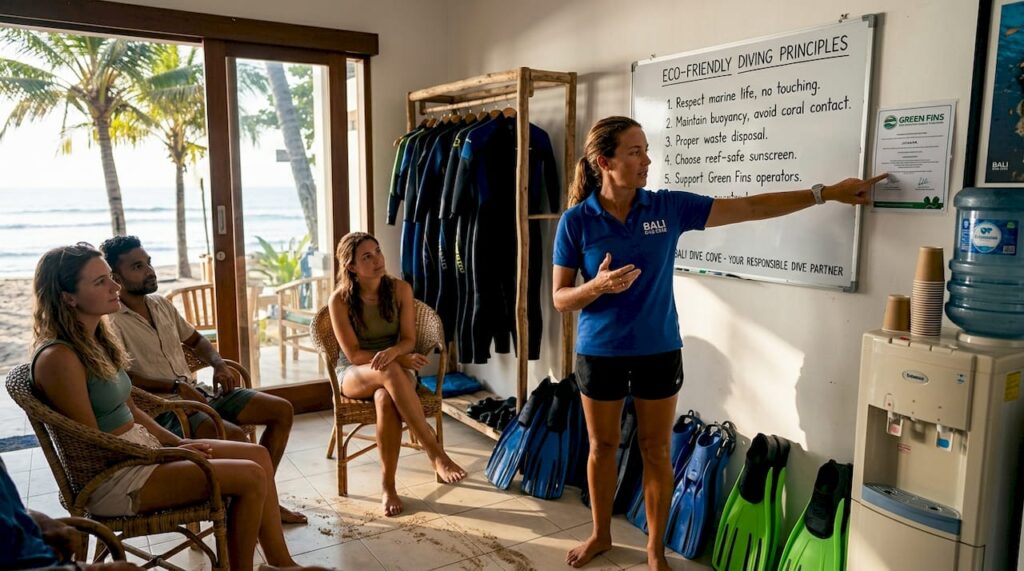
With the stakes clear, let’s define exactly what makes a Bali dive truly eco-friendly. The good news is that you don’t need to guess. There are reliable indicators that separate genuine environmental commitment from clever marketing.
Certifications to look for
The two most recognised marks of credibility are Green Fins and PADI AWARE. Green Fins certified operators implement rigorous environmental standards covering briefings, equipment care, waste management, and marine life interaction protocols. PADI AWARE connects dive shops to reef cleanup campaigns, coral reef conservation training, and citizen science data collection. Both programmes require ongoing compliance, not just a one-time application.
Beyond certifications, look for operators who are transparent about their practices. A responsible dive centre will openly share:
- Written no-touch and no-chase policies for marine life
- Restrictions on gloves (which encourage reef grabbing)
- Small group sizes, typically no more than four to six divers per guide
- Waste management policies, including single-use plastic bans
- Clear protocols for manta ray and shark encounters
- Post-dive briefings that report environmental observations
Small group sizes matter more than most divers realise. When a guide is responsible for eight or ten divers, individual buoyancy and positioning cannot be managed properly. Coral gets kicked, sediment gets stirred, and marine life gets stressed. A group of four with an attentive guide is a fundamentally different experience, for you and for the reef.
You can also help restore reefs by choosing operators who actively participate in community reef monitoring and conservation projects, not just those who avoid causing damage.
Pro Tip: Before booking, check the operator’s website for published impact reports, conservation awards, or photos of actual cleanup events. Legitimate operators are proud to show their work. If the “eco” claim is buried in marketing copy with no supporting evidence, keep looking.
Coral restoration dives: Making a direct impact
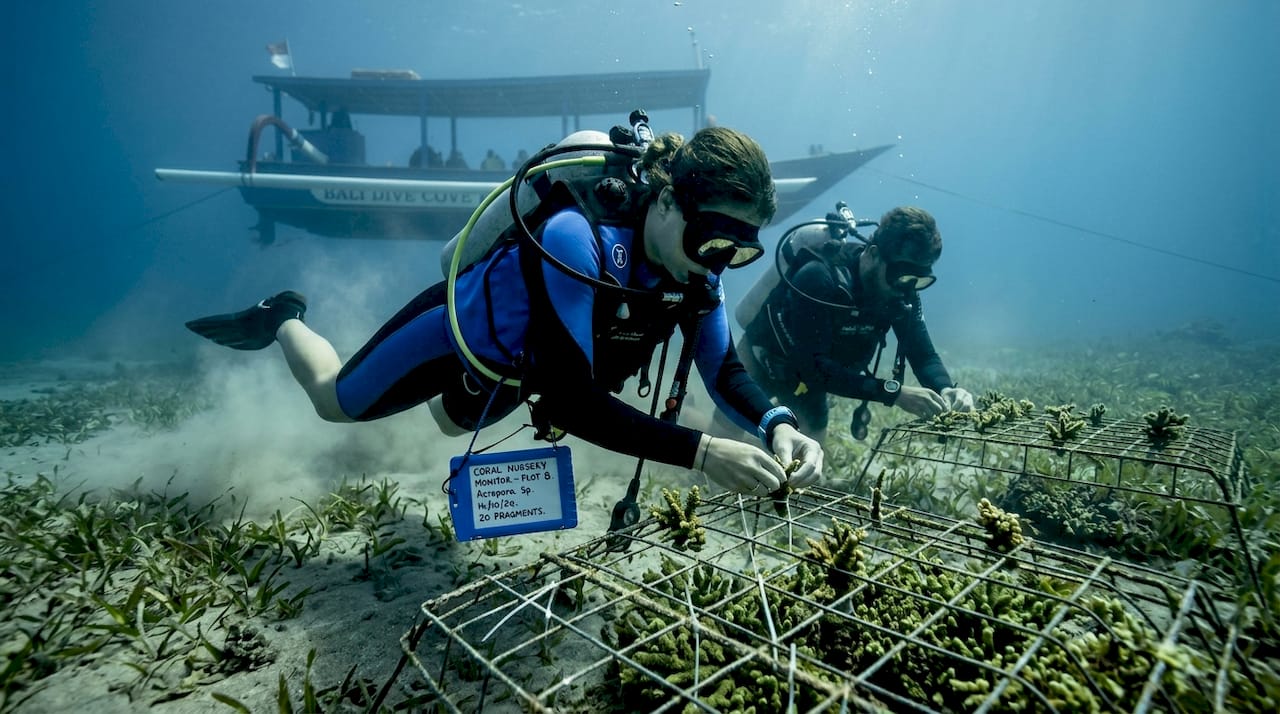
Once you know how to evaluate operators, here are tangible ways you can get involved and see real impact underwater. Coral restoration dives go beyond observing reefs and invite you to actively contribute to their recovery.
Three standout restoration programmes in Bali
-
Bali Conservation Diving focuses on artificial reef deployment and ongoing fish population monitoring. Participants help install reef structures, record species data, and track recovery over time. This long-term monitoring approach means your contribution feeds into a scientific dataset that informs future conservation decisions.
-
We Do OCEAN Impact Dives runs coral planting sessions where divers attach coral fragments to reef frames. The programme works at multiple sites around Bali and is particularly accessible for certified recreational divers who want a structured, hands-on experience.
-
Indo Ocean Coral Diver Course combines practical coral planting with species identification skills. You come away with both a new certification and a much deeper understanding of reef ecology, which makes every future dive more meaningful.
As confirmed by coral restoration projects in Bali, these operations facilitate reef restoration, coral planting, and ecological education in ways that go well beyond symbolic gestures.
The numbers behind reef recovery
The scale of restoration work happening in Bali is genuinely impressive. The Living Seas Foundation site at Padang Bai has planted 216,394 coral fragments across 5,936 structures, with artificial reefs recording 36% coral cover. Across Indonesia more broadly, over one million corals have been planted through coordinated restoration efforts. These are not small pilot projects. They represent a sustained, evidence-based commitment to reef recovery.
| Programme | Location | Activity type | Key result |
|---|---|---|---|
| Living Seas Foundation | Padang Bai | Coral planting, reef monitoring | 216,394 fragments, 36% coral cover |
| We Do OCEAN Impact Dives | Multiple Bali sites | Coral fragment attachment | Ongoing cover expansion |
| SD Point | Nusa Penida | Artificial reef structures | Fish density increases recorded |
| Ocean Gardener | Pemuteran / Bali | Biorock structures, planting | Coral species diversity gains |
| Bali Conservation Diving | Amed and surrounds | Fish monitoring, artificial reefs | Long-term species data collection |
Choosing dive tourism in Bali that includes one of these programmes turns your holiday into a genuine contribution to the reef’s future, and it makes for an unforgettable dive experience too.
Diving with certified eco-friendly operators
Active restoration is one compelling path. Partnering with the right eco-certified operator is just as powerful for everyday dives. Several Bali operators have earned global recognition for their environmental standards, and understanding what sets them apart helps you make a better choice.
Operators worth knowing
AquaMarine Diving Bali is one of the most recognised eco-operators in the region. AquaMarine ranked 5th globally for Green Fins certification in 2022, reflecting years of consistent environmental performance. Ceningan Divers, based on Nusa Lembongan, was awarded Best Environmental Performer 2025 by Green Fins, a remarkable achievement that reflects daily commitment to reef-safe practices. Purple Dive integrates reef conservation training into their courses and regularly organises Dive Against Debris events.
What Green Fins and PADI AWARE certification actually require
These programmes are not simply a badge. Certified operators must demonstrate:
- No gloves policy during dives (reduces the temptation to touch corals)
- Strict no-feeding rules for all marine life
- Regular waste and rubbish collection at dive sites
- Environmental briefings before every dive
- Recycling schemes and reduced single-use plastics at the dive centre
- Participation in reef health monitoring and citizen science initiatives
- Staff training and ongoing environmental education
| Operator | Certifications | Key eco-initiative | Recognition |
|---|---|---|---|
| AquaMarine Diving Bali | Green Fins, PADI AWARE | Environmental briefings, reef monitoring | 5th globally, Green Fins 2022 |
| Ceningan Divers | Green Fins | Debris removal, manta protection protocols | Best Environmental Performer 2025 |
| Purple Dive | PADI AWARE | Dive Against Debris events, reef training | Regional conservation recognition |
| Bali Conservation Diving | PADI AWARE | Artificial reef deployment, fish surveys | Long-term scientific dataset |
Connecting with the Bali dive community that takes environmental performance seriously is one of the most effective things you can do as a visiting diver.
Pro Tip: Prioritise operators who host Dive Against Debris events rather than simply claiming “eco” status on their homepage. Active participation in structured debris removal programmes shows genuine, ongoing commitment, not just a marketing angle.
What to know before joining an eco-dive in Bali
Ready to book? Take a moment to prepare and choose the right dives for your skills and your desired impact. Eco-friendly diving in Bali is rewarding, but it does come with specific requirements that vary by location and programme type.
Prerequisites and preparation
-
Complete a buoyancy checkout. Many restoration and conservation dives require a short buoyancy assessment before the main dive. Good buoyancy control protects fragile coral structures and is the single most important skill for reef-safe diving.
-
Check your certification level. Most restoration dives require a minimum of PADI Open Water, but sites with strong currents, such as Nusa Penida, typically require Advanced Open Water or equivalent. Some coral planting programmes specify Advanced certification to ensure divers can maintain position without using their hands.
-
Attend the eco-briefing fully. Restoration dives are preceded by thorough briefings covering marine life behaviour, safe distances, restricted zones, and handling protocols for coral fragments. These briefings are not optional extras. They are the foundation of responsible participation.
-
Understand the environment. Bali’s eco-dive sites vary significantly. Amed offers calmer conditions perfect for beginners exploring reef conservation. Nusa Penida brings powerful currents and open-water encounters with manta rays, conditions that demand genuine diving experience.
“Many restoration dives require at least PADI Advanced Open Water or equivalent experience, and a demonstrated ability to maintain neutral buoyancy without touching the reef.”
Common challenges to prepare for
Strong currents at Nusa Penida require advanced buoyancy skills, and manta rays are particularly vulnerable to crowding and harassment. Restoration dives at complex sites need divers who can hold position and work calmly without disturbing the surrounding reef.
Crowding at popular sites is also a real concern. Knowing dive site etiquette before you enter the water makes a tangible difference, both to the reef and to the experience of every other diver at the site.
How eco-friendly dives compare: Impact and limitations
Let’s put all these approaches in context with a candid look at what works best for Bali’s marine future. Eco-diving is not a single solution, and understanding the measured benefits alongside the real limitations helps you make genuinely informed choices.
What the evidence shows
Artificial reefs and diver-assisted restoration have produced measurable results: higher coral cover, increased fish density, and faster recovery at degraded sites. But artificial reefs deliver higher coral cover and fish density in the short term while not fully replicating the structural and biological complexity of natural reefs. Natural reefs have developed their architecture over centuries. They support species interactions, breeding cycles, and food web dynamics that restoration structures cannot yet replicate.
Benefits and honest limitations
Benefits:
- Rapid visible recovery at degraded sites
- Increased fish density around restoration structures
- Structured monitoring that generates scientific data
- Diver engagement that raises awareness and funds further conservation
- Long-term contribution to reef resilience in the face of bleaching events
Challenges:
- Ongoing maintenance required to prevent structure failure or algae overgrowth
- Visitor crowding at well-known eco-sites can negate conservation gains
- Restoration cannot reverse large-scale bleaching caused by climate change
- Some tourists treat conservation dives as a tick-box activity rather than a genuine commitment
“Natural reefs remain irreplaceable, but restoration gives nature a chance to recover where human activity and climate stress have caused serious damage.”
| Approach | Coral cover benefit | Fish density impact | Long-term complexity | Diver participation |
|---|---|---|---|---|
| Artificial reef structures | High (up to 36%) | High | Low to moderate | High |
| Natural reef protection | Variable | High | Very high | Passive |
| Diver-assisted restoration | Moderate to high | Moderate | Growing over time | Active |
The most effective approach combines all three: protecting natural reefs, supporting restoration efforts, and choosing operators who take both seriously. You can contribute to dive conservation even through the choices you make before you ever enter the water.
Our take: What truly makes a Bali dive eco-friendly?
Looking at all the evidence and operator claims, here’s our honest, experience-based view for conscious divers.
Conventional wisdom says “choose a certified operator,” and yes, that is a good starting point. But certification is a floor, not a ceiling. We’ve seen certified operators run large, rushed groups through sensitive sites simply because demand allows it. The certification didn’t stop the crowding. Only a conscious choice of small groups, quieter sites, and genuinely engaged guides will do that.
There’s an uncomfortable truth in the world of eco-diving: the most marketed, most awarded operators can sometimes be the least low-impact because their reputation attracts more visitors than the reef can comfortably absorb. A steady stream of forty divers per day at a coral restoration site carries consequences that no certification can fully offset.
Our honest recommendation is this: sometimes the greenest choice is a quieter reef with a small, knowledgeable local guide who dives the same site week after week and genuinely cares about what happens there. Personalised diving in Bali with a team that prioritises attention and reef care over volume is often more eco-friendly in practice than joining a large certified operation.
Post-dive advocacy also matters more than most people acknowledge. Sharing what you witnessed, reporting reef damage to local authorities or monitoring programmes, and choosing your next dive deliberately all add up. The reef doesn’t only need responsible divers. It needs advocates who carry the message back onto land.
Plan your next eco-friendly Bali dive adventure
Ready to put your new knowledge into action? At Bali Dive Cove, we believe that small groups, experienced guidance, and genuine respect for the reef are the foundation of every worthwhile dive.
Whether you’re preparing for coral restoration work with our Advanced Open Water course or looking for guided reef dives that prioritise care and quality over numbers, we can help you plan something truly memorable. Our team dives Amed’s reefs with the same attention to environmental responsibility that drew us here in the first place. Explore our eco-friendly dive packages and get in touch directly for personalised recommendations tailored to your experience level and conservation interests.
Frequently asked questions
What is Green Fins certification and why does it matter for divers?
Green Fins certification ensures operators follow strict environmental standards covering reef briefings, no-touch policies, and waste management, making it much easier for divers to identify genuinely responsible businesses.
Can beginners participate in coral restoration dives in Bali?
Most restoration dives require good buoyancy and at least Advanced Open Water certification, though some reef education programmes offer introductory participation for less experienced divers.
Are artificial reefs as good for fish and corals as natural reefs?
Artificial reefs show 36% coral cover and boost fish density in the short term, but natural reefs support far greater biodiversity and long-term ecosystem complexity that restoration structures cannot yet replicate.
How does diver tourism affect Bali’s marine environment?
Tourism raises vital conservation funds and awareness, but crowding stresses wildlife at popular sites like Nusa Penida, particularly manta rays, which is why responsible operator choice and sound dive etiquette remain absolutely essential.
