

TL;DR:
- Bali offers beginner-friendly dive sites with calm conditions and reputable operators.
- Mastering buoyancy control and practicing safe dive planning are essential for reef safety and comfort.
- Flexibility and adaptability during dives build confidence despite unpredictable conditions.
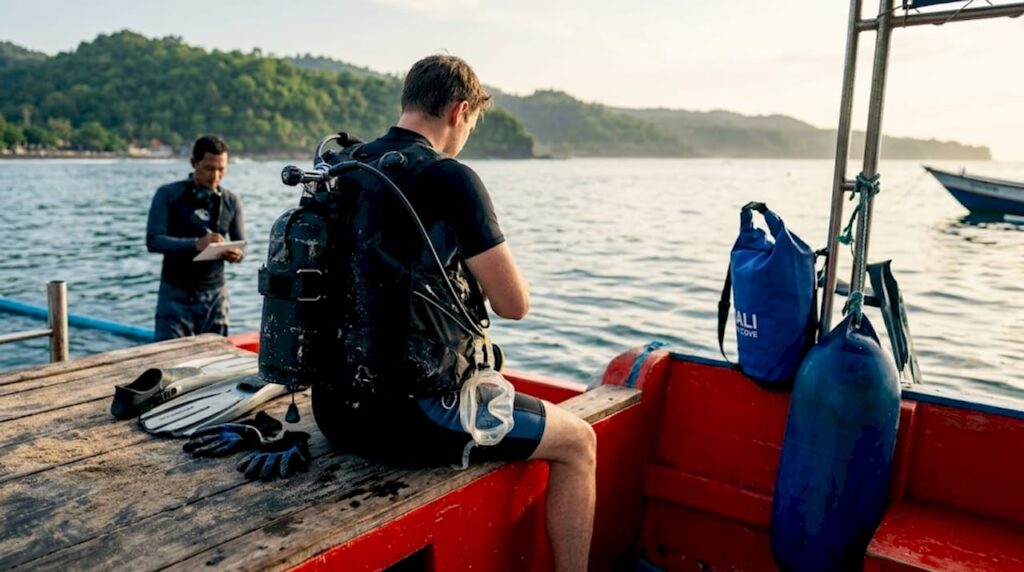
Bali’s underwater world is genuinely breathtaking. Vibrant coral gardens, curious reef fish, and the occasional turtle gliding overhead make every dive feel like a privilege. But if you’re planning your first reef dives here, the sheer variety of sites, operators, and techniques can feel a little overwhelming. Where do you start? Which sites are actually safe for beginners? And how do you make sure you’re protecting those beautiful reefs while you’re at it? This article gives you a clear, practical framework covering everything from choosing the right site and operator to mastering buoyancy, staying safe, and even handling your first gentle drift dive.
Key Takeaways
| Point | Details |
|---|---|
| Pick beginner-friendly sites | Choose calm, sheltered Bali reefs and quality operators to build comfort and safety as a new diver. |
| Practise dynamic buoyancy | Continuously manage buoyancy with breath and small adjustments to avoid reef contact and stress underwater. |
| Prioritise safety routines | Regular gear checks and surface protocols keep you prepared for the unexpected and boost dive confidence. |
| Plan ascents and recovery | Ascend slowly, use safety stops, stay hydrated, and delay any flights to prevent decompression sickness. |
| Drift with confidence | Start drift dives with mild currents, always use an SMB, and follow the guide for safe and memorable reef adventures. |
Choose the right reef and operator for your skill level
The single biggest factor in a rewarding beginner reef dive is not the marine life or the visibility. It’s the combination of site choice and operator quality. Get these two things right, and everything else falls into place naturally.
For site selection for beginners, Bali offers several locations that are genuinely well suited to new divers. Amed, Tulamben, and Padang Bai consistently stand out. These areas feature sheltered bays, shore entries, and predictable conditions that give you room to breathe, both literally and figuratively. The top Bali beginner dive sites share a few key characteristics: gentle currents, good visibility on most days, and a range of depths that allow you to stay shallow and comfortable while still seeing spectacular marine life.
Choosing a quality operator matters just as much as choosing the right site. As beginner reef diving guidance consistently highlights, picking locations with calm, predictable conditions and pairing them with a reputable, safety-focused dive operator is the foundation of a great first experience. Here is what to look for when assessing operators:
- Small group sizes: Fewer divers per instructor means more personal attention and a more relaxed pace.
- Thorough pre-dive briefings: A good operator will walk you through the site, signals, entry and exit points, and emergency procedures before you ever enter the water.
- Verified PADI credentials: Look for PADI-certified instructors and resorts with visible accreditation. A PADI 5-Star rating indicates a consistent standard of training and safety.
- Well-maintained equipment: Inspect regulators, BCDs (buoyancy control devices), and wetsuits before accepting them. Worn or poorly serviced gear is a red flag.
- Genuine guest reviews: Read recent feedback on independent platforms. Look specifically for comments about instructor patience, group size, and how the operator handled any issues.
Pro Tip: Ask the operator directly how many divers they take per instructor. If the answer is more than four for a beginner group, consider looking elsewhere. Smaller ratios mean safer, more enjoyable dives.
With the importance of accessible sites and guided learning established, the next step is mastering the basic technique that makes reef diving safe and satisfying: buoyancy control.
Master buoyancy for relaxed, reef-friendly diving
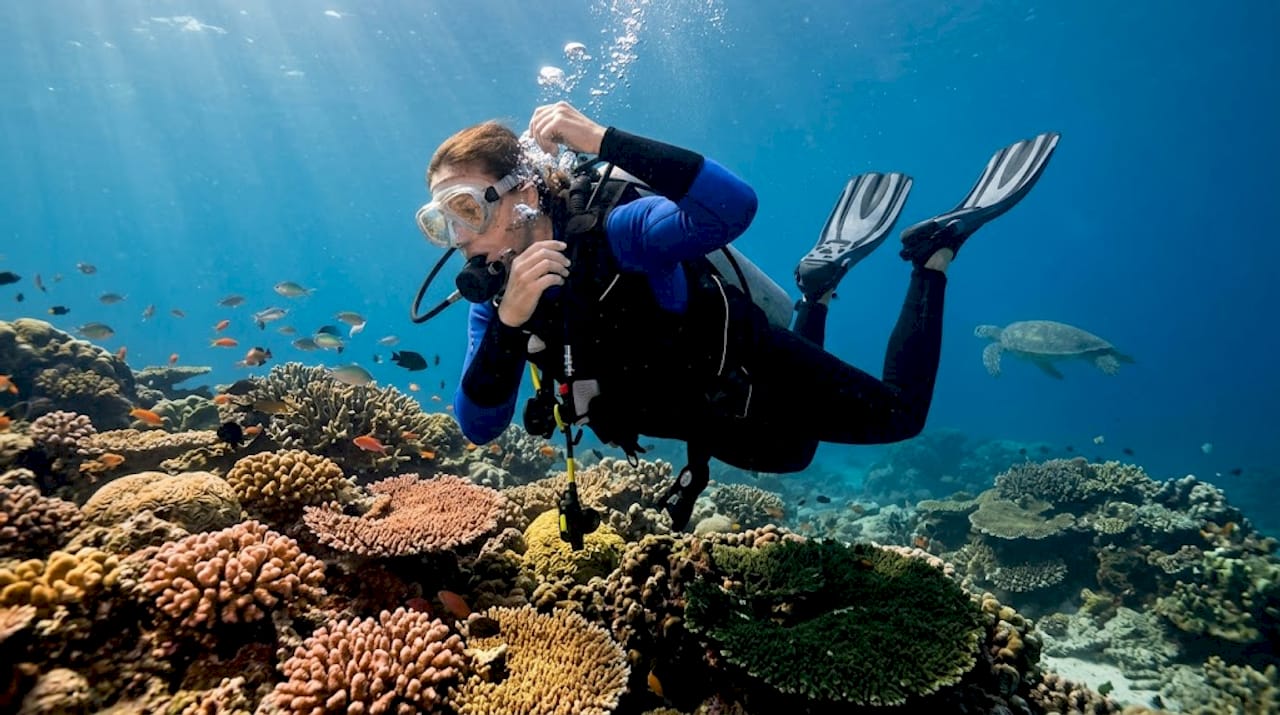
Buoyancy control is the skill that separates a stressful reef dive from a truly magical one. When you’re neutrally buoyant, you hover effortlessly in the water column, gliding over vibrant corals without touching a thing. When you’re not, you risk crashing into delicate reef structures, stirring up sediment, and exhausting yourself trying to compensate.
Buoyancy is the core mechanic for staying off the reef and making reef dives easier. The guidance is clear: use a proper surface weighting check and manage buoyancy dynamically with breathing, using only small BCD adjustments. Here is how to put that into practice:
- Weighting check at the surface: Before descending, hold a normal breath and float at eye level. If you sink, you need less weight. If you bob high, add a little more. Getting this right at the start saves enormous effort throughout the dive.
- Breathe for buoyancy: Inhaling slightly expands your lungs and lifts you gently. Exhaling does the opposite. Use this as your primary tool for fine adjustments, not constant BCD inflation or deflation.
- Anticipate changes: As you descend deeper, your wetsuit compresses and you become less buoyant. As your tank empties, it becomes lighter. Both require small, proactive adjustments.
- Hover with hands clear: Practice hovering horizontally with your arms folded or at your sides. This keeps your hands away from the reef and trains your core body position.
- Go slow: Buoyancy is a skill that improves with every dive. Don’t rush it. Even experienced divers continue refining their technique.
“Buoyancy is not a setting you dial in once and forget. It is a continuous conversation between your body, your gear, and the water around you. The divers who look most relaxed underwater are the ones who are constantly making tiny, almost invisible adjustments.”
Pro Tip: After your next dive, ask your instructor to watch your fin position during a hover. Fins pointing downward is one of the most common signs of poor buoyancy and one of the easiest things to correct with a small posture adjustment.
Good dive site etiquette goes hand in hand with buoyancy. Staying off the reef is not just about your comfort. It’s about protecting ecosystems that have taken decades to grow.
Stay safe: essential checks, common hazards, and recovery basics
Feeling confident underwater starts with knowing you’ve covered your bases before you even enter the water. A systematic pre-dive check takes only a few minutes and dramatically reduces the chance of avoidable problems. Many scuba issues stem from buoyancy-control failures, entanglement, or equipment malfunctions, all of which a good pre-dive routine helps prevent.
Here is a reliable pre-dive sequence to follow:
- BCD: Inflate and deflate to confirm it holds air and releases correctly. Check all dump valves.
- Weights: Confirm your weight belt or integrated weights are secure and that you know how to release them quickly if needed.
- Releases: Check all buckles and straps. Make sure nothing is twisted or likely to snag.
- Air: Confirm your tank is full and turned on. Breathe from your regulator to check airflow. Check your SPG (submersible pressure gauge) reads correctly.
- Final check: Mask, fins, computer or depth gauge, and a quick confirmation with your buddy or guide that you’re both ready.
Common hazards for beginner reef divers in Bali include unexpected currents, reduced visibility caused by surge or sediment, and physical exhaustion from fighting poor buoyancy. Knowing your operator’s recall signals before the dive means you can respond calmly if conditions change. Surface marker buoys, or SMBs, are a must-have for any dive with an open water exit or drift element. They make you visible to the boat and to other watercraft.
If something goes wrong underwater, the golden rule is simple: stop, signal your guide, and ascend slowly if needed. Panic is the real hazard. A calm response to any issue, whether it’s a mask flood, a cramp, or a sudden current, is something your instructor will help you practise and build confidence with before you need it for real. Keeping your scuba gear maintained in good condition between dives also reduces the chance of equipment surprises mid-water.
Plan your dives: ascent, decompression, and post-dive wellness
Smart dive planning is what keeps you healthy after the dive, not just during it. Decompression sickness, or DCS, occurs when nitrogen absorbed during a dive forms bubbles in your tissues during a too-rapid ascent. It is entirely preventable with good habits.
| Key guideline | Recommended practice |
|---|---|
| Ascent rate | No faster than 9 metres per minute |
| Safety stop | 3 minutes at 5 metres on every dive |
| Surface interval | Minimum 1 hour between dives |
| Hydration | Drink water before and after every dive |
| Flying after diving | Wait at least 12 to 18 hours after a single dive |
| Multiple dive days | Wait 18 to 24 hours before flying |
Avoiding breath-holding, ascending slowly, doing a safety stop, and managing DCS risk through hydration and careful flight timing are the pillars of post-dive wellness. These are not optional extras. They are habits that every diver, beginner or experienced, should treat as non-negotiable.
A few additional points worth building into your routine:
- Use a dive computer: Even a basic dive computer tracks your depth and bottom time and alerts you when to ascend. It takes the guesswork out of decompression management.
- Rest between dives: Post-dive fatigue is real. A good surface interval is not just about nitrogen offgassing. It’s also about restoring your energy and focus for the next dive.
- Avoid alcohol before diving: It dehydrates you and impairs your judgement. Save it for the evening after your last dive of the day.
- Eat lightly before diving: A heavy meal can cause discomfort underwater. A light snack an hour before is usually ideal.
Confidently handle Bali’s gentle drift dives
Once you feel comfortable on stationary reef dives, Bali offers something truly special: drift diving. This is where the current does the work, carrying you effortlessly over colourful reef walls and through channels teeming with marine life. It feels like flying, and for many divers, it becomes their favourite style of diving.
Drift diving is manageable for recreational divers when currents are selected appropriately. The most important skills are buoyancy control and positioning relative to the dive guide, and SMBs are mandatory for safe recovery. Here is a comparison to help you understand when drift diving is appropriate:
| Factor | Suitable for beginners | Requires more experience |
|---|---|---|
| Current speed | 1 to 2 knots | 3 knots or more |
| Visibility | 10 metres or better | Reduced or variable |
| Guide experience | Familiar with site | Unknown |
| Entry/exit | Controlled, boat-based | Shore entry with surge |
| SMB required | Yes, always | Yes, always |
For your first drift experience, choose a site with a mild, consistent current and a guide who knows the site well. Organising group drift dives with an experienced local operator makes a significant difference. They know exactly where the current picks up, where it eases, and how to position the group for the best experience with the least effort.
Stay close to your guide, maintain neutral buoyancy, and resist the urge to fight the current. Go with it, adjust your depth slightly to move in or out of the flow, and enjoy the ride. It is also worth reviewing water safety principles before any open water dive, as general awareness of conditions and signals applies universally.
Pro Tip: Practise deploying your SMB in a pool or calm, shallow water before your first drift dive. Knowing how to send it up confidently means you’re not fumbling with it at the end of a dive when you’re tired and in current.
Why dynamic learning matters more than perfect conditions
Here is something we’ve observed over many years of guiding beginners through Amed’s reefs: the divers who progress fastest are not the ones who waited for perfect conditions. They are the ones who stayed curious and adaptable when conditions were slightly less than ideal.
No site in Bali is completely predictable. Even the calmest bay in Amed can have a surprise surge. Even Tulamben’s famous Liberty wreck can have reduced visibility after a storm. Beginner-friendly reef diving is less about finding easy reefs everywhere and more about coupling calm site choice with operator quality, including small groups, clear briefings, and strong safety discipline. That combination gives you the structure to handle the unexpected without panic.
The same applies to buoyancy. Buoyancy is continuously changing as your lung volume shifts, your wetsuit compresses, and your tank empties. Your technique must be dynamic, not set-and-forget. The divers who understand this early stop fighting the water and start working with it. That shift in mindset is where real confidence comes from.
Good dive etiquette wisdom reflects the same principle. Respecting the reef, your fellow divers, and the conditions around you is not a rigid checklist. It’s a living practice that you refine with every dive. Choose your instructor carefully, stay curious, and treat each dive as a small experiment in skill and awareness. That approach will serve you far better than waiting for the perfect, challenge-free dive.
Ready to dive Bali’s best reefs with ease?
Applying these tips is so much easier when you have experienced, patient guides by your side from the very first breath.
At Bali Dive Cove, we’ve been welcoming beginners and certified divers to Amed’s reefs since 2018. Our small groups, unhurried pace, and instructors with over 16 years of local experience mean you get genuine personal attention on every dive. Whether you’re exploring our Bali dive courses to work towards your PADI certification, browsing our Bali dive packages for guided reef and wreck experiences, or simply starting with our scuba beginner’s guide to understand what to expect, we’re here to make your underwater Bali experience everything you hoped it would be.
Frequently asked questions
Which Bali reef sites are most beginner-friendly?
Amed, Tulamben, and Padang Bai are renowned for calm, predictable conditions ideal for first-timers under guided supervision.
How do I know if a Bali dive operator is reputable?
Look for small groups, transparent safety protocols, certified instructors, and consistently positive guest feedback. Operator quality including clear briefings and safety discipline is just as important as site choice.
What is the most important skill for new reef divers?
Buoyancy control is key. It keeps you off the reef, reduces effort, and makes every dive more comfortable and enjoyable.
Why is a surface marker buoy (SMB) important for reef diving?
An SMB signals your position to boats, making it essential for recovery during drift dives or open water ascents. SMBs are mandatory for safe recovery on any drift or open water dive.
What should I do after diving to reduce DCS risk?
Ascend slowly, complete a safety stop at 5 metres, hydrate well, and avoid flying for at least 12 to 18 hours after your last dive.
