

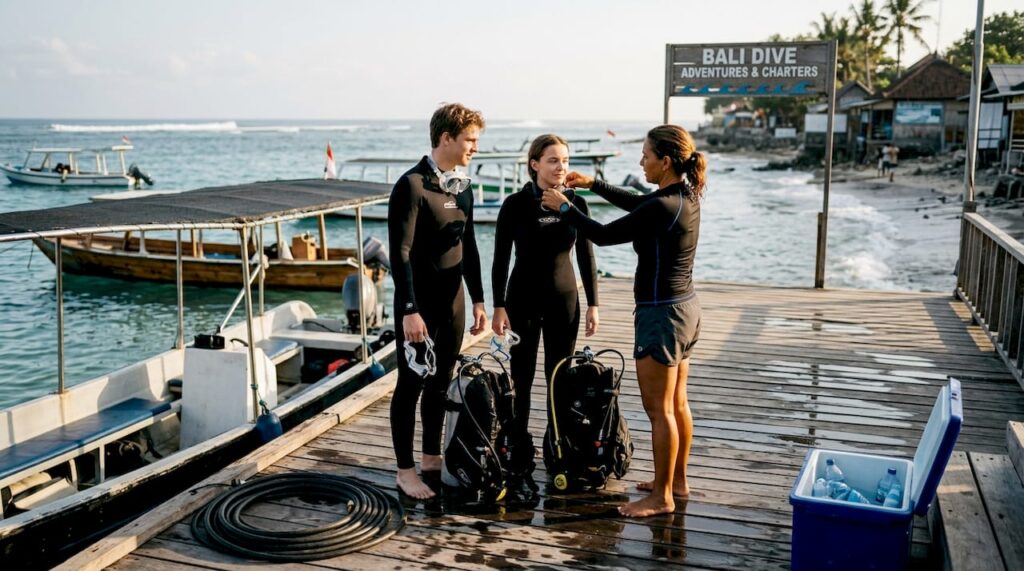
Many divers assume guided dives are simply a stepping stone for beginners, something you do once before striking out on your own. That assumption sells the experience short. Whether you are taking your very first breath underwater or you have logged hundreds of dives across Southeast Asia, a guided dive in Bali offers something genuinely different: local expertise, structured safety, and access to marine life and sites you simply would not find alone. This guide breaks down the real advantages of professional-led dives, from safety frameworks to wildlife encounters, so you can make the most of every minute beneath the surface.
Key Takeaways
| Point | Details |
|---|---|
| Safety for all levels | Guided dives in Bali provide close supervision, tailored support, and reduce diving risks for everyone. |
| Deeper marine encounters | With guides’ local knowledge, divers see more wildlife and enjoy secret underwater sites. |
| Small group advantages | Instructor-to-diver ratios around 2:1 or 1:4 ensure personalised attention and richer experiences. |
| Stress-free diving | Guided dives manage logistics, gear, and emergencies, letting you relax and focus on the adventure. |
| Easy to choose and book | A variety of guided options suit both beginners and advanced divers, making it simple to match your goals. |
Who needs guided dives? Debunking the myths
The idea that guided dives are only training dives is one of the most persistent myths in recreational diving. In reality, guided dives serve a remarkably wide range of people, and the benefits shift depending on your experience level rather than disappearing as you gain confidence.
For first-timers and families, a guide provides reassurance and hands-on support from the moment you enter the water. For PADI trainees working towards certification, guided dives are a structured environment to practise skills with immediate feedback. For advanced divers targeting wrecks, drift dives, or macro diving (searching for tiny, well-camouflaged creatures like nudibranchs and pygmy seahorses), a local guide is simply irreplaceable. They know exactly where to look, which conditions suit which sites, and how to position the group for the best sightings.
Exploring group diving options in Bali reveals just how varied these experiences can be, from relaxed reef dives to more technical adventures. And if you are weighing up whether to pursue formal training, understanding the scuba certification benefits can help you decide the right path.
Pro Tip: Even if you hold a Divemaster or advanced certification, always dive with a local guide on an unfamiliar site. Currents, visibility, and marine life behaviour vary enormously between locations, and local knowledge is worth more than any certification card.
Here is why divers of all levels choose guided dives:
- Safety net and supervision: Guides monitor the group continuously, catching potential issues before they escalate.
- Local site knowledge: They know the best entry points, current patterns, and hidden features of each reef or wreck.
- Access to special sites: Some of Bali’s most rewarding dive spots are only accessible or safe with a knowledgeable guide.
- Stress-free logistics: Equipment checks, briefings, and navigation are handled, so you focus entirely on the dive.
- Increased marine life sightings: Guides know where creatures shelter and feed, dramatically improving your chances of memorable encounters.
Safety first: How guided dives protect you
Safety is the foundation of every good dive, and guided dives in Bali are structured with this in mind from start to finish. Instructor-to-diver ratios in Bali typically run at 2:1 for beginners and 1:4 for more experienced groups, ensuring close supervision at every stage.
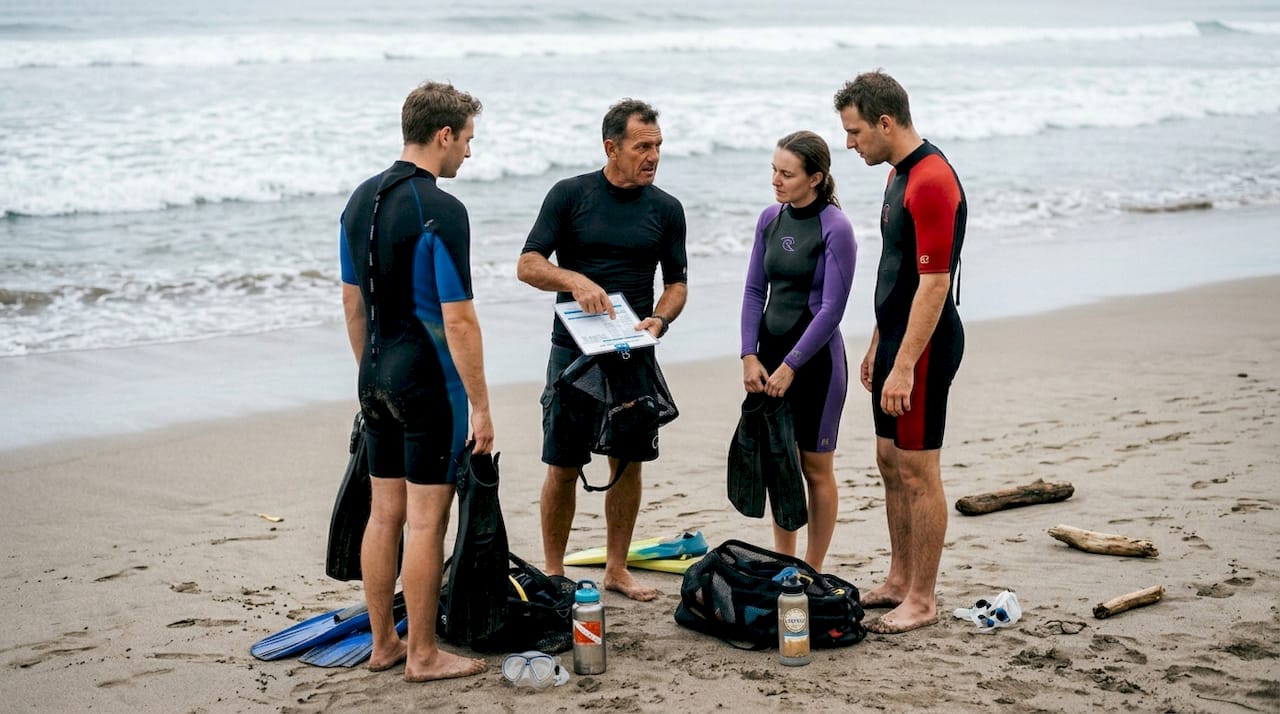
These ratios matter enormously. A guide managing two beginners can physically assist both if needed, check buoyancy, monitor air consumption, and respond to any sign of discomfort. Compare that to a large group dive where one guide might be responsible for eight or more divers, and the difference in personal attention becomes clear.
| Dive type | Typical ratio | Supervision level | Best suited for |
|---|---|---|---|
| Beginner guided dive | 2:1 | Very high | First-timers, nervous divers |
| Small group guided dive | 1:4 | High | Certified recreational divers |
| Large group dive | 1:8 or more | Moderate | Experienced, independent divers |
| Solo/independent dive | None | None | Advanced, self-sufficient divers |
Beyond ratios, guided dives include thorough gear checks before entry, pre-dive briefings covering hand signals and emergency procedures, and a guide who navigates so you never have to worry about getting disoriented. Small guided groups of 2 to 4 divers reduce stress, allow a personalised pace, and increase the likelihood of meaningful marine encounters.
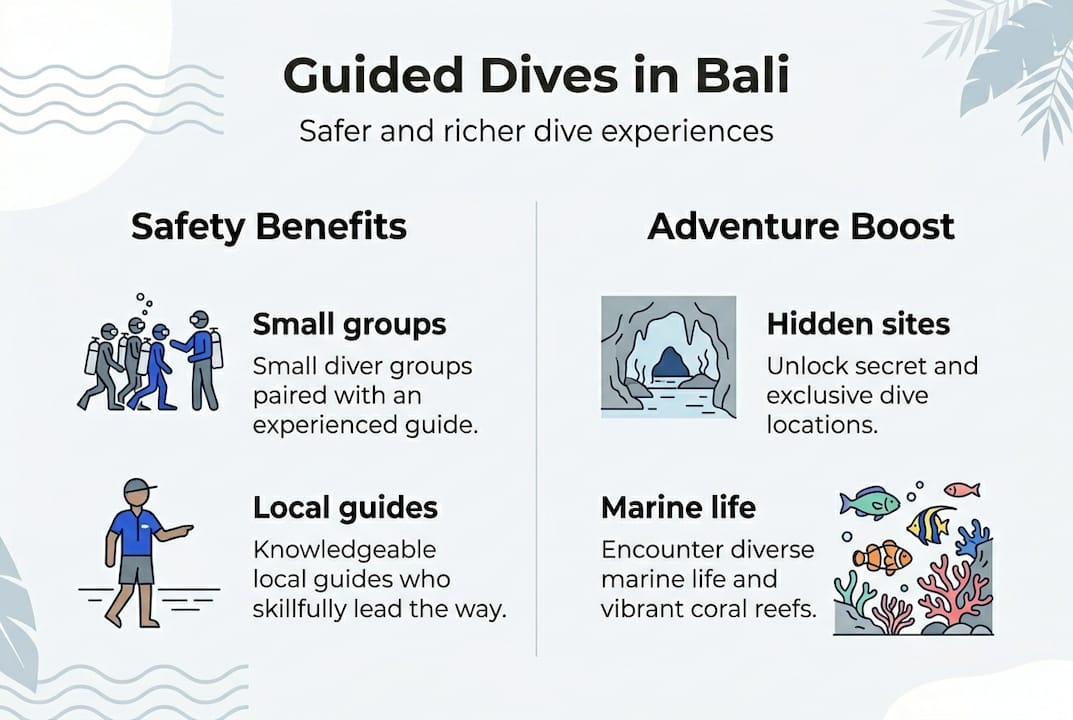
Understanding the importance of group size before you book is genuinely worthwhile. You can also review a preparation workflow for beginners to arrive at your dive feeling calm and ready.
Pro Tip: Before booking any guided dive, ask the operator directly about their instructor-to-diver ratio. If the answer is vague or the number seems high, that is a useful signal about the level of personal attention you can expect.
Beyond safety: Maximising dive experiences in Bali
Safety is essential, but it is only part of what makes a guided dive genuinely rewarding. The real magic lies in what a knowledgeable guide helps you see and experience beneath the surface.
Bali’s reefs are extraordinary, home to vibrant corals, resident turtles, reef sharks, and a treasure trove of tiny critters that most independent divers simply swim past without noticing. A guide who has spent years on the same reef knows exactly where the frogfish hides, which coral head the octopus calls home, and when the manta rays are most likely to cruise through.
“Small guided groups of 2 to 4 divers improve safety, reduce stress, allow a personalised pace, and increase marine encounters compared to larger groups.”
Here are the top ways guided dives enhance your time underwater:
- Wildlife spotting: Guides point out camouflaged creatures and rare species that untrained eyes miss entirely.
- Underwater photography: A guide can position you perfectly for shots, hold a torch to illuminate macro subjects, and signal when something special is nearby.
- Secret spots: Local guides know the less-visited corners of reefs and wrecks that rarely appear on tourist maps.
- Personalised pacing: You move at a speed that suits your comfort and curiosity, not the pace of a large, mixed-ability group.
Choosing to stay with a reputable operator, such as one of the established dive resorts in Bali, ensures your guide brings genuine site knowledge rather than a generic tour approach.
Guided dive options in Bali: What to expect and how to choose
Bali offers a wide range of guided dive formats, and knowing what to look for makes choosing the right one straightforward. Most operators structure their offerings around experience level and group size, with options ranging from introductory dives for complete beginners to private guided dives for advanced explorers.
Small guided groups of 2 to 4 divers allow a personalised pace and more marine encounters, which is why many experienced divers actively seek out smaller operators over large dive centres.
| Dive option | Who it suits | Group size | Certification needed |
|---|---|---|---|
| Introductory/beginner dive | First-timers | 2:1 ratio | None |
| Small group guided dive | Recreational divers | Up to 4 | Open Water or equivalent |
| Advanced guided dive | Experienced divers | Up to 4 | Advanced Open Water |
| Private guided dive | Any level | 1:1 or 1:2 | Varies by site |
Before you book, check these key details:
- Certification requirements: Some sites and dive types require a minimum certification level.
- Language of instruction: Confirm your guide speaks your language clearly and confidently.
- Group size: Smaller is almost always better for both safety and enjoyment.
- Speciality focus: If you want macro diving, wreck diving, or night dives, confirm the operator has specific experience in that area.
- Equipment included: Find out whether rental gear, tanks, and weights are covered in the price.
Exploring group and private dive options in advance helps you match the right format to your goals and comfort level.
Making the most of your guided dive
A great guided dive starts well before you enter the water. The more you communicate with your guide beforehand, the better they can tailor the experience to what you actually want.
Small guided groups in Bali reduce stress and allow a personalised pace, but only if you speak up about your goals and any concerns. Your guide cannot read your mind, and a quick conversation before the dive briefing can make a significant difference to your experience.
Follow these steps to get the most from your guided dive:
- Share your goals: Tell your guide whether you want to focus on photography, wildlife spotting, or simply building confidence.
- Mention any concerns: Nervousness, ear equalisation difficulties, or previous experiences are all worth raising before you enter the water.
- Disclose medical needs: Any relevant health conditions should be communicated clearly so your guide can plan accordingly.
- Ask about the site: Request a brief overview of what to expect, including depth, current, and likely marine life.
- Respect group etiquette: Stay close to the guide, avoid touching corals or marine life, and signal clearly if you need to ascend.
Reviewing a dive preparation workflow before your trip is a smart way to arrive feeling organised and confident.
Pro Tip: Bring a small dive logbook and jot down notes after each dive, including the guide’s tips on local marine life, current patterns, and hidden spots. This kind of local knowledge is genuinely hard to find elsewhere and will improve every future dive you do in the area.
Start exploring Bali’s reefs with the right dive guidance
At Bali Dive Cove, we have been guiding divers of all levels through Amed’s reefs, wrecks, and walls since 2018. Our instructors bring over 16 years of diving experience and a genuine passion for sharing what makes this corner of East Bali so special. Small groups, unhurried dives, and clear communication are at the heart of everything we do.
Whether you are ready to take your first breath underwater, working towards your PADI certification, or looking to explore advanced sites with a guide who truly knows the terrain, we have the right option for you. Browse our dive courses in Bali to find the right level, discover Bali’s top dive sites to plan your itinerary, or take a look at our guided dive packages and get in touch. We would love to show you what Amed has to offer.
Frequently asked questions
Are guided dives in Bali suitable for complete beginners?
Yes, absolutely. Guided dives in Bali are specifically designed with beginners in mind, offering close instructor supervision and hands-on support to build confidence safely from the very first dive.
Do experienced divers also benefit from guided dives in Bali?
Definitely. Experienced divers gain access to local site knowledge, less-visited spots, and a significantly higher chance of spotting unique marine life, with small guided groups offering a more personalised and rewarding experience than larger tours.
What is the usual group size on a Bali guided dive?
Most quality guided dives in Bali are limited to 2 to 4 divers per instructor, ensuring both strong safety oversight and a pace that suits every individual in the group.
Are guided dives only for certification purposes?
Not at all. Many experienced and fully certified divers choose guided dives specifically to access advanced wreck sites, drift dives, and rare wildlife encounters that are best explored with a knowledgeable local guide.
What should I ask before booking a guided dive in Bali?
Ask about the group size, your guide’s qualifications and local experience, what equipment is included, and whether the operator has specific expertise in the type of diving you want to do, such as macro, wreck, or night diving.
