

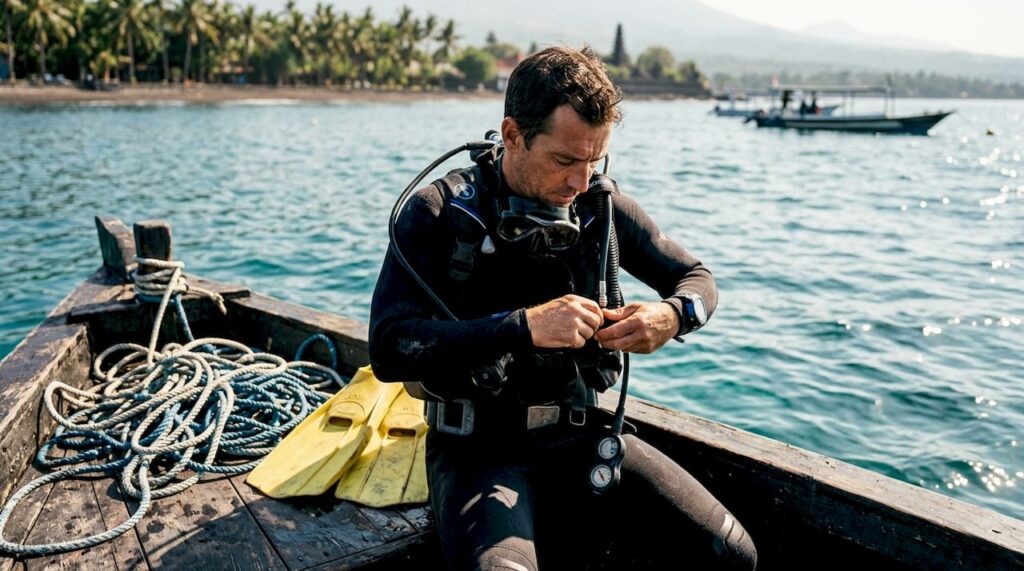
TL;DR:
- Recognizing and managing dive anxiety is essential for a safe and enjoyable Bali diving experience.
- Proper preparation and skill development significantly reduce pre-dive nerves and build confidence underwater.
- Accepting nerves and diving within personal limits fosters lasting confidence, even with ongoing anxiety.
Planning a scuba diving trip to Bali is genuinely exciting. The thought of gliding over vibrant coral gardens, spotting sea turtles, or exploring the famous USAT Liberty wreck in Amed fills most people with wonder. But for many first-time and even returning divers, that excitement comes bundled with a knot of nerves. What if I panic underwater? What if I can’t breathe properly? These feelings are far more common than you might think, and the good news is that with the right preparation and mindset, dive anxiety is very much manageable. This guide walks you through everything you need to know to feel calm, confident, and genuinely thrilled on your next Bali dive.
Key Takeaways
| Point | Details |
|---|---|
| Anxiety is normal | Feeling nervous before a dive is common and can be managed with the right approach. |
| Preparation matters | Good sleep, hydration, and calm planning greatly reduce dive-related anxiety. |
| Skill building boosts confidence | Taking progressive courses and practising techniques lowers fear in the water. |
| Communication is key | Sharing your feelings with instructors and dive buddies ensures safety and support. |
| Progress is gradual | Confidence grows over time with experience, so celebrate every small improvement. |
Recognising and understanding dive anxiety
Dive anxiety is not a sign of weakness. It is a natural physiological and psychological response to an unfamiliar environment, and it affects a surprisingly wide range of divers, from absolute beginners to those who have logged dozens of dives. Understanding what it is and where it comes from is the first step towards managing it well.
For those new to Bali diving specifically, common triggers include unfamiliar conditions such as stronger-than-expected currents, reduced visibility, or simply the overwhelming scale of the ocean. Gear that feels awkward, a fast-paced dive briefing, or uncertainty about what to expect at depth can all contribute. Even experienced divers can feel a flutter of nerves before entering an unfamiliar site.
The key thing to recognise is that a little anxiety is not your enemy. Mild anxiety sharpens awareness and can actually make you more attentive to your surroundings and your own body, which is genuinely useful underwater. The trouble arises when unmanaged anxiety escalates into panic, which can compromise your safety and your ability to make good decisions.
Here are the most common signs of dive anxiety to watch for:
- Physiological: Increased heart rate, faster breathing, dry mouth, or a feeling of tightness in the chest before or during a dive
- Behavioural: Hesitation at the water’s edge, repeatedly checking gear, reluctance to descend, or surfacing early without a clear reason
- Emotional: Persistent nervousness, dread, irritability, or a strong urge to cancel the dive altogether
Recognising these signs in yourself, without judgement, puts you in a much stronger position to address them. As one diving health expert puts it:
“Anxiety in diving is not inherently negative. Healthy fear sharpens your attention and encourages safe behaviour. The goal is not to eliminate nerves entirely, but to stop them from tipping into counterproductive panic.”
If you are just getting started, our beginner’s scuba guide is a great place to build foundational knowledge before you even get your feet wet. Now that we have established why anxiety is nothing to be ashamed of, let’s explore the crucial role of preparation.
Preparation essentials for a calm dive
Proper preparation including good sleep, hydration, early arrival, and a thorough gear check can dramatically reduce pre-dive anxiety. These might sound like small details, but they add up to a much calmer, more enjoyable experience in the water.
Here is a simple step-by-step approach to follow before any dive in Bali:
- Get a full night’s rest. Fatigue amplifies anxiety. Aim for at least seven to eight hours the night before your dive.
- Stay well hydrated. Dehydration increases the risk of decompression sickness and can make you feel sluggish and unsettled. Drink water steadily throughout the morning.
- Eat a light, balanced meal. Avoid heavy or greasy food right before diving. A light breakfast gives you energy without discomfort.
- Arrive early at the dive site. Rushing is one of the biggest anxiety triggers. Arriving early lets you settle in, ask questions, and assemble your gear without pressure.
- Conduct a personal gear check. Go through your BCD, regulator, mask, and fins methodically. Familiarity with your equipment builds confidence before you even enter the water.
| Pre-dive action | Recommended timing |
|---|---|
| Get adequate sleep | Night before |
| Hydrate consistently | Morning of the dive |
| Eat a light meal | 1 to 2 hours before |
| Arrive at the dive site | 30 to 45 minutes early |
| Complete personal gear check | 20 minutes before entry |
For a more detailed look at getting ready, our guide on preparing for your Bali dive covers the full workflow from start to finish.
Pro Tip: If you are diving at a busy Bali site like Tulamben or Jemeluk Bay, build in an extra thirty minutes beyond what you think you need. A relaxed setup makes a dramatic difference to how you feel in the water.
Preparation lays the foundation, but success underwater also depends on developing key diving skills.
Building confidence through skills and practice
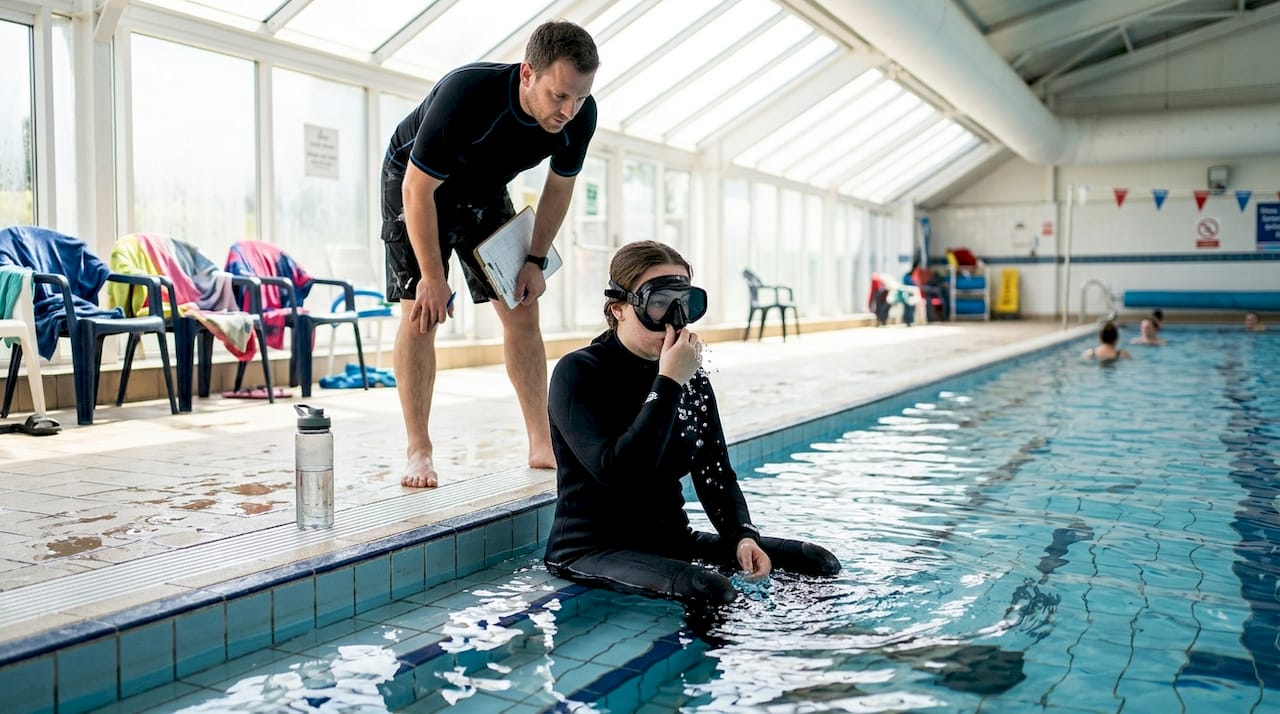
One of the most effective and lasting remedies for dive anxiety is skill development. When your hands know what to do without conscious thought, your mind has room to relax and actually enjoy the experience. Skill development through advanced courses such as Advanced Open Water and Rescue Diver, combined with dedicated buoyancy practice, builds real confidence and measurably reduces anxiety over time.
The three skills worth focusing on most, especially if you tend to feel anxious, are:
- Buoyancy control: Poor buoyancy makes everything harder. When you achieve neutral buoyancy, you feel weightless and in control, which is enormously calming.
- Mask clearing: Flooding and clearing your mask is a classic anxiety trigger. Practising this repeatedly in calm, shallow water until it feels completely routine removes a major source of worry.
- Air management: Knowing how to monitor your air supply calmly, and trusting yourself to signal your buddy or ascend in good time, removes one of the biggest sources of underwater stress.
Here is a quick comparison of how different PADI courses help with anxiety:
| PADI course | Key skill focus | Anxiety benefit |
|---|---|---|
| Open Water Diver | Foundational skills, mask clearing | Builds baseline confidence |
| Advanced Open Water | Navigation, buoyancy, new environments | Expands comfort zone safely |
| Rescue Diver | Self-rescue, reading conditions | Deepens composure under pressure |
| Peak Performance Buoyancy | Precise buoyancy control | Removes the single biggest anxiety trigger |
Exploring our advanced dive courses is a smart way to find the right programme for your current level and your confidence goals.
Pro Tip: Before your open water dive in Bali, request a short pool or shallow-water session with your instructor. Even twenty minutes practising mask clearing and buoyancy in chest-deep water can transform how you feel once you are in the ocean.
With skills in hand, it is just as vital to know what to do in the water and who to communicate with if anxiety strikes.
In-water techniques and communicating anxiety
Even the best-prepared divers can feel a wave of anxiety once they are beneath the surface. Knowing exactly what to do in that moment is what separates a recovered dive from an aborted one.
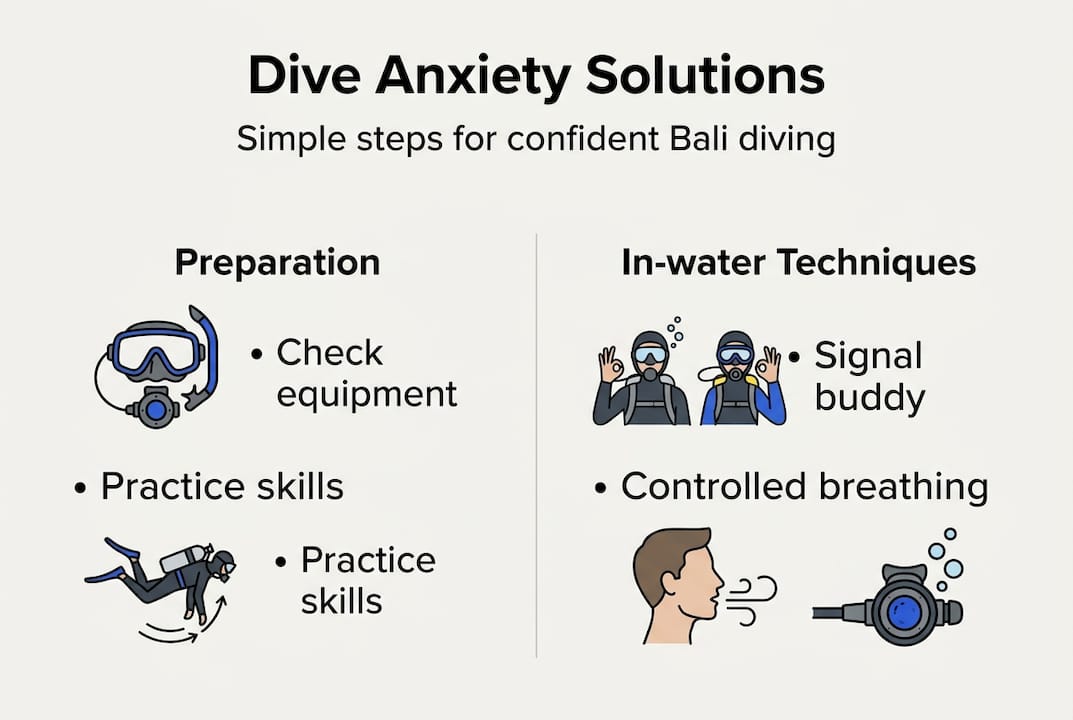
The most important technique is controlled breathing. Slow, deep, deliberate breaths through your regulator calm the nervous system and reduce air consumption. If you feel your breathing speeding up, that is your cue to pause everything else and focus on the breath first.
Here are the steps to follow if anxiety strikes mid-dive:
- Stop all movement immediately. Hover in place or hold a reef at a safe spot.
- Signal your buddy or instructor. Use the standard ‘OK?’ hand signal and make eye contact. You do not need to surface immediately to communicate.
- Focus on slow, deliberate breathing. Inhale for four counts, exhale for six. This activates your body’s calming response.
- Check your buoyancy. Neutral buoyancy with 50 bar remaining gives you a clear safety margin and a feeling of control.
- Ascend if needed. There is absolutely no shame in ending a dive early. Safety always comes first.
Communicating anxiety to your instructor or buddy before and during a dive is one of the most powerful things you can do. A good instructor will adjust the dive profile, stay close, and offer reassurance. At Bali Dive Cove, we always encourage divers to tell us before we enter the water if they are feeling uncertain.
“Choosing a patient instructor and staying within your personal comfort zone, avoiding strong currents or very deep dives initially, is not a limitation. It is smart diving.”
Our guide on troubleshooting dive issues covers more specific scenarios and solutions if you want to feel even more prepared. After applying these strategies, it is helpful to know what sort of improvement and experience to expect over time.
Tracking progress and setting expectations
Overcoming dive anxiety is a gradual process, and progress does not always look dramatic. But it is very real, and learning to notice it makes the journey far more rewarding.
Research confirms that experience genuinely changes your body’s response to diving. Experienced divers show lower cortisol levels post-dive and better heart rate variability, both of which are markers of reduced physiological stress. In other words, the more you dive, the calmer your body becomes, not just your mind.
Here are some milestones that signal real progress:
- Assembling your gear quickly and without second-guessing yourself
- Descending on your first attempt without needing extra encouragement
- Noticing marine life during a dive rather than focusing purely on your breathing
- Handling a minor issue such as a flooded mask without surfacing
- Finishing a dive feeling exhilarated rather than relieved
For inspiration on what confident diving actually feels like, our dive confidence insights share real experiences from divers who have made the journey.
It is also worth knowing that mild anxiety is not a contraindication to diving, provided it is well-managed. However, if you experience repeated, severe panic underwater, it is genuinely important to seek a professional assessment from a diving physician before continuing. This is not a barrier to diving long-term. It is simply the responsible, informed approach.
With the groundwork covered, what is the bigger picture on managing anxiety for Bali divers?
Our honest take: What most advice misses about dive anxiety
Most articles about dive anxiety end up saying some version of ‘just relax and breathe.’ Honestly, that advice is not wrong, but it is incomplete. What it misses is the emotional reality of being an anxious diver: that simply knowing the right techniques does not always stop the feeling from arriving.
In our experience at Bali Dive Cove, the divers who make the most lasting progress are not the ones who try hardest to eliminate anxiety. They are the ones who learn to accept it, take note of it, and dive anyway, within safe and manageable limits. True confidence is not the absence of nerves. It is the ability to keep going despite them.
We have also noticed that many divers push themselves too fast, chasing advanced certifications or deeper dives before they have fully settled into the basics. Rapid progression can actually deepen anxiety rather than resolve it. Our diver beginner advice reflects this philosophy. Go at your own pace. Celebrate every calm descent. Make enjoyment, not just ticking off milestones, the real measure of success.
Take your next step with Bali Dive Cove
If this guide has helped you feel more prepared, you are already ahead of where most nervous divers start. The real transformation, though, happens in the water, with the right support around you.
At Bali Dive Cove, our experienced instructors specialise in working with divers of all confidence levels, including those who arrive with nerves front and centre. With small groups, unhurried dives, and clear communication at every step, we create the kind of environment where anxiety genuinely fades. Whether you are starting with a discovery experience or ready to build towards certification, explore our Bali dive courses and dive packages in Bali to find the right fit for your next adventure in Amed.
Frequently asked questions
Can I scuba dive in Bali if I have a history of anxiety?
Mild, well-managed anxiety is usually not a barrier to diving, but anyone with a history of severe panic attacks should consult a diving physician before getting in the water.
What can I do immediately if I feel anxious underwater?
Pause, signal your buddy or instructor, focus on slow and deliberate breathing, and ascend if needed. There is never any pressure to push through when you are not feeling safe.
How long does it take to become a confident diver?
Most divers notice a meaningful reduction in anxiety after several well-supported dives, as experience lowers physiological stress and skills become more automatic with each session.
Are special courses available in Bali to help nervous divers?
Yes, dive centres in Bali including Bali Dive Cove offer beginner and skill-building PADI courses specifically designed to build comfort, confidence, and competence at a pace that suits you.
