

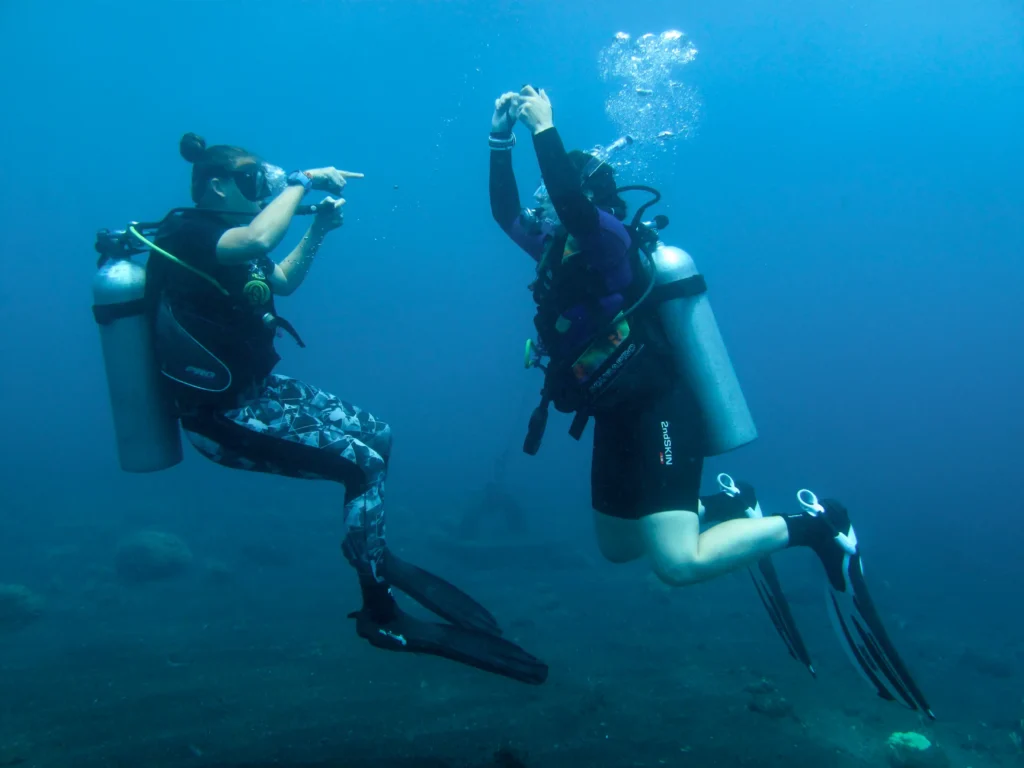
Even the most experienced divers run into issues underwater. A mask starts leaking, equalising becomes difficult during descent, or a regulator begins to free-flow. These moments can happen during a dive and do not always mean something serious is wrong.
Knowing how to troubleshoot dive issues is what allows you to stay calm, fix the problem, and continue the dive safely. In most cases, the issue itself is small. What matters is how you respond to it underwater.
In Bali, conditions can vary from calm shore dives in Amed to stronger currents in more exposed sites. Having a clear, simple approach to handling common dive problems helps you stay in control, protect your safety, and get the most out of every dive.
Why dive issues happen in the first place
Most dive problems fall into a few simple categories. Recognising these makes them easier to manage.
Equipment-related issues
Poorly fitted or maintained gear can lead to mask leaks, regulator problems, or discomfort during the dive.
Skill-related issues
Things like equalisation, buoyancy control, and navigation improve with practice. Early on, they can feel challenging.
Environmental factors
Currents, surge at entry points, and visibility changes can all affect how a dive feels, particularly in Bali where sites range from calm reefs to more dynamic conditions.
Psychological responses
This is often the most important factor. Small issues can feel much bigger underwater, and if stress increases, it can affect breathing, awareness, and decision-making.
These factors often overlap rather than occur in isolation. For example, a minor equipment issue combined with unfamiliar conditions can feel more challenging than either on its own. Recognising that most dive problems are a combination of small factors helps you approach them more logically and avoid overreacting underwater.
With experience, divers become better at identifying which type of issue they are dealing with and responding appropriately. This awareness is what turns potential problems into manageable situations.
Dive Problems Before you Dive
Preparing your gear to prevent and identify dive issues
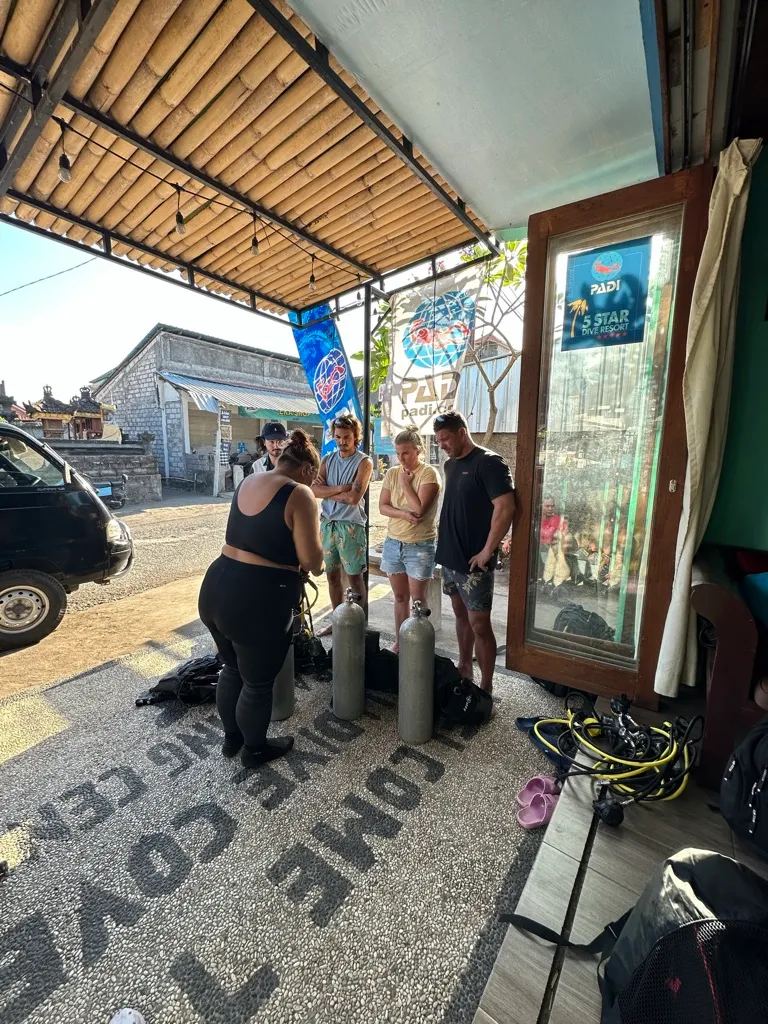
Most dive issues start with how your gear is set up before you enter the water. Taking a few extra minutes to assemble everything properly helps prevent problems and makes it easier to spot anything that does not feel right.
Begin by checking the cylinder’s test dates. Before attaching your regulator, briefly open the tank valve and smell the air to ensure it is clean and normal. Then inspect the o-ring for any damage or debris, as this is a common cause of leaks.
Secure your BCD firmly to the cylinder so it does not shift. Attach the first stage carefully, then connect the low-pressure inflator hose. Open the tank slowly, checking that the pressure is full and there are no unusual sounds or leaks around the connections.
Take a few breaths from your primary and alternative regulator to make sure they are breathing smoothly. Test that your BCD inflates and deflates properly, and make sure the dump valves are working as expected.
As you set up, streamline your hoses so everything sits neatly and is easy to access underwater. Your alternate air source should be clearly positioned, and your gauges should be easy to read without needing to adjust them during the dive. These simple checks help you identify small issues early, before they become distractions underwater.
Common problems to look for during setup and quick fixes
| Problem | What it might indicate | Quick fix |
|---|---|---|
| Damaged or missing o-ring | Poor seal between tank and regulator, leading to leaks | Replace the o-ring before attaching the regulator |
| Air smells unusual | Contaminated or poor-quality air fill | Do not use the tank, notify the dive centre immediately |
| Hissing sound at first stage | Leak at the connection or poorly seated regulator | Re-seat the first stage and check the o-ring |
| BCD moves on the cylinder | BCD not secured tightly enough | Re-tighten the BCD strap and check positioning |
| Regulator hard to breathe from | Possible internal issue or incorrect setup | Switch to another regulator and have it checked |
| Alternate air source not accessible | Poor hose routing or setup | Reposition so it is clearly visible and easy to reach |
| BCD inflates or deflates poorly | Inflator or dump valve issue | Disconnect and reconnect hose, test valves again |
| BCD slowly deflates without pressing a button | Possible leak or hole in the bladder | Do not dive, have the BCD inspected |
| Dump valves feel stiff or stuck | Salt buildup or wear | Rinse and test again, flag for maintenance if needed |
| Hoses twisted or pulling | Poor hose routing | Adjust and streamline hoses before entering the water |
| Gauges hard to read | Poor positioning or clipping | Reposition so they are visible and easy to check |
Pre-dive safety check (BWRAF)
Once your gear is assembled, a final buddy check helps catch anything that may have been missed. The BWRAF check is a simple and widely used system to make sure both divers are ready before entering the water.
It stands for:
-
B – BCD: Check that both BCDs inflate and deflate properly
-
W – Weights: Confirm weights are secure and releases are understood
-
R – Releases: Ensure all clips and buckles are fastened and accessible
-
A – Air: Check tank is fully open, confirm pressure, and test both regulators
-
F – Final check: Masks, fins, and overall readiness before entry
Running through BWRAF with your buddy creates a final layer of safety and ensures you both know where key equipment is located. It only takes a minute, but it can prevent simple oversights from turning into issues during the dive.
Dive problems at the surface
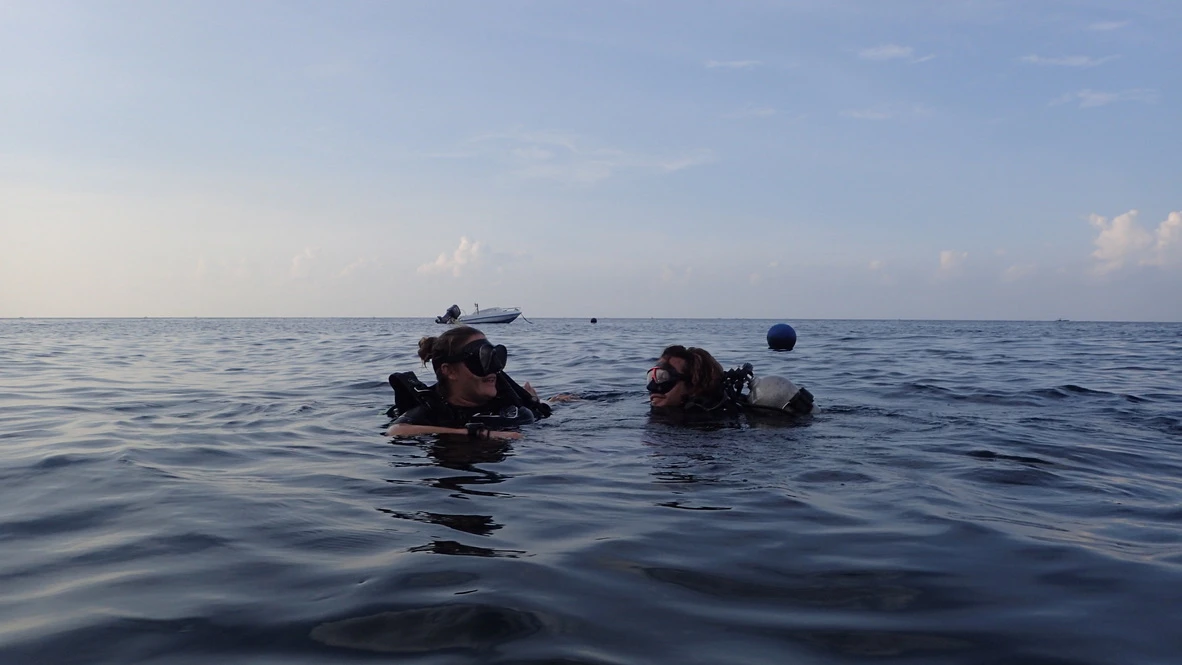
Many dive issues begin or escalate at the surface, particularly before descent or after the dive. This is often when divers are adjusting equipment, managing entry and exit, or dealing with changing conditions such as waves or surge.
Surface situations can feel more chaotic than being underwater. Waves, current, and movement from other divers can make it harder to stay stable and focused. For newer divers especially, this is where small issues can quickly feel overwhelming.
Common surface challenges include:
-
Difficulty staying afloat comfortably while adjusting gear
-
Mask or regulator being dislodged during entry
-
Managing waves or surge at shore entry points
-
Feeling rushed or unprepared before descent
-
Increased breathing rate due to stress or surface conditions
How to manage these situations:
-
Make sure you are properly weighted
- Take your time before descending. There is no need to rush
-
Fully inflate your BCD so you are comfortably floating
-
Secure your mask and regulator before entry, especially in waves
-
Stay close to your buddy or guide and communicate clearly
-
If something does not feel right, pause and sort it out at the surface
A calm, controlled start sets the tone for the entire dive. If you feel settled and prepared at the surface, you are far more likely to have a relaxed and enjoyable dive once you descend.
Bali-specific surface conditions to be aware of
Surface conditions in Bali can vary depending on the location and time of day. While many sites are calm, areas such as Amed and Tulamben often involve shore entries where small waves and surge can affect your setup before the dive even begins.
Walking in with full gear over rocks or uneven ground can feel awkward, especially if there is movement in the water. Timing your entry between waves and keeping your balance is important to avoid unnecessary stress before descending.
It is also common for conditions to change slightly between dives. A calm surface in the morning may have more movement later in the day, which can impact both entry and exit.
To manage Bali-specific surface conditions:
-
Take your time when entering from shore and watch the wave timing
-
Keep your mask around your neck not on your head
-
Fully inflate your BCD so you can comfortably float
-
Follow your guide’s instructions for entry and exit points
-
Stay close to your buddy, especially in moving water
Local knowledge makes a big difference in these situations. Diving with experienced guides who understand each site helps you approach entries and exits with more confidence and control.
Common dive issues underwater and how to troubleshoot them
Mask problems: fogging, leaking, or slipping
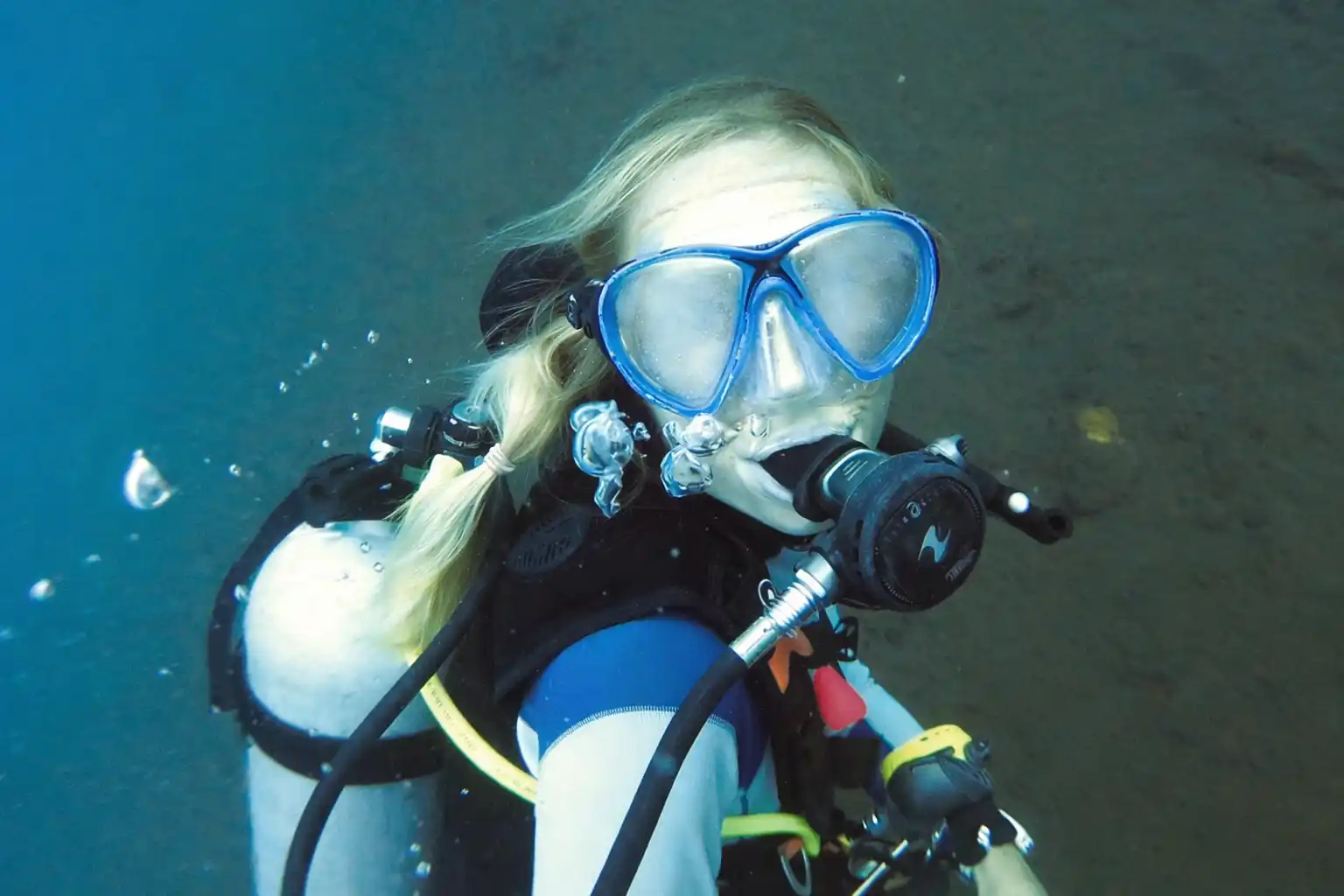
A foggy or leaking mask is one of the most common issues, especially for newer divers.
| Issue | Why it happens | How to fix it |
|---|---|---|
| Mask fogging | Lack of defog solution | Apply defog and rinse lightly before the dive. Avoid touching the inside of the lens |
| Mask leaking | Hair or hood breaking the seal | Check the skirt is sitting flat against your face with no obstructions |
| Mask slipping | Strap too loose or poorly adjusted | Adjust the strap so it is snug, but not overly tight |
| Water inside the mask | Normal minor leaks or movement | Clear the mask slowly using the technique you learned in training |
Difficulty equalising your ears
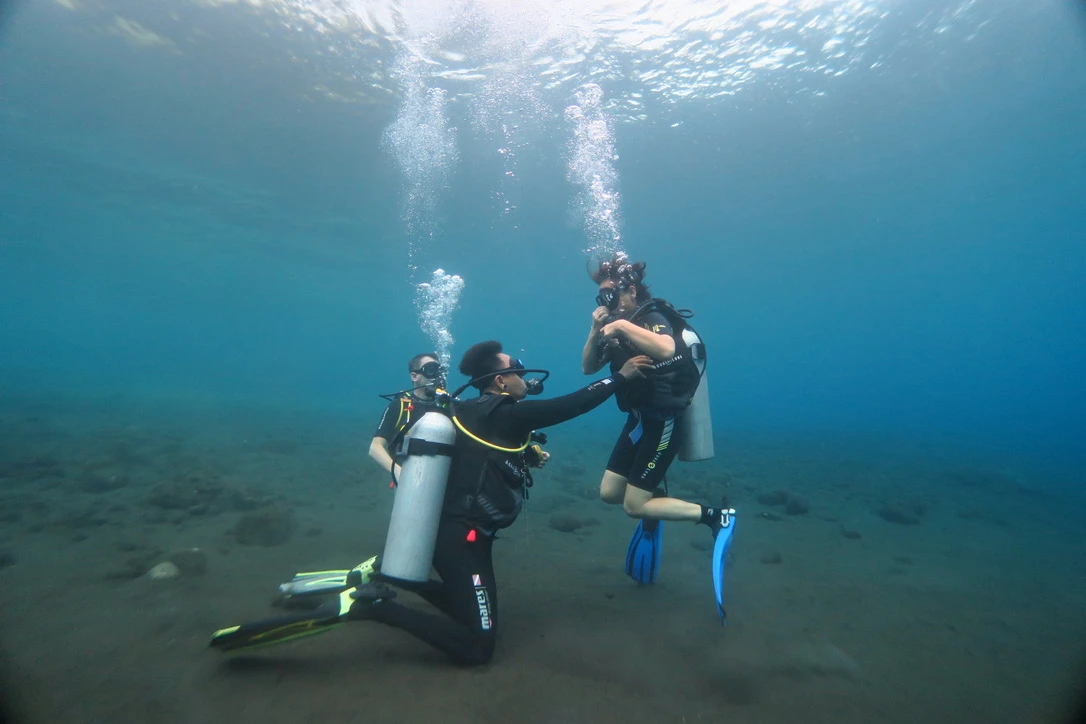
Equalisation is essential and should never be forced.
| Issue | Why it happens | How to fix it |
|---|---|---|
| Difficulty equalising during descent | Descending too quickly | Slow your descent and pause regularly |
| Pain or pressure in ears | Not equalising early enough | Equalise before discomfort, not after |
| Equalisation not working | Congestion or sinus issues | Do not dive if congested |
| Equalisation stops working mid-descent | Continued descent without adjustment | Ascend slightly and try again calmly |
| Discomfort during ascent (reverse block) | Expanding air unable to escape due to congestion | Ascend slowly, stop if needed, and allow pressure to equalise naturally. Do not force it |
If equalisation is not working, the correct decision is to stop the descent or end the dive safely.
Regulator free-flow or breathing issues
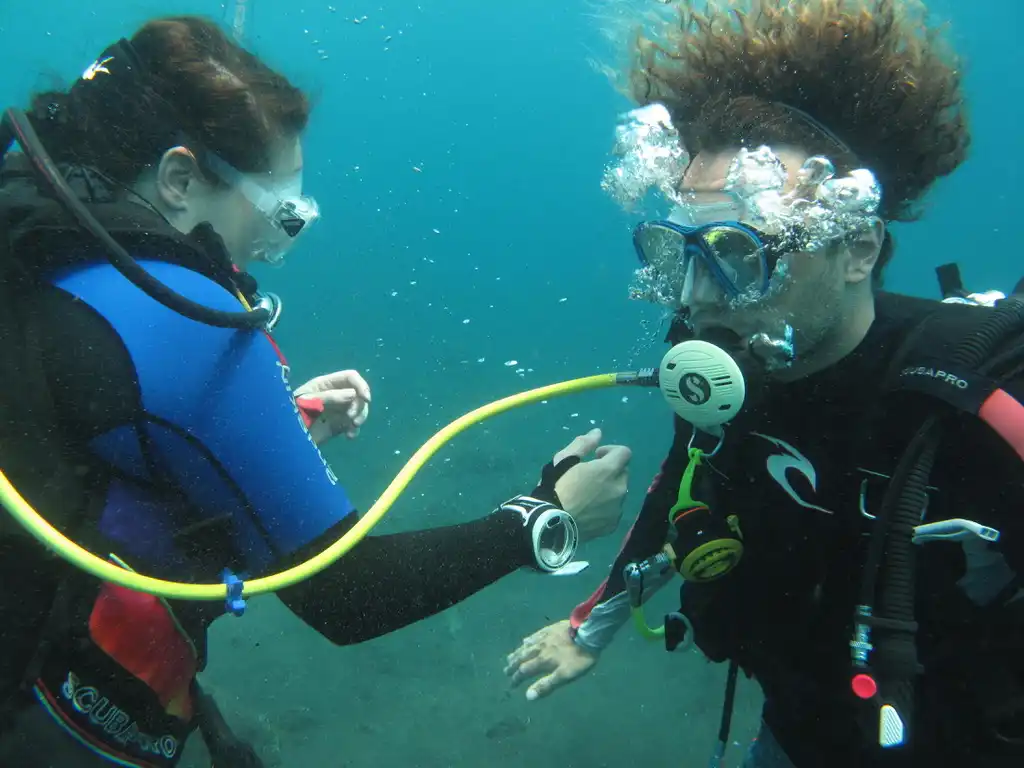
A free-flowing regulator can feel alarming if you have not experienced it before.
| Issue | Why it happens | How to fix it |
|---|---|---|
| Regulator free-flowing | Debris, salt buildup, or a malfunction | Stay calm, keep the regulator in your mouth, and continue breathing |
| Free-flow in current or movement | Regulator pushed or knocked out of position | Adjust the regulator angle or shield it slightly with your hand |
| Regulator breathing feels tight or restricted | Possible internal issue or incorrect setup | Signal your buddy and switch to your alternate air source if needed |
| Sudden increase in airflow | Purge button stuck or pressed accidentally | Release the purge and reposition the regulator |
| Unusual breathing resistance | Equipment issue or early warning sign | Stop, assess calmly, and end the dive if it does not improve |
Most importantly, do not panic. You still have access to air. You learn how to manage situations like a free-flow during your Open Water course.
Poor buoyancy control
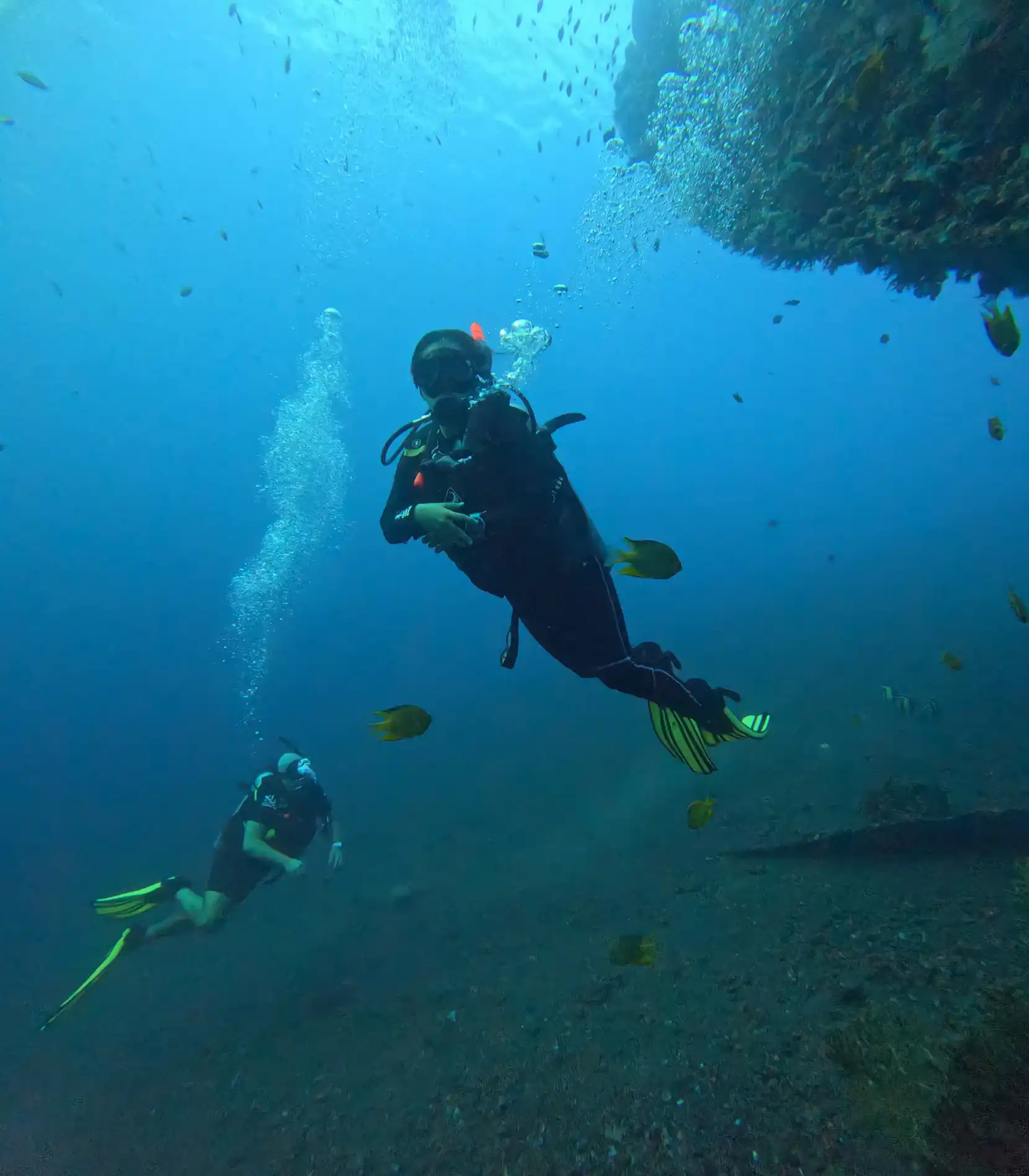
Buoyancy issues can make diving feel frustrating or tiring.
| Issue | Why it happens | How to fix it |
|---|---|---|
| Sinking too quickly | Overweighting or releasing too much air from BCD | Make sure you are correctly weighted. Add small amounts of air and slow your descent |
| Floating up unintentionally | Too much air in BCD or uncontrolled breathing | Release air slowly and control your breathing |
| Constant up and down movement | Overcorrecting with large BCD adjustments | Make small, gradual adjustments instead of big changes |
| Struggling to stay level | Poor body position or using fins to compensate | Stay horizontal and avoid kicking to hold position. Use breathing and small BCD adjustments instead |
| Feeling unstable or out of control | Lack of recent practice or incorrect weighting | Pause, regain control, and make small corrections |
Buoyancy improves quickly with practice and guidance. The Peak Performance Buoyancy course is a great way to refine your control and become more comfortable in the water.
Disorientation or losing direction underwater
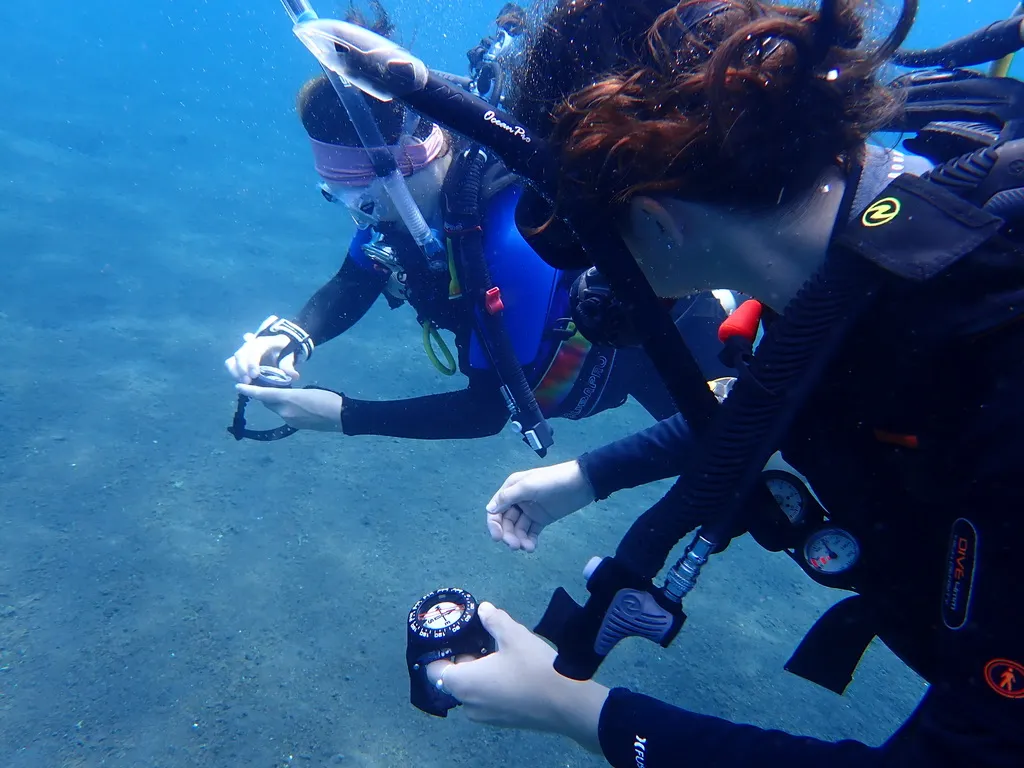
This can happen more easily than expected, particularly on new dive sites.
| Issue | Why it happens | How to fix it |
|---|---|---|
| Unsure of direction | Lack of reference points or unfamiliar dive site | Stop, look around, and identify landmarks or your guide |
| Reduced visibility | Low visibility or changing conditions | Slow down and stay close to your buddy or guide |
| Losing track of your buddy | Poor communication or drifting apart | Stop immediately, look for bubbles or movement, and surface if needed |
| Drifting off course | Current or lack of awareness of surroundings | Stay aware of your position and adjust gradually using natural references like reef direction or slope |
Diving with a guide in Bali helps reduce this risk significantly, and navigation skills can be further developed through courses such as the PADI Underwater Navigation speciality.
The most important rule: stay calm and solve the problem
The biggest risk in diving is not usually the issue itself, but how a diver reacts to it.
Small problems can escalate if stress takes over. Divers who panic may lose awareness, breathe rapidly, or make unsafe decisions. In many cases, panic has been identified as a contributing factor in a large percentage of diving incidents.
When something feels off underwater:
- Stop
- Breathe slowly
- Think through the solution
- Signal your buddy or guide
In many cases, the problem can be resolved in seconds once you stay calm.
When to safely end a dive
Knowing when to end a dive is part of good decision-making.
You should consider ending the dive if:
-
You cannot equalise
-
You feel unwell or overly stressed
-
Equipment is not functioning properly
-
Conditions feel beyond your comfort level
Ending a dive does not mean something went wrong. It means you made a controlled, safe decision.
In many cases, divers try to push through discomfort, especially if others in the group seem fine. However, every diver experiences conditions differently, and what feels manageable for one person may not feel right for another. Recognising your own limits and acting early helps prevent small issues from escalating.
A safe dive is always more important than completing the planned dive. Ascending slowly, staying close to your buddy, and communicating clearly ensures the situation remains controlled from start to finish.
Preventing dive issues before they happen
The best way to troubleshoot dive issues is to reduce the chances of them happening in the first place.
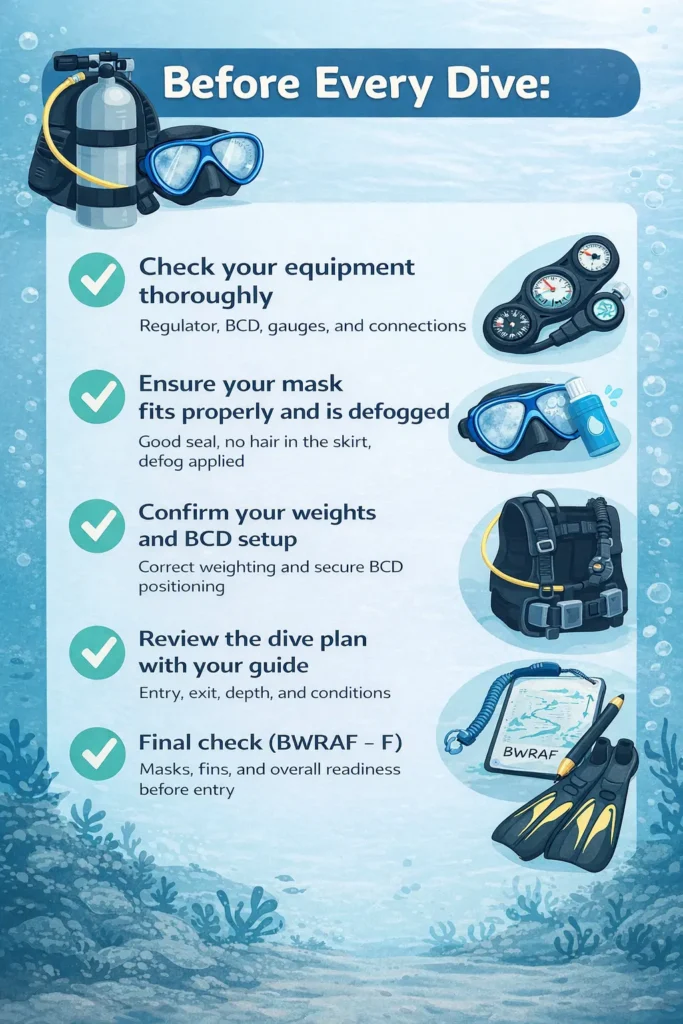
Before every dive:
- Check your equipment thoroughly
- Ensure your mask fits properly and is defogged
- Confirm your weights and BCD setup
- Review the dive plan with your guide
- Final check – BWRAF
Good preparation also includes being honest about your recent diving experience. If you have not dived for a while, skills such as equalising, buoyancy control, and air consumption may take a few minutes to feel natural again. Taking the first part of the dive slowly allows you to settle in and avoid unnecessary stress.
A clear dive briefing is equally important. Understanding the entry, exit, depth profile, and any expected conditions means you are less likely to be surprised underwater. This reduces the chance of small issues feeling overwhelming.
Bali-specific dive considerations
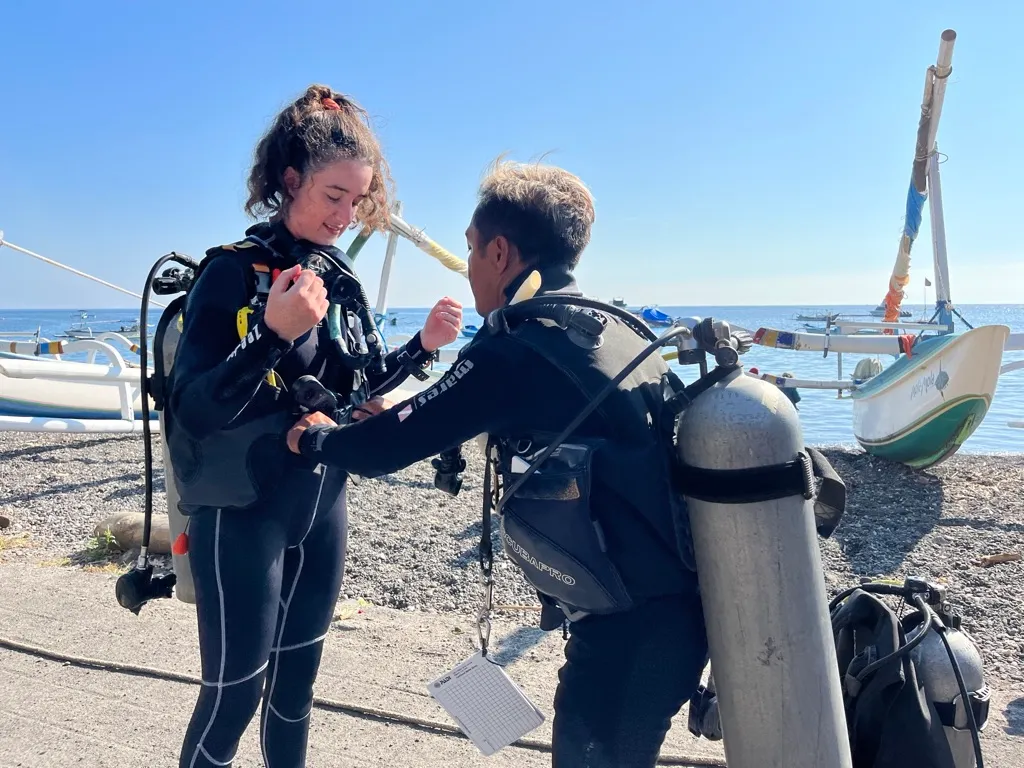
Diving in Bali offers a wide range of conditions, and understanding these before you enter the water can help prevent small issues from becoming distractions during the dive.
Many sites in areas such as Amed and Tulamben are shore dives, which means your entry and exit play a bigger role than in boat diving locations. Walking in with full gear over rocks or uneven ground, combined with small waves or surge, can make it easy to feel unsettled before the dive has even begun.
Currents can also vary depending on the site and time of day. While some dives are calm and ideal for building confidence, others may involve mild to moderate movement that requires better positioning and awareness. Staying close to your guide and maintaining good buoyancy helps reduce the impact of changing conditions.
Visibility is generally good, but it can change slightly due to plankton, swell, or recent weather. This can affect how easy it is to navigate and stay oriented, particularly on new dive sites.
To manage these conditions:
-
Take your time during shore entries and watch the timing of the waves
-
Keep your equipment and accessories secure during entries and exits
-
Stay close to your guide, especially in areas with current or reduced visibility
-
Maintain good buoyancy to avoid contact with the reef or being pushed off position
-
Listen carefully to dive briefings, as local conditions can change day to day
Diving with experienced local guides makes a noticeable difference. They understand how each site behaves in different conditions and can adjust the plan to ensure a safer and more comfortable experience.
Pro Tip: Book your first few Bali dives with smaller operators offering personalised attention rather than large groups. This approach allows instructors to assess your skills individually and provide targeted guidance for local conditions.
Post-dive equipment care
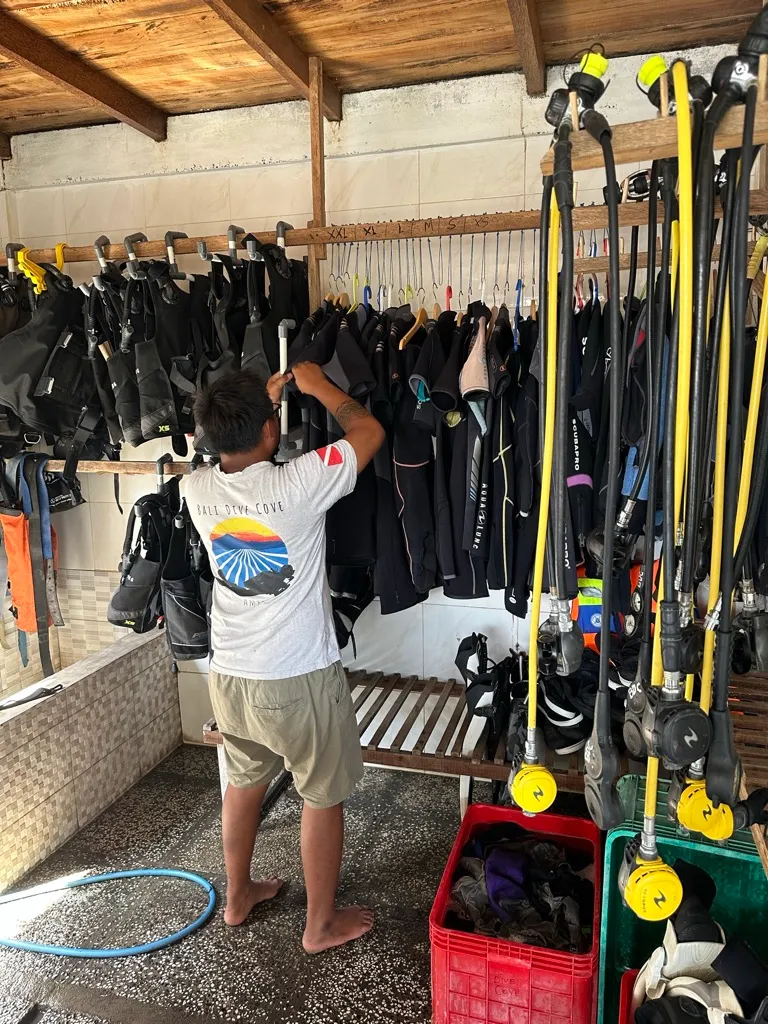
Taking a few minutes to look after your gear after each dive helps prevent issues on future dives. Small problems are often easier to spot once you are back on the surface.
-
Rinse all equipment thoroughly with fresh water as soon as possible
-
Check your regulator and hoses for any leaks or unusual wear
-
Test your BCD inflator and dump valves to ensure they are working smoothly
-
Allow your gear to dry fully in a shaded, well-ventilated area
-
Store equipment in a cool, dry place away from direct sunlight
Regular maintenance also plays an important role in preventing future issues. Equipment that is serviced on schedule and checked between dives is far less likely to fail unexpectedly. Even simple habits, such as rinsing salt from moving parts and checking connections, contribute to more reliable performance over time.
Treating your gear as part of your safety system, rather than just equipment, helps reinforce good habits and ensures you are always prepared for your next dive.
Discover expert-guided dive courses and packages in Bali
Mastering troubleshooting techniques requires more than reading articles. Hands-on practice with experienced instructors accelerates your learning and builds genuine confidence for handling real underwater situations.
Bali Dive Cove offers comprehensive dive courses designed to develop your problem-solving skills through structured scenarios and personalised feedback. Our instructors bring over 16 years of local diving experience, teaching you not just generic techniques but specific approaches for Bali’s unique conditions. Small group sizes ensure individual attention whilst you practise equipment troubleshooting, buoyancy control, and emergency responses in safe, controlled environments.
Explore Bali’s spectacular underwater world through our tailored dive packages that match your experience level and interests. From calm bay dives perfect for building skills to thrilling drift dives for advanced divers, each package includes thorough briefings on site-specific challenges and safety considerations. Discover the best dive sites East Bali offers, guided by professionals who know every reef, wreck, and current pattern intimately.
Final thoughts
Learning how to troubleshoot dive issues is part of becoming a confident diver. Problems underwater are normal, and with the right approach, they are usually simple to manage.
The goal is not perfection. It is awareness, calm thinking, and using the skills you have already learned.
Once you trust your ability to handle small challenges, you will find diving becomes far more relaxed, enjoyable, and rewarding.
Frequently asked questions
What should I do if I have a problem underwater?
The most important thing is to stay calm. Stop, breathe slowly, and take a moment to assess the situation. Most dive issues can be managed with simple actions, and panicking will only make the situation harder to control. If needed, signal your buddy or guide for assistance.
When should I end a dive due to an issue?
You should end the dive if the problem cannot be resolved quickly or if you feel uncomfortable continuing. This includes issues like being unable to equalise, equipment not functioning properly, or feeling stressed and unable to regain control. Always end the dive in a slow, controlled manner.
How can I avoid problems with equalising?
Equalise early and often during your descent. If you feel discomfort, stop descending and ascend slightly until the pressure eases, then try again. Never force equalisation, and avoid diving if you are congested or unwell.
Is a leaking mask a serious problem?
A leaking mask is common and usually easy to manage. You can clear it underwater by lifting the bottom of the mask slightly and exhaling through your nose. If the issue continues, it may be due to fit, hair under the seal, or strap position.
What causes a regulator to free-flow and what should I do?
A free-flowing regulator can be caused by debris, salt build-up, or incorrect positioning. If it happens, stay calm, keep the regulator in your mouth, and continue breathing while signalling your buddy. In most cases, the dive can be ended safely without urgency.
Do Bali dive conditions make troubleshooting more difficult?
Conditions can vary depending on the site. Calm areas like Amed are generally easy to manage, while stronger currents in other locations may require more awareness and control. Diving with experienced local guides helps you anticipate conditions and manage any issues more confidently.
