


Many aspiring divers believe becoming a PADI instructor is a quick, straightforward process. The reality involves structured training, significant experience prerequisites and rigorous safety standards. This guide explains what PADI dive instructor qualifications truly require, from foundational certifications through to professional teaching competencies, and why choosing personalised training in Bali’s unique conditions matters for long-term success.
Key takeaways
| Point | Details |
|——-|———||
| Clear certification pathway | Prerequisites include Divemaster certification, minimum 60 logged dives, and Emergency First Response training before starting instructor development. |
| Course structure | IDC covers theory, confined water instruction and open water teaching practice over 9 to 14 days with intensive daily sessions. |
| Bali’s local conditions | Amed’s currents, visibility variations and reef environments require instructors familiar with regional dive site nuances. |
| Personalised small group training | Individual attention, unhurried pacing and clear communication improve safety outcomes and skill mastery. |
| Divemaster and instructor roles differ | Divemasters supervise dives whilst instructors teach full PADI certification courses, requiring distinct qualifications and responsibilities. |
Introduction to PADI dive instructor qualifications
PADI (Professional Association of Diving Instructors) is the world’s leading dive training organisation, certifying instructors in over 180 countries. A PADI Open Water Scuba Instructor can teach recreational diving courses from beginner Open Water through to specialty certifications like PADI Wreck Diver. This global recognition ensures your credentials meet professional standards wherever you teach.
Becoming a certified instructor isn’t just about passing a course. It’s about developing competence in dive theory, emergency management, student assessment and environmental awareness. These skills protect both you and your future students. Certification demonstrates you’ve met rigorous safety benchmarks and can deliver quality instruction under varying conditions.
PADI instructor qualifications open career opportunities worldwide. You’ll gain authority to:
- Teach Open Water, Advanced and Rescue Diver courses
- Certify students in multiple specialty areas
- Supervise dive operations and guide groups safely
- Mentor Divemaster candidates and assist other instructors
The pathway demands commitment, but the professional credibility and safety expertise you develop are worth the investment. Whether you aim to work full-time in dive tourism or teach part-time whilst travelling, PADI certification provides the foundation for a respected career.
PADI dive instructor certification pathway and prerequisites
Before enrolling in an Instructor Development Course, you must complete several foundational certifications. These prerequisites ensure you possess the dive skills and emergency response capabilities needed for professional teaching.
Required qualifications include:
- PADI Divemaster certification as your first professional-level credential
- PADI Advanced Open Water Diver or equivalent from another recognised agency
- PADI Rescue Diver certification demonstrating emergency management skills
- Emergency First Response Primary and Secondary Care training within the past 24 months
- Minimum age of 18 years old
- At least 60 logged dives documented in your logbook
The Instructor Development Course typically spans 9 to 14 days of intensive training. Daily sessions run six to eight hours covering academic instruction, confined water teaching practice and open water student scenarios. You’ll study dive physics, physiology, equipment function and risk management in depth. Evenings often involve additional study and preparation for the next day’s practical sessions.
After completing the IDC, you’ll attend a separate Instructor Examination conducted by a PADI examiner. This two-day evaluation tests your teaching abilities, dive skills and theoretical knowledge. Passing the exam qualifies you as a PADI Open Water Scuba Instructor.
Pro Tip: Log extra dives beyond the minimum 60 before starting your IDC. Diverse experience in varied conditions, including deeper dives through courses like PADI Deep Diver, builds confidence and practical skills that help during instructor training. Familiarity with scuba diving preparation workflows also streamlines your training efficiency.
Course structure and core competencies of instructor training
The IDC develops your ability to teach diving safely and effectively. Training focuses on four core competency areas that shape professional instructors.
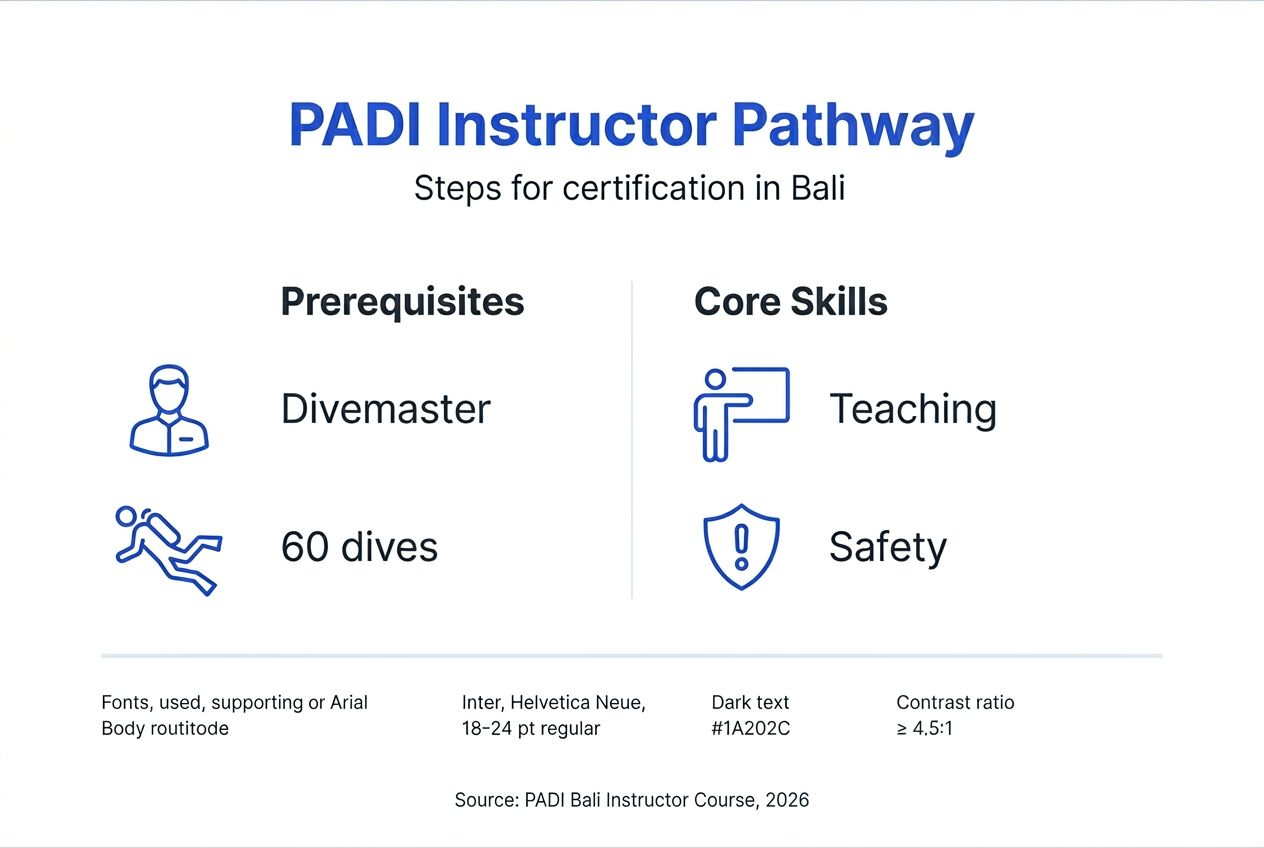
Academic teaching covers dive theory including physics, physiology, equipment and environment. You’ll learn to explain complex concepts clearly, answer student questions accurately and adapt explanations to different learning styles. Lesson planning, presentation skills and knowledge assessment methods form major components.
Confined water instruction happens in pools or shallow protected areas. You’ll practise demonstrating skills, correcting student errors and managing groups underwater. Quality demonstrations matter because students copy what they see. Poor technique from an instructor creates bad habits in learners.
Open water teaching involves supervising students during actual dives. You’ll learn to brief dives thoroughly, monitor students underwater, manage environmental factors and respond to problems calmly. This phase tests your ability to balance student safety with skill development progression.
Emergency management and risk assessment training ensures you can prevent incidents and respond effectively when problems occur. You’ll study accident scenarios, practise rescue techniques and develop decision-making skills for managing unexpected situations. Surface support, missing diver protocols and equipment failures all require confident, competent responses.
Pro Tip: Pace yourself during the intensive IDC schedule. Mental fatigue affects learning and performance. Take breaks, stay hydrated and get adequate sleep each night. The course challenges you deliberately to build resilience, but managing your energy sustains focus throughout training. Experience from your PADI Divemaster course helps you anticipate the demands and prepare accordingly.
Understanding divemaster vs. instructor roles
Whilst both are professional PADI certifications, Divemaster and Instructor roles differ significantly in responsibilities, training and career scope.
| Aspect | Divemaster | Instructor |
|---|---|---|
| Primary role | Supervise certified divers and assist instructors during training | Teach and certify students in PADI courses independently |
| Training duration | Typically 4 to 6 weeks depending on format | 9 to 14 days IDC plus prior Divemaster certification |
| Course teaching | Cannot teach certification courses | Can teach all PADI recreational courses |
| Career progression | Entry-level dive professional | Advanced professional with teaching authority |
| Prerequisites | Rescue Diver, 40 logged dives, Emergency First Response | Divemaster, 60 logged dives, Emergency First Response |
Divemasters lead certified divers on guided tours, conduct dive briefings and assist instructors with student groups. They handle logistics, equipment management and site orientation. It’s a supervisory role focused on dive operations rather than teaching.
Instructors possess full teaching authority for recreational diving courses. You can certify students, develop curriculum, conduct evaluations and run your own dive training programmes. The Instructor credential builds on Divemaster experience, adding pedagogical skills and deeper theoretical knowledge.
Most dive professionals complete Divemaster certification first, gain practical experience supervising dives, then progress to instructor training. This pathway ensures you understand dive operations from multiple perspectives before taking on teaching responsibilities.
Local conditions impacting instructor training in Bali
Bali’s underwater environment presents unique characteristics that influence instructor training quality and safety.
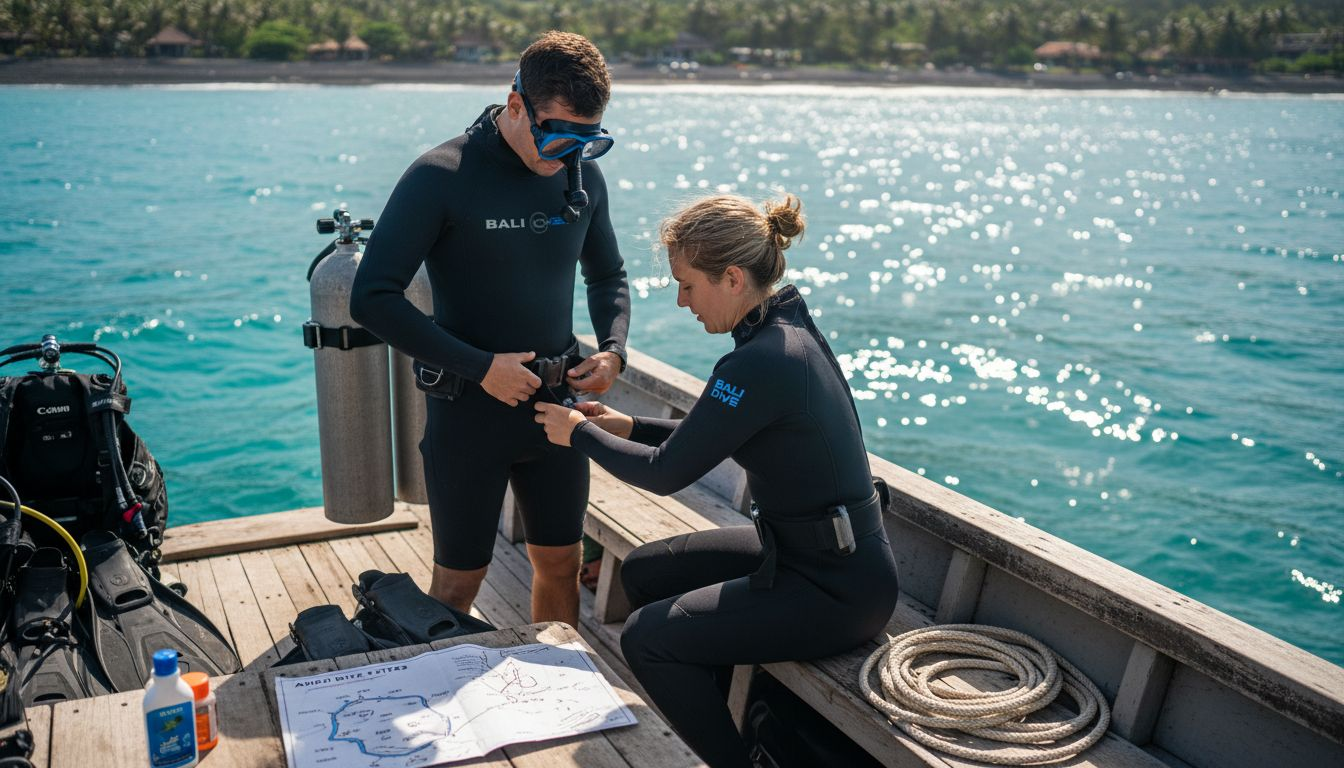
Amed’s dive sites feature coral reefs, volcanic sand slopes and accessible wrecks like the USAT Liberty at Tulamben. Currents vary by site and season, ranging from gentle drift conditions to moderate flows requiring precise buoyancy control. Training in these varied environments builds adaptable skills.
Visibility fluctuates based on rainfall, plankton blooms and seasonal patterns. Dry season (April to October) typically offers clearer water, whilst wet season brings reduced visibility but calmer surface conditions. Instructors familiar with these patterns adjust training schedules and site selections accordingly.
Local expertise matters because:
- Experienced instructors know which dive sites suit different skill levels and training objectives
- Understanding tidal patterns and current windows ensures safer training dives
- Knowledge of seasonal marine life behaviour enriches educational content
- Familiarity with local boat operations and emergency procedures streamlines logistics
Bali’s tropical water temperature (26 to 29 degrees Celsius) allows comfortable extended training dives without thick exposure protection. This enables longer practice sessions and more repetitions of teaching demonstrations. Combined with diverse marine ecosystems, Bali provides an ideal training laboratory for developing instructor skills.
| Season | Visibility | Water temperature | Current strength |
|---|---|---|---|
| Dry (April to October) | 15 to 30 metres | 27 to 29°C | Moderate, predictable |
| Wet (November to March) | 10 to 20 metres | 26 to 28°C | Variable, calmer surface |
Choosing instructors with deep local knowledge ensures your training adapts to real conditions. Courses like PADI Advanced Open Water familiarise you with Bali’s environment before instructor training, building confidence and site awareness.
Training environment and personalisation benefits
Small group sizes directly impact learning quality and safety outcomes during instructor training.
Personalised attention means instructors observe your demonstrations closely, provide specific feedback and address individual weaknesses. Large classes dilute this focus. You might perform a skill incorrectly without immediate correction, reinforcing poor technique. Small groups ensure problems get identified and fixed quickly.
Clear communication reduces stress and improves comprehension. When instructors explain concepts clearly, answer questions thoroughly and check understanding regularly, you absorb information more effectively. Rushed explanations or assumptions about prior knowledge create confusion.
Unhurried pacing allows proper skill development. Mastering teaching demonstrations, lesson planning and student assessment takes time. Courses that prioritise throughput over competence push candidates through too quickly. Quality training respects individual learning speeds.
Safety benefits from close supervision. Instructors monitoring fewer candidates notice early warning signs of fatigue, stress or confusion. They can intervene before minor issues escalate. This protective environment builds confidence whilst maintaining high standards.
Key personalisation advantages include:
- More underwater practice time per candidate
- Detailed feedback on teaching demonstrations
- Flexible pacing matching individual progress
- Stronger instructor-candidate relationships
- Reduced performance anxiety
Pro Tip: Visit potential dive centres before committing to training. Observe their teaching style, group sizes and communication approach. Ask about instructor-to-student ratios during confined and open water sessions. Centres prioritising PADI scuba certification benefits through personalised instruction deliver better outcomes than volume-focused operations.
Common misconceptions about dive instructor qualifications
Several myths persist about becoming a PADI instructor, creating unrealistic expectations.
Myth: Instructor courses are quick and easy if you’re already a strong diver. Reality: The IDC requires 9 to 14 intensive days plus significant prior experience. Strong personal dive skills don’t automatically translate to teaching ability. You must learn pedagogical techniques, student psychology and risk management separately.
Myth: You can skip Divemaster and go straight to instructor training. Reality: Divemaster certification is a mandatory prerequisite. It develops supervisory skills, dive operation knowledge and professional responsibility essential for instructor success.
Myth: Sixty logged dives is excessive preparation. Reality: Diverse dive experience builds the environmental awareness, problem-solving ability and equipment familiarity needed to teach safely. Minimum requirements represent absolute thresholds, not optimal preparation levels.
Myth: All instructor courses deliver equivalent training quality. Reality: Course quality varies dramatically based on instructor experience, group sizes, local conditions and training philosophy. Choosing experienced instructors who prioritise safety and personalisation matters enormously.
“The best instructor training doesn’t just teach you to pass the exam. It develops the judgment, communication skills and safety mindset you’ll rely on throughout your career. That depth of preparation requires time, practice and mentorship from instructors who genuinely care about your long-term success.”
Understanding these realities helps you approach instructor training with appropriate expectations. The qualification demands serious commitment, but the professional capabilities you develop justify the investment.
Choosing your instructor training in Bali
Selecting the right dive centre for your IDC significantly impacts training quality and career preparation.
Evaluate instructor experience and local knowledge first. Instructors with extensive Bali dive experience understand regional conditions, site characteristics and seasonal patterns. They teach skills applicable to real-world Bali diving, not just theoretical scenarios. Ask about instructor backgrounds, years operating in Bali and familiarity with local dive sites.
Prioritise small group sizes. Maximum four candidates per instructor allows proper attention during teaching demonstrations and underwater practice. Larger groups compromise feedback quality and safety supervision. Confirm exact student-to-instructor ratios before enrolling.
Consider course scheduling flexibility. Some centres offer condensed formats whilst others spread training over longer periods with rest days. Match the schedule to your learning style and physical stamina. Intensive formats suit experienced divers comfortable with demanding schedules. Extended programmes benefit those wanting more practice time.
Assess the training environment quality. Well-maintained equipment, safe boat operations and appropriate dive site selections demonstrate operational professionalism. Visit facilities beforehand. Observe how staff interact with students and handle equipment.
Key selection criteria include:
- Instructor qualifications and teaching experience
- Typical class sizes and student-to-instructor ratios
- Access to varied dive sites for comprehensive training
- Equipment quality and maintenance standards
- Post-course support and career development resources
Choosing personalised training establishes strong foundational skills. Starting your professional diving career with Divemaster certification in Bali, gaining experience at quality Amed dive sites, then progressing to instructor training with the same trusted team ensures continuity and comprehensive preparation.
Discover personalised PADI courses at Bali Dive Cove
Ready to advance your diving career with instructor qualifications tailored to your goals? Bali Dive Cove offers personalised Divemaster training and instructor development in small groups led by instructors with over 16 years of Bali diving experience.
Our approach prioritises safety, clear communication and unhurried skill development. We train at Amed’s best dive sites, adapting each session to local conditions and individual progress. Whether you’re beginning your professional journey or advancing from Divemaster to instructor, we provide the personalised attention and local expertise that builds confident, competent dive professionals. Explore our PADI Deep Diver course to enhance your experience before instructor training, or contact us to discuss your professional diving goals.
FAQ
What are the main prerequisites to start PADI instructor training in Bali?
You must be minimum age 18 with Divemaster certification, 60 logged dives and current Emergency First Response training. These prerequisites ensure you possess fundamental dive skills and professional experience before undertaking instructor development.
How long does the instructor development course (IDC) typically last?
The IDC usually takes 9 to 14 days depending on format and scheduling. Training includes academic sessions, confined water teaching practice and open water student scenarios in intensive daily sessions.
Why is training with local instructors in Bali important?
Local instructors understand Bali’s currents, visibility variations and dive site characteristics intimately. This knowledge ensures safer, more relevant training adapted to actual conditions you’ll encounter when teaching in the region.
What is the difference between a Divemaster and an instructor?
Divemasters supervise certified divers and assist instructors but cannot teach certification courses independently. Instructors possess full teaching authority for all PADI recreational courses and can certify students.
Can I complete PADI instructor training quickly if I am an experienced diver?
Prior experience helps but the IDC has mandatory minimum duration and intensity requirements. Safety standards and thorough competency development mean accelerated formats still require 9 to 14 days minimum for quality training.
