

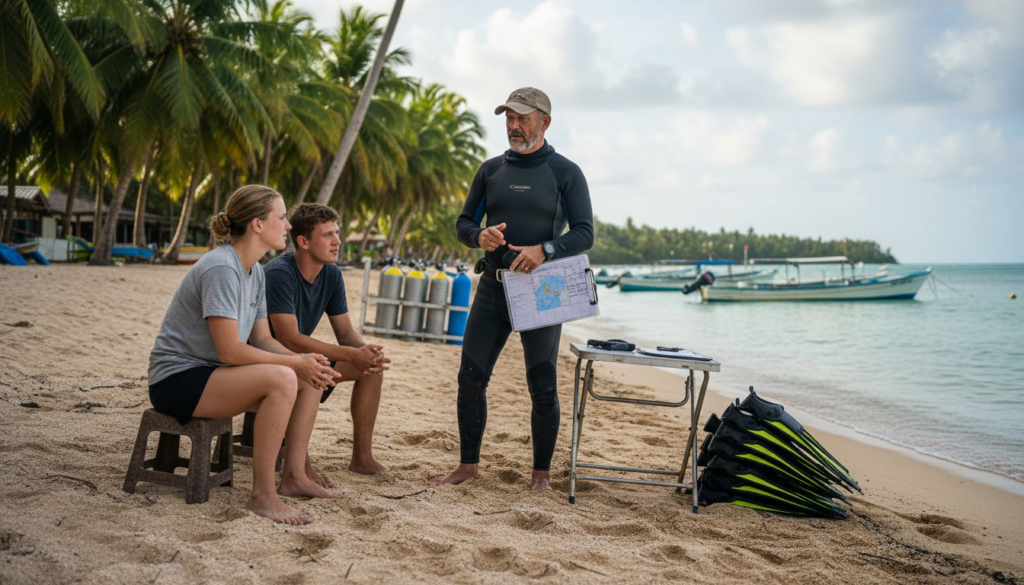
Many travellers assume PADI instructors simply demonstrate scuba skills underwater, but their role extends far deeper into critical safety decisions and life-saving judgement calls. Your instructor doesn’t just teach you how to clear your mask or control buoyancy. They train you to think critically under pressure, recognise danger before it escalates, and respond effectively when unexpected situations arise. In Bali’s vibrant diving environment, where diverse conditions and stunning biodiversity create both opportunity and challenge, understanding what your PADI instructor actually does transforms your certification from a tick-box exercise into genuine preparation for confident, safe diving adventures.
Key takeaways
| Point | Details |
|---|---|
| Safety frameworks | PADI instructors teach structured protocols like the drowning chain of survival, preparing you for emergency response |
| Critical thinking development | Instructors guide you to apply knowledge in unexpected situations, not just memorise procedures |
| Personalised attention | Small group instruction in Bali adapts to your learning style and local dive conditions |
| Beyond skill demonstration | Your instructor trains decision-making abilities essential for independent, confident diving |
Understanding the essential role of a PADI instructor
When you sign up for PADI certification in Bali, you’re not just learning physical techniques. Your instructor serves as safety guardian, critical thinking coach, and decision-making mentor throughout your underwater education. This multi-layered responsibility distinguishes professional dive instruction from simple skill demonstration.
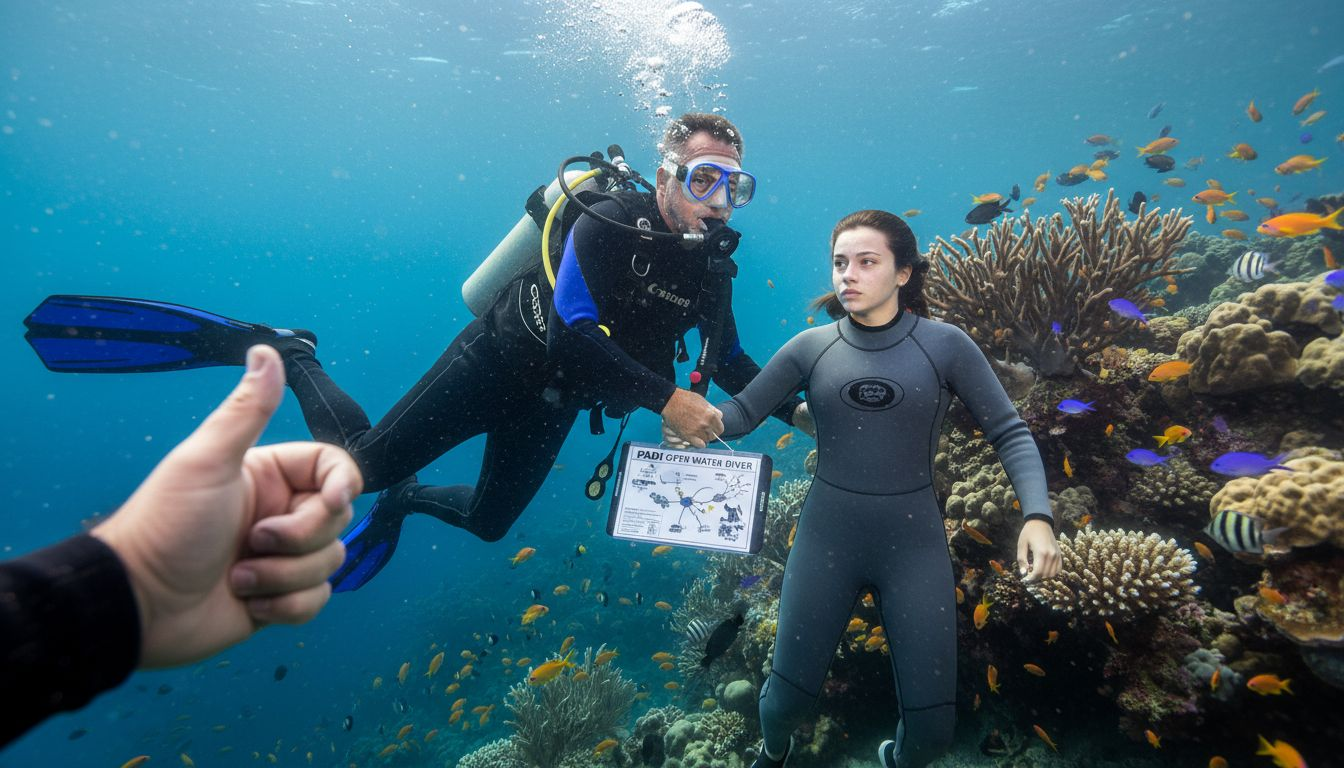
Critical thinking is a higher-order mental skill essential for divers, requiring application of knowledge to novel situations rather than rote procedure following. Your instructor must possess these abilities themselves before effectively teaching you. They continuously assess underwater conditions, monitor student behaviour, and make split-second judgements about safety whilst simultaneously demonstrating techniques and providing feedback.
The responsibilities extend across several domains:
- Teaching foundational skills like buoyancy control, equipment management, and underwater navigation
- Developing your awareness of environmental factors affecting dive safety
- Training emergency readiness through scenario practice and rescue protocols
- Building personal responsibility for dive planning and risk assessment
- Modelling professional behaviour and critical decision-making under pressure
Pro Tip: Watch how your instructor responds when conditions change unexpectedly during training dives. Their calm, methodical approach to problem-solving demonstrates the critical thinking skills they’re teaching you.
Understanding PADI dive instructor qualifications reveals the extensive preparation behind this role. Instructors complete hundreds of dives, master rescue techniques, and undergo rigorous teaching assessments before earning certification. This preparation ensures they can handle the complex, simultaneous demands of underwater instruction whilst maintaining absolute focus on your safety and learning progress.
The drowning chain of survival: a cornerstone framework for PADI instructors
Every PADI instructor teaches and enforces the drowning chain of survival, a structured protocol that underpins emergency response in diving. This framework transforms chaotic panic into organised, effective action when seconds determine outcomes.
| Chain Link | Action Required | Instructor’s Role |
|---|---|---|
| Recognition | Identify distress signals | Train students to spot subtle warning signs |
| Assistance | Provide immediate support | Teach proper approach and communication |
| Flotation | Establish positive buoyancy | Demonstrate equipment use and positioning |
| Removal | Extract from water safely | Guide efficient rescue techniques |
| Medical care | Deliver first aid and oxygen | Ensure certification in emergency protocols |
Your instructor doesn’t just explain this chain theoretically. During your PADI Rescue Diver course, you practice each link through realistic scenarios that build muscle memory and decision-making speed. This hands-on training ensures you can execute the protocol instinctively when stress levels spike.
The chain’s power lies in its simplicity. Rather than requiring complex medical knowledge, it provides clear steps anyone can follow:
- Recognise distress before it becomes panic or unconsciousness
- Provide immediate verbal reassurance and physical assistance
- Establish positive buoyancy using the distressed diver’s equipment or your own
- Remove the person from water using appropriate techniques for the situation
- Deliver oxygen and first aid whilst arranging professional medical care
Pro Tip: Distress often appears as subtle changes in breathing patterns, equipment position, or swimming efficiency before visible panic occurs. Your instructor trains you to recognise these early warning signs, allowing intervention before situations escalate.
Instructors with proper qualifications regularly refresh their emergency response skills, ensuring they can demonstrate and guide you through each chain link with current best practices. This ongoing professional development means your safety training reflects the latest research and field experience.
How PADI instructors cultivate critical thinking under water
Teaching you to think critically underwater requires fundamentally different methods than traditional classroom instruction. Your instructor can’t simply lecture about decision-making and expect you to apply it when nitrogen narcosis clouds your judgement at 30 metres depth.
Teaching critical thinking involves guiding students through discussions and providing techniques rather than direct instruction. Your instructor creates scenarios, asks probing questions, and helps you discover solutions through guided exploration. This Socratic approach builds genuine understanding rather than surface-level memorisation.
The process unfolds through specific techniques:
- Pre-dive briefings that pose hypothetical problems and discuss potential responses
- Underwater scenarios where you must assess conditions and choose appropriate actions
- Post-dive debriefs analysing decisions, outcomes, and alternative approaches
- Progressive complexity as your skills develop, introducing new variables and challenges
- Modelling by instructors who verbalise their own thinking processes during demonstrations
Think of it like learning to ride a bicycle. Your instructor can explain balance, steering, and pedalling, but you must practice applying these concepts simultaneously whilst moving. They run alongside, providing guidance and catching you when needed, until your brain integrates the separate skills into fluid, automatic performance.
Critical thinking in diving means applying your knowledge to unique situations you’ve never encountered before, making sound judgements when conditions don’t match your training scenarios exactly.
Your instructor demonstrates this constantly. When visibility drops unexpectedly, they don’t panic or blindly follow the original plan. They assess the situation, consider alternatives, communicate clearly with the group, and adjust the dive profile appropriately. Watching this process repeatedly teaches you the mental framework for your own decision-making.
Pro Tip: After each dive, ask your instructor why they made specific decisions during the dive. Understanding their reasoning process accelerates your own critical thinking development.
As you progress through advanced qualifications, critical thinking becomes even more vital. Technical diving, deep dives, and challenging environments demand split-second judgements with potentially serious consequences. Your foundational training with a skilled instructor establishes the mental habits that keep you safe throughout your diving career.
Personalised instruction in Bali: ensuring safety and confidence on your diving journey
Bali’s diving environment presents unique opportunities and challenges that generic instruction can’t adequately address. Your PADI instructor in Amed or other Bali locations tailors teaching to local conditions, your individual learning style, and the specific sites you’ll explore during certification.
Smaller class sizes at quality Bali dive centres mean your instructor can monitor your progress closely, identifying and addressing difficulties before they become ingrained bad habits. This personalised attention proves particularly valuable for nervous beginners or those with previous challenging experiences. Your instructor adjusts pacing, provides additional practice time for difficult skills, and offers encouragement calibrated to your personality and needs.
Local expertise makes enormous difference to your learning experience:
- Understanding current patterns at specific Bali dive sites and timing dives accordingly
- Recognising local marine life behaviour and teaching appropriate interaction protocols
- Knowing seasonal variations in visibility, temperature, and conditions
- Identifying the best training locations for different skill levels and learning objectives
- Communicating with local dive operators, boat crews, and emergency services when needed
Your instructor’s familiarity with Bali’s underwater landscape means they can select training sites that match your current abilities whilst providing appropriate challenge. Calm, shallow bays for initial skills, then progression to gentle slopes with marine life encounters, building towards more complex environments as your confidence grows.
Personalised coaching extends beyond technical skills. Your instructor helps you develop the psychological resilience essential for safe diving. They recognise when you’re pushing too hard versus when gentle encouragement will help you break through mental barriers. This emotional intelligence distinguishes exceptional instructors from merely competent ones.
Adapting to individual learning styles accelerates skill acquisition. Some students learn best through visual demonstration, others through detailed verbal explanation, still others through immediate hands-on practice. Your instructor assesses your preferences and adjusts their teaching approach accordingly, ensuring efficient progress through your dive course.
Discover PADI courses with expert instructors at Bali Dive Cove
Now that you understand what makes PADI instruction truly effective, you’re ready to experience it firsthand. Bali Dive Cove offers comprehensive dive courses where experienced instructors provide the personalised attention, critical safety training, and confidence-building support described throughout this article.
Our instructors bring over 16 years of diving experience and intimate knowledge of Amed’s reefs, wrecks, and conditions. Whether you’re taking your first breaths underwater or advancing towards Rescue Diver certification, we maintain small groups and unhurried pacing that prioritises your safety and genuine skill development over rushing through requirements.
Explore stunning Bali dive sites whilst learning from instructors who understand both the technical demands of scuba instruction and the personal journey each student undertakes. Your certification becomes more than a card in your wallet. It represents genuine readiness for confident, safe diving adventures wherever your travels take you.
FAQ
What qualifications do PADI instructors have?
PADI instructors complete extensive training including Divemaster certification, instructor development courses, and rigorous evaluation examining both diving skills and teaching abilities. They must demonstrate mastery of rescue techniques, equipment knowledge, and emergency protocols. Most instructors accumulate hundreds of dives before earning certification, ensuring they possess the experience necessary to handle diverse situations and student needs safely.
How do PADI instructors teach safety beyond skills?
Instructors teach structured frameworks like the drowning chain of survival that provide clear protocols for emergency response. They develop your critical thinking abilities through scenario practice, guided discussions, and progressive challenges that build decision-making confidence. This approach prepares you to handle unexpected situations by applying principles rather than just memorising procedures, creating genuine safety competence.
Why is personalised instruction important in Bali?
Bali’s diverse dive sites and varying conditions require tailored instruction that addresses local factors like currents, visibility, and marine life behaviour. Personalised teaching adapts to your learning style, pace, and comfort level, accelerating skill development whilst building confidence. Smaller class sizes allow instructors to monitor your progress closely and address difficulties before they become problematic, ensuring better safety outcomes and more enjoyable learning experiences.
What should I expect from a PADI course in Bali?
Expect comprehensive skill training covering buoyancy control, equipment management, navigation, and emergency procedures. Your course includes critical safety education through frameworks like the drowning chain of survival and scenario-based practice. Personal coaching from experienced instructors helps you develop confidence and competence at your own pace. You’ll explore diverse Bali dive sites, encountering vibrant marine life whilst applying your new skills in real-world conditions under professional supervision.
