

TL;DR:
- Shore diving in Bali offers easy access from beaches suitable for all skill levels.
- East Bali sites like Tulamben and Amed feature calm conditions and rich marine life.
- It provides cost-effective, flexible diving with excellent opportunities for macro photography and skill building.
Most travellers picture Bali diving as a boat affair, loading tanks at dawn and motoring out to distant reefs. But some of the island’s most extraordinary underwater experiences begin right at the water’s edge. The USAT Liberty Wreck at Tulamben, for example, sits just 30 metres offshore at depths of 5 to 30 metres, making it one of the world’s most accessible wreck dives. Shore diving in Bali is genuinely suited to every skill level, from curious first-timers to seasoned divers seeking independence and flexibility. This guide explains what shore diving actually involves, where Bali’s best shore sites are, how it compares to boat diving, and how you can get started safely and confidently.
Key Takeaways
| Point | Details |
|---|---|
| Shore diving defined | It means entering from land, combining flexibility and budget benefits compared to boat-based trips. |
| Bali’s top sites | Tulamben, Amed, and Jemeluk offer world-famous, easy-access shore dives suitable for all experience levels. |
| Great for learning | Calm, clear waters and shallow reefs make Bali’s shore dives perfect for new divers and PADI courses. |
| Key skills and safety | Success with shore diving relies on entry technique, gear handling, and honest self-assessment of conditions. |
What is shore diving? A simple explanation
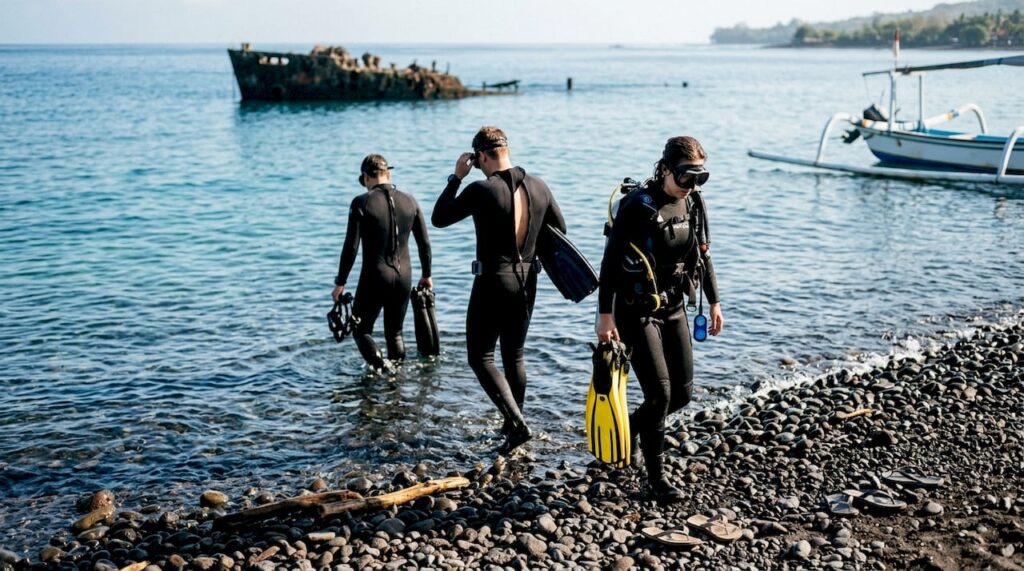
Shore diving simply means entering the water directly from a beach, jetty, or rocky shoreline rather than from a boat. You gear up on land, walk or wade into the water, and begin your dive from there. It sounds straightforward because it is, though a little preparation makes the experience far more enjoyable.
Shore diving is practised all over the world. The Mediterranean, the Caribbean, and Southeast Asia all have celebrated shore entry sites. In Bali, the volcanic black sand beaches and calm bays of East Bali create particularly welcoming conditions for this style of diving. Sites like Jemeluk Bay in Amed offer gentle, shallow entries that are ideal for beginners and training dives alike.
The process itself is simple. You assemble your equipment on shore, perform your buddy checks, and enter the water at a designated entry point. You then navigate to your dive site, complete your dive, and return to the same or a nearby exit point. Local knowledge matters here, as knowing where to enter and exit saves effort and keeps you safe.
Shore diving carries some clear advantages. According to Divernet, shore diving offers flexible scheduling, lower costs, unlimited repeat dives, excellent skill practice, and rich macro life compared to boat-based alternatives. The trade-offs are real too: you carry your own gear across the beach, navigate surf entries and exits, and do not have the immediate safety support of a boat crew nearby.
Advantages and disadvantages of shore diving:
- Flexible schedule: Dive when you want, as many times as you like
- Lower cost: No boat fees, just air fills and any site entry charges
- Skill development: Excellent for practising buoyancy, navigation, and equipment handling
- Macro life: Shallow reef zones near shore are treasure troves for nudibranchs, frogfish, and critters
- Gear carrying: You transport all equipment to and from the water yourself
- Surf awareness: Entry and exit through waves requires confidence and technique
- Self-reliance: Navigation and safety management rest primarily with you and your buddy
Pro Tip: Before your first shore dive, spend a few minutes watching other divers enter and exit. Note the wave patterns, the footing, and where experienced divers choose to enter. This simple observation reduces stress and builds confidence before you even get your fins wet. Understanding dive resort experiences beforehand also helps you set realistic expectations for what to expect on arrival.
Bali’s top shore diving locations and conditions
Now that shore diving basics are defined, let’s see why Bali stands out as a paradise for this type of diving. East Bali, in particular, offers conditions that are almost tailor-made for shore entry dives, combining calm bays, rich reefs, and easy access from the beach.
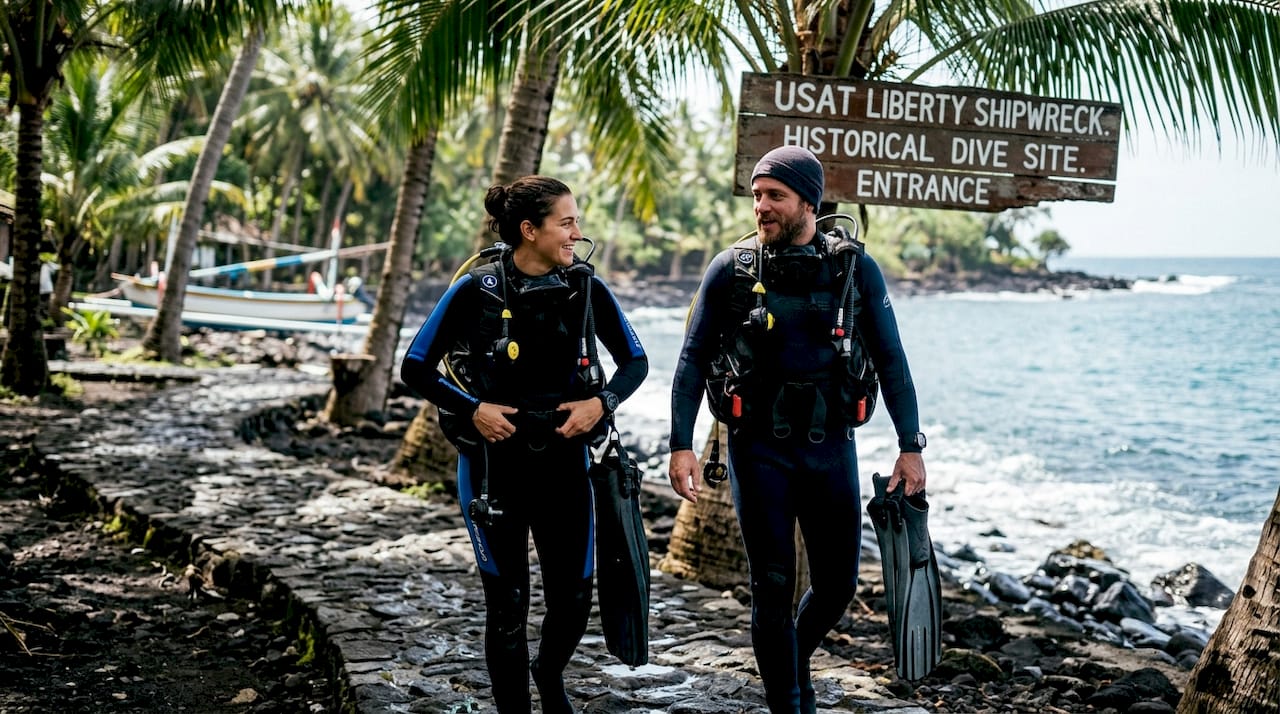
Tulamben is home to the USAT Liberty, an American cargo ship torpedoed in 1942 and now one of the most visited dive sites in Asia. The wreck sits just 30 metres offshore, with the shallowest sections starting at around 5 metres and the deepest reaching 30 metres. Entry is from a black pebble beach, and the site is suitable for beginners and experienced divers alike. It is a genuine dive into history, covered in vibrant corals and teeming with fish.
Amed offers a different but equally rewarding experience. Jemeluk Bay is a calm, sheltered cove with a gently sloping sandy bottom that transitions into coral gardens. It is one of the most beginner-friendly Bali dive sites anywhere on the island, with mild currents and superb visibility. The bay is also excellent for macro diving, with seahorses, nudibranchs, and octopus regularly spotted in the shallows.
Water conditions across both areas are consistently welcoming. Visibility typically ranges from 15 to 25 metres, and water temperatures stay between 27 and 30°C throughout the year. Currents are generally mild at most shore sites, making them excellent choices for beginner dive sites and PADI training programmes.
| Site | Depth range | Entry type | Best for | Conditions |
|---|---|---|---|---|
| USAT Liberty, Tulamben | 5 to 30m | Pebble beach | All levels, wreck lovers | Mild current, 20m+ visibility |
| Jemeluk Bay, Amed | 3 to 20m | Sandy beach | Beginners, macro divers | Calm, clear, sheltered |
| Japanese Wreck, Amed | 10 to 28m | Rocky shore | Intermediate divers | Mild current, good visibility |
| Coral Garden, Amed | 3 to 15m | Sandy beach | Snorkellers, beginners | Very calm, shallow |
Both Tulamben and Amed are reachable by road from Bali’s main tourist areas, typically within two to three hours from Seminyak or Kuta. This accessibility, combined with year-round conditions, makes East Bali the undisputed heart of shore diving on the island.
Shore diving vs boat diving: What to consider in Bali
You’ve learned Bali’s best shore spots, but how do they stack up against traditional boat dive adventures? The honest answer is that neither option is universally better. The right choice depends on your goals, experience, and what you want from your time underwater.
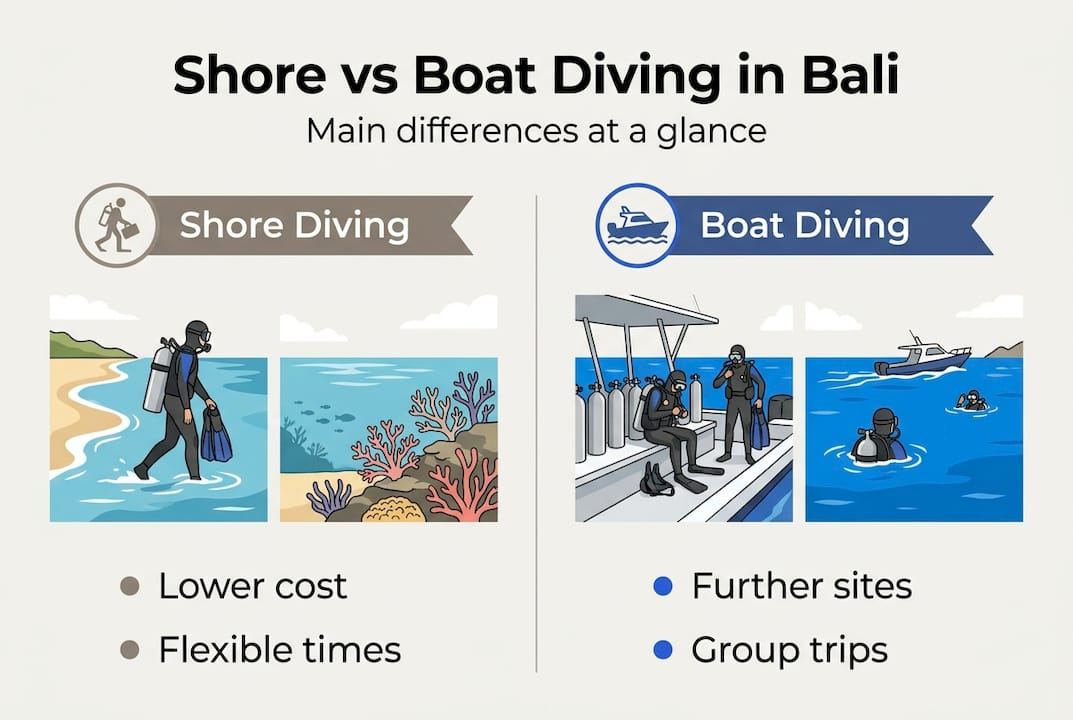
| Factor | Shore diving | Boat diving |
|---|---|---|
| Cost | Lower, no boat fees | Higher, includes transport |
| Accessibility | Walk-in, flexible timing | Scheduled departures |
| Training value | Excellent for beginners | Less ideal for confined skills |
| Gear logistics | Carry yourself to water | Loaded onto boat |
| Marine life | Rich macro, reef species | Pelagic, deep water species |
| Depth range | Typically 3 to 30m | Can reach 30m and beyond |
| Independence | High, self-directed | Guided, group-paced |
As Divernet notes, boat diving is the better choice for reaching deep or offshore sites and spotting pelagic species like manta rays and sharks. Shore diving, however, excels for flexibility, cost savings, and beginners learning in calm, controlled environments.
Factors to consider when choosing:
- Your experience level: New divers benefit enormously from the calm, predictable conditions of shore entries in Amed and Tulamben
- Your budget: Shore diving is consistently more affordable, particularly for multiple dives in a single day
- What you want to see: Macro life, coral gardens, and wrecks are all accessible from shore; manta rays typically require a boat
- Your comfort with gear: Shore diving means carrying tanks and equipment across beaches, which can be tiring
- Time flexibility: Shore diving lets you dive at sunrise, midday, or sunset without waiting for a boat schedule
Pro Tip: If you are completing a PADI Open Water course, many of your training dives will be conducted as shore dives. This is actually a significant advantage, as it builds real-world skills from day one. Reviewing dive preparation tips before your course helps you arrive ready and relaxed. For further guidance on choosing the right location, site selection advice can help narrow down the best match for your goals.
Is shore diving for you? Safety, skills, and getting started in Bali
Understanding your options is only half the picture; next comes deciding if shore diving fits your goals and safety needs. The good news is that shore diving in Bali is genuinely accessible, provided you approach it with the right preparation.
Shore diving is the backbone of PADI Open Water training in Bali. Many students complete their PADI training dives from calm beach entries, building navigation and buoyancy skills in real conditions from the very first session.
Essential safety tips for shore diving:
- Always attend a full site briefing before entering the water
- Complete thorough buddy checks, covering air, buoyancy, releases, and signals
- Identify your entry and exit points clearly before you enter
- Check local conditions: tide, current direction, and visibility
- Carry a surface marker buoy (SMB) so boats can see you when you surface
- Never dive alone, and stay within your certification limits
Safety in shore diving also means understanding the physical demands. Carrying gear across rocky or pebbly beaches requires sturdy footwear and a steady pace. Surf entries, even in calm Bali conditions, need a confident technique to avoid stumbling.
Basic skills every new shore diver should practise:
- Controlled surf entry and exit with fins on
- Underwater navigation using natural landmarks and a compass
- Buoyancy control in shallow water before descending
- Signalling and communication with your buddy
Steps to get started with shore diving in Bali:
- Research safe beginner sites like Jemeluk Bay or the Liberty Wreck shallows
- Book a PADI course or guided shore dive with a qualified local instructor
- Conduct a full equipment check the evening before your dive
- Ask your instructor about specific entry and exit conditions at your chosen site
- Start shallow, build confidence, and extend your depth gradually over multiple dives
Bali’s shore diving community is welcoming and supportive. Local instructors know the reefs intimately and can guide you through conditions that might seem daunting at first but quickly become second nature.
A local perspective: How shore diving changed what we thought about Bali diving
When we first started guiding dives in Amed, we assumed experienced divers would always prefer boats. More distance, more depth, more drama. What we discovered surprised us.
The divers who returned most often were the ones who had done shore dives. They came back for the pace, the freedom, and the marine life that only reveals itself when you slow down and look closely. A nudibranch the size of your thumbnail. A frogfish sitting motionless on a coral head. These are the moments that stay with people, and they happen in the shallows just metres from the beach.
Shore diving also builds a kind of confidence that boat diving rarely does. When you navigate yourself to a site, manage your own entry, and surface safely under your own judgement, you feel genuinely capable underwater. That confidence accelerates learning for students working towards their PADI certification.
What we wish more visitors knew before arriving: local etiquette, gear organisation, and reading the water matter as much as any technical skill. The glossy brochures rarely mention that the best shore divers are the ones who observe, ask questions, and respect the reef. Those habits make every dive better, whether it is your first or your five hundredth.
Start your Bali shore diving adventure
Inspired to try shore diving yourself? Here’s how you can make it happen in Bali. At Bali Dive Cove, we specialise in exactly this kind of experience: relaxed, guided shore dives from Amed’s best entry points, led by instructors with over 16 years of local knowledge.
Whether you want to explore the Liberty Wreck, discover Jemeluk Bay’s coral gardens, or earn your PADI certification in calm, clear water, we have dive packages and PADI dive courses designed for every level. Our small group approach means you dive at your own pace, with personal attention throughout. Browse our Bali shore dive sites or get in touch to build a custom itinerary that fits your schedule, goals, and experience level. We would love to show you what Amed’s reefs have to offer.
Frequently asked questions
How shallow are Bali’s shore dives, and are they suitable for beginners?
Shore dives in Bali typically range from 5 to 30 metres deep with calm, clear conditions, making them well-suited to new and learning divers, particularly at sites like Jemeluk Bay and the Liberty Wreck shallows.
What equipment do I need for shore diving in Bali?
You’ll need standard scuba gear including mask, fins, BCD, regulator, and wetsuit, plus sturdy footwear and a mesh bag, since carrying gear across rocky or pebbly beaches is a key part of shore diving logistics.
Is shore diving cheaper than boat diving in Bali?
Yes, shore dives are generally more affordable because you avoid boat transport costs and typically pay only for air fills and any site entry fees, making shore diving cheaper for divers wanting multiple dives per day.
Do I need special training for shore diving?
Basic scuba certification covers shore diving, but learning specific entry and exit techniques is strongly recommended. Many PADI Open Water training dives in Bali are conducted as shore dives, so beginners naturally develop these skills during their course.
