

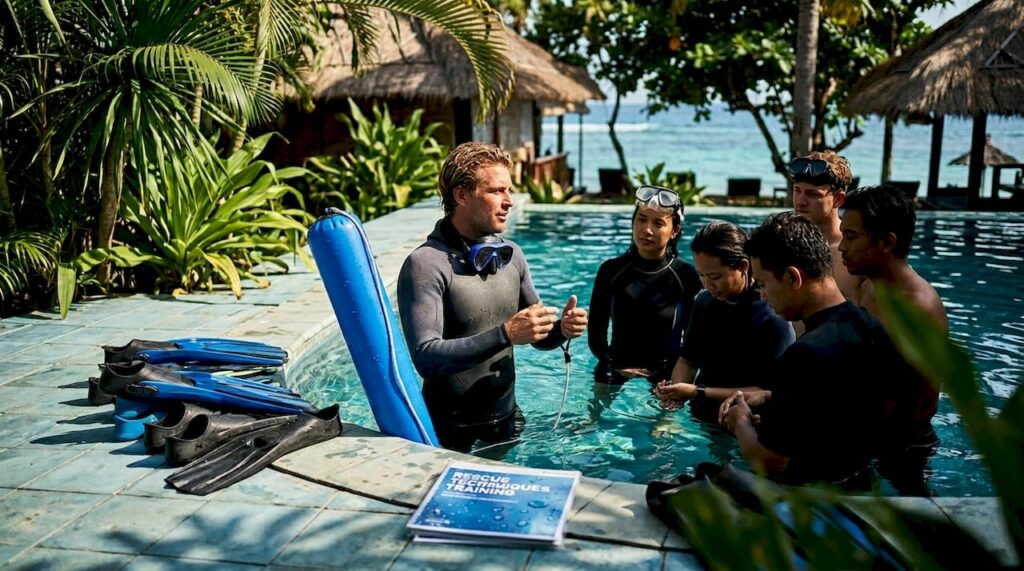
TL;DR:
- Rescue diver training improves safety awareness and emergency response skills for recreational divers.
- The course is manageable in 2-3 days and highly beneficial, even for occasional divers.
- Holding rescue skills makes every Bali dive safer, calmer, and more enjoyable.
Many holiday divers assume that rescue diver certification is reserved for dive professionals, instructors, or emergency response teams. In reality, it is one of the most rewarding and practical certifications available to recreational divers of every level. Whether you are planning your first multi-day diving trip to Amed or you already have dozens of dives in your logbook, understanding what rescue divers do and how they are trained can genuinely change the way you experience the underwater world in Bali. This guide walks you through everything you need to know, from certification requirements and course comparisons to real-world applications along Bali’s spectacular reefs.
Key Takeaways
| Point | Details |
|---|---|
| Rescue diver definition | A rescue diver is trained to prevent and respond to underwater emergencies, not just professionals. |
| Safety statistics | Rescue diver skills address common causes of diving accidents, enhancing safety for all. |
| Course comparisons | Different agencies offer varying course intensity and structure, but all teach essential rescue skills. |
| Holiday benefit | Holiday divers in Bali can boost their confidence and safety with rescue diver training. |
Defining the rescue diver
The term “rescue diver” might conjure images of dramatic ocean rescues or professional coast guard operations, but the reality is far more accessible. A rescue diver certification is offered by agencies such as PADI, SSI, SDI, and NAUI, and focuses specifically on emergency response, self-rescue, and the ability to assist other divers in distress. It is a recreational certification, not a professional one, meaning it is designed for everyday divers who want to be better prepared underwater.
At its core, the rescue diver certification equips you with skills that go far beyond buoyancy control or navigating a reef. You learn how to recognise stress in other divers before it escalates, how to manage your own fear and fatigue in challenging situations, and how to provide effective assistance when something goes wrong. These are not abstract skills either. They are practised hands-on in real water, making the training genuinely memorable and engaging.
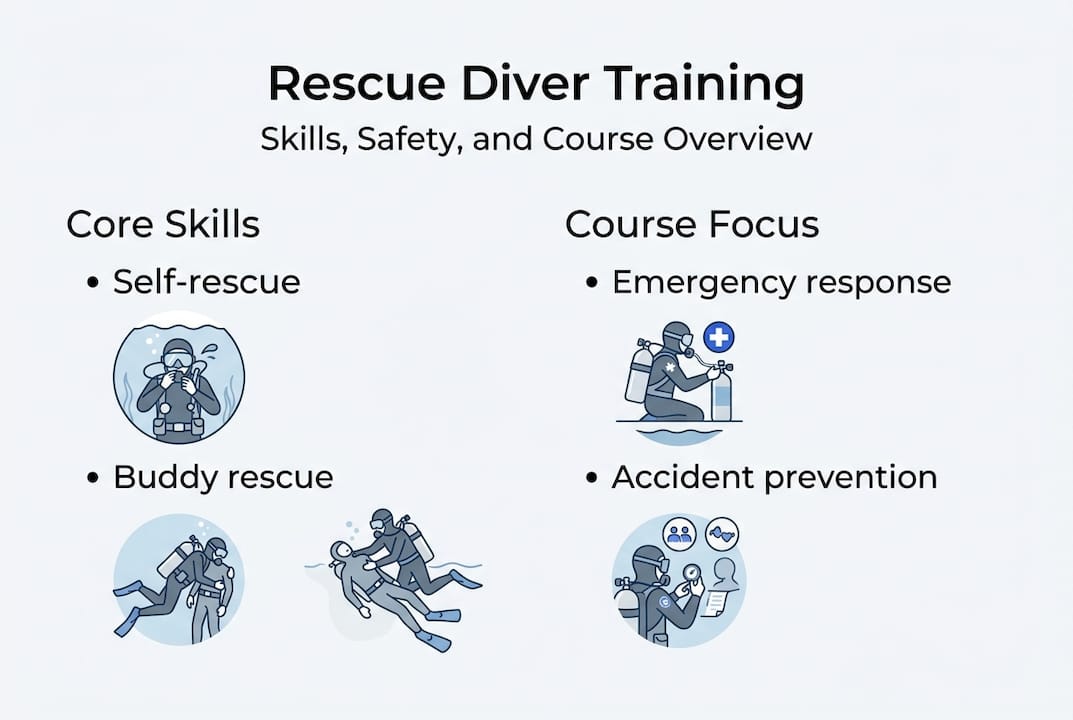
Here is what you can typically expect to learn across most rescue diver programmes:
- Recognising and managing diver stress both at the surface and underwater
- Self-rescue techniques, including managing equipment failures and controlling your own buoyancy under pressure
- Assisting unresponsive divers, including bringing them to the surface safely
- Rescue breathing and basic first aid at the surface
- Emergency planning and coordination with dive leaders and surface support
- Search patterns for missing divers
“Rescue diver certification transforms a passive diver into an active, aware participant in group safety. It shifts your mindset from simply enjoying the dive to understanding the full picture of what is happening around you.”
The PADI Rescue Diver course in Amed follows this same framework, blending classroom learning, confined water practice, and open water scenarios into a structured and genuinely exciting progression. Once you hold this certification, you see every dive differently. Not with anxiety, but with a calm, confident awareness that makes the whole experience richer.
Why rescue diver training matters
Understanding the value of rescue diver skills, let us examine why such training is critical for Bali’s holiday divers.
Bali is one of the world’s most popular dive destinations, and with good reason. The reefs around Amed, the famous USAT Liberty wreck at Tulamben, and the strong currents of Nusa Penida draw divers of all abilities, from complete beginners to seasoned technical divers. But popularity and variety also mean a broad range of skill levels sharing the water, and that creates real safety considerations.
Scuba fatality rates are estimated at around 2 per million dives in the United States, with higher rates among older divers aged 50 and above, who account for roughly 50 to 65 percent of diving fatalities. The most common contributing factors include panic, lack of training or experience, and diving alone or becoming separated from a group. Crucially, rescue training directly addresses all of these factors by teaching divers to anticipate problems before they escalate.
| Risk factor | How rescue training addresses it |
|---|---|
| Panic | Teaches self-rescue breathing and controlled emergency ascent |
| Lack of experience | Builds situational awareness and pre-dive safety checks |
| Separation from group | Trains search patterns and surface signalling techniques |
| Unresponsive buddy | Practises in-water rescue and surface towing |
| Equipment failure | Drills alternate air source use and buoyancy control under stress |
For holiday divers visiting Bali, the relevance is clear. You may be diving with people you have only just met on a boat, in conditions that are unfamiliar, with currents that behave differently to your home waters. Having even one trained rescue diver in a group can be the difference between a minor incident and a serious emergency. Learning about safe diving in Bali is something every visitor should prioritise before getting in the water.
Pro Tip: The biggest benefit of rescue training is not what you do during an emergency. It is how you prevent one. Trained divers naturally monitor their buddies more closely, communicate more clearly before entering the water, and feel calmer when conditions become challenging. This proactive mindset is what sets rescue-trained divers apart.
Comparing rescue diver courses
If safety is a priority, choosing the right rescue diver course is the next step. Not all rescue diver programmes are structured the same way, and understanding the differences helps you pick the option that fits your timeline and goals during your Bali holiday.
Course structures vary considerably between agencies. PADI’s approach, shaped by its American heritage, tends to be more streamlined and modular, typically completed in two to three days after you hold your Advanced Open Water Diver certification. SSI offers a comparable programme called Stress and Rescue, which follows a similarly efficient format. European agencies such as CMAS and BSAC take a longer and more intensive approach, often spreading training across several weekends, with greater emphasis on theoretical assessment and prolonged in-water scenarios. All certifications are internationally recognised, and the skills they teach are equivalent regardless of the name on the card.
Here is a straightforward comparison to help you choose:
| Agency | Course name | Typical duration | Intensity | Prerequisites |
|---|---|---|---|---|
| PADI | Rescue Diver | 2 to 3 days | Moderate | Advanced Open Water + EFR |
| SSI | Stress and Rescue | 2 to 3 days | Moderate | Advanced Adventurer + CPR |
| CMAS | Rescue Diver 2 | 3 to 5 days | High | CMAS 2 Star |
| BSAC | Sports Diver | Multiple sessions | High | Ocean Diver |
Most holiday divers visiting Bali will find the PADI or SSI route most practical, simply because the time commitment fits a week-long or two-week trip without sacrificing too many days of recreational diving. Here is what you can expect from the PADI programme specifically:
- Knowledge development: Self-study or instructor-led sessions covering emergency scenarios, rescue techniques, and dive accident management.
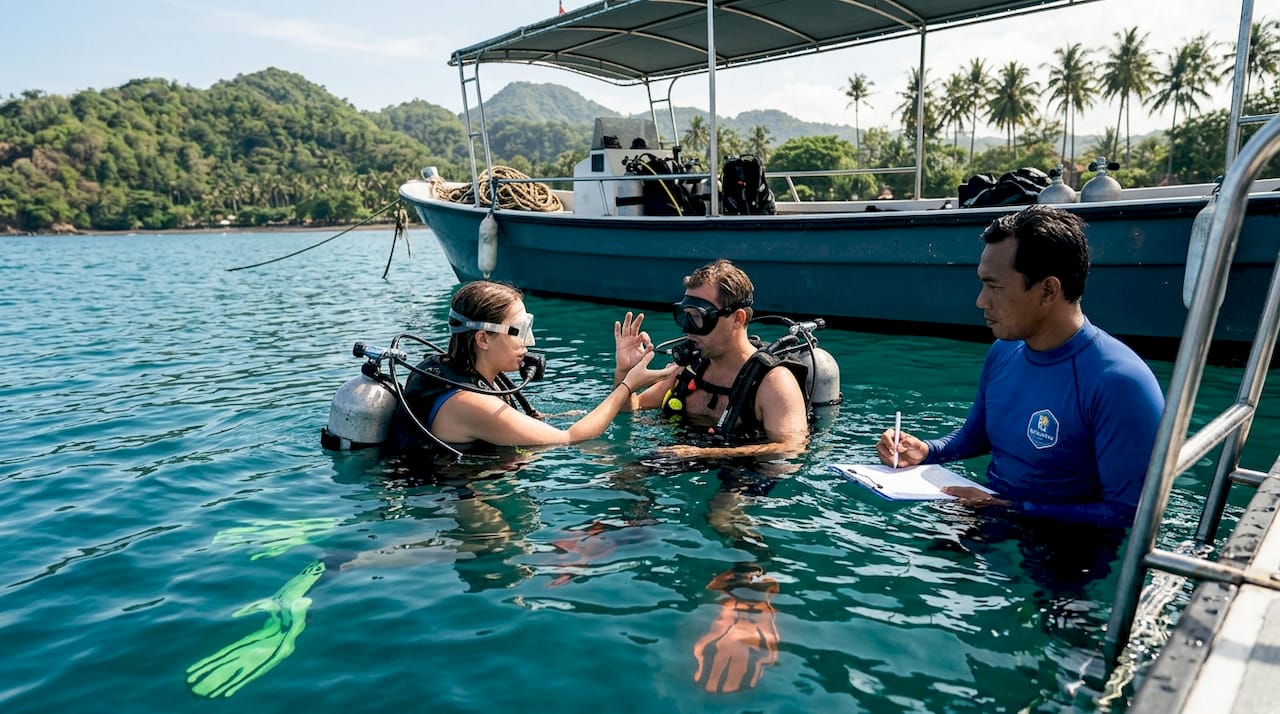
- Confined water skills: Practising rescue techniques in shallow, controlled water, including removing an unresponsive diver’s equipment.
- Open water scenarios: Realistic, multi-step rescue exercises in the sea, often culminating in a full-scale simulated emergency.
- Emergency First Response integration: Most agencies require a current CPR and first aid qualification, which can often be completed the day before your rescue course.
Choosing a PADI 5-Star resort for your training, rather than a budget operation, genuinely makes a difference. You get smaller groups, more personalised feedback, and instructors who know the local conditions. Exploring the dive course options available in Amed gives you a clear picture of how this structured progression works in practice.
How rescue diver skills are applied in Bali
With the right course selected, it is time to see how these skills are put to use while diving in Bali. The theory comes alive quickly when you are actually in the water, and the confidence that comes with rescue training shapes every dive you do from that point forward.
Bali’s dive sites offer a wonderful variety of environments, and each one presents its own set of conditions. The shallow, sandy bays around Amed are ideal for relaxed recreational diving, while the deeper sections of the USAT Liberty wreck demand careful buoyancy and awareness. In sites like these, rescue diver skills help anticipate and prevent incidents, and divers who hold this certification consistently report it as one of the most rewarding steps in their diving journey.
Here is how rescue skills typically come into play on a Bali diving holiday:
- Pre-dive buddy checks become second nature. Trained divers do not rush through safety checks. They notice when a buddy’s tank is only partially open, or when someone looks anxious before entering the water.
- Surface management improves dramatically. You become confident handling situations at the surface, where many incidents actually occur, including a diver who is struggling with their kit or panicking after a fast ascent.
- Group awareness sharpens. Rescue-trained divers naturally keep track of where everyone in the group is, especially during drift dives where currents can quickly separate people.
- Response to fatigue and stress is calmer. Knowing exactly what to do in an emergency makes you far less likely to panic yourself, which keeps the situation manageable.
- Communication with divemasters and instructors is clearer. You share a common language and set of protocols, making teamwork more effective and instinctive.
Pro Tip: Even on a relaxed holiday dive, integrate one or two small habits from your rescue training. Position yourself where you can see all group members, make a mental note of the nearest exit point, and take a moment at the surface to assess whether everyone in the group looks comfortable. These small acts cost nothing but can make an enormous difference.
Whether you book dive packages in East Bali that cover multiple sites over several days, or you simply want a structured week of guided dives, having rescue skills aboard the boat quietly reassures everyone. Dive resorts recognise this too. Understanding what a quality dive resort offers in terms of safety culture and support is worth reading before you commit to any programme.
Why every holiday diver should consider rescue training
Having seen how rescue diver skills are applied in Bali, let us reflect on why these abilities matter for every diver visiting, not just those planning a career in diving.
Here is a perspective that might surprise you: rescue diver training is arguably the single most underrated confidence booster in recreational scuba diving. Most divers focus on accumulating logged dives, ticking off famous sites, or moving towards the Divemaster threshold. Rescue training tends to get overlooked as something you “should do eventually.” That is a genuine shame, because the transformation it creates happens almost immediately.
We have seen this pattern repeatedly at Bali Dive Cove. Divers who arrive with 50 or 100 dives often feel quietly uncertain in unfamiliar conditions. They manage their own dive well but feel vague and passive when it comes to the overall group dynamic. After completing rescue training, those same divers carry themselves differently in the water. They are not nervous or hyper-vigilant. They are simply present in a way they were not before.
The conventional wisdom says rescue training is for people who want to become divemasters or instructors. We disagree entirely. The skills you build during a rescue course, particularly the ability to read other divers’ body language and stay calm under pressure, make every recreational dive more enjoyable. You stop being a passenger and start being a genuinely aware participant. That shift in mindset is worth more than another ten logged fun dives.
There is also the social dimension. When you are on a liveaboard or a day boat with a group of strangers, knowing that someone in the group is rescue-certified subtly changes the atmosphere. People feel safer, and that safety allows everyone to relax more deeply into the experience. You become a quiet, positive asset to every dive you join, regardless of the conditions or the site.
If you are weighing up the scuba certification benefits for your next trip to Bali, rescue training deserves to sit at the very top of your list. Not because accidents are common, but because the confidence and awareness it builds will genuinely improve every single dive you do from that day forward.
Next steps: Dive into rescue diver training in Bali
As you consider your own Bali diving adventure, here is how to take the next step into rescue diver training. At Bali Dive Cove, we have guided divers through every stage of the PADI progression, from first breaths underwater to rescue certification, in the warm, clear waters of Amed. Our instructors bring over 16 years of local knowledge to every session, keeping groups small and the experience personal.
Whether you are already an Advanced Open Water Diver ready to take the next step, or you are planning your certification pathway from scratch, we can build a programme that fits your schedule and your goals. Explore our full range of dive courses in Bali to see how rescue training slots naturally into your trip, or browse our Bali dive packages to combine skills development with guided dives across Amed’s most spectacular sites. Get in touch with us directly and we will help you plan a holiday that makes you a more capable, more confident diver before you leave.
Frequently asked questions
Do I need to be an experienced diver to start rescue diver training?
Most courses require an Advanced Open Water certification as a minimum, but you do not need years of experience behind you, just a solid foundation in the basics.
How long does a rescue diver course typically last?
PADI rescue courses generally run over two to three days, making them ideal for a one or two week holiday in Bali, while European programmes such as BSAC can take considerably longer due to their added intensity.
Is rescue diver training useful for holiday divers who only dive occasionally?
Absolutely. Rescue training prevents accidents through anticipation and awareness, meaning even occasional divers benefit from a significant improvement in both safety and overall confidence in the water.
Are there extra fees for rescue diver certification in Bali?
Costs vary depending on the resort and course format, but most Bali dive resorts, including Bali Dive Cove, offer clear package pricing and are happy to provide full details on request before you book.
