

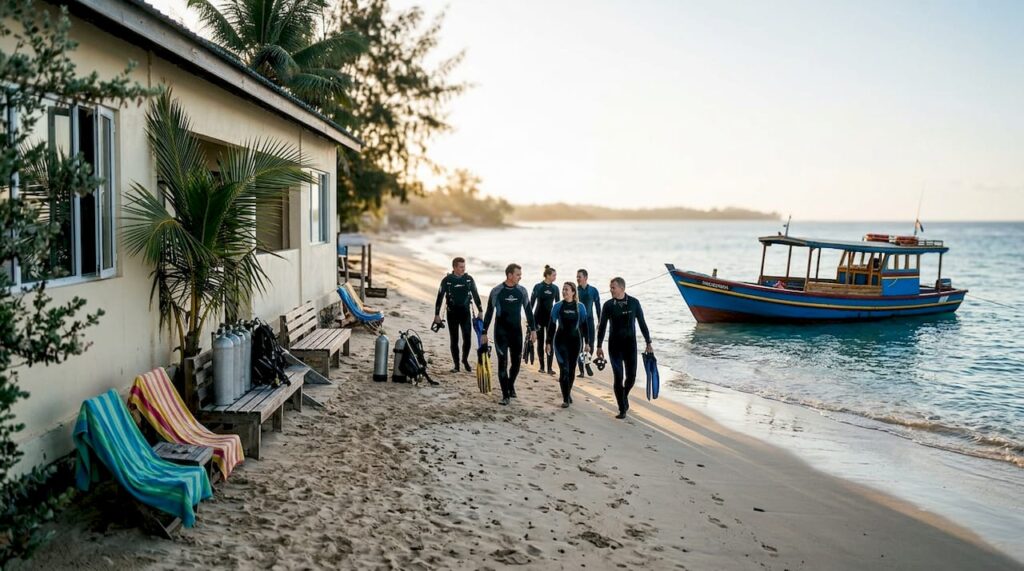
Many travellers mistakenly believe dive resorts are simply beachfront hotels near dive sites. In reality, a dive resort is a specialised scuba diving centre that integrates accommodation with comprehensive diving services, including PADI certification courses, guided dives, equipment rental, and air fills. Understanding what truly defines a dive resort helps you choose the perfect base for your Bali scuba diving holiday, whether you’re taking your first underwater breaths or pursuing advanced certifications. This guide clarifies exactly what dive resorts offer, how they cater to beginners, and why they might be your ideal choice over liveaboards for exploring Bali’s stunning underwater world.
Key takeaways
| Point | Details |
|---|---|
| Dive resort definition | Destination dive centres integrated with accommodation, offering training, guided dives, gear rental, and air fills focused on scuba holidays. |
| Beginner-friendly features | Small instructor ratios, Try Scuba experiences, structured PADI training, and calm dive sites make resorts ideal for first-timers. |
| Resort versus liveaboard | Resorts provide flexibility, land activities, and no seasickness risk, whilst liveaboards offer more dives and remote sites but less freedom. |
| Standard services | Most resorts provide gear rental, Nitrox fills, Try Scuba programmes, and employ multiple instructors and divemasters for safety. |
| Choosing your resort | Verify PADI certification, check instructor experience, consider dive site proximity, and match services to your skill level. |
What is a dive resort? Defining key features and services
A dive resort is a destination dive centre, often integrated with accommodation, providing comprehensive scuba services including training, guided dives, gear rental, and air fills, focused on scuba diving vacations. Unlike regular beach hotels that might recommend external dive operators, dive resorts place scuba diving at their core, building every aspect of the guest experience around underwater exploration. This integration means you wake up steps from your dive briefing, store gear conveniently on-site, and plan each day’s dives over breakfast with instructors who know local conditions intimately.
The physical setup typically includes dedicated facilities beyond standard hotel amenities. You’ll find equipment storage rooms, rinse tanks for gear, compressor stations for air fills, and often purpose-built training pools for confined water sessions. Many Bali dive resorts in locations like Amed or Tulamben position themselves directly on shore dive entry points, eliminating boat transfer time and maximising your underwater hours. This proximity transforms your holiday rhythm, allowing spontaneous afternoon dives or early morning wreck explorations without complex logistics.
Core services at dive resorts extend far beyond basic guided dives:
- PADI certification courses from beginner Open Water through to professional Divemaster levels
- Daily guided dives to multiple sites with experienced divemasters who know currents, marine life behaviour, and optimal timing
- Complete equipment rental including wetsuits, BCDs, regulators, masks, fins, and specialised gear like dive computers
- Air and Nitrox fills available throughout the day to support multiple dive schedules
- Try Scuba discovery experiences for non-certified guests wanting to test underwater breathing
What truly distinguishes dive resorts from regular hotels is their singular focus on creating optimal diving conditions. Staff understand tides, current patterns, and seasonal marine life movements. Meal times accommodate dive schedules rather than forcing divers to rush. The entire environment supports your underwater goals, whether that’s completing certification or exploring Bali’s famous USAT Liberty shipwreck.
Why dive resorts are perfect for beginners and certification seekers
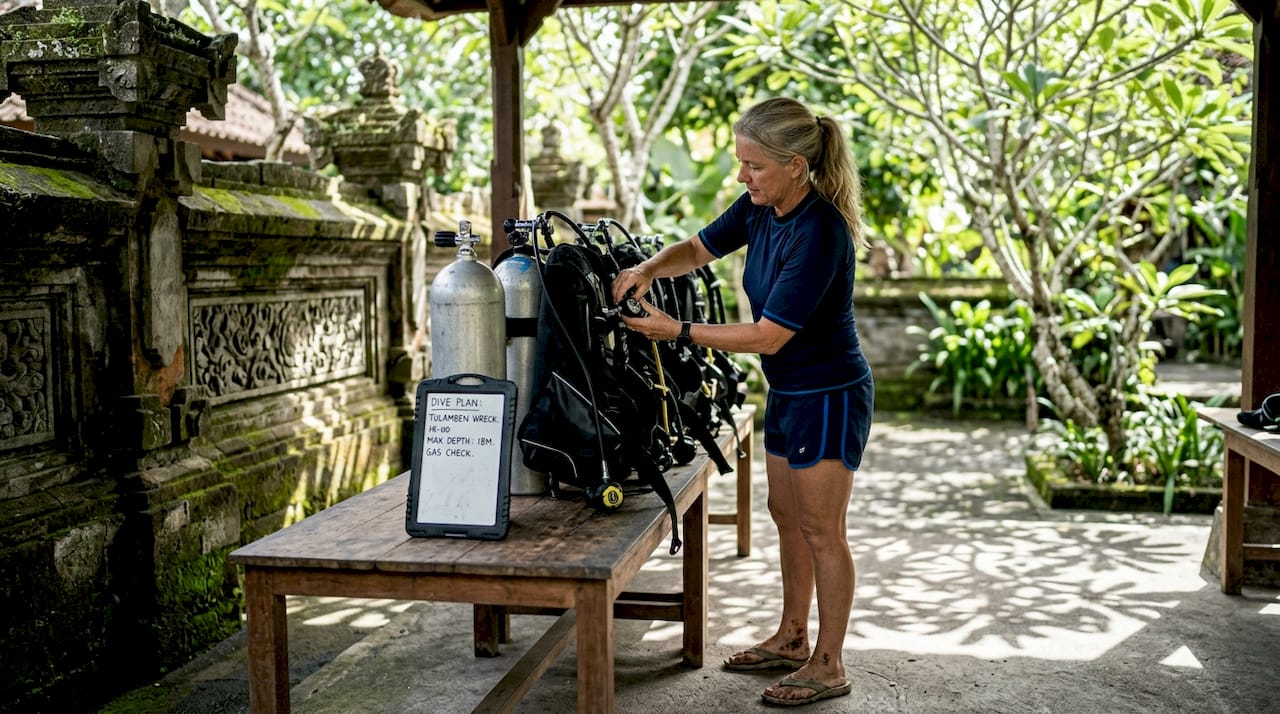
Dive resorts employ substantial professional staff specifically to support new divers safely. Industry data shows typical dive resorts employ 7.3 instructors and 4.9 divemasters, ensuring adequate supervision and personalised attention throughout your learning journey. This staffing level means you’re never just another student in an overcrowded class. Instead, you receive focused guidance from experienced professionals who can adapt teaching methods to your comfort level and learning pace.
The structured pathway from complete beginner to certified diver follows proven PADI methodologies designed around safety and confidence building. Your journey typically begins with pool or confined water sessions in controlled environments where you master basic skills like regulator clearing, buoyancy control, and underwater communication. Only after demonstrating competence in these fundamentals do you progress to open water dives in carefully selected beginner-friendly sites. Bali’s volcanic bays around Amed offer ideal conditions with calm waters, gentle slopes, and minimal currents perfect for first-timers finding their fins.
Small student-to-instructor ratios form the foundation of safe beginner training. Research on methodologies for first-timers shows ratios of 2:1 to 4:1, pool refreshers, confined water sessions before open water, personalised instruction, and shore entries in calm volcanic bays. These intimate group sizes mean instructors notice immediately if you’re struggling with a skill, feeling anxious, or experiencing equipment issues. You’re never lost in a crowd of eight students all competing for instructor attention during critical learning moments.
Dive resorts offering dive courses structure training around your holiday schedule rather than rigid timetables. If you need extra pool time to feel comfortable with mask clearing, quality resorts accommodate that without pressure. If you’re progressing quickly, they’ll advance you appropriately. This flexibility proves invaluable for adult learners who may feel self-conscious or need more time than younger students to master physical skills.
The benefits of scuba certification extend far beyond your Bali holiday. Once certified, you can dive anywhere globally without repeating training, explore deeper sites beyond beginner limits, and join advanced speciality courses like wreck diving or underwater photography. Dive resorts provide the perfect environment to build this foundation because they control every variable, from equipment quality to site selection, ensuring your first experiences underwater are positive and confidence-building.
Pro Tip: Always verify your chosen dive resort holds current PADI 5-Star certification and check instructor credentials directly. Experienced instructors with thousands of logged dives and years teaching in local conditions provide dramatically better learning experiences than recently certified instructors still building their teaching skills.
Dive resorts versus liveaboards: choosing the best fit for your Bali diving holiday
The choice between dive resorts and liveaboards fundamentally shapes your entire Bali diving experience. Research indicates beginners prefer resorts for flexibility, land activities, no seasickness risk, and mixing with non-divers, whilst liveaboards suit those wanting maximum dives and remote sites despite risks of feeling trapped or challenging currents. Understanding these trade-offs helps you match your choice to personal preferences, physical comfort, and diving goals.
Dive resorts offer unmatched flexibility in daily planning. You can dive in the morning, explore temples or rice terraces in the afternoon, and enjoy beachfront dinners in the evening. If you wake up feeling tired or slightly unwell, you simply skip that day’s diving without disrupting an entire boat schedule or feeling you’ve wasted expensive liveaboard fees. This freedom proves especially valuable for travellers combining diving with cultural exploration or those travelling with non-diving partners who want their own activities.
Liveaboards excel at accessing remote dive sites impossible to reach from shore-based resorts. You’ll typically complete four to five dives daily compared to two or three from resorts, maximising underwater time during limited holiday weeks. Night dives happen steps from your cabin rather than requiring boat transfers. For experienced divers focused purely on accumulating dive time and seeing rare marine life in pristine locations, liveaboards deliver unparalleled intensity.
However, liveaboards present significant drawbacks for many divers:
- Seasickness affects even experienced sailors during rough passages between dive sites, potentially ruining entire days
- Confined living spaces with limited privacy can feel claustrophobic during week-long trips
- Fixed schedules mean you dive when the boat dictates, regardless of personal energy levels or preferences
- Strong currents at remote sites challenge beginners who haven’t yet mastered buoyancy and navigation skills
- Limited escape options if you dislike the boat, crew, or fellow passengers
The comparison table below clarifies key differences:
| Feature | Dive Resort | Liveaboard |
|---|---|---|
| Daily flexibility | High – dive when you choose | Low – fixed boat schedule |
| Dives per day | 2-3 typically | 4-5 typically |
| Land activities | Full access to local culture | None – always on water |
| Seasickness risk | None – shore-based | Moderate to high |
| Privacy | Private room | Shared cabin often |
| Site variety | Limited to local area | Remote pristine locations |
| Beginner suitability | Excellent | Challenging |
Your ideal choice depends on honest self-assessment. If you’ve never experienced multi-day boat living, don’t gamble your entire Bali holiday on a liveaboard. Start with dive resorts, complete several days of diving, and assess your comfort with boat-based diving through day trips before committing to liveaboard adventures. Conversely, if you’re an experienced diver who’s completed dozens of shore dives and wants to explore Komodo or Nusa Penida’s deeper sites, liveaboards offer efficiency resorts cannot match.
Bali Dive Cove’s dive packages provide the perfect middle ground, combining resort-based accommodation with boat trips to varied sites around East Bali, giving you flexibility without sacrificing dive site variety.
Pro Tip: Consider your tolerance for seasickness seriously. Even calm-water sailors often struggle with multi-day exposure to boat motion, and seasickness medication causes drowsiness that conflicts with safe diving. If you’re uncertain, choose resorts first.
Typical scuba diving services and safety practices at dive resorts
Modern dive resorts provide comprehensive services extending far beyond basic air fills and equipment rental. Industry benchmarking reveals 63% offer sidemount training, whilst 100% provide Try Scuba experiences, gear rental, air and Nitrox fills, with professional staff ensuring safety and standards throughout operations. This service breadth means you can progress from complete beginner through advanced specialities without changing facilities or adapting to new instructors and procedures.
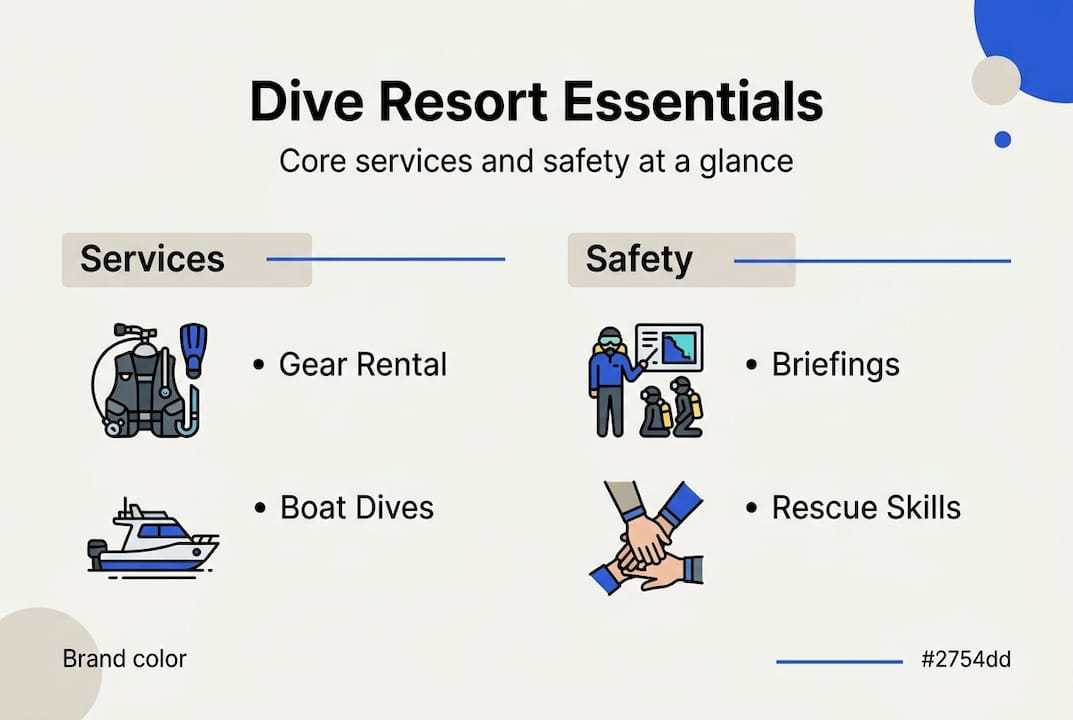
Equipment services form the practical foundation of every dive resort. You’ll find rental gear in multiple sizes, regularly serviced and replaced according to manufacturer schedules. Quality resorts maintain detailed service logs for every regulator, BCD, and dive computer, ensuring reliability when you’re 20 metres underwater. Nitrox fills, offering extended bottom times and reduced nitrogen loading, are now standard at most Bali resorts catering to frequent divers completing multiple dives daily.
Sidemount configuration, where divers wear cylinders alongside their body rather than on their back, has grown from technical diving into recreational popularity. The 63% of resorts offering sidemount reflects this trend, providing training and equipment for divers wanting better trim, easier cylinder handling, or preparation for cave and wreck penetration diving. Even if you’re not immediately interested, knowing your resort offers diverse training options means you can expand skills as interests develop.
Staffing levels directly impact safety and service quality:
| Staff Role | Average per Resort | Primary Responsibility |
|---|---|---|
| Dive Instructors | 7.3 | PADI certification training, skill development |
| Divemasters | 4.9 | Guided recreational dives, site briefings |
| Equipment Technicians | 1-2 | Gear servicing, cylinder fills, maintenance |
These numbers translate to personalised attention throughout your diving. Instructors know your name, remember your comfort level with specific skills, and adapt briefings to your experience. Divemasters leading recreational dives keep groups small, typically four to six divers maximum, allowing them to monitor everyone’s air consumption, buoyancy, and navigation without losing track of individuals.
Safety protocols at professional dive resorts follow PADI standards rigorously. Every dive begins with comprehensive briefings covering entry and exit points, maximum depth, expected conditions, marine life to watch for, and emergency procedures. Divemasters carry first aid kits, oxygen units, and communication devices on every dive. Surface support remains alert throughout dive times, tracking groups and ready to respond if assistance is needed.
The role of PADI instructors extends beyond teaching diving skills to fostering environmental awareness and responsible diving practices. Quality instructors emphasise buoyancy control to prevent reef damage, proper weighting to avoid silting, and respectful marine life observation without touching or harassing creatures. This education creates better divers who protect the underwater environments they’ve come to love.
For those considering diving professionally, resorts offering the PADI Divemaster course provide pathways to turn passion into career. Divemaster training involves assisting with courses, leading dives, and developing the judgement needed for professional diving supervision. Completing this training at a busy resort exposes you to diverse student challenges and conditions, building competence faster than quieter locations.
Pro Tip: Before booking any dive resort, request to see instructor certification cards and ask about their experience in local conditions. An instructor with 5,000 dives and ten years in Bali offers dramatically more value than someone with 500 dives split across multiple locations who arrived last season.
Experience Bali’s top dive resorts with Bali Dive Cove
Now that you understand what separates exceptional dive resorts from basic dive shops, it’s time to experience the difference firsthand. Bali Dive Cove operates as a PADI 5-Star Dive Resort in Amed, East Bali, combining family-owned hospitality with professional diving standards honed over years of operation. Our instructors bring over 16 years of diving experience and intimate knowledge of Amed’s reefs, wrecks, and seasonal conditions, ensuring every dive maximises safety and enjoyment.
Whether you’re ready to complete your PADI certification, explore our carefully designed dive packages visiting East Bali’s most spectacular sites, or simply want to discover what lies beneath Bali’s surface, we focus on small groups, clear communication, and unhurried dives at your own pace. Our approach eliminates the pressure and rush common at larger operations, replacing it with personalised attention and genuine passion for sharing Bali’s underwater treasures. Explore our dive sites to see where your Bali diving adventure could take you, from vibrant coral gardens to historic shipwrecks teeming with marine life.
Frequently asked questions about dive resorts
How does a dive resort differ from a dive shop?
A dive resort integrates accommodation with comprehensive diving services on-site, whilst a dive shop typically operates separately from lodging and focuses primarily on equipment sales, rentals, and day trip coordination. Dive resorts provide immediate access to diving from your room, with gear storage, training facilities, and dive planning all centralised in one location for convenience.
Can beginners get PADI certified at a dive resort in Bali?
Yes, dive resorts specialise in beginner certification with structured PADI Open Water courses including pool training, confined water sessions, and open water dives in calm conditions. Bali’s dive resorts employ experienced instructors maintaining small student ratios, ensuring personalised attention throughout your certification journey. Most PADI dive courses can be completed in three to four days during your holiday.
What equipment is typically provided by dive resorts?
Dive resorts provide complete rental equipment including wetsuits, BCDs, regulators, masks, fins, weights, and dive computers. Most also offer Nitrox fills, underwater cameras, and specialised gear like sidemount configurations. You only need to bring personal items like reef-safe sunscreen and any prescription mask lenses you require.
Are dive resorts safe for first-time scuba divers?
Dive resorts prioritise safety through professional PADI-certified instructors, small group sizes, controlled training environments, and beginner-friendly dive sites with calm conditions. Comprehensive briefings, surface support, emergency oxygen, and first aid equipment ensure safe experiences. Choosing PADI 5-Star certified resorts guarantees adherence to international safety standards.
What should I pack for a dive resort holiday?
Pack swimwear, reef-safe sunscreen, lightweight clothing, a rash guard for sun protection, and any personal dive gear you own like masks or computers. Most divers bring their own mask for fit and comfort but rent remaining equipment. Include a dive logbook to record your adventures and any certification cards if you’re already qualified.
