

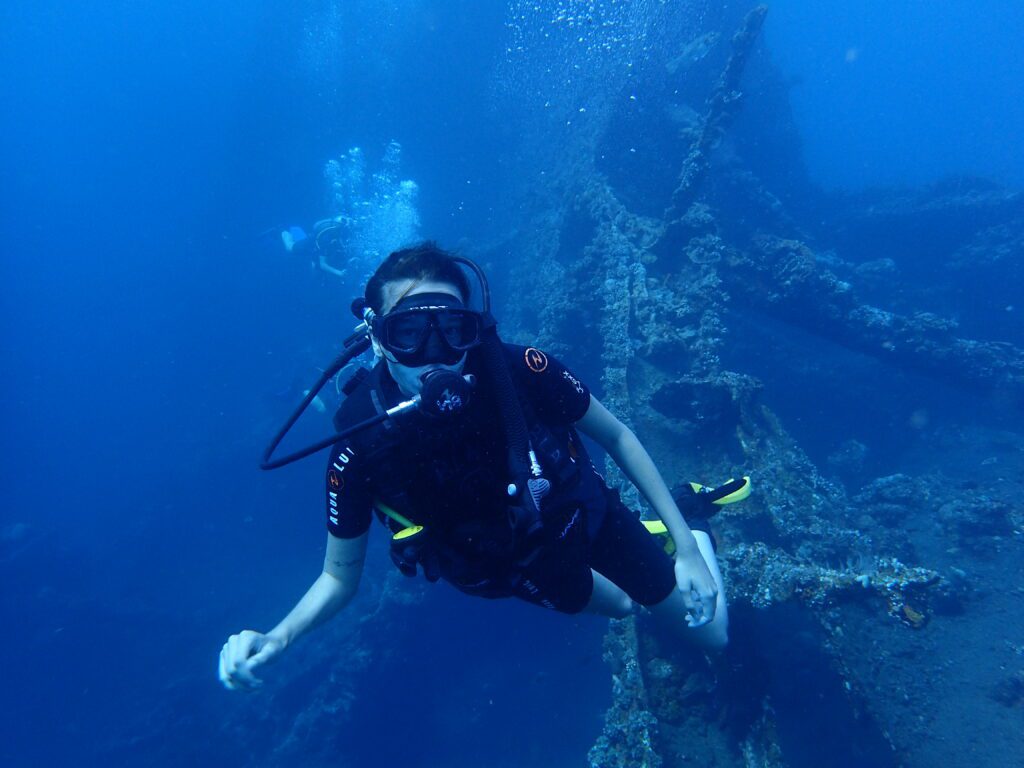
You’ve heard open water diving is risky or requires peak fitness. Yet thousands of tourists discover Bali’s underwater world safely each year, many on their first dive. This guide unpacks what open water diving truly involves, from PADI certification steps to safety protocols and local dive conditions. Whether you’re considering your first dive or planning a guided experience, you’ll learn exactly what to expect beneath Bali’s surface.
Key takeaways
| Point | Details |
|---|---|
| Entry-level certification | PADI Open Water Diver certifies beginners to dive up to 18 metres in natural waters worldwide. |
| Safety through training | Buddy systems, pre-dive briefings, and controlled ascent rates make diving accessible for beginners. |
| Bali’s ideal conditions | Warm 26°C water and visibility exceeding 20 metres create comfortable learning environments at sites like Amed. |
| Guided dive advantages | Small group sizes and instructor oversight enhance safety and personalisation for all skill levels. |
Understanding open water diving: definition and scope
Open water diving refers to scuba diving in natural bodies of water like oceans, lakes, or quarries, distinct from pool training. The PADI Open Water Diver certification limits depth to 18 metres, establishing a safe boundary for entry-level divers whilst they build experience and comfort underwater. This depth allows exploration of reefs, wrecks, and marine life without the physiological risks associated with deeper technical dives.
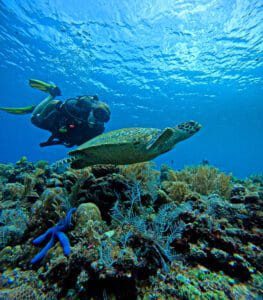
Before venturing into open water, learners complete confined water training in controlled environments such as swimming pools or shallow bays. These sessions teach fundamental skills like regulator clearing, buoyancy control, and mask removal in low-stress settings. Confined water practice ensures you can manage equipment and respond to basic challenges before encountering currents, wildlife, or variable visibility.
The beginner’s guide to scuba diving certification process emphasises three pillars: knowledge development through theory modules, skill acquisition in confined and open water, and safety awareness covering equipment function and emergency procedures. Successful completion grants an internationally recognised credential, allowing certified divers to book dives globally with any PADI-affiliated dive centre. For tourists visiting Bali, this certification opens access to world-class dive sites without requiring months of preparation.
Key aspects of open water diving include:
- Natural environment exposure with real-world conditions like currents and marine interactions
- Maximum depth restriction of 18 metres for Open Water Divers
- Mandatory buddy system pairing divers for mutual monitoring
- Pre-dive planning covering site briefings, hand signals, and emergency protocols
The PADI certification process: steps and duration
The typical PADI Open Water Diver course takes 3-4 days combining theory, pool training, and open water dives, making it feasible for tourists with limited holiday time. This compressed timeline delivers comprehensive training through a structured three-phase approach, each building on prior skills. Many Bali dive centres offer flexible scheduling, allowing you to spread sessions across mornings and afternoons to accommodate sightseeing or rest.
The certification journey unfolds as follows:
- Knowledge development involves completing online modules or classroom sessions covering dive physics, physiology, equipment function, and underwater communication. You’ll study topics like pressure effects on air spaces, decompression theory basics, and dive planning principles. Most students complete this phase in 6-8 hours, either before arriving in Bali or during their first day.
- Confined water training takes place in a pool or shallow bay, where instructors teach 20 core skills including regulator recovery, controlled emergency swimming ascents, and buoyancy adjustments. These sessions typically span two half-days, with repetition ensuring muscle memory and confidence. You’ll practise removing and replacing your mask underwater, a skill many beginners find challenging initially but master through guided repetition.
- Open water dives involve four separate dives at approved sites, usually completed over two days. Each dive lasts 30-45 minutes and focuses on applying confined water skills in real conditions. You’ll demonstrate buoyancy control whilst navigating coral gardens, practise compass navigation, and perform safety stops at 5 metres depth before surfacing.
Assessment occurs continuously throughout the course rather than through a single final exam. Instructors evaluate your performance during each confined and open water session, ensuring you meet PADI’s mastery standards before certification. Theory knowledge is tested through short quizzes and a final exam requiring 75% accuracy, with review sessions clarifying any misunderstood concepts.
Pro tip: Complete your online theory modules before arriving in Bali to maximise in-water time during your holiday. Most students find evening study sessions after a day of exploring more productive than cramming theory between dives.
Safety protocols and risk management in open water diving
Diving safety rests on multiple overlapping systems rather than single precautions. Buddy systems and pre-dive briefings are essential safety practices, creating redundancy that catches equipment malfunctions or human errors before they escalate. Your buddy acts as a second set of eyes, monitoring your air supply, depth, and behaviour for signs of nitrogen narcosis or discomfort. This mutual oversight transforms diving from a solo activity into a collaborative safety exercise.
Pre-dive briefings delivered by instructors or dive guides cover site-specific conditions including entry and exit points, maximum depth, expected marine life, and potential hazards like thermoclines or surge zones. Briefings establish communication protocols using standardised hand signals for concepts like “low on air,” “something is wrong,” or “equalize ears.” These signals transcend language barriers, ensuring clear communication regardless of your buddy’s nationality.
Controlled ascent rates prevent decompression sickness, the most serious physiological risk in recreational diving. PADI standards mandate ascent speeds no faster than 9-10 metres per minute, roughly matching the speed of your smallest exhaled bubbles. Modern dive computers worn on your wrist track depth and time, alerting you if you ascend too quickly or approach no-decompression limits. Safety stops at 5 metres depth for three minutes allow dissolved nitrogen to off-gas gradually, further reducing decompression risk.
Instructors and dive guides manage safety through multiple checkpoints:
- Pre-dive equipment checks verify all gear functions properly before entering water
- Dive planning establishes maximum depth, bottom time, and turnaround air pressure limits
- Continuous monitoring throughout the dive tracks diver positions and air consumption
- Emergency equipment including spare regulators, surface marker buoys, and first aid kits
Pro tip: Perform your own pre-dive equipment check following the BWRAF acronym (Buoyancy, Weights, Releases, Air, Final check) even when diving with experienced guides. This personal verification builds confidence and catches any overlooked issues.
Bali-specific dive conditions and sites
Bali’s tropical waters maintain temperatures around 26°C year-round, warm enough for comfortable diving in thinner wetsuits yet cool enough to support diverse marine ecosystems. This thermal stability eliminates the cold-water shock many beginners fear, allowing you to focus on buoyancy and breathing rather than temperature management. Most divers opt for 3mm wetsuits or even shorty suits during warmer months, reducing the buoyancy weight needed and simplifying gear management.
Visibility often exceeds 20 metres during dry season months from April through November, creating ideal conditions for photography and marine life observation. Clear water reduces anxiety for new divers who can easily maintain visual contact with their buddy and instructor. Seasonal variations do occur, with visibility occasionally dropping to 10-15 metres during peak plankton blooms or following heavy rainfall that increases river runoff.
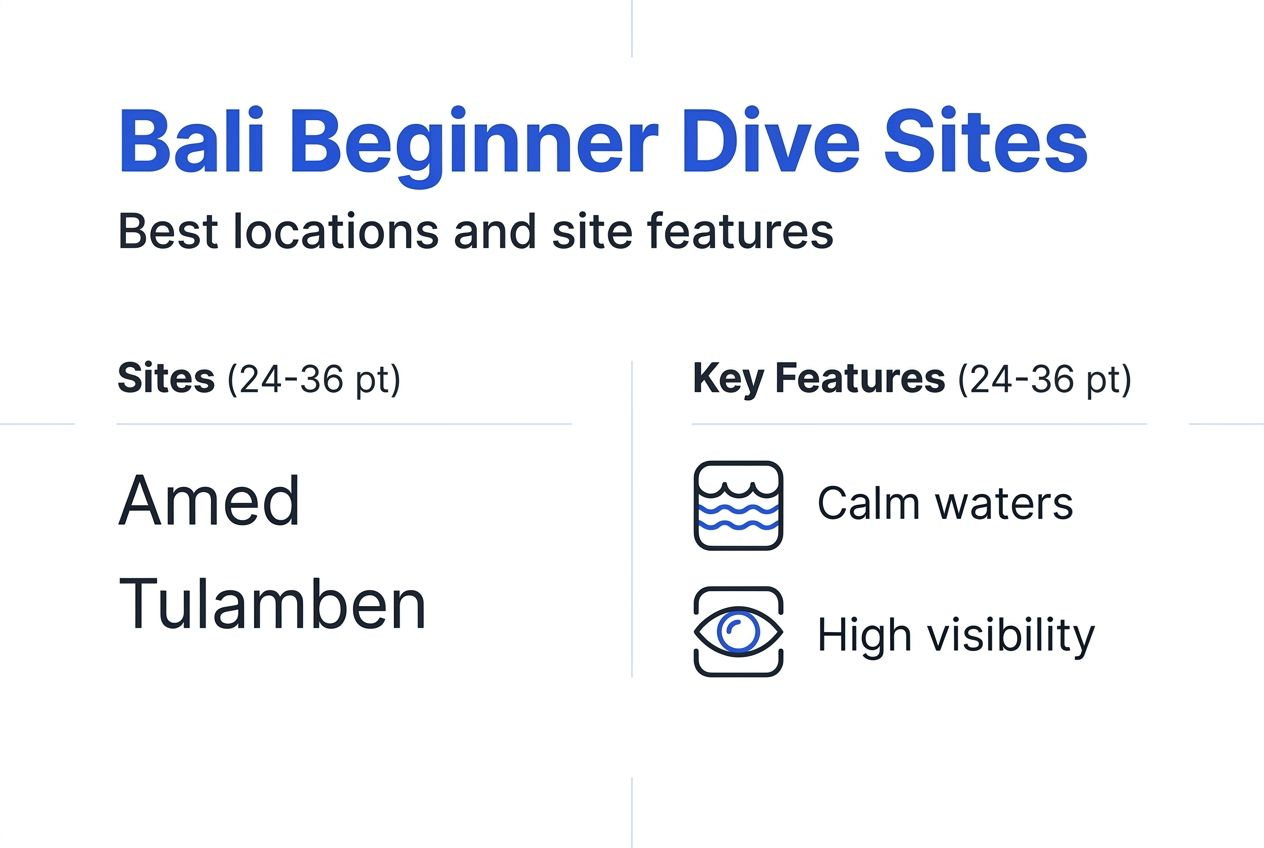
Amed and Tulamben represent Bali’s most beginner-friendly locations, offering protected bays with minimal currents and gradual depth profiles. These sites provide shore-accessible diving, eliminating boat transfers that can trigger seasickness in susceptible individuals. The USS Liberty wreck in Tulamben sits in just 5-30 metres of water, allowing Open Water Divers to explore a genuine World War II vessel safely within their certification limits.
| Dive Site | Depth Range | Typical Visibility | Current Strength | Best For |
|---|---|---|---|---|
| Jemeluk Bay, Amed | 5-18m | 15-25m | Minimal | Certification dives, macro photography |
| USS Liberty, Tulamben | 5-30m | 15-30m | Minimal to mild | Wreck exploration, first open water dives |
| Japanese Shipwreck, Amed | 6-12m | 15-20m | None | Shallow wreck diving, beginners |
| Coral Garden, Amed | 5-15m | 20-30m | Minimal | Reef diving, marine life diversity |
Seasonal considerations for Bali dive conditions include:
- Dry season (April-November) delivers optimal visibility and calmer seas
- Wet season (December-March) brings occasional afternoon storms but maintains warm water
- Mola mola season (July-October) attracts divers to deeper sites beyond beginner limits
- Plankton blooms in February-March can reduce visibility but increase manta ray sightings
Local dive centres adapt site selection daily based on current conditions, prioritising safety and comfort over rigid itineraries. This flexibility ensures your open water certification dives occur in the most favourable environments available during your visit.
Common misconceptions about open water diving
Many prospective divers believe scuba requires exceptional fitness or swimming ability, yet the reality proves far more accessible. Water buoyancy eliminates the weight-bearing demands of land exercise, whilst controlled breathing through a regulator reduces cardiovascular strain compared to surface swimming. You need only moderate fitness equivalent to walking comfortably for an hour, sufficient to manage equipment carrying and surface swimming in full gear.
Common scuba diving myths about danger stem from Hollywood depictions of shark attacks and equipment failures rather than statistical reality. Recreational diving maintains an excellent safety record, with serious incidents occurring in fewer than 1 in 200,000 dives when proper protocols are followed. The mandatory buddy system and instructor supervision during training further reduce risks, particularly for beginners still developing situational awareness underwater.
Pressure-related concerns, especially regarding ear pain and decompression sickness, create unnecessary hesitation. Equalisation techniques taught during confined water training prevent ear discomfort by opening the Eustachian tubes as you descend. Most divers master equalisation within their first few attempts, finding it no more challenging than clearing ears during aeroplane descent. Conservative dive profiles at 18 metres maximum depth keep Open Water Divers well within no-decompression limits, making decompression sickness extremely rare when following PADI guidelines.
Physiological realities of diving include:
- Breathing remains natural once you overcome initial psychological resistance to inhaling underwater
- Buoyancy control through breath and equipment adjustments requires practice but becomes intuitive
- Nitrogen narcosis does not affect divers at Open Water certification depths
- Claustrophobia rarely emerges due to the open, three-dimensional environment underwater
The learning curve proves gentler than many anticipate. Most students who initially feel anxious during confined water sessions report significant confidence gains by their second open water dive. Patient instruction and gradual skill progression allow your nervous system to adapt to the underwater environment without overwhelming sensory input.
Guided diving experiences: benefits for beginners and experts
Guided dives through established operators offer distinct advantages over independent buddy diving, particularly for newly certified divers or visitors unfamiliar with local conditions. Professional dive centres in Amed maintain maximum group sizes of four divers per guide compared to the self-sufficient buddy pairs of experienced divers. This lower ratio ensures personalised attention, with guides monitoring each diver’s air consumption, buoyancy control, and comfort level throughout the dive.
Pace flexibility represents another key benefit. Guided groups typically descend and ascend more slowly than independent divers, allowing thorough equalisation and reducing the risk of squeeze injuries or reverse blocks. Surface intervals between dives extend longer, providing ample rest and off-gassing time. This relaxed approach particularly suits beginners whose air consumption rates run higher due to excitement and less efficient breathing patterns.
| Aspect | Guided Dive | Independent Dive |
|---|---|---|
| Group size | Maximum 4 divers per guide | Typically 2 buddy pairs (4 divers) |
| Pre-dive briefing | Detailed site-specific briefing with entry/exit demonstration | Self-briefing based on dive plan |
| Navigation | Guide leads, divers follow | Both buddies share navigation duties |
| Marine life spotting | Guide identifies species and points out camouflaged creatures | Divers locate marine life independently |
| Emergency response | Professional trained in rescue procedures present | Relies on buddy’s skills and training level |
| Pace | Adjusted to slowest/newest diver | Set by buddy pair’s mutual agreement |
Local knowledge enhances guided experiences substantially. Guides familiar with seasonal patterns know where to find specific species, from pygmy seahorses hiding in gorgonian coral to cuttlefish displaying mating behaviours. They navigate optimal routes through wreck structures, avoiding silty areas or tight spaces that might challenge beginners. This expertise transforms dives from simple underwater swimming into curated encounters with Bali’s marine biodiversity.
Additional guided dive advantages include:
- Equipment setup assistance ensuring proper configuration before entering water
- Real-time skill coaching addressing buoyancy, trim, or finning technique issues
- Photography opportunities with guides positioning divers near photogenic subjects
- Safety oversight including continuous headcounts and buddy separation prevention
Experienced divers benefit equally from guided services when exploring unfamiliar sites. Local guides prevent navigation errors that waste bottom time, identify optimal entry timing to avoid surge zones, and provide insights into site history and ecology. The collaborative approach allows advanced divers to focus on photography or marine observation whilst the guide handles logistics and safety monitoring.
Open water diving equipment: essentials and tips
Standard rental gear includes BCD, regulator, mask, fins, and wetsuit, with preference for lighter wetsuits in Bali’s warm waters. The buoyancy control device (BCD) functions as a life jacket, flotation device, and equipment attachment platform simultaneously. Inflation and deflation controls allow you to achieve neutral buoyancy at any depth, hovering motionless mid-water without kicking. Modern BCDs incorporate integrated weight systems, eliminating the need for separate weight belts that can slip or cause discomfort.
Regulators deliver air from your cylinder at ambient pressure, adjusting automatically as you change depth. A primary regulator (your main breathing source) and octopus (backup regulator for buddy air sharing) attach to the first stage valve on your cylinder. Quality rental regulators breathe smoothly even at depth, requiring minimal inhalation effort. Purge buttons allow easy clearing if water enters the mouthpiece.
Mask selection proves more personal than other equipment choices. A properly fitting mask seals comfortably without excessive tightening, creating no pressure points on your nose bridge or temples. Clear or lightly tinted lenses suit Bali’s bright tropical conditions better than dark lenses that reduce light transmission underwater. Masks with lower internal volume require less air to clear if flooded, an important consideration for beginners still mastering the head-tilt clearing technique.
Equipment considerations for Bali diving:
- Fins should fit snugly without binding, with adjustable heel straps preferable to full-foot models
- 3mm wetsuits provide adequate thermal protection whilst minimising buoyancy compensation needs
- Dive computers track depth, time, and no-decompression limits more accurately than tables
- Surface marker buoys (SMBs) improve safety during ascents by marking your position to boats
Proper equipment familiarity before diving reduces task loading underwater. Spend time in shallow water locating your BCD inflation controls, practising regulator recovery, and adjusting mask straps. Know where your alternate air source attaches and how quickly you can deploy it in an emergency. This pre-dive rehearsal transforms equipment from potential distraction into transparent tools supporting your dive experience.
Pro tip: Request the same rental gear configuration throughout your certification course. Consistent equipment placement builds muscle memory for locating controls and reduces underwater confusion when you need to adjust buoyancy or check gauges.
Discover Bali dive experiences with Bali Dive Cove
Ready to experience Bali’s underwater world firsthand? Bali Dive Cove offers comprehensive PADI certification courses tailored for tourists, from absolute beginners to advanced divers seeking speciality training. Our experienced instructors maintain small group sizes, ensuring personalised attention throughout your Open Water Diver course. Based in Amed, we provide daily access to East Bali’s calmest, most beginner-friendly dive sites including the famous USS Liberty wreck and vibrant coral gardens.
Whether you’re completing your first certification dives or joining guided trips to explore Bali’s best dive sites, our team prioritises safety and comfort. Flexible scheduling accommodates your holiday itinerary, whilst equipment rental eliminates the need to transport bulky gear internationally. For certified divers wanting to expand their skills, we offer speciality courses that advance your diving capabilities including deep diving, wreck exploration, and underwater photography. Visit our website to browse available courses, review site descriptions, and secure your spot for an unforgettable Bali diving adventure.
Frequently asked questions
What is open water diving?
Open water diving is recreational scuba diving in natural water bodies like oceans or lakes, certified through PADI training that qualifies divers to explore depths up to 18 metres independently. The certification requires completing theory modules, confined water skill practice, and four open water training dives under instructor supervision. Once certified, you can dive anywhere globally with a buddy, accessing reefs, wrecks, and marine environments.
How long does it take to get PADI open water certified?
The typical course spans 3-4 days, ideal for tourists with limited holiday time in Bali. This includes approximately 8 hours of theory study, two half-days of pool training, and four open water dives completed over two days. Some students finish faster if they complete online theory modules before arriving, whilst others prefer a more relaxed five-day schedule with shorter daily sessions.
Is open water diving safe for beginners?
With certified PADI instructors and adherence to established safety protocols, open water diving maintains an excellent safety record for beginners. The mandatory buddy system, pre-dive equipment checks, and conservative depth limits create multiple safety layers. Instructors continuously monitor student divers, intervening immediately if any difficulties arise, making training dives statistically safer than many common tourist activities.
What dive sites in Bali are best for beginners?
Amed and Tulamben offer calm, protected waters with minimal currents and excellent visibility exceeding 20 metres during dry season. The USS Liberty wreck in Tulamben sits in shallow water accessible to Open Water Divers, whilst Jemeluk Bay in Amed provides gentle coral gardens perfect for practising buoyancy control. These sites feature shore entries avoiding boat transfers and gradual depth profiles that build confidence progressively.
Do I need my own diving equipment when diving in Bali?
Most tourists rent quality equipment from dive centres, eliminating luggage weight and airline baggage fees for bulky gear. Rental packages include all essential items: BCD, regulator, mask, fins, wetsuit, and weights, properly sized and maintained to PADI standards. Whilst owning personal gear offers familiarity benefits, rental equipment proves perfectly adequate for certification courses and guided dives, with proper fitting and familiarisation before each dive ensuring comfort and safety.
