

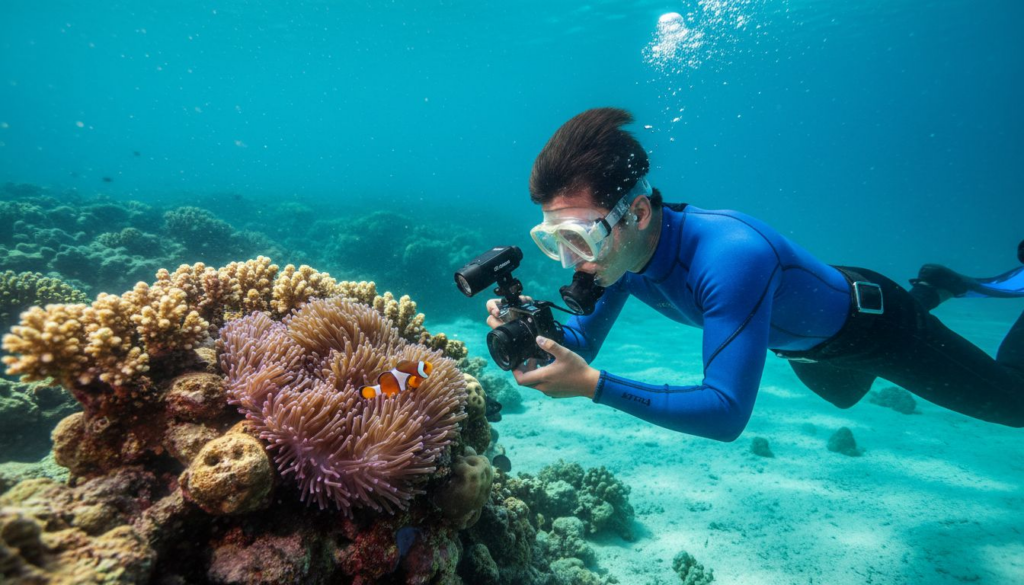
Many divers believe underwater photography requires expensive equipment and years of experience. The reality is far more accessible. Whether you are completing your first scuba dive or have logged hundreds, capturing Bali’s vibrant marine life is within reach. This guide explains what underwater photography truly involves, the gear you need, and how Bali’s diverse dive sites create perfect conditions for developing your skills. You will learn practical techniques, understand common challenges, and discover how to start your own underwater photography journey in one of the world’s most photogenic diving destinations.
Key takeaways
| Point | Details |
|---|---|
| Accessible to all levels | Underwater photography combines diving skills with camera techniques, suitable for beginners and experienced divers alike |
| Essential gear varies | Start with compact cameras in housings, progress to advanced setups with strobes and manual controls as skills develop |
| Bali offers ideal conditions | Diverse marine life, varied dive sites, and excellent visibility create perfect learning environments for underwater photographers |
| Technical challenges exist | Water absorbs light and colour, requiring specific techniques for exposure, white balance, and subject approach |
| Practice builds mastery | Regular dives, patience with marine subjects, and understanding site conditions accelerate photographic improvement |
Understanding underwater photography: what it is and why it matters
Underwater photography is a unique convergence of scuba diving skills and photographic techniques to capture marine life and seascapes. Unlike terrestrial photography, you operate in a three dimensional environment where buoyancy control becomes as important as camera settings. The practice involves descending below the surface with waterproof camera equipment to document coral formations, fish behaviour, wrecks, and the interplay of light through water.
The appeal extends beyond simple documentation. For many divers, photography transforms each descent into a purposeful exploration. You begin noticing details previously overlooked, studying how clownfish interact with anemones or how nudibranchs navigate coral branches. Sharing these images connects non divers to marine environments they might never experience, whilst building a personal archive of underwater encounters that would otherwise exist only in memory.
Bali’s marine biodiversity creates exceptional opportunities for underwater photographers. The island’s dive sites range from shallow coral gardens teeming with tropical fish to dramatic wall dives and historic wrecks. Warm water temperatures, generally good visibility, and accessible sites make Bali particularly suitable for developing photographic skills. You can encounter manta rays, turtles, reef sharks, and countless macro subjects within a single week of diving.
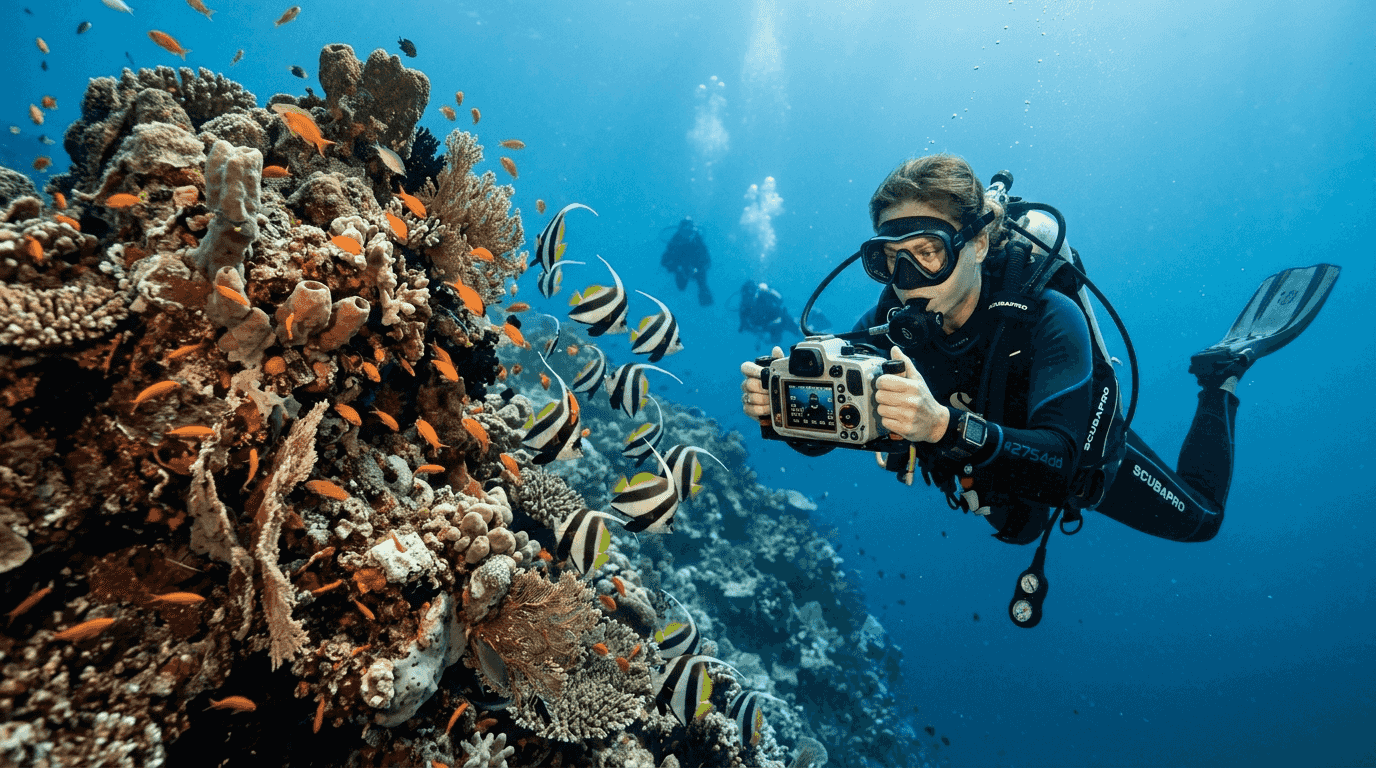
Common misconceptions discourage potential underwater photographers unnecessarily. Many assume specialised, expensive cameras are mandatory from the start. Whilst professional equipment produces superior results, modern compact cameras in affordable housings deliver impressive images for beginners. Another myth suggests underwater photography requires advanced diving certification. In reality, good buoyancy and basic diving competence matter more than certification level.
Light behaves differently underwater, fundamentally affecting photographic outcomes:
- Water absorbs colours progressively with depth, removing reds first, then oranges and yellows
- Suspended particles scatter light, reducing contrast and sharpness
- Refraction through your mask and camera housing magnifies subjects by approximately 25%
- Available light decreases rapidly beyond 10 metres, requiring artificial lighting for accurate colours
Pro Tip: Start photographing in shallow water between 5 and 10 metres where natural light remains strong. This allows you to master composition and buoyancy before adding complexity of strobes and deeper environments.
Essential equipment and techniques for beginners
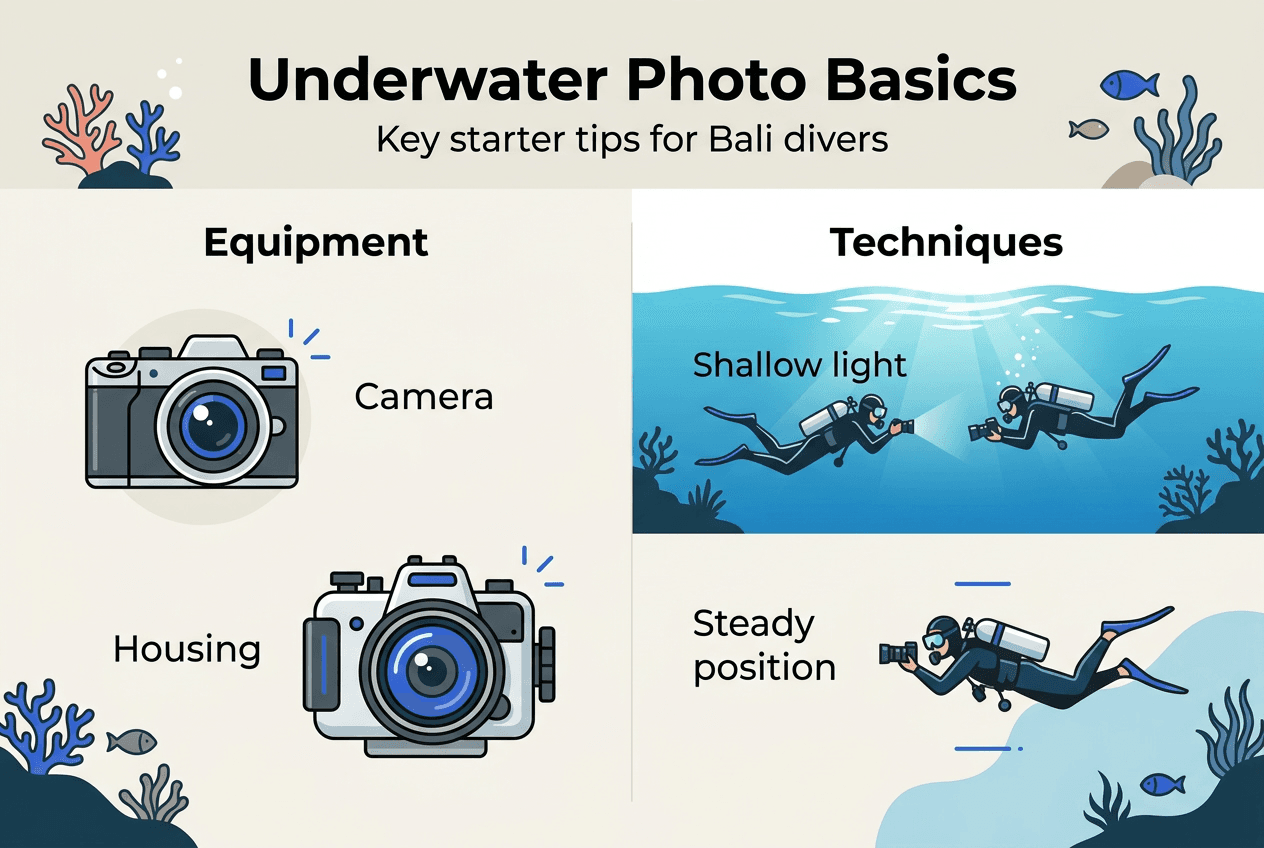
Choosing appropriate camera equipment depends on budget, diving frequency, and photographic ambitions. Compact cameras offer the most accessible entry point, fitting easily into small housings and requiring minimal technical knowledge. Mirrorless systems provide superior image quality and interchangeable lenses whilst maintaining reasonable size. DSLR setups deliver professional results but demand larger housings and greater investment.
Proper underwater photography gear includes waterproof housings, strobes, and suitable cameras for beginners. Housings protect your camera from water pressure and corrosion whilst providing access to essential controls. Quality housings feature controls for shutter, aperture, and zoom, with ports matched to your lens type. Strobes provide artificial light to restore colours absorbed by water, eliminating the blue green cast present in natural light images beyond shallow depths.
| Camera Type | Approximate Cost | Ease of Use | Key Features | Best For |
|---|---|---|---|---|
| Compact with housing | £300-£800 | Very easy | Auto modes, built in flash, lightweight | Beginners, casual divers |
| Mirrorless with housing | £1,200-£3,000 | Moderate | Manual controls, interchangeable lenses, excellent quality | Serious hobbyists |
| DSLR with housing | £2,500-£8,000+ | Complex | Professional sensors, extensive lens options, full manual | Advanced photographers |
Mastering fundamental techniques matters more than equipment quality initially. Follow these steps to build competence:
- Perfect your buoyancy control before adding camera complexity, practising hovering motionless at various depths
- Approach subjects slowly and deliberately, avoiding sudden movements that startle marine life
- Get close to your subject, then get closer, as water between camera and subject degrades image quality
- Shoot upward when possible, using the water surface or blue water as clean backgrounds
- Review images between dives, identifying technical issues to address on subsequent descents
Bali’s dive conditions influence photographic planning significantly. Visibility varies seasonally and by location, with the dry season from April to November generally offering clearer water. Morning dives often provide calmer conditions and better light angles. Research safe dive sites for beginners to match your skill level whilst finding photogenic subjects.
Pro Tip: Dedicate entire dives to photography rather than attempting to photograph whilst following a standard dive tour. This allows you to work methodically, returning to promising subjects and experimenting with different angles without feeling rushed.
Advanced tips and common challenges for experienced underwater photographers
Experienced underwater photographers focus on settings like manual exposure, colour correction, and advanced lighting techniques. Moving beyond automatic modes grants creative control over final images. Manual exposure allows precise adjustment of shutter speed, aperture, and ISO to balance ambient light with strobe output. Faster shutter speeds freeze fish movement, whilst wider apertures create pleasing background blur isolating your subject.
White balance correction addresses colour loss underwater. Custom white balance settings or shooting in RAW format enable accurate colour restoration during editing. Many photographers use strobes positioned at 45 degree angles to the subject, providing directional light that reveals texture and dimension. Understanding strobe power and positioning prevents common issues like overexposed foregrounds or unnatural lighting.
Several technical challenges frustrate even experienced photographers:
- Motion blur from camera movement or subject activity requires faster shutter speeds, typically 1/125th second or quicker for fish
- Backscatter appears as bright spots when strobe light reflects off particles between camera and subject, reduced by angling strobes outward
- Subject approach demands patience and understanding of marine behaviour, with some species tolerating close proximity whilst others flee immediately
- Composition underwater proves difficult when managing buoyancy, monitoring air supply, and framing shots simultaneously
Dive planning becomes increasingly important as photographic ambitions grow. The Bali underwater visibility guide helps predict conditions at different sites and seasons. Current, surge, and depth all affect your ability to position yourself and maintain stability for sharp images. Choosing dive sites matching your target subjects, whether wide angle reef scenes or macro critters, maximises productive shooting time.
“The best underwater photographs come from photographers who understand marine life behaviour and anticipate moments rather than simply reacting to them. Patience and observation matter more than expensive equipment.”
Pro Tip: Spend the first five minutes of each dive simply observing without photographing. Watch how fish move, where they rest, and how they react to your presence. This observation period reveals photographic opportunities you would miss whilst immediately focused on your camera.
Choosing the best Bali dive sites for underwater photography
Bali offers varied dive sites like the USAT Liberty wreck, coral gardens of Menjangan, and macro rich sites in Tulamben, ideal for photographers. Each location provides distinct photographic opportunities suited to different equipment and skill levels. The USAT Liberty wreck in Tulamben creates dramatic wide angle compositions with the structure covered in soft corals and surrounded by schools of jacks and barracuda. Menjangan Island features pristine hard coral formations and excellent visibility, perfect for vibrant reef scenes.
| Dive Site | Photography Style | Average Visibility | Depth Range | Skill Level | Notable Subjects |
|---|---|---|---|---|---|
| USAT Liberty Wreck | Wide angle, fish portraits | 15-25 metres | 5-30 metres | All levels | Wreck structure, bumphead parrotfish, macro life |
| Menjangan Island | Wide angle reef scenes | 20-30 metres | 5-40 metres | Intermediate | Hard corals, reef sharks, turtles |
| Tulamben Drop Off | Macro photography | 10-20 metres | 5-30 metres | All levels | Nudibranchs, frogfish, pygmy seahorses |
| Amed Pyramids | Beginner wide angle | 10-15 metres | 5-18 metres | Beginner | Artificial reef structures, schooling fish |
Matching dive sites to photographic goals improves success rates significantly. Wide angle photography capturing expansive reef scenes or large marine life requires good visibility and dramatic subjects. Sites with wrecks, walls, or frequent pelagic visitors work best. Macro photography focusing on small creatures benefits from sites known for critter diversity, where you can spend entire dives in small areas searching for nudibranchs, shrimp, and juvenile fish.
Safety and accessibility considerations affect site selection:
- Current strength influences your ability to maintain position for photography, with protected bays offering easier conditions
- Depth limits determine available bottom time for photography, with shallower sites allowing longer shooting sessions
- Entry and exit points matter when carrying camera equipment, with shore dives requiring careful navigation through surf
- Boat dive sites provide access to remote locations but limit flexibility for returning to promising spots
The Bali marine life dive site guide details seasonal variations in marine life presence. Manta rays appear more frequently at certain times, whilst mola mola sightings peak during specific months. Planning photography focused dive trips around these patterns increases chances of capturing target species.
Pro Tip: Schedule photography dives during mid morning when sun angle provides optimal natural light penetration. Early morning dives often feature plankton blooms reducing visibility, whilst afternoon dives contend with increased boat traffic and stirred up sediment at popular sites.
Explore underwater photography with Bali dive cove courses
Developing underwater photography skills accelerates dramatically with structured training and expert guidance. Bali Dive Cove offers comprehensive dive courses designed for all experience levels, from complete beginners to advanced divers seeking specialisation. Our PADI certified instructors bring over 16 years of diving experience in Bali’s waters, understanding precisely which techniques and locations suit different photographic goals.
The PADI deep diver course Bali expands your range of accessible dive sites and subjects, opening opportunities to photograph deeper wrecks and walls where larger pelagic species congregate. Combined with photography focused guidance, these certifications build confidence and capability for capturing compelling underwater images. Our small group approach ensures personalised attention, allowing instructors to address your specific photographic challenges and goals.
Exploring Bali dive sites with experienced local guides reveals hidden photographic opportunities you would likely miss independently. Our instructors know where frogfish hide, which cleaning stations attract manta rays, and when specific nudibranchs appear seasonally. This knowledge transforms ordinary dives into productive photography sessions.
Frequently asked questions
What exactly does underwater photography involve for scuba divers?
Underwater photography combines scuba diving skills with camera operation to capture images below the surface. You descend with waterproof camera equipment, managing buoyancy and dive safety whilst composing and shooting photographs of marine life, coral formations, or underwater landscapes. Success requires competent diving skills, understanding of how light behaves underwater, and patience with marine subjects.
Does camera quality significantly affect underwater photography results?
Camera quality influences image sharpness, colour accuracy, and low light performance, but technique and lighting matter more initially. Modern compact cameras in proper housings produce excellent results for beginners. Expensive professional equipment offers advantages in challenging conditions and allows greater creative control, but poor buoyancy or incorrect strobe positioning will compromise results regardless of camera cost. Start with equipment matching your current skill level.
Which Bali locations work best for different underwater photography styles?
Wide angle photography capturing reef scenes and large subjects succeeds at sites like Menjangan Island and the USAT Liberty wreck, where visibility exceeds 15 metres and dramatic subjects appear regularly. Macro photography focusing on small creatures thrives at Tulamben’s muck diving sites and Amed’s coral slopes, known for nudibranchs, frogfish, and crustaceans. The best dive sites in Bali details specific locations for various photographic goals.
How should beginners improve their underwater photography skills?
Beginners should prioritise buoyancy mastery before adding camera complexity, as stable positioning enables sharp, well composed images. Start with automatic camera modes in shallow water, gradually introducing manual controls as comfort increases. Dedicate entire dives to photography rather than attempting to shoot whilst following standard dive tours. Review images between dives, identifying technical issues to address. Consider dive site selection for beginners that offer easy conditions and abundant subjects for practice.
