

TL;DR:
- Continuing dive education enhances skills, confidence, and access to Bali’s most advanced dive sites.
- More training reduces risks and prepares divers for Bali’s challenging conditions.
- Progressing through courses like Rescue Diver improves safety and environmental responsibility.
Getting your Open Water certification feels like a huge achievement, and it absolutely is. But many divers treat it as the finish line rather than the starting block. The truth is, 94.5% of divers have experienced a close call underwater, often linked to inexperience or a gap in training. Bali’s most iconic sites, from the Liberty Wreck at Tulamben to the current-swept waters of Nusa Penida, demand more than the basics. Continuing your dive education is not just about adding a card to your wallet. It is about building the skills, confidence, and awareness to truly experience everything Bali’s underwater world has to offer.
Key Takeaways
| Point | Details |
|---|---|
| Unlock more dive sites | Advanced education lets you access deeper, more exciting Bali locations that basic certs cannot. |
| Improve safety and skill | Continuing courses build your confidence, air usage, and ability to handle real underwater challenges. |
| Boost enjoyment and sustainability | Ongoing training helps you dive responsibly, enjoy more wildlife, and protects fragile coral environments. |
| Be prepared for emergencies | Rescue and advanced courses teach you how to respond reliably to problems, benefitting both you and your dive buddies. |
What is continuing dive education?
Continuing dive education is any structured learning you pursue after your initial Open Water certification. It covers a broad range of courses, from the next logical step of Advanced Open Water all the way through to Rescue Diver, Divemaster, and a wide variety of PADI specialty courses. Think of it as a learning path rather than a single destination.
The typical progression looks something like this:
- Open Water Diver: Your entry-level certification, allowing dives to 18 metres with a buddy or instructor.
- Advanced Open Water Diver: Extends your depth limit to 30 metres and introduces five adventure dives, including deep diving and underwater navigation.
- Rescue Diver: Focuses on problem prevention, emergency management, and assisting other divers.
- Divemaster: The first professional level, guiding certified divers and assisting instructors.
- Specialty courses: Targeted skills like Nitrox, wreck diving, night diving, or underwater photography.
One of the biggest misconceptions is that Advanced Open Water is only for serious or technical divers. It is not. It is designed for anyone who wants to feel more capable and comfortable in the water. PADI Advanced Open Water and Specialty courses build essential skills like navigation, buoyancy control, and the use of Nitrox, all of which make everyday holiday diving noticeably more enjoyable.
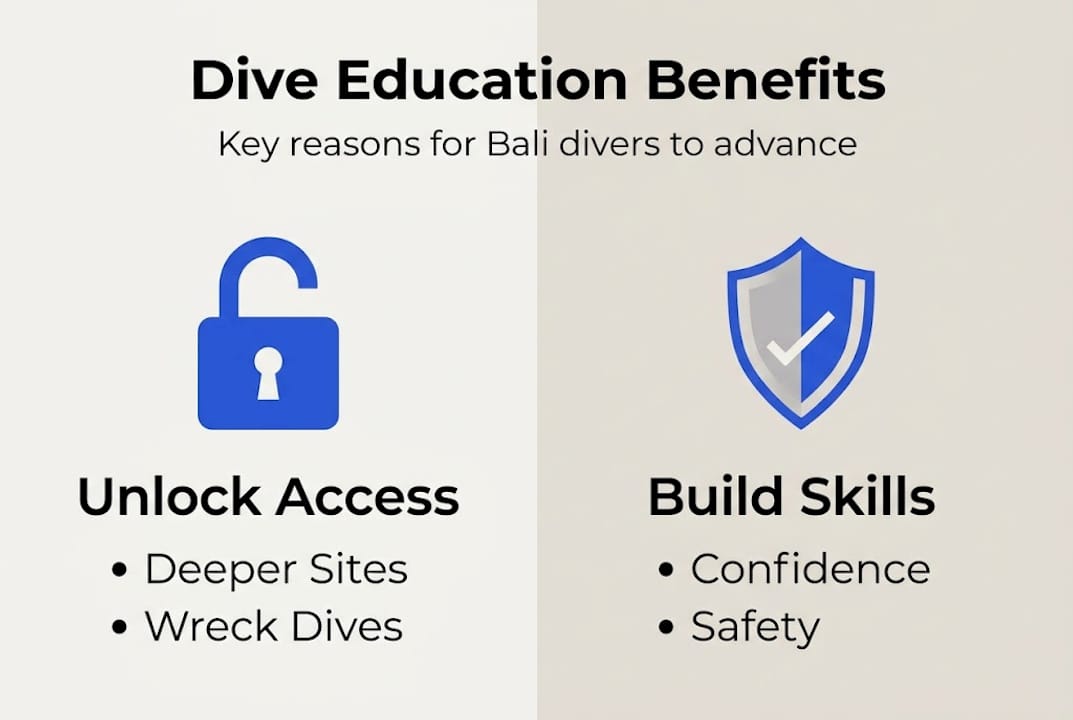
Here is a quick comparison of what each level unlocks:
| Certification level | Max depth | Key skills gained | Typical freedoms |
|---|---|---|---|
| Open Water | 18 metres | Core scuba skills | Guided dives, calm sites |
| Advanced Open Water | 30 metres | Navigation, deep diving, buoyancy | Wrecks, walls, stronger currents |
| Rescue Diver | 30 metres | Emergency response, self-rescue | Greater independence, leadership |
| Divemaster | 40 metres | Guiding, assisting, dive planning | Professional dive leadership |
You can explore the full range of options through our dive courses overview, which covers everything available in Amed and beyond.
Unlock Bali’s top dive sites and adventures
Understanding PADI courses is only half the story. The real difference is in where you can go and what you can experience next.
Bali is genuinely one of the most diverse dive destinations in the world. The challenge is that its most spectacular sites are not always accessible to every certification level. Sites like Liberty Wreck, Amed walls, and deeper reefs require advanced training for full access, whether that means greater depth, stronger currents, or specific technical skills.
Imagine arriving in Bali with an Open Water certification and hearing that the full Liberty Wreck experience, including its deeper sections teeming with schooling fish and soft corals, is beyond your current level. Or that the famous drift dives at Nusa Penida, where manta rays glide past in the blue, require a comfort with currents that only comes from proper training. That is a real scenario for many holiday divers, and it is entirely avoidable.
Here is how certification level maps to some of Bali’s most celebrated dive sites:
| Dive site | Recommended level | Why advanced helps |
|---|---|---|
| Liberty Wreck (shallow sections) | Open Water | Accessible, calm entry |
| Liberty Wreck (full wreck) | Advanced Open Water | Deeper sections, navigation |
| Amed walls | Advanced Open Water | Depth, buoyancy control |
| Nusa Penida drift dives | Advanced Open Water | Current management |
| Night dives, Tulamben | Specialty (Night Diver) | Low visibility, torch skills |
The skills you gain through Advanced Open Water and specialty courses, including better air management, refined buoyancy, and current awareness, directly translate to richer, more relaxed dives at Bali’s best spots. You can check site access recommendations to understand what each location typically requires.
For those who want to explore alternative Bali sites beyond the well-known spots, advanced training opens up a whole new catalogue of possibilities. Our team can help you match your diver training options to your specific holiday ambitions.
Pro Tip: Before you book your Bali trip, think about which dive sites excite you most and work backwards to figure out what certification you will need. Planning your learning around your holiday goals makes the whole experience far more rewarding.
Boost your safety, skill, and confidence underwater
Gaining access to more sites is exciting, but many divers underestimate how advanced skills reduce worry and incident risks during real dives.
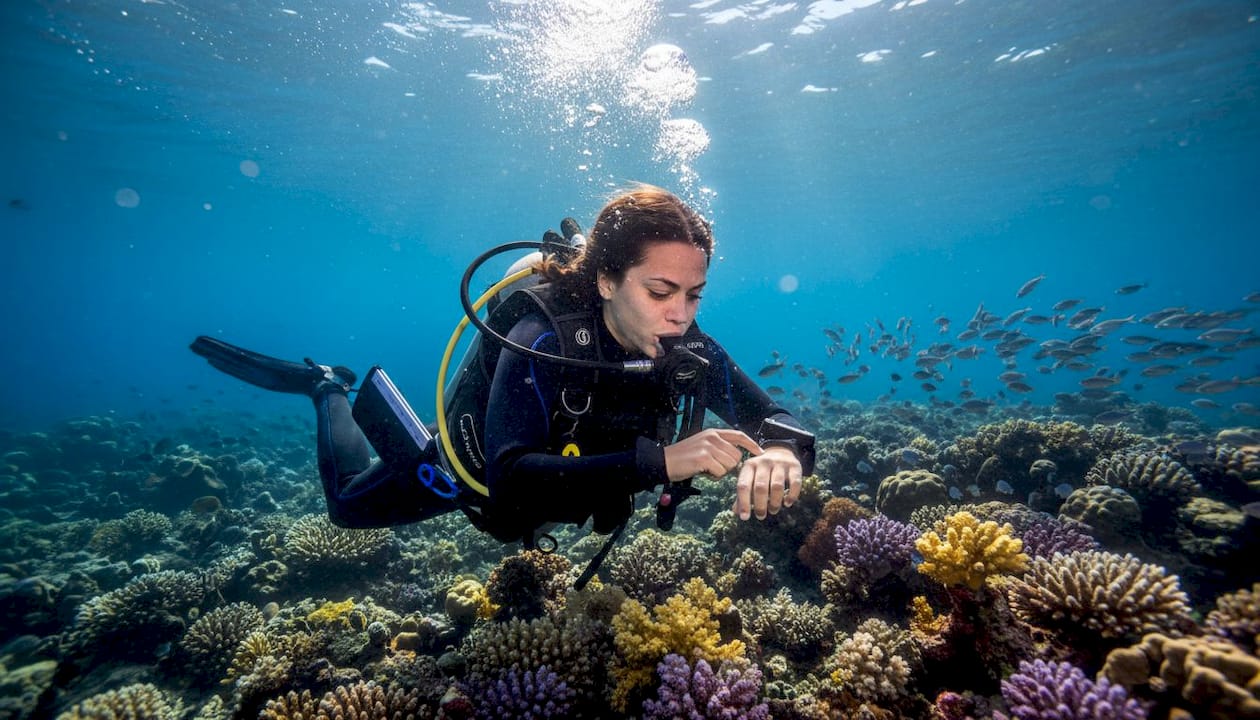
The statistics here are sobering. 94.5% of divers have had close calls, often due to poor skills or inexperience. And it is not just about deep water. DAN reports fatalities even at shallow depths, highlighting that skill gaps can be dangerous regardless of how far down you go.
Advanced training addresses these gaps in very practical ways:
- Buoyancy control: Poor buoyancy is one of the leading causes of reef damage and diver fatigue. Advanced courses refine this skill significantly.
- Air consumption: Learning to breathe more efficiently means longer, calmer dives and less chance of running low unexpectedly.
- Navigation: Knowing how to use a compass and read natural features reduces the risk of getting disoriented or separated.
- Self-rescue: Recognising and managing your own stress underwater is a skill that can prevent minor issues from becoming serious ones.
- Buddy skills: Advanced training reinforces how to stay connected to your dive partner and respond if something goes wrong.
Bali presents some genuinely demanding conditions. Currents can shift, visibility can change, and depths can tempt you further than planned. Having the training to manage these situations calmly is what separates a stressful dive from a brilliant one.
Our PADI instructor insights go deeper into how experienced guidance shapes safer outcomes, and our blog on PADI certification benefits covers the broader advantages in detail.
Pro Tip: Try to continue your training soon after completing your Open Water course. Skills fade faster than most people expect, and building on fresh foundations makes the learning far more natural.
Advanced courses for real challenges: Rescue, emergencies, and beyond
Safe, confident diving often requires more than just basic skills. Handling edge cases is where advanced courses prove genuinely vital.
The PADI Rescue Diver course covers emergency management, self-rescue, and buddy assistance in a structured, progressive way. It is widely regarded by experienced divers as one of the most valuable courses available, not because emergencies are common, but because the training builds a level of awareness and calm that changes how you approach every dive.
Here is what the Rescue Diver course typically involves:
- Knowledge development: Study of dive accident prevention, stress recognition, and rescue theory.
- Confined water sessions: Practising rescues, tired diver tows, and surface management in a controlled pool environment.
- Open water scenarios: Realistic simulations including unconscious diver rescues, missing diver searches, and panicked buddy management.
In Bali specifically, this training prepares you for situations that can arise at sites like Nusa Penida or during deeper wreck dives:
- Managing a buddy who is overwhelmed by a strong current
- Responding to an out-of-air situation at depth
- Conducting a missing diver search in low visibility
- Providing surface support while waiting for assistance
You can find full details about the Rescue course and what to expect at each stage. Once you have completed Rescue Diver, the path to Divemaster becomes a natural and exciting next step.
For those working towards Advanced Open Water first, our Advanced Open Water course in Bali is a great place to start building those deeper skills.
Why diving beyond the basics genuinely matters in Bali
Most guides focus on which courses to take and in what order. What they rarely say is this: the biggest barrier to continuing dive education is not cost or time. It is the false sense of completion that comes with that first certification.
We have seen it many times. Divers arrive in Amed with an Open Water card earned a year or two ago, excited to explore the Liberty Wreck or drift along the walls. Within a few dives, the hesitation is obvious. Skills that were sharp after the course have softened. Confidence that felt solid in a pool or calm bay wobbles when the current picks up or the depth increases.
Continuing your education shortly after certification does something important. It locks in the fundamentals before they fade and builds momentum that keeps you engaged with diving long after your holiday ends. Divers who progress tend to dive more often, dive more safely, and develop a genuine relationship with the underwater world rather than treating it as a tick-box activity.
There is also a sustainability angle that rarely gets mentioned. Trained divers with good buoyancy and reef awareness cause significantly less damage to fragile coral ecosystems. Bali’s reefs are precious, and every diver who invests in proper training becomes a better steward of them.
Bali’s mix of calm, shallow bays and challenging open-water sites means the learning genuinely never stops. You can read more about choosing the right starting point in our guide to safer dive site selection.
Continue your dive journey in Bali
Ready to put your curiosity into action? Whether you are looking to advance your certification, build specific skills, or simply get more from every dive you do in Bali, the next step is closer than you think.
At Bali Dive Cove, we offer a full range of PADI courses in Bali tailored to every level, from first-time divers to those ready to take on the Advanced Open Water course and beyond. Our small groups and experienced instructors mean you learn at your own pace, with real attention and no rush. If you want to combine courses with guided dives across Amed’s best sites, our Bali dive packages make it easy to plan the perfect underwater holiday. Come dive with us and see how much further your skills can take you.
Frequently asked questions
What is the difference between Open Water and Advanced Open Water certification?
Open Water divers are certified to 18 metres and learn core scuba skills, while Advanced Open Water extends to 30 metres and includes five adventure dives covering deep diving, navigation, and more. The Advanced course meaningfully expands both your depth range and your practical abilities underwater.
Do I really need continuing education if I only dive occasionally on holiday?
Yes, particularly for safety and enjoyment. Most close calls are linked to a lack of preparation or experience, and maintaining momentum after your initial certification keeps your skills sharp and your dives more rewarding, even if you only dive once or twice a year.
What Bali dive sites are only open to advanced divers?
Deeper sections of Liberty Wreck, some Amed wall dives, and current-prone areas like Nusa Penida require Advanced certification to explore fully. Sites in Tulamben and Amed specifically require advanced training to access all their features safely.
How do Rescue and specialty courses help me in real emergencies?
PADI Rescue Diver training covers emergency management, assisting panicked divers, and self-rescue techniques, preparing you for situations like out-of-air incidents or a lost buddy during a dive in Bali’s varied conditions.
