


TL;DR:
- Choosing a local instructor in Bali ensures real-time adaptation to changing conditions, enhancing safety and enjoyment. They offer personalized coaching in small groups, build confidence, and provide authentic hospitality that enriches your diving holiday. Prioritizing local knowledge and safety culture transforms a standard dive into a memorable underwater experience.
Planning a scuba diving holiday in Bali can feel wonderfully exciting and a little overwhelming at the same time. With dozens of dive centres competing for your booking, it’s tempting to assume they all offer much the same experience. They don’t. The question of why local instructors make such a difference comes down to one thing most travellers don’t consider until they’re already in the water: Bali’s dive conditions change constantly, and only someone who dives these sites week after week truly knows how to read them. Choosing the right instructor isn’t just about certification. It’s about local knowledge, genuine care, and a dive experience built around you.
Key takeaways
| Point | Details |
|---|---|
| Local knowledge protects you | Bali’s currents and temperatures shift daily, and local instructors adapt plans in real time to keep you safe. |
| Safety culture shapes behaviour | Dive schools with strong safety cultures produce instructors who follow protocols more consistently and responsibly. |
| Small groups mean better learning | Local operators offering four to six divers per instructor give you far more personal attention and coaching. |
| Personalised instruction builds confidence | Private and small group formats allow instructors to pace dives around your comfort, not a fixed schedule. |
| Local hospitality enriches the whole trip | Local instructors bring community ties, warmth, and genuine passion that turn a dive day into a real memory. |
Why local instructors know Bali’s waters like no one else
Bali is not a single dive destination. It’s a collection of wildly different environments packed into one island. Amed in East Bali offers calm, macro-rich reefs and the famous USS Liberty wreck in Tulamben. Nusa Penida delivers powerful oceanic currents and the chance to swim alongside manta rays. Each site has its own personality, and that personality can shift dramatically within a single morning.
Dive site conditions in Bali include water temperatures ranging from 18°C to 28°C, with thermoclines that can drop several degrees within a short descent. Nusa Penida in particular is known for quick temperature shifts and changing currents that directly affect diver safety and comfort. A visiting instructor following a fixed itinerary won’t necessarily know that the site they planned to visit this morning has developed a strong surge. A local one will.
Experienced local instructors monitor these conditions before every single dive. They check current direction, assess visibility, and make decisions on the fly based on what they actually see, not what the schedule says. Operators in Nusa Penida describe a dynamic decision process that responds to current changes in real time rather than sticking to a pre-set route. That flexibility is not a luxury. It’s what separates a brilliant dive from a stressful one.
| Bali dive site | Typical conditions | Local knowledge advantage |
|---|---|---|
| Amed reefs | Calm, gentle current, 25-28°C | Knowing the best macro spots by season |
| USS Liberty wreck | Mild current, excellent visibility | Understanding fish behaviour around the wreck |
| Nusa Penida | Strong currents, thermoclines, 18-24°C | Reading current windows for safe diver entry |
| Crystal Bay | Variable current, cooler water | Timing dives to catch mola mola season |
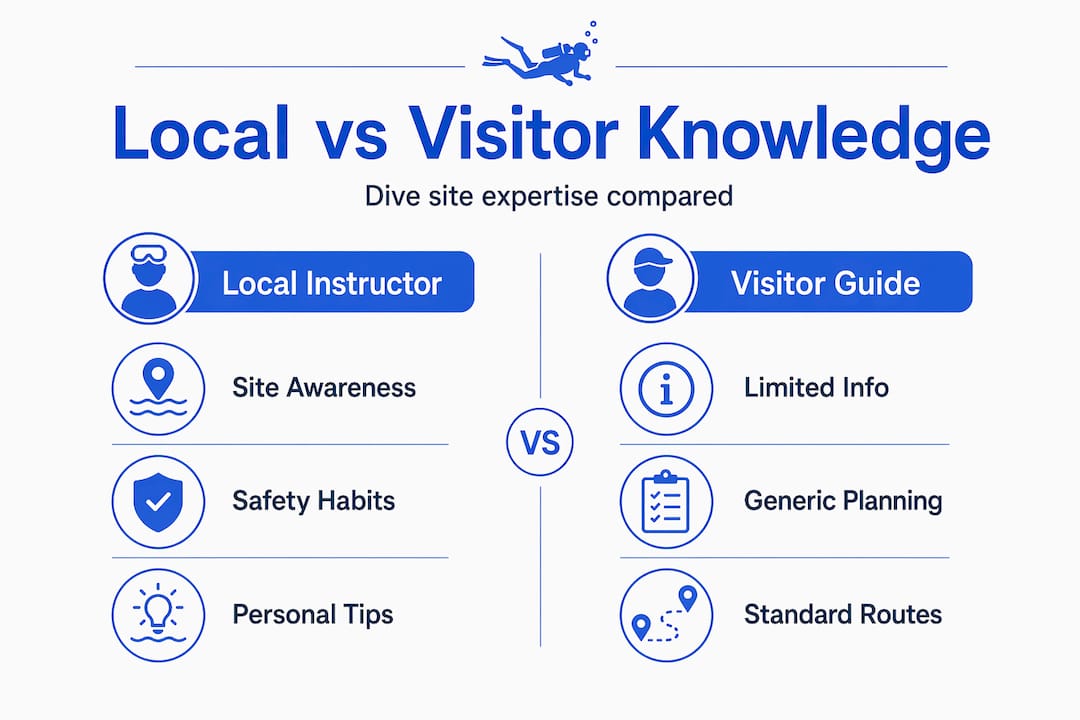
Pro Tip: Before booking any dive trip in Bali, ask your operator how they decide whether to change a dive site on the day. A local instructor who gives you a specific, confident answer is one who genuinely uses local knowledge rather than relying on a fixed schedule.
Safety culture: the hidden difference with local dive schools
Technical skill gets you certified. Culture keeps you safe. This distinction matters more than most divers realise, and it’s one of the strongest reasons to choose a reputable local dive school when visiting Bali.
Research into instructor behaviour shows that safety culture within a dive school has a measurable influence on how instructors behave underwater. Schools that actively promote safety as a core value produce instructors who are more consistent, more careful, and more attentive. It’s not just about following rules. It’s about an attitude that shapes every decision from gear checks to group management.
“A dive school’s culture is the invisible instructor in the water with you. It shapes how your guide responds under pressure, how they handle a nervous diver, and whether safety ever gets traded off for speed or convenience.”
Local dive schools in Bali, particularly family-run operations, tend to build this culture organically. Their reputation depends entirely on every guest returning safely and leaving happy. There’s no head office to blame and no franchise to hide behind. That accountability creates a different kind of instructor.
Here’s what that looks like in practice:
- Pre-dive briefings that cover site-specific hazards, not just standard script
- Honest conversations about whether a site is appropriate for your experience level
- Willingness to cancel or modify a dive if conditions aren’t right, even at short notice
- Consistent buddy checks and equipment verification before every entry
- Post-dive debriefs that help you improve and understand what you experienced
The role of a PADI instructor goes well beyond teaching skills. In a strong local dive school, that role includes being the person who tells you when not to dive, and meaning it.
Personalised coaching: what small groups actually give you
There is a real difference between being guided and being taught. Many large dive operations in Bali will take you to a site, keep you together as a group, and bring you back safely. That’s guiding. Genuine instruction is something different, and it requires space, time, and attention that large groups simply can’t provide.
Small groups of four to six divers per instructor allow for a fundamentally different experience. Your instructor can watch how you fin, notice if you’re struggling with buoyancy, and quietly correct your trim without disrupting the rest of the group. In a group of twelve, that level of observation is impossible.
Here’s how to identify genuine personalised instruction when you’re comparing operators:
- Ask about maximum group size. Any answer above six per instructor should make you pause.
- Find out if your instructor is also your guide. At some operations, an instructor runs the briefing and a less experienced divemaster leads the actual dive. These are not the same thing.
- Ask whether they offer private dive options. Private dive formats offer flexible pacing and personalised guidance that genuinely improves diver confidence, especially for those returning to diving after a break.
- Check if the programme can be adapted to your goals. If you want to work on underwater photography, improve your buoyancy, or simply take things slowly, a local instructor should be able to build the session around that.
- Look for instructors with site-specific experience. Someone who has dived Amed’s reefs hundreds of times will show you things a visiting guide simply doesn’t know are there.
Pro Tip: If you’re returning to diving after more than a year out of the water, book a private session rather than joining a group dive. A good local instructor will use that time to rebuild your confidence at your pace, not theirs.
Choosing the right dive instructor in Bali is genuinely one of the most important decisions you’ll make before your trip. The right person turns a good holiday into an unforgettable one.
How local instructors enhance your whole Bali diving holiday
The benefits of local instructors extend well beyond the dive itself. When you dive with someone who grew up near these reefs, who knows the boat captains by name, who can recommend the best warung near the dive site and who genuinely loves introducing visitors to the waters they call home, something shifts in the experience.
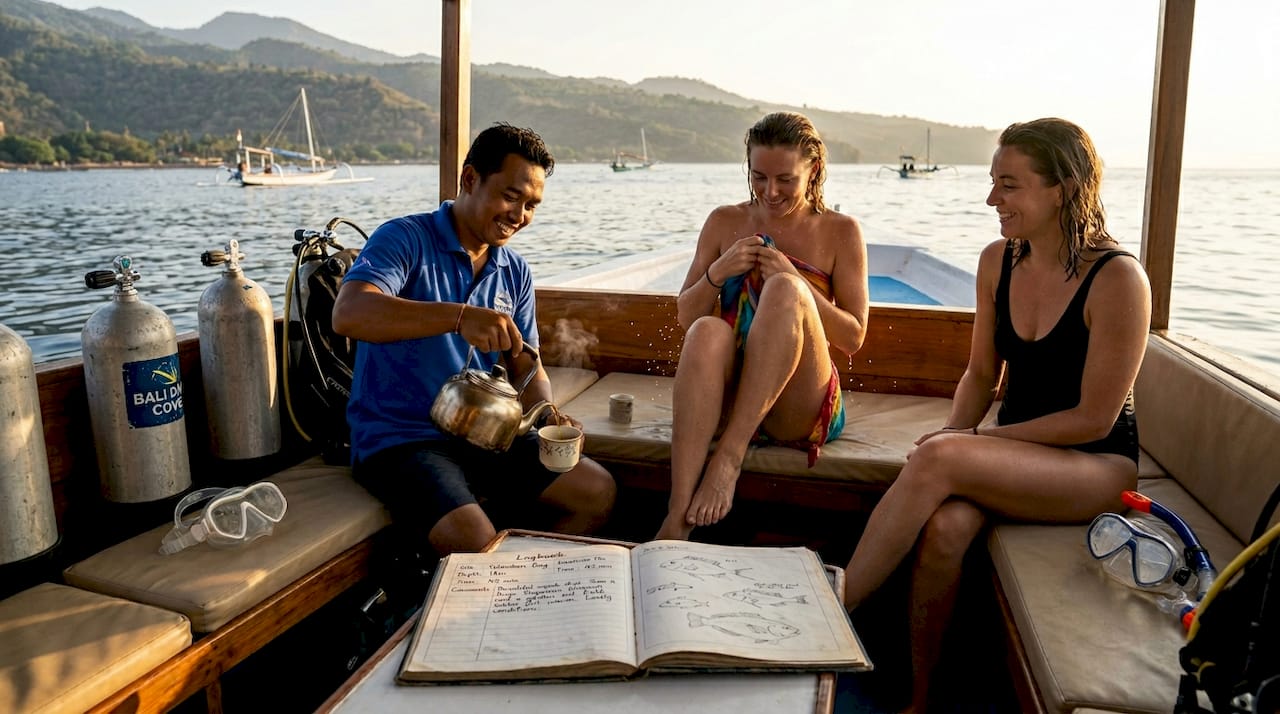
Local dive centres bring a level of hospitality that is woven into the culture rather than scripted into a service manual. That warmth is real, and it makes a difference when you’re nervous before your first open water descent or exhausted after a long travel day.
Here’s what that broader local advantage looks like across a typical dive holiday:
- Site selection tailored to you. Local instructors know which sites suit beginners on a choppy day, which reefs are best at dawn, and where you’re most likely to spot the creatures on your wish list.
- Flexible scheduling. A local operation can move your dive to the afternoon if morning conditions aren’t ideal. A larger operator often can’t, because they’re running twenty groups that day.
- Genuine marine life knowledge. Your instructor knows where the pygmy seahorses live, which cleaning station the reef sharks use, and when the nudibranch season peaks. That knowledge turns a dive into a story.
- Community connection. Local operators often have relationships with conservation projects, fishing communities, and marine research groups. Diving with them connects you to Bali’s ocean story in a way no package tour can replicate.
- Relaxed, unhurried pacing. Small, local operations aren’t rushing you through to make way for the next group. The dive ends when it’s ready to end.
The importance of local instructors is perhaps felt most on the surface interval, sitting on the boat, drinking tea, talking about what you just saw. That conversation, with someone who genuinely loves these waters, is part of the experience.
My honest take on why local instruction changes everything
I’ve watched a lot of divers arrive in Bali with expectations shaped by dive trips they’ve done elsewhere. Some are disappointed early on, not because the diving is poor, far from it, but because they booked based on price or convenience and ended up on a large group dive that didn’t match what they actually needed.
In my experience, the divers who leave Bali genuinely transformed are almost always the ones who spent time with a local instructor who knew them by name by the second dive. That relationship, built on trust and real attention, is what makes the difference between ticking a box and falling in love with the underwater world.
I’ve seen nervous beginners take their first breaths underwater and surface beaming, because their instructor took the time to calm them, explain everything clearly, and never once rushed the process. I’ve also seen experienced divers rediscover their passion for diving after years away, simply because someone showed them something they’d never seen before, a frogfish tucked into the sand, a cleaning station full of batfish, a reef that looked like a living painting.
What I’ve learned after years of diving in Amed is this: local knowledge isn’t just useful. It’s irreplaceable. No app, no guidebook, and no visiting instructor with a packed schedule can give you what a local can. If you’re planning a dive trip to Bali, prioritise the person over the price. You’ll thank yourself underwater.
— Matt
Dive Bali with a team that knows every reef
At Balidivecove, we’ve been running dives and courses from Amed since 2018, and our lead instructors bring over 16 years of in-water experience to every session. We keep our groups small, our communication clear, and our dives unhurried because that’s how great diving actually works.
Whether you’re working towards your first certification or looking to explore Amed’s extraordinary reefs and wrecks with a knowledgeable guide, we build every experience around you. Our dive courses in Bali are led by local instructors who know these waters intimately, from the best macro spots on the reef slope to the safest entry points on a windy day. If you’d prefer to explore straight away, our Bali dive packages offer flexible, locally guided dives tailored to your experience and the day’s conditions. Come and see what local really means.
FAQ
Why do local instructors matter more in Bali specifically?
Bali’s dive conditions, including currents, thermoclines, and visibility, change rapidly and vary significantly between sites. Local instructors monitor these conditions daily and adapt plans in real time, which visiting instructors following fixed itineraries simply cannot do.
How many divers should be in a group for the best experience?
The best local dive operators in Bali keep groups to four to six divers per instructor. This allows for genuine personal attention, real-time coaching, and a more relaxed, enjoyable dive for everyone.
Are private dives with a local instructor worth the extra cost?
Yes, particularly if you’re returning to diving after a long break or working on specific skills. Private dive formats allow instructors to pace the dive entirely around your comfort and goals, which builds confidence far more effectively than a group session.
How can I tell if a local dive school has a strong safety culture?
Ask how they decide to change dive sites when conditions shift. A school with a genuine safety-first culture will give you a specific, considered answer based on real monitoring, not a vague reassurance.
What’s the difference between a dive guide and a local dive instructor?
A guide leads you through the water safely. An instructor coaches you, corrects your technique, notices your comfort level, and adapts the experience to your needs. For the richest possible Bali diving experience, look for a local PADI instructor who also leads your dive, not just your briefing.
