


TL;DR:
- Coral reefs support a quarter of all marine species despite covering less than 1% of the ocean floor. Protecting reefs benefits biodiversity, coastal protection, and local communities facing climate and human pressures. Effective conservation involves reducing local pollution, supporting reef connectivity, respecting indigenous knowledge, and responsible tourism practices.
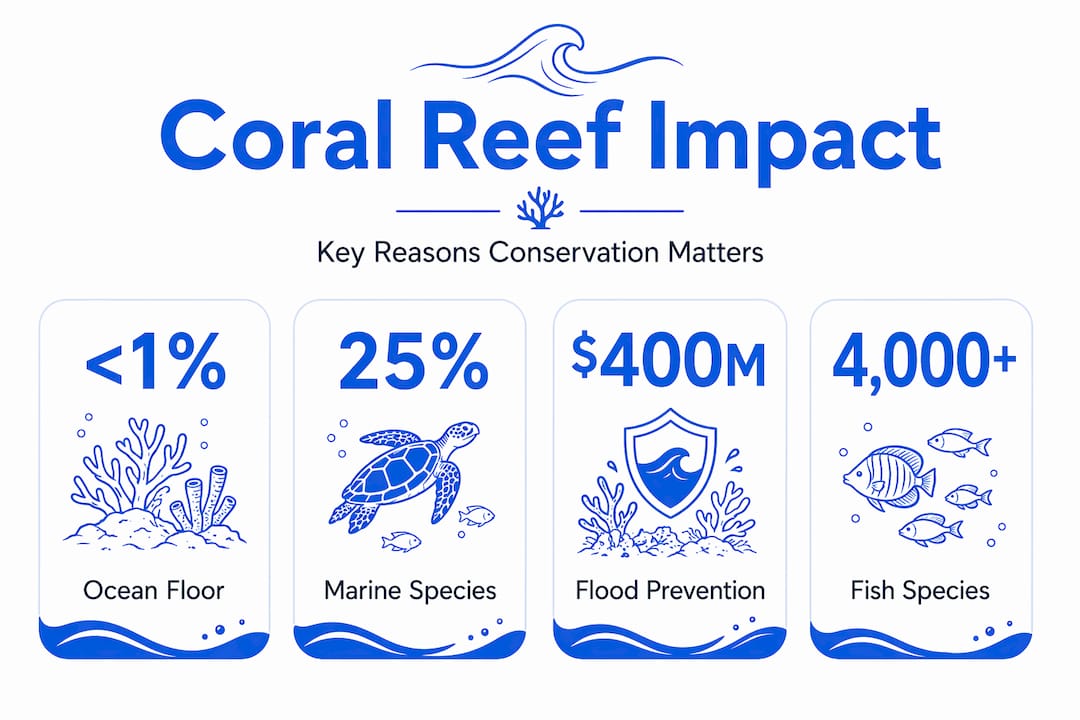
Coral reefs cover less than 1% of the ocean floor yet support roughly a quarter of all marine species on Earth. That single fact should stop you in your tracks. Why reef conservation is so urgent becomes clear the moment you understand what reefs actually do: they shelter biodiversity, shield coastlines, feed hundreds of millions of people, and store ecological knowledge built over millions of years of evolution. Here at Balidivecove, diving alongside Amed’s reefs every day, we see both the extraordinary beauty of these systems and the very real pressures threatening them. This article covers all of it.
Key takeaways
| Point | Details |
|---|---|
| Reefs punch far above their weight | Covering less than 1% of the ocean, reefs support 25% of all marine species, making their conservation disproportionately impactful. |
| Coastal communities depend on reefs | Healthy reefs absorb up to 97% of wave energy, protecting millions of people and billions of pounds worth of infrastructure from flooding. |
| Climate change is the defining threat | Over 84% of reefs were impacted by the 2023 to 2025 bleaching event, with ocean acidification compounding structural damage. |
| Local action delivers immediate results | Reducing nearby pollution and overfishing gives corals a fighting chance to withstand the wider pressures of a warming climate. |
| Conservation is a moral obligation | Reef destruction falls hardest on Indigenous peoples and developing nations, making protection a matter of social justice as much as ecology. |
Why reef conservation starts with understanding biodiversity
The number of species packed into a coral reef is genuinely staggering. Over 4,000 fish species depend on reef structures, alongside tens of thousands of invertebrates, from nudibranchs and mantis shrimp to sea urchins and lobsters. To put that in perspective, the entire Amazon rainforest, celebrated as the world’s biodiversity crown jewel, covers an area roughly 500 times larger than all coral reefs combined. Reefs do more with less than almost any other ecosystem on the planet.
Think of a reef as a living city. The coral itself forms the architecture: branching, plate, and massive corals create a three-dimensional framework of corridors, caverns, and overhangs. Every structural feature shelters a different community of organisms. Knock down a building in that city and dozens of residents lose their home overnight.
| Feature | Detail |
|---|---|
| Ocean floor coverage | Less than 1% of total ocean area |
| Marine species supported | Approximately 25% of all known marine species |
| Fish species recorded on reefs | Over 4,000 species globally |
| Invertebrate diversity | Tens of thousands of species including crustaceans, molluscs, and echinoderms |
| Reef ecosystem function | Breeding, nursery, feeding, and refuge habitat combined |
Reefs also act as genetic libraries. Corals and the species that depend on them carry evolutionary adaptations refined across millions of years. Lose a reef system and you lose not just the animals, but the biological knowledge encoded in their DNA. Some of that knowledge, particularly the chemical compounds produced by reef organisms, is already informing cancer research and the development of new medicines.
Pro Tip: When you dive Amed’s reefs, pay attention to the structural variety of the coral. The more complex the architecture, the richer the community it supports. That complexity is exactly what conservation efforts are working hardest to protect.
Reefs as natural coastal shields
It is easy to think of reef conservation in purely ecological terms, but the social and economic case is just as compelling. Healthy reefs absorb up to 97% of wave energy, acting as natural breakwaters that reduce the force of storms and daily wave action reaching the shore. When reefs degrade, that protection disappears almost overnight.
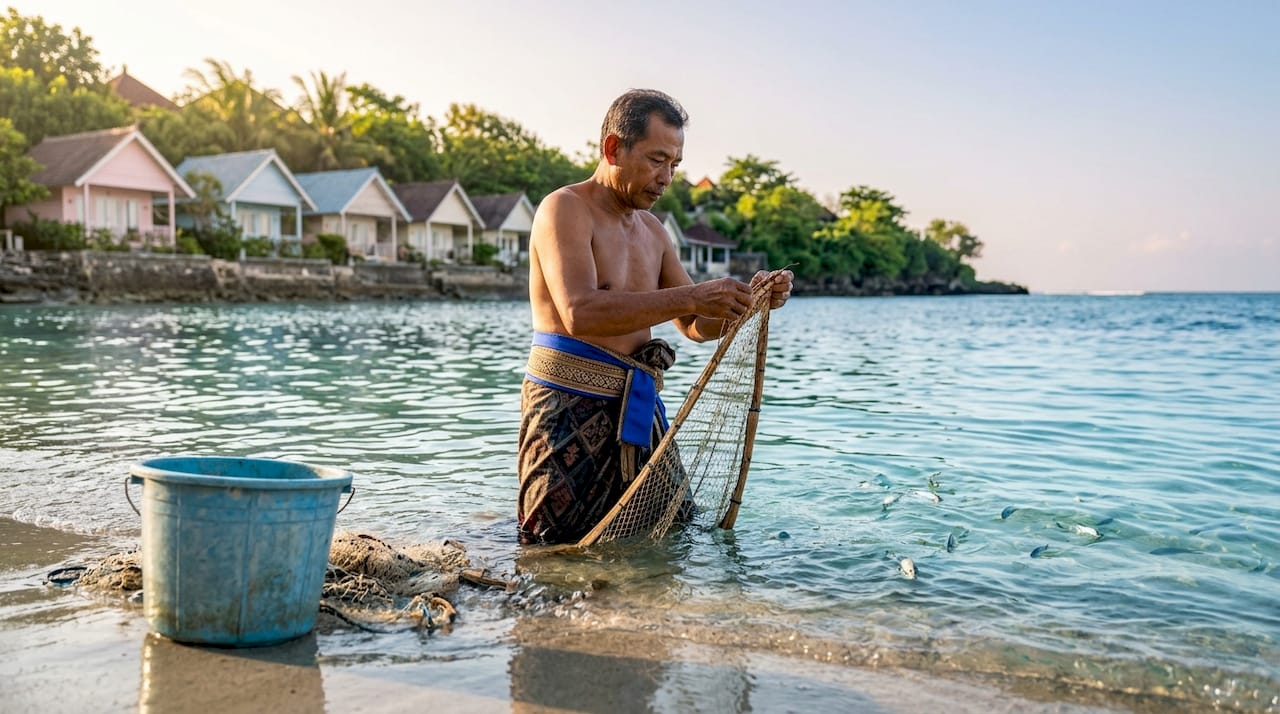
In Florida alone, reef degradation could increase annual flood damages by $400 million. Across the United States, reefs provide an estimated $1.8 billion per year in flood protection. Scale that globally and the figure becomes almost incomprehensible. Coastal infrastructure, agricultural land, freshwater sources, and entire communities sit behind the line of defence that reefs provide.
The communities most at risk when reefs fail are not the wealthy ones with concrete sea walls and insurance policies. They are small island nations, fishing villages, and low-lying coastal towns in developing regions where there is no financial fallback.
The direct benefits of healthy reef systems for coastal communities include:
- Reduced flood damage to homes, businesses, and agricultural land
- Lower coastal erosion rates, preserving beaches and shorelines
- Protection of freshwater aquifers from saltwater intrusion
- Buffering of storm surges during cyclones and typhoons
- Maintained fishing habitats that sustain food security and local livelihoods
- Tourism revenue from healthy reefs driving local economic activity
The importance of reef conservation becomes even clearer when you consider that replacing this protection with engineered structures, sea walls, and breakwaters, would cost many times what reef restoration programmes require.
The threats pushing reefs to the brink
Understanding the impact of coral reef loss requires knowing what is causing it. The threats are layered and they interact with each other in ways that make them harder to address separately.
Climate change is the headline threat. Rising sea temperatures trigger coral bleaching, the process by which stressed corals expel the symbiotic algae living in their tissues. Without those algae, corals turn white and, if temperatures remain elevated for too long, they die. The scale of recent bleaching has been alarming: 84% of reefs globally were impacted by the 2023 to 2025 bleaching event, the most widespread on record.
Ocean acidification adds another layer of damage. As the ocean absorbs atmospheric CO₂, it becomes more acidic, which reduces the ability of corals to calcify and build their skeletons. Under sustained acidification, reefs can transition to net erosion, where bio-erosion and chemical dissolution outpace new coral growth. A reef in net erosion is not just struggling. It is physically dissolving.
| Threat | Primary mechanism | Key impact |
|---|---|---|
| Rising sea temperatures | Coral bleaching and mortality | Mass die-offs, reduced species diversity |
| Ocean acidification | Reduced calcification, net erosion | Loss of reef structural complexity |
| Overfishing | Removal of herbivores and keystone species | Algal overgrowth smothering corals |
| Coastal pollution | Nutrient loading, sedimentation | Reduced light, disease outbreaks |
| Destructive fishing | Physical destruction of reef structure | Immediate habitat loss |
| Runoff and sediment | Smothering of coral polyps | Recruitment failure in young corals |
Local stressors like pollution and overfishing act as force multipliers alongside climate change. A reef already weakened by agricultural runoff or depleted of herbivorous fish has far less capacity to recover from a bleaching event. These pressures compound each other.
Pro Tip: When choosing eco-friendly diving practices in Bali, the small things genuinely add up. Avoiding sunscreen with oxybenzone, staying off the coral, and supporting operators who follow sustainable protocols all reduce the local stressors that weaken reef resilience.
The ethical and social case for protecting reefs
The reasons to protect coral reefs go well beyond economics. There is a moral imperative rooted in intergenerational justice and environmental stewardship. Reefs have existed for hundreds of millions of years. The generation alive today is the first with both the knowledge and the capacity to destroy them, and the first with the responsibility to choose otherwise.
Reef destruction falls disproportionately on Indigenous peoples and developing nations. These are communities whose food security, cultural identity, and economic survival are bound directly to reef health. For them, reef loss is not an environmental statistic. It is the end of a way of life.
“Reefs contribute an estimated $6 to $10 trillion annually through tourism, fisheries, and recreation, sustaining the livelihoods of hundreds of millions of people. But no financial figure captures what reefs mean to communities who have fished, celebrated, and built their cultures around them for generations.”
The cultural dimension of reef conservation is chronically underrepresented in scientific and policy discussions. Traditional ecological knowledge held by coastal communities often contains observations about reef behaviour and resilience that formal science is only beginning to document. Community-led conservation and equitable partnerships are not just ethically preferable. Evidence consistently shows they produce better conservation outcomes.
Reef conservation strategies that actually work
Knowing why reef conservation matters is one thing. Knowing what actually makes a difference is another. The good news is that effective strategies exist, and many of them are within reach of individuals, dive operators, and local communities right now.
-
Reduce local pollution at source. Reducing agricultural runoff, improving sewage treatment, and cutting plastic waste entering waterways are among the most immediately impactful reef conservation strategies available. Local pollution reduction gives corals a meaningful chance to resist and recover from climate stress.
-
Support connected reef networks. Connected reef systems allow heat-tolerant larvae to disperse regionally, repopulating damaged areas with more resilient corals. Prioritising the protection of reef corridors rather than isolated patches significantly increases long-term survival prospects.
-
Restore structural complexity, not just coral cover. Restoration programmes that focus only on replanting coral miss a critical point. Reef structural complexity, what researchers call “reef roughness,” is what dissipates wave energy and supports biodiversity. Effective restoration rebuilds the three-dimensional architecture, not just the living tissue.
-
Integrate Indigenous and community knowledge. Incorporating local expertise into conservation planning consistently improves results. Community co-management models that share decision-making and economic benefits with coastal communities produce conservation that lasts beyond the next funding cycle.
-
Choose responsible dive tourism. Eco-conscious divers and operators reduce physical damage to reefs, support local conservation initiatives financially, and build the public awareness that drives policy change. The role of dive conservation in Bali is a genuine and growing example of how tourism can become a conservation tool rather than a threat.
Pro Tip: Look for dive operators that actively participate in reef monitoring, support local clean-up efforts, and keep group sizes small. Small groups mean less physical disturbance to the reef, and a more personal experience for you.
My perspective: what sixteen years on these reefs has taught me
I have been diving for over sixteen years, and the reefs around Amed have been my classroom, my office, and honestly my favourite place on Earth. I have watched sections of reef that were thriving ten years ago become pale and fragmented. I have also watched carefully managed sites recover in ways that genuinely surprised me.
What I have come to believe is that the importance of reef conservation cannot be separated from personal connection. People protect what they love. Every diver who descends onto a healthy reef and sees a hawksbill turtle glide past a table coral is a potential advocate. That moment of wonder is not incidental. It is the most powerful conservation tool there is.
I have also learned to be sceptical of solutions that treat reefs as purely a science problem. The most resilient reefs I have seen are the ones where local fishing communities have real ownership of conservation decisions. When a community’s livelihood depends on a reef being healthy, they become its most effective guardians. Science matters enormously, but it works best when it supports community knowledge rather than overrides it.
My honest view is this: the benefits of reef protection are so wide-reaching that no one group can be solely responsible for delivering them. Governments, scientists, businesses, divers, and coastal communities all have a role. But every individual choice matters. Where you dive, who you book with, what you put on your skin, and what you leave behind. It all adds up.
— Matt
Dive with us and be part of the solution
At Balidivecove, we genuinely care about the reefs we dive every day. Our courses and guided dives are designed to give you the skills, awareness, and respect for the underwater world that makes you a better diver and a better steward of these ecosystems. Whether you are just starting out or working towards advanced certifications, we keep our groups small and our approach personal.
Every dive we lead around Amed is an opportunity to see reef conservation in action, from the healthy coral gardens off Jemeluk to the marine life surrounding the USAT Liberty wreck at Tulamben. If you want to explore our PADI dive courses that build real reef awareness, or browse our guided dive packages across East Bali’s best sites, we would love to hear from you. Come and see what we are working to protect.
FAQ
What is reef conservation?
Reef conservation refers to the active protection, management, and restoration of coral reef ecosystems. It includes reducing local stressors like pollution and overfishing, restoring damaged reef structures, and supporting policies that address climate change.
Why is reef conservation so urgent right now?
Over 84% of the world’s reefs were impacted by the 2023 to 2025 global bleaching event, the largest on record. Combined with ocean acidification and local pollution, reefs are under simultaneous pressure from multiple directions, making urgent action critical.
What are the main benefits of reef protection?
Healthy reefs support roughly 25% of all marine species, absorb up to 97% of wave energy to protect coastlines, and contribute an estimated $6 to $10 trillion annually through fisheries, tourism, and recreation.
How does coral reef loss affect coastal communities?
Reef degradation removes natural coastal protection, increasing flood and storm damage risk significantly. In Florida alone, reef loss could raise annual flood damages by $400 million, with developing coastal nations facing even greater proportional losses.
What can I do personally to help protect coral reefs?
Choose reef-safe sunscreen, support certified eco-friendly dive operators, avoid single-use plastics that enter waterways, and book with businesses that actively contribute to reef monitoring and local conservation initiatives.
