

TL;DR:
- Choose a reputable PADI 5-Star dive centre for safety and quality experience.
- Beginners can try Discover Scuba Diving or complete an Open Water Diver course.
- Bali offers calm beginner sites and challenging advanced dives like Nusa Penida.
You land in Bali with one image burned into your mind: gliding over vibrant corals, watching a sea turtle drift lazily past. The reality, though, is that most travellers arrive excited but unsure of the next step. Which dive centre do you trust? Do you need a certification first? Is Nusa Penida actually safe for beginners? Whether you are picking up a regulator for the very first time or you are a certified diver hungry for a new challenge, this guide walks you through everything you need to know, from choosing a centre to selecting a site that matches your experience level.
Key Takeaways
| Point | Details |
|---|---|
| Start with the right course | Choose a PADI Discover Scuba Diving experience or Open Water Diver course depending on your experience. |
| Prioritise safety always | Select trusted PADI-certified centres and follow core dive protocols for every adventure. |
| Match site to skill | Pick sheltered East Bali for beginners and advanced drift sites only if certified and briefed. |
| Understand Bali’s seasons | Dive during the dry season for optimal conditions and visibility. |
What you need before your first underwater adventure
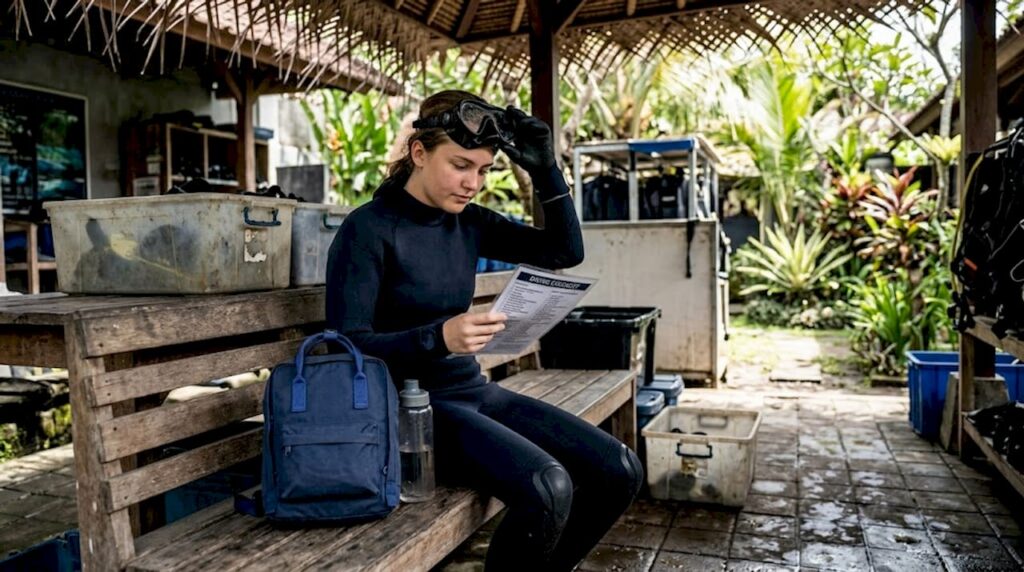
Now that you are excited to explore Bali’s reefs, let’s clarify exactly what you need to get started. The single most important decision you will make before entering the water is choosing the right dive centre. Look for a PADI 5-Star centre like Bali Dive Cove, where safety standards, instructor qualifications, and equipment maintenance are rigorously upheld. Reviews matter enormously here, so read them carefully.
For beginners, there are two main routes. The first is the PADI Discover Scuba Diving programme (DSD), a one-day introduction where you experience breathing underwater in a controlled, shallow environment without committing to full certification. The second is the PADI Open Water Diver course, which runs over three to four days and qualifies you to dive to 18 metres worldwide. Both are excellent options depending on your time and goals.
What beginners need to bring:
- Swimwear and a towel
- Basic swimming confidence (you do not need to be a competitive swimmer)
- A completed medical questionnaire confirming fitness to dive
- An open mind and a willingness to learn
Experienced divers should arrive with their certification card (also called a C-card), their personal logbook, and proof of DAN (Divers Alert Network) insurance. Most dive centres, including Bali Dive Cove, supply all technical equipment such as BCDs (buoyancy control devices), regulators, wetsuits, and masks for guided dives and courses.
| Diver type | Required documents | Equipment provided |
|---|---|---|
| Beginner (DSD) | Medical form | All equipment |
| Beginner (OWD) | Medical form | All equipment |
| Certified diver | C-card, logbook, insurance | Most equipment |
Exploring the many beginner-friendly dive sites around East Bali is far more enjoyable when you arrive prepared.
Pro Tip: Book your course a few days before your planned dive dates. This gives you time to complete the online eLearning theory at your own pace before arriving at the centre.
Step-by-step: Your first dive experience in Bali
With your prerequisites in order, you are now ready to enter the world of Bali diving. Here is how a typical first dive adventure unfolds.
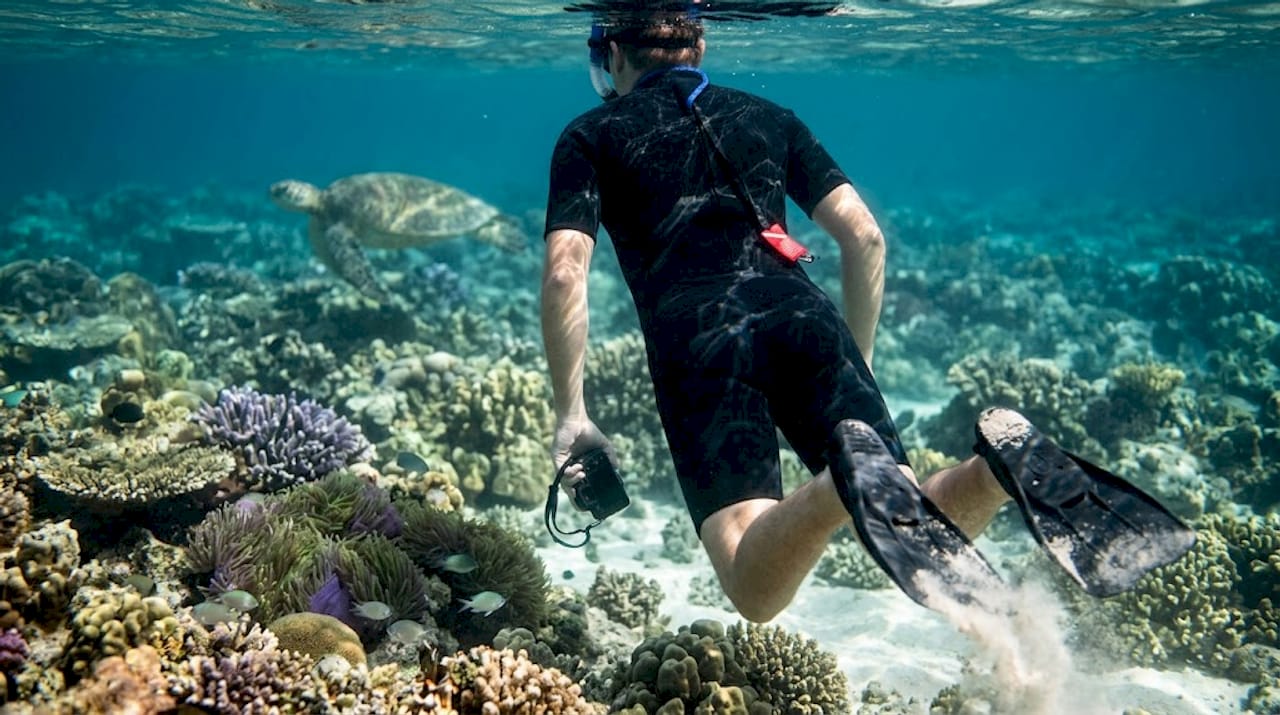
The OWD course structure follows a clear three-phase progression: eLearning theory completed online before your trip, confined water (pool) skills sessions where you practise techniques in shallow water, and four open water dives at real reef sites. This phased approach builds genuine confidence at each stage before moving to the next.
A typical first dive day looks like this:
- Morning briefing covering equipment, signals, and safety protocols
- Pool or confined water session to practise mask clearing and buoyancy
- Transfer to a calm, shallow reef site (usually 5 to 12 metres deep)
- Buddy check and final briefing on the dive site
- First open water dive, guided by your instructor
- Debrief and review of the experience
The DSD experience compresses steps one to four into a single morning, giving you one supervised dive in the afternoon. It is perfect for those short on time or testing the waters before committing to full certification.
| Factor | Discover Scuba Diving (DSD) | Open Water Diver (OWD) |
|---|---|---|
| Duration | 1 day | 3 to 4 days |
| Certification | No | Yes, globally recognised |
| Depth limit | 12 metres | 18 metres |
| Best for | Curious travellers | Those committed to diving |
Bali Dive Cove keeps groups deliberately small, which means your instructor is always close and communication is clear. Choosing one of the safest learning sites in East Bali, such as the calm bays around Amed, makes that first underwater experience genuinely enjoyable rather than nerve-wracking. Being part of a supportive dive community also helps beginners progress with far greater confidence.
Pro Tip: If you feel nervous in the pool session, tell your instructor immediately. Slowing down at this stage is not a weakness. It is exactly what experienced instructors encourage.
Dive safety essentials: Protocols, signals and avoiding common mistakes
Having reviewed the step-by-step process, let’s cover the essential safety principles that distinguish a rewarding dive from a risky one.
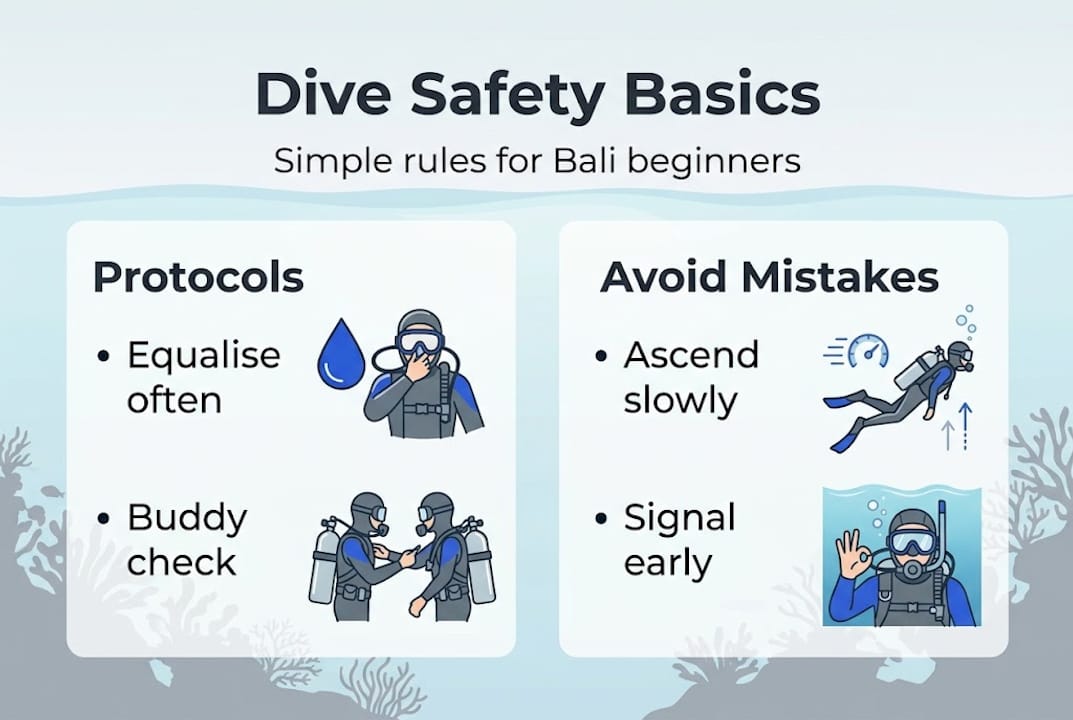
The buddy system and pre-dive checks are the foundation of every safe dive. Before entering the water, you and your buddy complete the BWRAF check: BCD, Weights, Releases, Air, and Final check. This routine confirms your equipment is correctly fitted and functioning. Never skip it, even on a relaxed holiday dive.
Core safety protocols every diver must know:
- Hand signals: Communicate OK, stop, ascend, descend, and out of air using internationally recognised signals
- Equalising: Pinch your nose and gently blow to equalise pressure in your ears as you descend, every metre or two
- Mask clearing: Practise flooding and clearing your mask during confined water sessions so it feels natural underwater
- Controlled ascents: Never rise faster than 9 metres per minute and always perform a three-minute safety stop at 5 metres
- Breathing: Breathe continuously. Holding your breath underwater is the most dangerous thing a diver can do
“The incident rate in recreational diving is fewer than 1 in 200,000 dives, thanks to robust protocols. DAN insurance is strongly recommended for all divers visiting Bali.”
The most common mistakes among first-time divers are rushing through the pre-dive briefing, failing to equalise early enough during descent, and ascending too quickly when uncomfortable. All three are avoidable with attention and patience. Understanding the benefits of full certification also means you are better prepared to handle unexpected situations.
Pro Tip: If your ears hurt during descent, stop and ascend one metre, equalise again, and descend slowly. Forcing the descent causes barotrauma (pressure injury), which can put your entire trip on hold.
Choosing the right Bali dive site: Matching your skills to your adventure
With safety basics clear, your next step is choosing a dive site that matches both your ambitions and your current experience.
East Bali is the natural starting point for most divers. The reefs around Amed, Tulamben, and Jemeluk are calm, shallow, and teeming with colourful marine life. Beginners thrive in East Bali’s calm waters, where gentle currents and excellent visibility make learning feel effortless. You will spot nudibranchs, reef sharks, and dense schools of fish without needing to be a strong swimmer.
Bali dive site overview by skill level:
- Beginner: Amed Bay, Jemeluk, Lipah Bay (East Bali) — calm, 5 to 15 metres, ideal for OWD and DSD
- Intermediate: USAT Liberty wreck in Tulamben (shallow sections, 5 to 30 metres)
- Advanced: Nusa Penida (strong drift dives, manta rays, thermoclines, best April to October)
- Technical: Boga wreck, 18 to 36 metres deep, requiring advanced certification
The dry season from April to October brings Bali’s finest underwater conditions, with visibility reaching 15 to 30 metres and water temperatures sitting comfortably between 26 and 30°C. Outside this window, swell and reduced visibility can make certain sites challenging, particularly for newer divers.
Nusa Penida is extraordinary but genuinely demanding. Strong, unpredictable currents and sudden thermoclines (cold water layers that can disorient divers) mean it is only suitable for experienced and properly briefed divers. Browse the full range of Bali dive sites to find the right match, and if deep reef or wreck adventures call to you, consider completing your PADI Deep Diver course before heading to the more challenging sites.
Why mindful planning makes all the difference for Bali’s underwater adventures
Here is something that most dive guides will not tell you: the biggest risk for Bali divers, both beginners and experienced ones, is not the ocean. It is overconfidence.
Bali’s beauty is intoxicating. You arrive, you see photos of manta rays and dramatic wrecks, and suddenly your ambitions outrun your actual experience. We see it regularly. A freshly certified diver insists on diving Nusa Penida. An experienced recreational diver skips the local briefing because they have dived strong currents before. Both decisions can lead to dangerous situations that a little humility would easily prevent.
At Bali Dive Cove, we believe that slow, methodical progression is not a limitation. It is the philosophy that keeps diving safe, social, and genuinely inspiring over a lifetime. Local instructors know these reefs intimately, and that knowledge is something no online review can replicate. Small groups, unhurried dives, and honest communication between instructor and diver create the ideal environment for real growth. Whether you are choosing your first site or planning a return trip, learning what makes a truly great dive resort experience will shape every dive you do in Bali.
Start your Bali dive journey with local experts
Planning your underwater adventure in Bali is genuinely exciting, and the right support makes all the difference. At Bali Dive Cove, we offer a full range of dive courses in Bali designed for every level, from your very first breath underwater to advanced certifications that open up the ocean’s most dramatic sites. Small groups mean you are never just a number, and our instructors bring over 16 years of local knowledge to every session.
Whether you are ready to try a one-day introduction or want a structured package that combines courses and guided reef dives, our dive packages are built around your goals and your pace. Come and discover why Amed is one of Bali’s most rewarding places to learn and explore underwater.
Frequently asked questions
How long does it take to get PADI certified in Bali?
The PADI Open Water Diver course typically lasts three to four days and certifies you to dive to 18 metres at dive sites around the world.
Can I dive in Bali if I have no experience?
Absolutely. Beginners can join a one-day Discover Scuba Diving programme or enrol on a full Open Water course with absolutely no prior experience needed.
When is the best season to dive in Bali?
The dry season from April to October offers the best underwater visibility and calmest sea conditions for divers of all levels.
Is Bali safe for beginner divers?
Yes. Bali has many calm, shallow reef sites perfect for new divers, and the incident rate across reputable centres is fewer than 1 in 200,000 dives thanks to strict safety protocols.
What extra precautions are needed for advanced sites like Nusa Penida?
Advanced sites like Nusa Penida demand strong current awareness and preparation, including a surface marker buoy, a 5mm wetsuit, and strict adherence to your guide’s instructions throughout the dive.
