

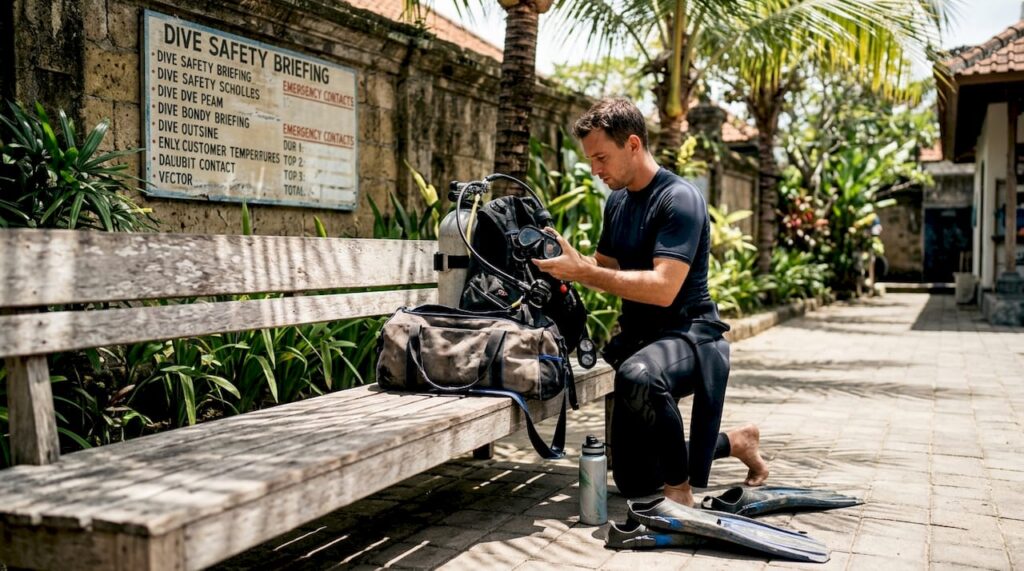
Planning a scuba dive in Bali is genuinely exciting, but excitement alone won’t keep you safe underwater. Bali’s reefs, wrecks, and currents are spectacular, yet they demand real preparation. A thorough pre-dive checklist bridges the gap between a thrilling dive and a dangerous one. The PADI BWRAF acronym forms the backbone of this process, giving every diver a reliable, repeatable routine before entering the water. Whether you’re a first-timer at Tulamben or a seasoned diver exploring Amed’s macro reefs, working through a solid checklist means you can focus on the wonder beneath the surface rather than worrying about what you might have missed.
Key Takeaways
| Point | Details |
|---|---|
| Always use BWRAF | The BWRAF buddy check is the foundation of safe diving in Bali and should be completed before every dive. |
| Ask for site-specific briefings | Conditions like currents and marine life in Bali can vary so a local briefing is essential for safety. |
| Hydrate and prepare health-wise | Staying hydrated and monitoring personal health prevents common dive risks in Bali’s tropical climate. |
| Choose 5-star dive centres | Reputable operators offer maintained gear, small groups, and thorough safety checks that support a better dive experience. |
| Personal checks are crucial | Do not rely solely on staff—perform your own gear and safety checks every time. |
Understanding the BWRAF pre-dive checklist
Now that we’ve established why a checklist matters for Bali dives, let’s break down the global standard, the BWRAF buddy check, and see how it directly applies.
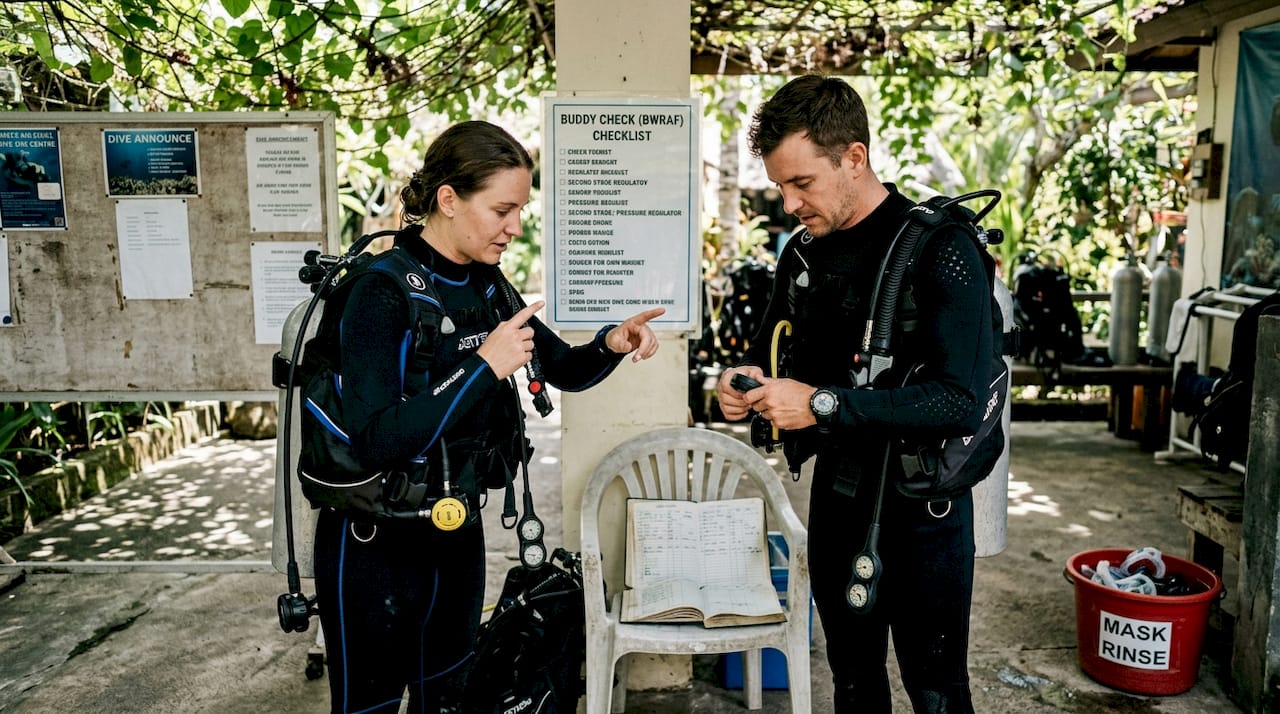
BWRAF stands for Buoyancy, Weights, Releases, Air, and Final check. The PADI BWRAF standard is used by dive professionals worldwide precisely because it covers every critical system in a logical order. Skipping even one step can lead to serious problems underwater, particularly in Bali’s varied conditions.
Here’s how to work through each step:
- Buoyancy: Check that your BCD (buoyancy control device) inflates and deflates correctly. Test the oral inflation valve and all dump valves. A faulty BCD in a strong Bali current is not something you want to discover at depth.
- Weights: Confirm your weight belt or integrated weights are the correct amount and properly secured. Check your buddy’s weights too. Forgetting to check weight releases is one of the most common errors divers make.
- Releases: Locate and test every buckle and release on your BCD and weight system. You need to know exactly how to ditch your weights in an emergency, and so does your buddy.
- Air: Turn on your tank fully, check the pressure gauge, and breathe from your regulator to confirm airflow. Check your buddy’s air supply too. Rushing this step is a classic mistake that leads to entering the water with a partially open valve.
- Final check: Run a quick head-to-toe visual. Mask on correctly? Computer active? Fins secure? Signal devices ready?
“A buddy check isn’t just a formality. It’s the last line of defence before you enter the water.”
Even when dive centre staff assist with your setup, always run through the pre-dive workflow in Bali yourself. Staff are thorough, but personal accountability matters.
Pro Tip: Practise saying BWRAF aloud with your buddy before every dive. It takes less than two minutes and creates a habit that could save your life.
Site-specific safety and briefings in Bali
Having understood the BWRAF basics, it’s essential to adapt that checklist to Bali’s unique underwater world and local site briefings.
Bali isn’t a one-size-fits-all destination. A dive at Amed’s calm macro reefs feels completely different from navigating the surge at Nusa Penida. Pre-dive preparation in Bali always includes a site-specific briefing alongside your BWRAF check, and for good reason.
Before entering the water at any Bali site, make sure your briefing covers:
- Current direction and strength: Bali’s currents can shift quickly, especially at sites like Crystal Bay or Manta Point.
- Marine life awareness: Know which creatures to avoid touching and which are protected. Nudibranchs, sea turtles, and reef sharks all deserve respectful distance.
- Entry and exit points: Rocky entries, boat dives, and shore dives each require different techniques. Confirm the plan before you kit up.
- Emergency procedures: Where is the oxygen kit? Who is the dive leader? What’s the signal for abort?
- No-decompression limits (NDLs): Stay within your limits for every dive. Exceeding NDLs increases decompression sickness risk significantly.
- No-fly rule: Wait at least 18 hours after multiple dives before boarding a flight.
Here’s a quick comparison of beginner versus advanced Bali dive sites to help you choose wisely:
| Feature | Beginner sites (Amed, Tulamben) | Advanced sites (Nusa Penida, Padang Bai) |
|---|---|---|
| Current strength | Mild to moderate | Strong, unpredictable |
| Visibility | Generally excellent | Variable |
| Depth range | 5 to 18 metres | 15 to 40+ metres |
| Marine life | Reef fish, nudibranchs, turtles | Manta rays, sharks, sunfish |
| Recommended experience | Open Water certified | Advanced or Rescue certified |
Choosing the right site for your skill level is itself a safety decision. Explore the full Bali dive site guide to match sites to your experience, or browse safe sites in Bali specifically curated for newer divers.
Hydration, health, and equipment tips for Bali dives
Moving from local conditions and briefings, let’s focus on how personal preparation, especially hydration and health, can make all the difference.
Bali is hot. Genuinely, sweat-through-your-rashguard hot. That heat accelerates dehydration, and dehydration is a known risk factor for decompression sickness (DCS). Extra hydration before diving actively reduces your DCS risk in tropical conditions, so drinking plenty of water the evening before and the morning of your dive is not optional, it’s essential.
Here’s your personal health checklist before any Bali dive:
- Drink at least 500ml of water before your first dive of the day.
- Avoid alcohol the night before. Even mild dehydration from alcohol increases DCS risk.
- Eat a light meal roughly two hours before diving. Avoid heavy, greasy food that can cause nausea underwater.
- Declare any health issues to your dive centre honestly. Ear infections, colds, and sinus congestion can make equalising painful or impossible.
- Apply reef-safe sunscreen well before kitting up. Conventional sunscreens harm coral reefs and are banned or restricted at many Bali sites.
- Check your dive computer is charged, set to the correct mode, and reset from any previous dives.
Equipment deserves its own moment of attention. Inspect your mask seal, check your fins for cracks, and confirm your wetsuit or rashguard fits properly. Bali’s water temperature typically sits between 26°C and 29°C near the surface, but thermoclines (sudden drops in water temperature at depth) can catch you off guard.
Pro Tip: Pack a thin 3mm thermal layer in your dive bag. Thermoclines in Bali can drop water temperature by several degrees within just a few metres, and a cold diver is a distracted diver.
For more on how the Bali dive community prioritises safety and personalised experiences, it’s worth understanding the culture of care that good local operators bring to every dive.
Checking your dive operator: quality, gear, and safety standards
With personal health and gear in mind, let’s step back and assess the final link in the safety chain: your chosen dive operator’s standards, procedures, and service quality.
Not all dive centres are equal. Choosing the right operator is as important as any item on your personal checklist. PADI and SSI 5-star centres maintain higher standards for equipment servicing, instructor qualifications, and group sizes, making them the safer choice for your Bali diving holiday.
Here’s what to look for when evaluating a dive operator:
- Certification: Is the centre PADI or SSI certified? Look for 5-star ratings, which indicate consistent quality standards.
- Group size: Smaller groups mean more personal attention. Avoid operators who take out groups of 10 or more with a single guide.
- Equipment condition: Regulators, BCDs, and tanks should look well-maintained. Don’t hesitate to ask when gear was last serviced.
- Instructor experience: Ask how long instructors have been diving locally. Local knowledge of currents and conditions is genuinely valuable.
- Briefing quality: A thorough, unhurried briefing signals a safety-first culture. If a centre rushes you into the water, that’s a red flag.
| Operator type | Group size | Gear maintenance | Local knowledge |
|---|---|---|---|
| Local 5-star centre | Small (2 to 6) | Regular, documented | Excellent |
| International chain | Medium (6 to 12) | Variable | Moderate |
| Budget operator | Large (10+) | Often inconsistent | Variable |
“Even at the best dive centre in Bali, always double-check your own setup. No one knows your gear like you do.”
If something feels off during setup or briefing, speak up. Good operators welcome questions. For practical advice on what to do if things go wrong underwater, the troubleshooting Bali dive issues guide is a genuinely useful read before your trip.
What most Bali divers overlook
After covering checklists and standards, let’s pause to share what years of experience really teach about safe diving in Bali. It’s never just about ticking boxes.
Here’s an uncomfortable truth: most dive incidents don’t happen because someone skipped the checklist entirely. They happen because someone rushed through it. There’s a real difference between completing a BWRAF check and actually doing one. When you’re excited, standing on a boat with vibrant coral visible below, the temptation to move quickly is powerful.
We’ve seen experienced divers enter the water with tanks only three-quarters open because they assumed the staff had sorted it. We’ve seen weight belts clipped incorrectly because the diver nodded along to the buddy check without genuinely engaging. These aren’t beginners making rookie mistakes. These are confident divers who trusted the system a little too much.
Personal vigilance is the one thing no operator can provide for you. Treat every dive as your own responsibility, regardless of how professional the centre is. The diver troubleshooting tips we share with our guests always start with the same message: slow down, check again, then enter the water.
The checklist isn’t bureaucracy. It’s the habit that keeps the wonder of Bali’s underwater world accessible and safe, dive after dive.
Ready to dive? Explore Bali’s top courses and sites
Now that you know how to prepare safely, it’s time to put that knowledge to work in some of Bali’s most breathtaking waters.
At Bali Dive Cove, we’ve been guiding divers through Amed’s reefs and wrecks since 2018, with small groups, experienced instructors, and an unhurried approach that puts your safety and enjoyment first. Whether you’re ready to take your first breaths underwater or you’re looking to explore advanced sites, our Bali dive courses and dive packages are designed around you. Browse our full range of Bali dive sites and find the perfect dive for your experience level. We’d love to share the magic of East Bali’s waters with you.
Frequently asked questions
What is the BWRAF buddy check, and why is it important for Bali dives?
BWRAF is a step-by-step buddy check ensuring your equipment and safety are verified before every dive. It’s especially critical in Bali, where varied conditions like strong currents and thermoclines demand that every system works perfectly.
How can I choose a safe dive site in Bali as a beginner?
Opt for sites with mild currents like Amed or Tulamben and always request a thorough site briefing from a reputable centre before entering the water.
Why is hydration emphasised in Bali pre-dive checklists?
Bali’s tropical heat accelerates dehydration, which raises your risk of decompression sickness. Drinking extra water before diving is a simple, effective way to reduce that risk.
Can I rely entirely on dive centre staff for my equipment check?
No. Even at excellent centres, always run your own BWRAF check to catch anything that may have been missed and to confirm everything feels right to you personally.
What is the no-fly rule after Bali dives?
After multiple dives, wait at least 18 hours before boarding a flight to allow residual nitrogen to leave your body safely and reduce decompression sickness risk.
