

TL;DR:
- Knowing each diver’s certification, experience, and comfort levels is essential for safe, enjoyable group diving.
- Match dive sites to the group’s abilities, favoring calm, shallow locations for beginners and intermediate divers.
- Proper planning of logistics, guides, gear, and safety measures ensures a stress-free, memorable Bali diving experience.
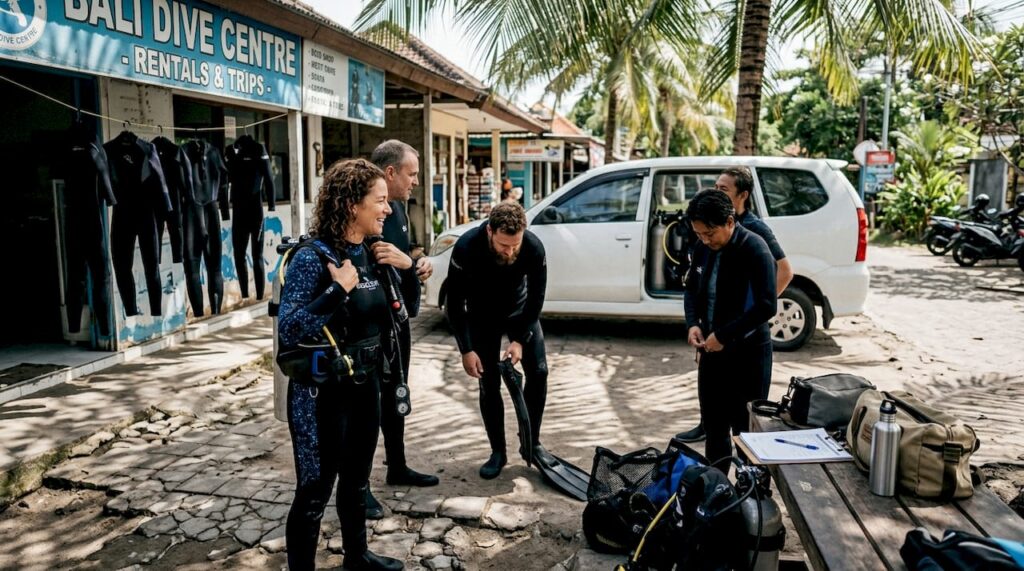
Planning a group dive tour in Bali sounds like a dream until the reality sets in. You have got nervous first-timers alongside seasoned divers, a dozen opinions on which sites to visit, and a tangle of logistics involving transport, gear, and accommodation. Get it wrong and the trip becomes stressful for everyone. Get it right and you create a shared underwater adventure that people talk about for years. This guide walks you through every stage of organising a group dive trip in Bali, from assessing your divers’ abilities to booking the right guides, so you can focus on the experience rather than the chaos.
Key Takeaways
| Point | Details |
|---|---|
| Match diver levels | Assess every group member’s certification and experience to choose safe and suitable sites. |
| Logistics are crucial | Organising transport, gear and guides optimises safety and enjoyment for the whole group. |
| Eco-safety matters | Use reef-safe sunscreen and practise neutral buoyancy to help protect Bali’s marine life. |
| Operator vs. DIY | Tour operators handle details, but DIY trips can save money if you manage logistics well. |
Understanding your group’s dive profile
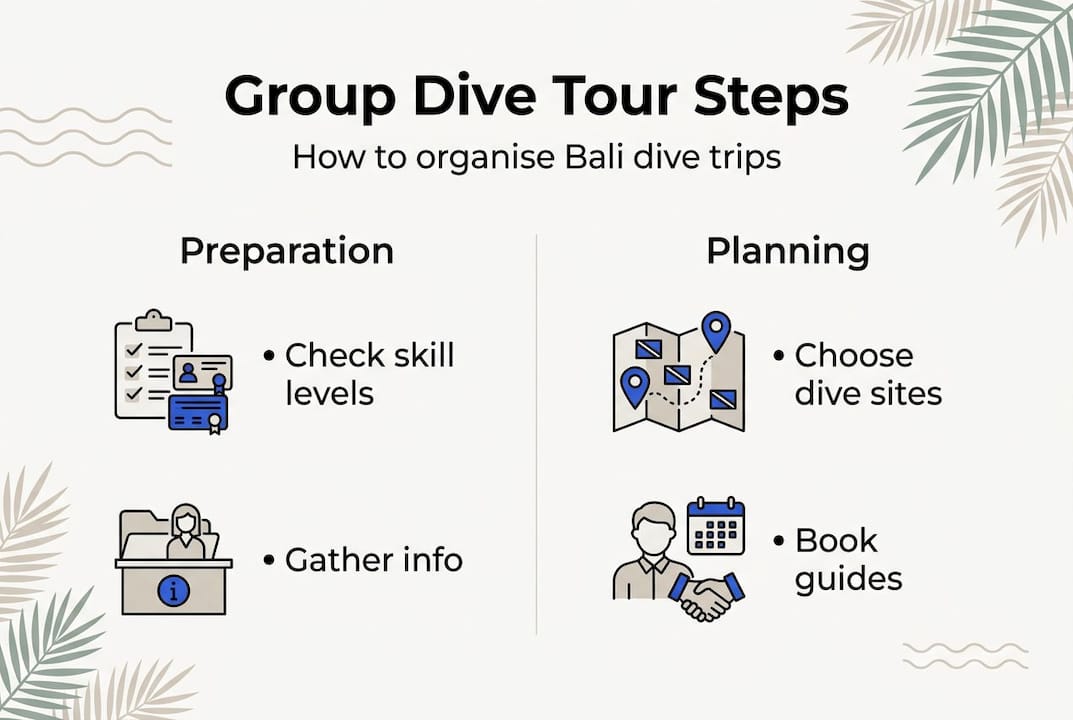
Before you book a single dive, you need to know exactly who is in your group. This is the foundation of everything else. A group of eight divers might include two complete beginners, three PADI Open Water certified divers, two Advanced Open Water holders, and one Rescue Diver. Each level brings different needs, different site options, and different safety considerations.
Start by collecting certification details from every group member. Ask how recently they have dived, because a certified diver who has not been underwater for more than six months is considered rusty and should complete a refresher session before the trip. Level-matching prevents issues, and refreshers for inactive divers reduce risk significantly. Do not skip this step, even if it feels awkward to ask.
For complete beginners, the PADI Open Water course takes three to four days and costs roughly Rp 5 to 7 million, after which they can join beginner sites or discovery dives. Factor this into your trip timeline if any group members are starting from scratch.
Once you have a clear picture of everyone’s level, you can explore group diving options that accommodate mixed abilities without leaving anyone behind. The goal is to match dive sites to the weakest certified diver in the group, while still offering experienced members enough to get excited about.
| Certification level | Suitable sites | Max depth |
|---|---|---|
| Beginner / Discovery | Amed bays, shallow reefs | 5 to 12 metres |
| PADI Open Water | Tulamben, Amed wall dives | Up to 18 metres |
| Advanced Open Water | Nusa Penida, deeper wrecks | Up to 30 metres |
| Rescue / Divemaster | All sites, drift dives | 30+ metres |
Key things to assess before finalising your group profile:
- Certification level for every diver, including expiry or inactivity periods
- Comfort in currents, which varies even among certified divers
- Physical fitness, particularly relevant for sites with shore entries over rocks
- Interest areas, such as macro photography, wreck diving, or reef exploration
- Willingness to complete an advanced PADI course if the trip timeline allows
Pro Tip: Ask group members to fill in a short pre-trip form covering their certification, last dive date, and any anxieties. This saves hours of back-and-forth and helps your guide prepare properly.
Also remind everyone to use reef-safe sunscreen and practise neutral buoyancy before the trip. These habits protect Bali’s coral and are often required by responsible operators. You can read more in the dive tourism guide for 2026.
Choosing dive sites and planning logistics
With your group’s ability mapped out, the next step is matching those abilities to Bali’s remarkable range of dive sites. Bali is not a single dive destination. It is a collection of very different underwater environments, each with its own character, depth, and difficulty.
Different sites cater to varying skill levels: Tulamben shore dives and Amed bays suit beginners perfectly, while Nusa Penida is reserved for advanced divers comfortable with strong currents and open water conditions. Choosing the right mix means everyone gets a meaningful experience.
Here is a simple comparison of popular Bali dive locations:
| Site | Best for | Highlights | Current strength |
|—|—|—|
| Amed | Beginners to intermediate | Macro life, Japanese wreck | Mild |
| Tulamben | Beginners to intermediate | USAT Liberty wreck, reef | Mild to moderate |
| Nusa Penida | Advanced | Manta rays, Mola Mola | Strong |
| Menjangan | Intermediate | Wall diving, pristine coral | Mild |
For logistics, consider these steps in order:
- Confirm your base location. Staying in Amed puts you close to multiple beginner and intermediate sites, reducing daily travel time.
- Choose between a private charter and a shared operator. Private charters cost more upfront but offer flexibility, dedicated guides, and group cohesion. Shared boats are cheaper but less adaptable to your schedule.
- Book accommodation near your dive sites. Villas in Amed or Tulamben allow the group to stay together, share costs, and roll out of bed ready to dive.
- Plan surface intervals. These are not wasted time. Use them for briefings, snorkelling, or simply enjoying the scenery.
- Build in a buffer day. Weather, currents, and minor gear issues can shift your schedule. A spare day prevents a single disruption from derailing the whole trip.
“The best group dive trips we have seen are the ones where the organiser has done the groundwork before anyone arrives. Site selection, transport, and accommodation sorted in advance means the group can simply enjoy the water.”
For a full overview of where to go, browse the available Bali dive sites and cross-reference them with your group’s profile. Also revisit group diving tips for practical advice on structuring a multi-day itinerary.
Securing gear, guides, and certifications
With sites and logistics locked in, the next priority is equipment and expert guidance. These two elements can make or break a group dive experience, particularly when abilities vary across the group.
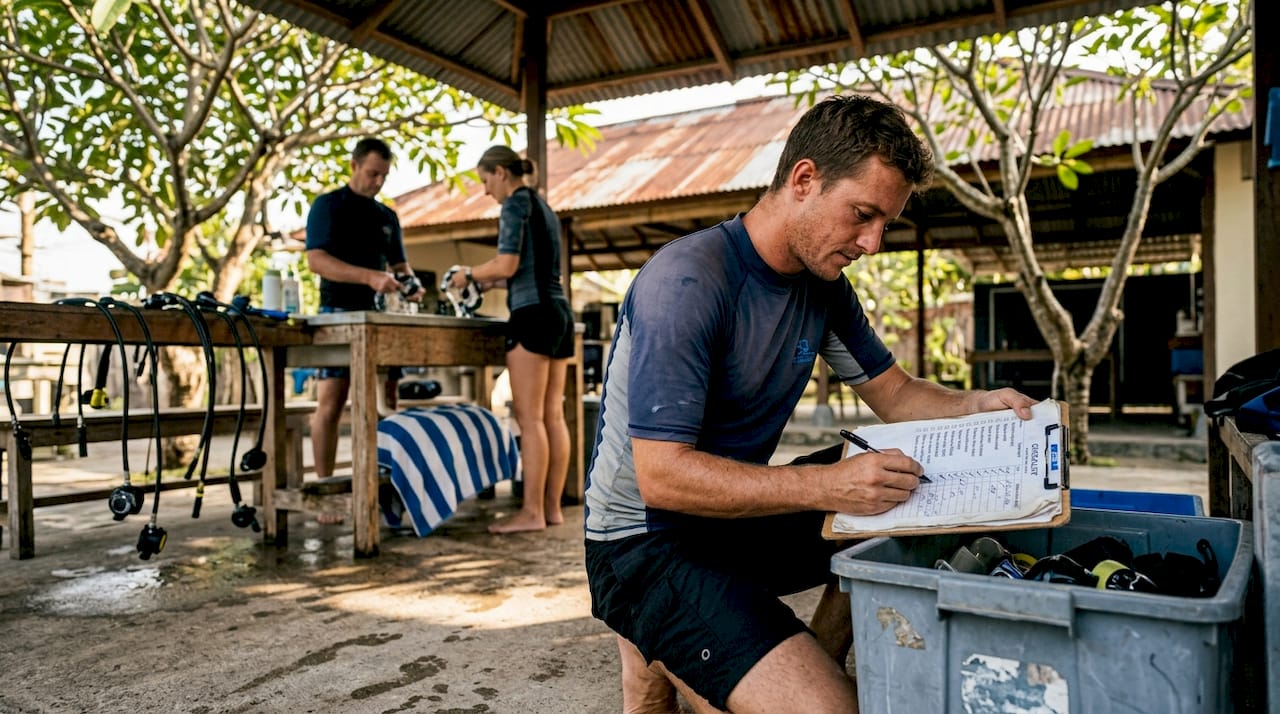
Renting versus bringing your own gear is a common dilemma. For most group travellers, renting locally is the practical choice. Quality rental gear is widely available in Amed and Tulamben, and it saves the hassle of airline baggage fees and equipment checks. That said, experienced divers who are particular about their mask fit or wetsuit thickness often prefer their own kit. Encourage group members to bring personal items like masks, fins, and computers if they have them, and rent the rest locally.
For mixed-ability groups, booking a certified guide or instructor is not optional. It is essential. A single guide managing eight divers of different levels is a recipe for stress. Aim for a ratio of no more than four divers per guide, ideally splitting the group by ability so beginners get dedicated attention.
If some group members need certification, the PADI Open Water course takes three to four days and costs approximately Rp 5 to 7 million, making it a realistic addition to a week-long trip. Schedule certification dives at the start of the trip so newly qualified divers can join the group for the remaining days.
When it comes to planning, operators manage logistics but offer less flexibility, while DIY planning is cheaper yet significantly more complex. For groups of six or more with mixed abilities, using a local dive resort as your organising partner is almost always the smarter call.
Key considerations when securing gear and guides:
- Confirm guide certifications before booking. Look for PADI-certified instructors with local site knowledge.
- Check gear condition on arrival, not in the water. Inspect regulators, BCDs, and wetsuits before each dive.
- Book a deep diver course for experienced members who want to push beyond 18 metres.
- Consider a PADI Divemaster course for any group member interested in leading future dives.
- Use a dive resort guide to understand what a full-service resort can handle on your behalf.
Pro Tip: Ask your dive operator to assign the same guide to your group for the entire trip. Consistency builds trust, and a guide who knows your group’s quirks by day two is far more effective than a rotating roster of strangers.
Managing group safety, conservation, and troubleshooting
With logistics and training in place, the final layer of preparation is safety and environmental responsibility. These are not afterthoughts. They are the framework that holds the whole trip together.
Safety starts before anyone enters the water. Every dive should begin with a thorough briefing covering entry and exit points, depth limits, hand signals, and emergency procedures. Buddy checks, where each diver verifies their partner’s gear before descending, are non-negotiable. Assign buddy pairs based on ability, not friendship, so that each pair is well matched in the water.
Safety essentials include level-matching, refreshers for rusty divers, reef-safe sunscreen, and practising neutral buoyancy to protect coral. These are not just guidelines. They are the habits that keep divers and reefs safe across thousands of dives.
For conservation, remind the group of these non-negotiable rules:
- No touching marine life, even if it seems harmless. Coral polyps are fragile and oils from skin cause lasting damage.
- Maintain neutral buoyancy at all times. Poor buoyancy is the single biggest cause of accidental reef damage.
- Use only reef-safe sunscreen or wear a rash vest instead. Many chemical sunscreens are toxic to coral.
- Do not chase or harass wildlife. Manta rays, turtles, and reef sharks are highlights, not props.
“A group that respects the reef leaves it better than they found it. That is the standard we hold ourselves to on every dive.”
Troubleshooting is part of every group trip. Common issues include gear mismatches discovered at the surface, nervous divers who freeze at the entry point, and schedules that slip due to weather. Have a plan for each scenario. Keep spare masks and fins on the boat. Assign a calm, experienced diver as a buddy for anyone showing anxiety. Build flexibility into your daily schedule so a delayed start does not cascade into a missed dive.
For a deeper look at how to structure safe dive holidays in Bali, explore how local operators approach personalised group planning.
Expert perspective: what most planners miss about group dive tours
After years of guiding groups through Amed’s reefs and wrecks, we have noticed a pattern. Most organisers focus heavily on booking and itinerary, and underestimate the human side of the trip. The logistics matter, but the experience is shaped by how people feel in the water.
The most commonly missed step is the refresher dive. Organisers assume that a certified diver is a ready diver. They are not always. A diver who has not been underwater for eight months will feel anxious on the descent, struggle with buoyancy, and slow the whole group down. One short refresher session on day one fixes all of that.
The second thing planners miss is the value of shared downtime. A group villa, a communal dinner, a sunset debrief over cold drinks: these moments bond the group and make the dives more memorable. Diving is social. The dive community insights we have gathered over the years consistently point to shared experiences as the defining feature of a great group trip, not the number of dives completed.
Finally, do not underestimate the cost of DIY stress. Saving money by managing everything yourself sounds appealing until you are coordinating eight people’s gear rentals at 6am. A local operator with experience in group logistics often pays for itself in time, sanity, and quality.
Discover guided Bali dive tours and courses
If you are ready to stop planning in circles and start diving, Bali Dive Cove is here to make it straightforward. We are a PADI 5-Star Dive Resort based in Amed, East Bali, and we have been organising group dive experiences since 2018.
Our instructors have over 16 years of experience across Amed’s reefs, wrecks, and currents. We keep groups small, communication clear, and dives unhurried. Whether your group needs dive packages tailored to mixed abilities, dive courses for beginners working towards certification, or a guided tour of the best Bali dive sites, we handle the logistics so your group can focus on the water. Get in touch and let us build the right programme for your group.
Frequently asked questions
What is the minimum certification required for group diving in Bali?
For most Bali dive sites, PADI Open Water is the minimum certification required, though some shallow sites accept discovery dives or PADI Scuba Diver for complete beginners.
Can groups mix beginners and experienced divers?
Yes, but level-matching within buddy teams is essential. Beginners should always be paired with a guide or experienced diver and kept to shallower, calmer sites.
How do group organisers save money on Bali dive tours?
Shared villas and private charters reduce per-person costs significantly, making group trips more affordable than booking individually through a shared operator.
What are the best Bali sites for beginner divers?
Tulamben shore dives and Amed bays are ideal for newcomers, offering calm conditions, easy entry points, and abundant marine life at shallow depths.
