

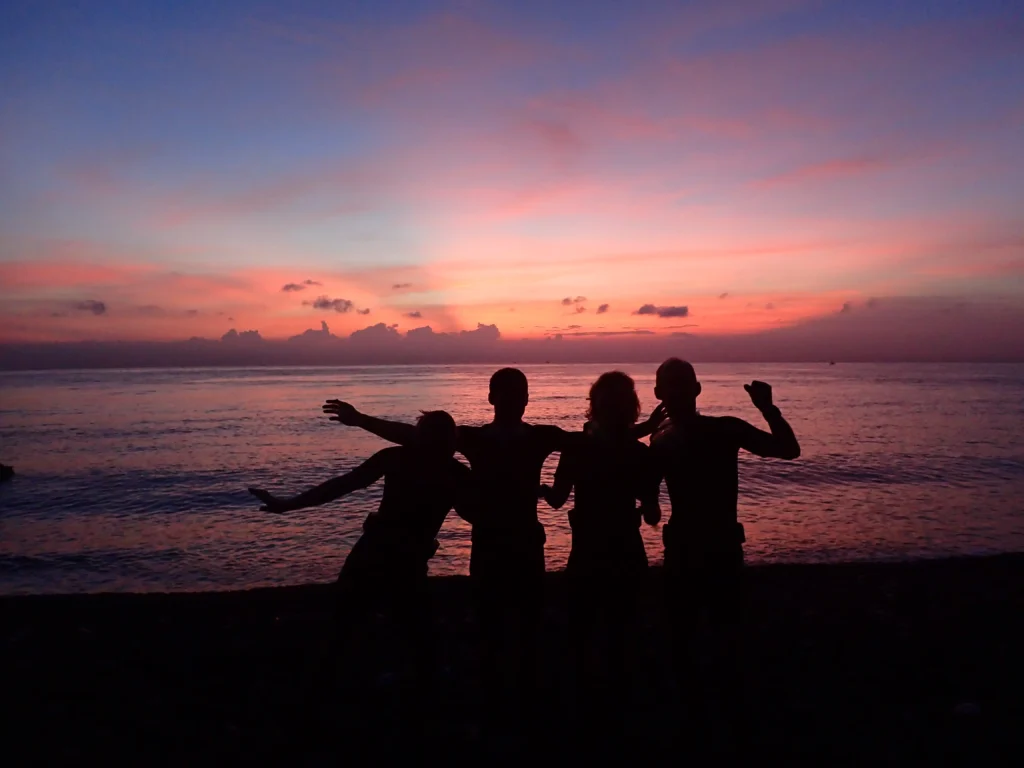
If we are choosing when to do a USAT Liberty wreck dive, we will always choose sunrise. It’s quieter, the visibility is often better before lots of divers have been through the site, and the surface conditions are usually calmer too.
The USAT Liberty is one of those dive sites that really does live up to the hype. The 120-metre World War II wreck sits just off the beach in Tulamben and is now completely covered in coral and marine life.
The wreck has shallow outer sections, deeper areas and swim-throughs for more experienced divers, so there is plenty to explore across multiple dives.
And even though we have dived it thousands of times, it never really feels like the same dive twice. The conditions, visibility, marine life and even the wreck itself are always changing, and the time you dive can make a huge difference. For us, getting there early is by far our favourite way to experience it.
Why is sunrise a good time to dive the USAT Liberty?
The biggest reason we love diving the Liberty at sunrise is that it is simply much more peaceful. There are fewer divers around, the visibility is often clearer before lots of people have moved through the wreck, and the surface conditions are usually calmer. You have more space to take your time and actually enjoy the site rather than constantly working your way around other groups.
You will not have the wreck completely to yourself. At around 6am, there are normally already a handful of dive groups getting ready or in the water. But compared with a few hours later, it feels completely different.
The Liberty attracts divers from all over Bali. It is not just people staying in Amed and Tulamben; dive centres regularly make the trip from places such as Sanur, Candidasa and Pemuteran, with many of these groups starting to arrive later in the morning. By around 9am, we notice the site getting a lot busier.
The difference is especially obvious during high season. In August 2026, detikBali reported that around 200 people per day were visiting Tulamben for diving and snorkelling, with even more visitors on particularly busy days. A local dive guide interviewed for the article also described the Liberty as the favourite dive site for people visiting the area, which we definitely agree with!
That number covers diving and snorkelling visitors across Tulamben rather than the Liberty alone, but it gives you a good idea of how busy the area can get during peak periods.
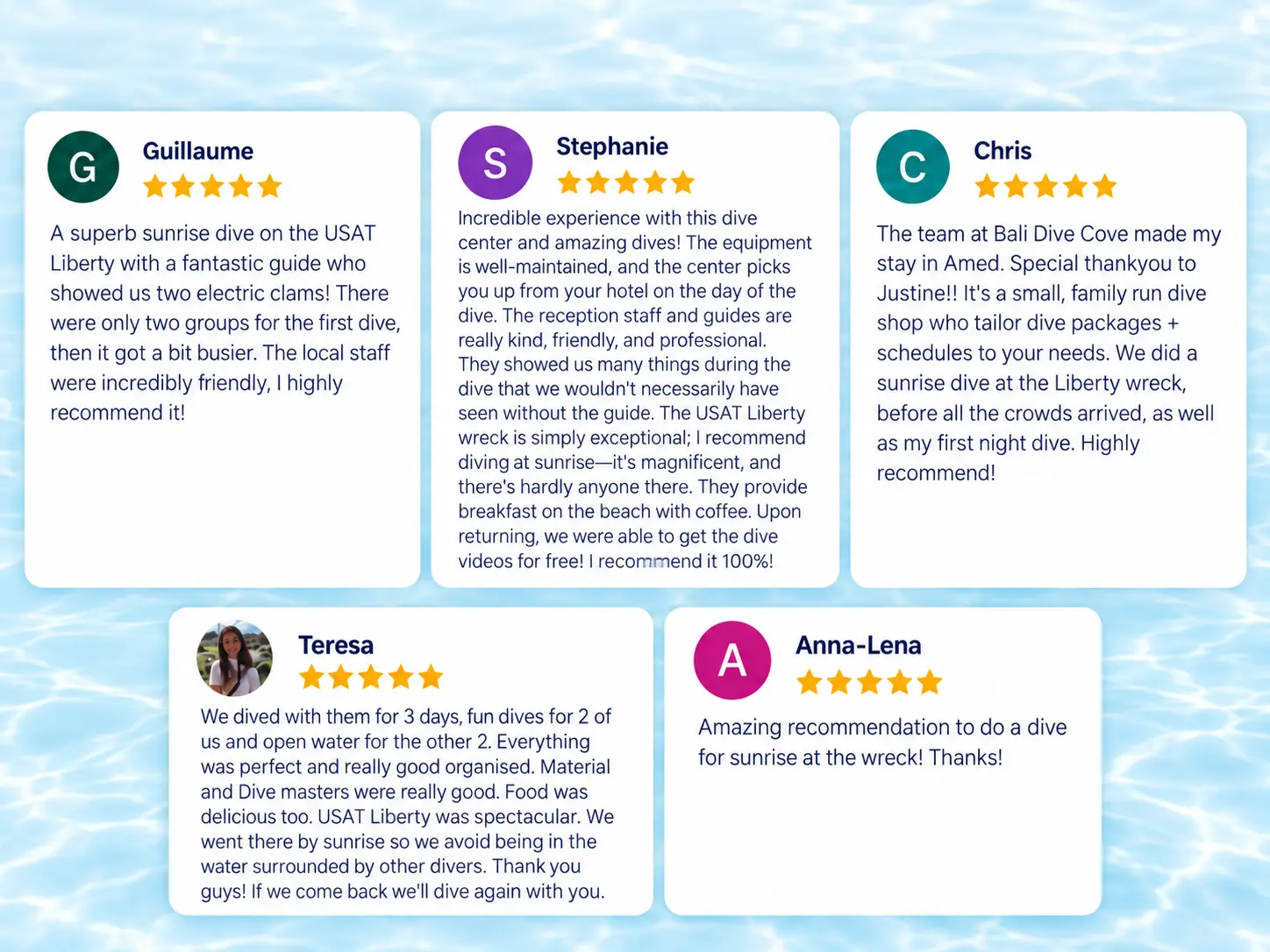
Our guests notice the difference too. One recent diver told us there were only two groups around during their first sunrise dive before things became noticeably busier later in the morning, and several other guests have mentioned how much they enjoyed seeing the wreck before the main crowds arrived.
So, is the early start worth it? For us, absolutely. Sunrise is not perfect in every way, and the first dive does have less natural light than later in the morning, but the quieter wreck, calmer surface conditions and more relaxed pace more than make up for it. Here is what actually changes when you dive the Liberty early, and when a later start might suit you better.
Is visibility better at the USAT Liberty at sunrise?
Visibility at the USAT Liberty is often better early in the morning because fewer divers have been through the wreck and disturbed the sediment around the site. Sea conditions still play the biggest role, so clearer water is never guaranteed, but once the wreck gets busy, visibility can definitely be affected in some areas.
This is especially noticeable around parts of the wreck where divers naturally move closer to or through the structure. Fins, general movement and several groups passing through the same sections can stir up the sand and sediment.
Getting into the water at sunrise gives us a better chance of seeing the wreck before that happens.
Are the waves and currents calmer at sunrise?
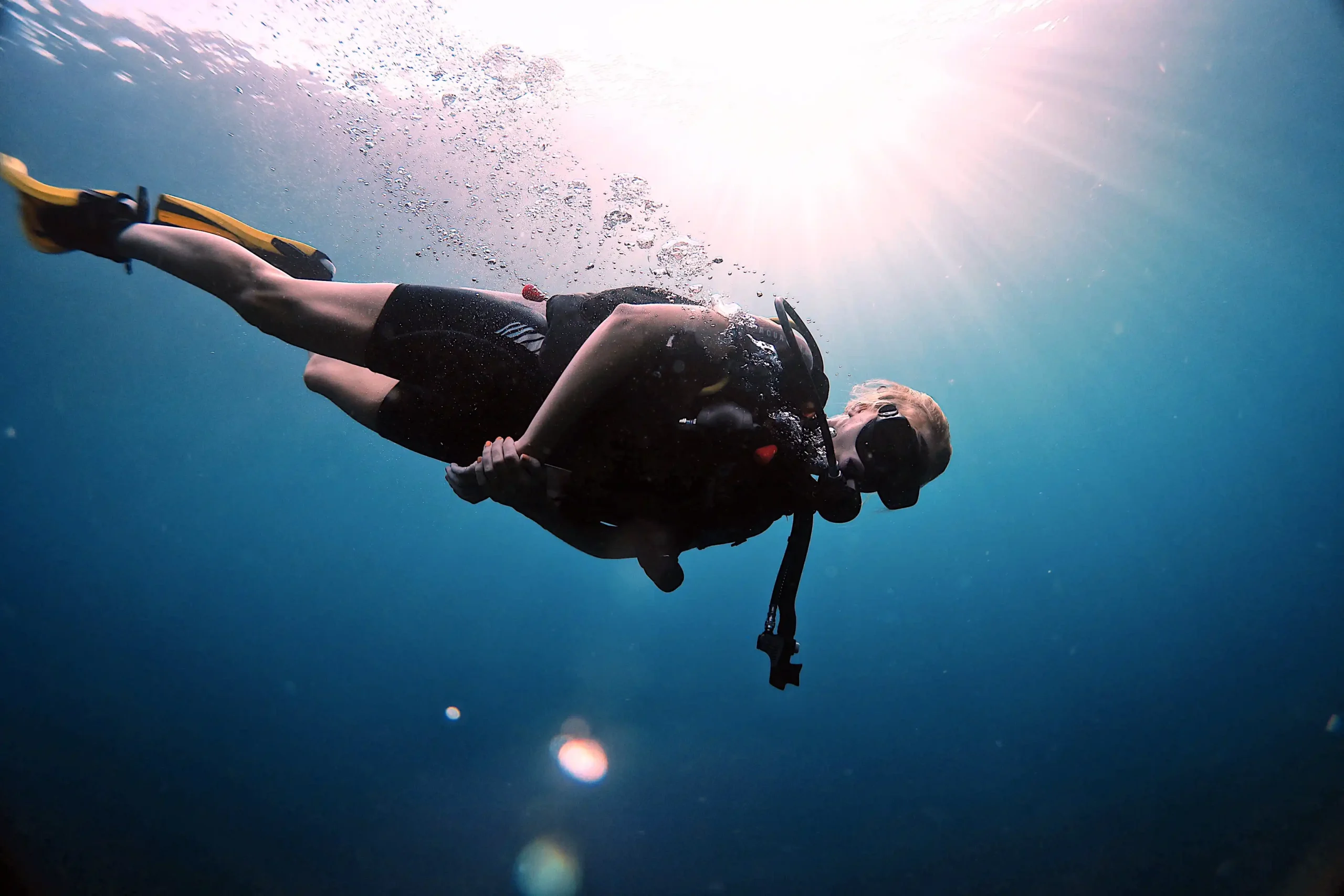
Waves and surface conditions in Tulamben are generally calmer around sunrise, but currents are not necessarily weaker early in the morning. Currents around the USAT Liberty are influenced more by tides and moon phases and can change from one day to the next, regardless of what time we enter the water.
The Liberty is a shore dive, so smaller waves can make the pebble-beach entry and exit much more comfortable. We still check the conditions each day and adjust the route, depth and dive plan when needed rather than assuming every sunrise dive will be the same.
What is the light like during a sunrise Liberty wreck dive?
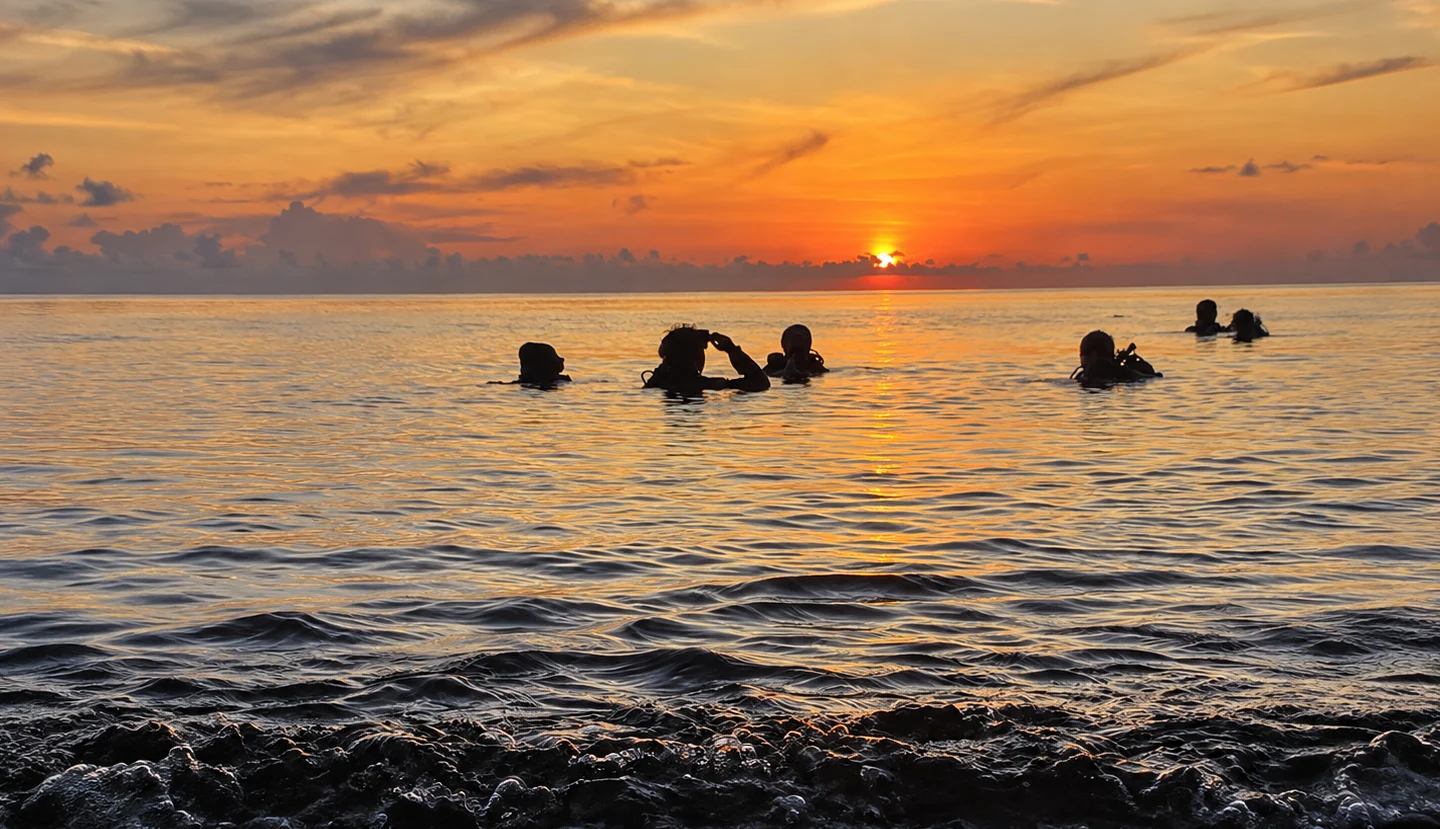
The beginning of the first Liberty dive is usually a bit darker, as the sun has only just come up. The light gets better as the dive goes on, and by the second dive at around 8:30am it is much brighter.
Towards the end of the first dive, around the stern, the sun is much higher and the light rays coming down against the silhouette of the wreck are beautiful.
For underwater photographers, sunrise is not automatically better. A later dive may have stronger natural light from the start, while an early dive can mean clearer water, fewer divers in the background and less competition for the same photo spots.
By the second dive, we often have much better natural light while still finishing before the wreck reaches its busiest period.
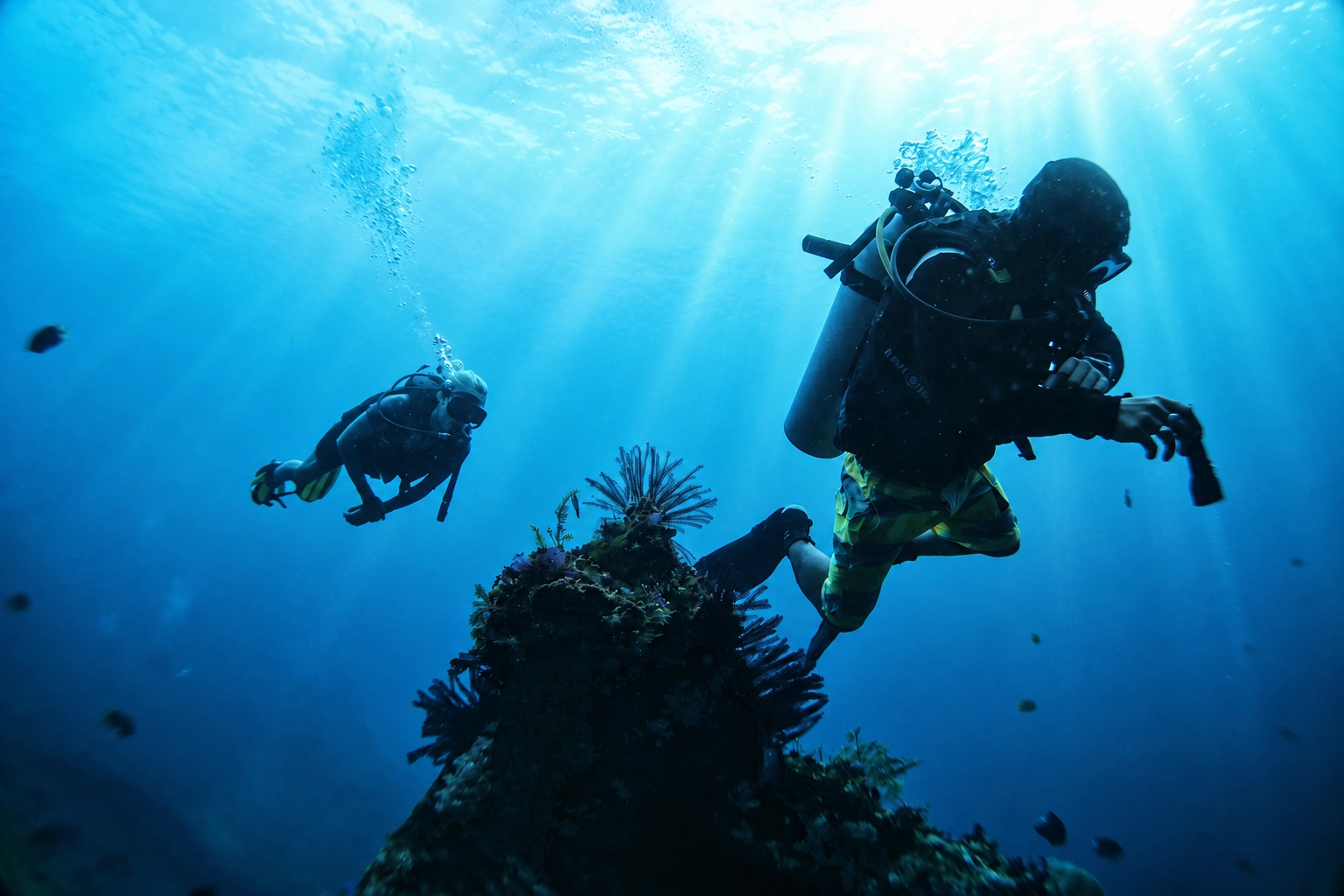
USAT Liberty sunrise diving with Bali Dive Cove
From Bali Dive Cove in Amed, we leave the dive centre at around 5:30am. It takes 20 minutes to drive to the shipwreck in Tulamben. When we arrive, we wait for the sun to rise while setting up equipment and giving dive briefings before starting the first dive at around 6:30am.
After the dive, we enjoy a well-deserved breakfast beside the beach during our surface interval, then head back in for a second dive at around 8:30am. We are then back in Amed by around 10–11am, with two USAT Liberty dives completed and most of the day still ahead to enjoy Amed!
Exact timings can vary depending on the time of year, sunrise, conditions and the divers in the group, but our usual schedule looks something like this:
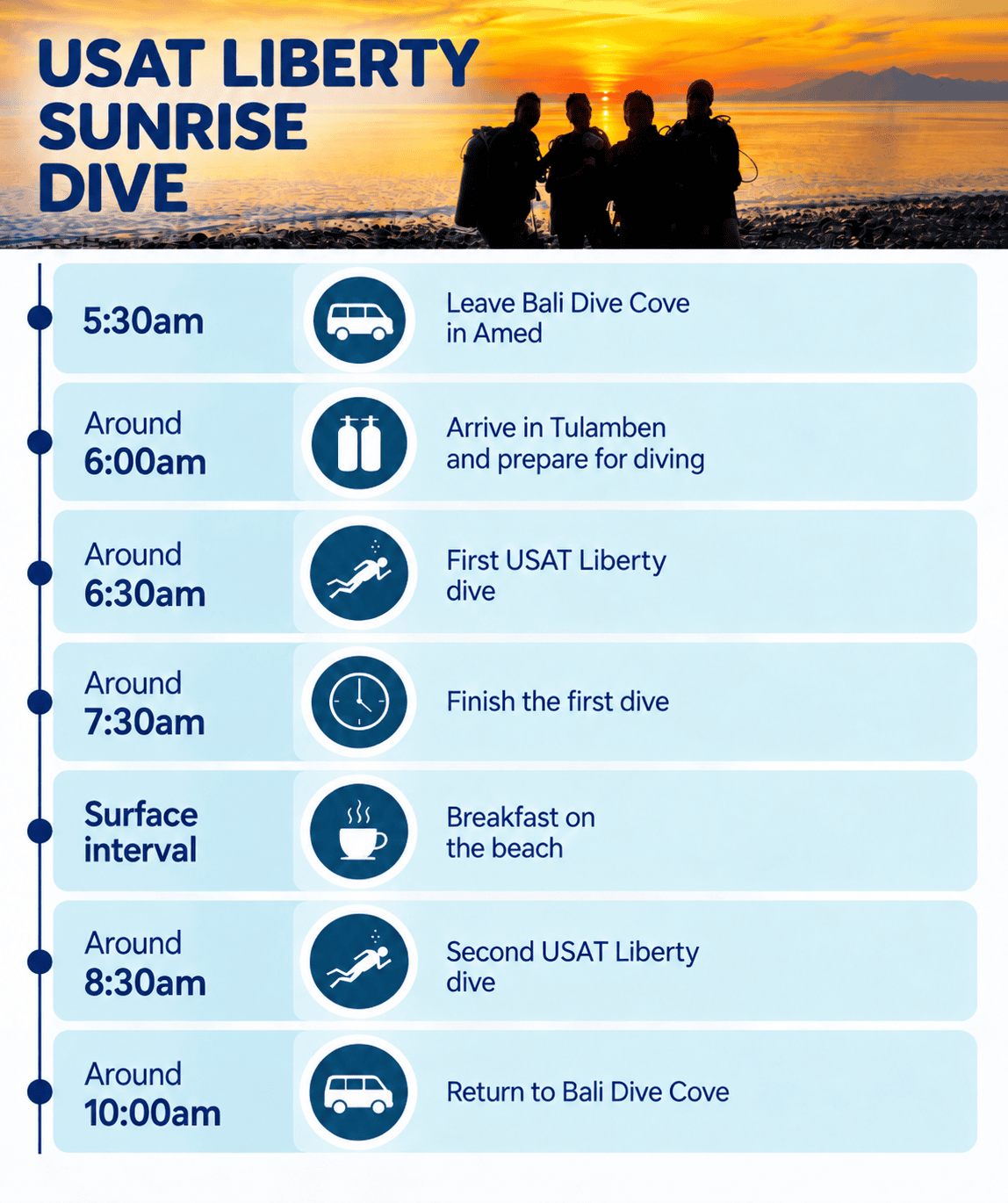
Our dives are often around an hour, although actual dive time depends on factors including depth, air consumption and the individual divers.
Local Tulamben porters carry our tanks and dive equipment down to the beach, and divers gear up next to the entry before walking into the water.
During the approximately one-hour surface interval, breakfast is included. We normally sit beside the water with a choice of banana pancakes or an omelette, plus tea or coffee.
By the time breakfast is finished, the sun is properly up and we are ready to explore a different part of the wreck.
Is one dive enough for the USAT Liberty?
One dive can introduce you to the USAT Liberty, but we recommend two because there is so much structure, marine life and detail to explore properly. We normally spend the first dive exploring the outside of the wreck before focusing more on the middle sections during dive two, with swim-throughs included where appropriate for the diver’s experience and comfort level.
Swim-throughs are always optional, and we choose the route according to certification, experience, buoyancy, comfort and conditions.
If you would like a bit more variety, there is also the option to do your second dive at the nearby Tulamben Drop Off instead, or add the Drop Off as a third dive after two dives on the Liberty.
Wayan, the owner of Bali Dive Cove, has been diving in Amed and Tulamben for 14 years and has completed thousands of dives on the Liberty. He still describes it as “a different dive every time”.
Conditions and marine life can change from dive to dive, and completing two dives gives you time to slow down and notice more of the wreck instead of rushing to cover as much as possible in one go.
What can an experienced guide show you on the Liberty?
Wayan and the team regularly point out features that are easy to miss, including the guns, ladders, bow, stern and the wheel-like structures on the wreck, as well as smaller marine life hidden throughout the site. When you’re taking in the scale of the Liberty, it’s surprisingly easy to swim straight past some of its most interesting details.
The same goes for the marine life. While you’re taking in a huge coral-covered wreck, you can easily overlook an electric clam, octopus, unusual nudibranch or another small creature tucked away in the structure.
What marine life can you see on a sunrise dive at the USAT Liberty?
The Liberty is home to a huge range of marine life. Some of the species we regularly look out for include:
- Reef fish
- Barracuda
- Sweetlips
- Turtles
- Garden eels
- Napoleon wrasse
- Nudibranchs
- Octopus
And so much more.
We have also noticed shark sightings becoming more frequent in recent years, particularly around the deeper section near the stern on our sunrise dives.
During cooler-water periods, particularly around July and August, we have also had occasional mola mola sightings around Tulamben. Neither sharks nor mola mola are guaranteed, of course. Unfortunately, the wildlife still refuses to check our dive plan in advance!
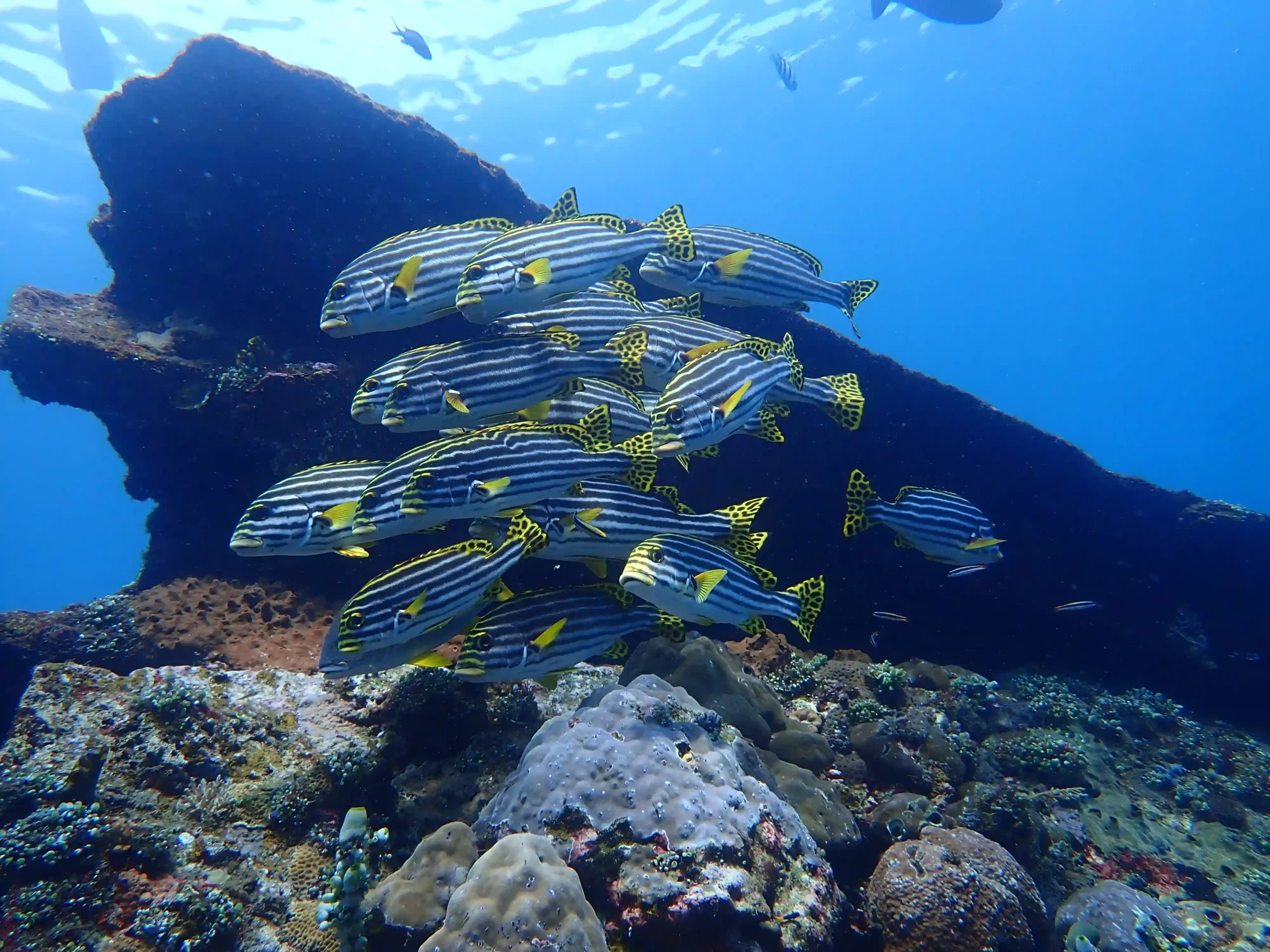
Are there still bumphead parrotfish at the USAT Liberty?
No. The group of bumphead parrotfish that used to be seen around the USAT Liberty, particularly on early morning dives, has not been seen for years. They disappeared during the COVID period and have not returned to the wreck since.
You may still come across older Liberty guides describing bumphead parrotfish as a regular sunrise sighting, but that information is now outdated.
The large school of jacks that used to be a regular sight around the Liberty has moved too. These days, we are much more likely to find them at the nearby Tulamben Drop Off.
Has the USAT Liberty wreck changed over time?
Yes. Parts of the USAT Liberty have collapsed or shifted over the years, larger coral growths and barrel sponges have disappeared from some areas, and the reef growing across the wreck continues to change.
Wayan, who has been diving in Amed and Tulamben for 14 years, notes that “Some areas have collapsed or fallen in, and some of the larger coral and barrel sponges have fallen off. But I also love seeing how much the coral has grown since the wreck went underwater.”
The Liberty was pushed offshore and submerged during Mount Agung’s 1963 eruption. For Wayan, watching the coral develop over the years really shows how quickly an underwater structure can become part of a living reef, especially in an area where there was originally much less coral.
Can Open Water divers dive the USAT Liberty wreck?
Yes. Open Water divers can dive suitable sections of the USAT Liberty within their 18-metre maximum depth, and the wreck can also be used for training dives and supervised Discover Scuba Diving experiences. The route and plan will be adapted to the diver’s certification, experience and comfort rather than expecting every diver to explore the same parts of the wreck.
At Bali Dive Cove, Discover Scuba Diving participants remain within a maximum depth of 12 metres, while certified Open Water divers stay within 18 metres.
Suitably qualified and experienced Advanced Open Water divers may follow routes reaching around 26–27 metres, depending on the conditions.
We visit the Liberty during Open Water courses and refreshers, so wreck diving in Tulamben is not limited to highly experienced divers.
Rather than following the same route with everyone, we adapt the dive to each diver’s experience and comfort level.
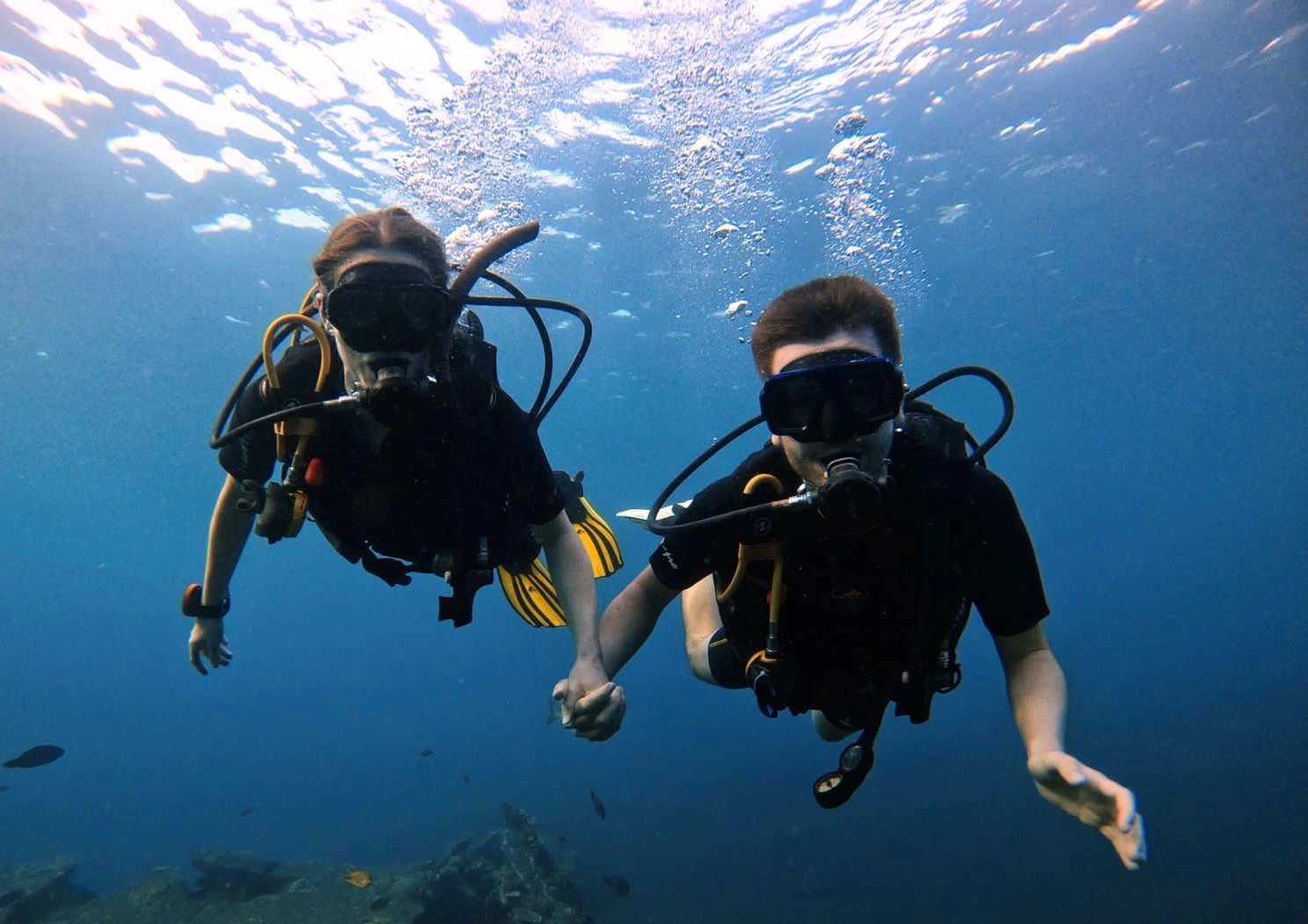
Should you dive in Amed before doing the Liberty at sunrise?
Not necessarily. You can absolutely head straight to the USAT Liberty for your first dives with us, provided your certification, recent diving experience and comfort level are suitable. However, if you have more than one day to explore the area, we often recommend starting with local Amed dives at a “normal” time on day one and saving the sunrise Liberty dives for day two.
This can be particularly useful for newly certified divers or anyone returning to diving after a break. A day in Amed gives you time to settle back into the water, check your weighting and equipment, and get comfortable before the early start the following morning.
It also gives our guides a chance to get to know how you dive, which can help us tailor the Liberty route to your experience and comfort level.
There are plenty of options across our Amed and East Bali dive sites, so if you have the time, combining Amed with Tulamben is a great way to experience more of East Bali’s diving.
If you are arriving late after a long journey, we suggest getting a good night’s sleep before an early sunrise dive.
Who is a sunrise USAT Liberty wreck dive best for?
A sunrise Liberty dive is a great choice if you want to see the wreck before it gets busy and enjoy a more relaxed dive. It is especially good for divers who do not love crowded sites, experienced divers who want more space to explore, and photographers who would rather not have a stream of other divers in every shot.
That said, sunrise is not essential for everyone. During quieter times of year, the Liberty can still be very enjoyable later in the morning, and the stronger natural light can be a bonus.
If you have arrived late, are exhausted, have not dived for a long time or simply know that a very early start is not your thing, there is no problem diving later. The Liberty is still an amazing dive. We just prefer it before the crowds arrive.
Is diving the USAT Liberty at sunrise worth the early start?
For us, absolutely. If we are choosing when to dive the USAT Liberty, sunrise wins almost every time. Fewer divers, calmer surface conditions and often clearer visibility make the whole experience feel much more relaxed.
And even after thousands of dives on the Liberty, it is still one of our favourites. You never quite know what you are going to see, and watching someone experience the wreck for the first time is still one of the best parts of the job.
Then there is the morning itself. You get to dive the Liberty before the main crowds arrive, have breakfast beside the sea, head back in for a second dive and still be back in Amed by around 10–11am with most of the day ahead of you.
For us, that is definitely worth the alarm.
Plan your USAT Liberty sunrise dive from Amed
We run sunrise dives at the Liberty wreck for a range of experience levels, with the route and depth adjusted to suit the diver and the conditions on the day.
If you have more than one day with us, you can also combine local Amed dives with a sunrise morning in Tulamben, which is a great way to see more of East Bali’s diving rather than spending your whole trip at one site.
For more information about the wreck itself, including its history and what you can expect underwater, read our USAT Liberty Shipwreck guide.
If you’re planning a USAT Liberty wreck dive from Amed, we can help you choose the right time, route and dive plan for your experience.
Ready to experience the USAT Liberty at sunrise? Get in touch via our contact form, on WA +62 819 4544 3567 or via email at balidivecove@gmail.com and we’ll help you plan the right dives for your experience, schedule and time in Amed.
