

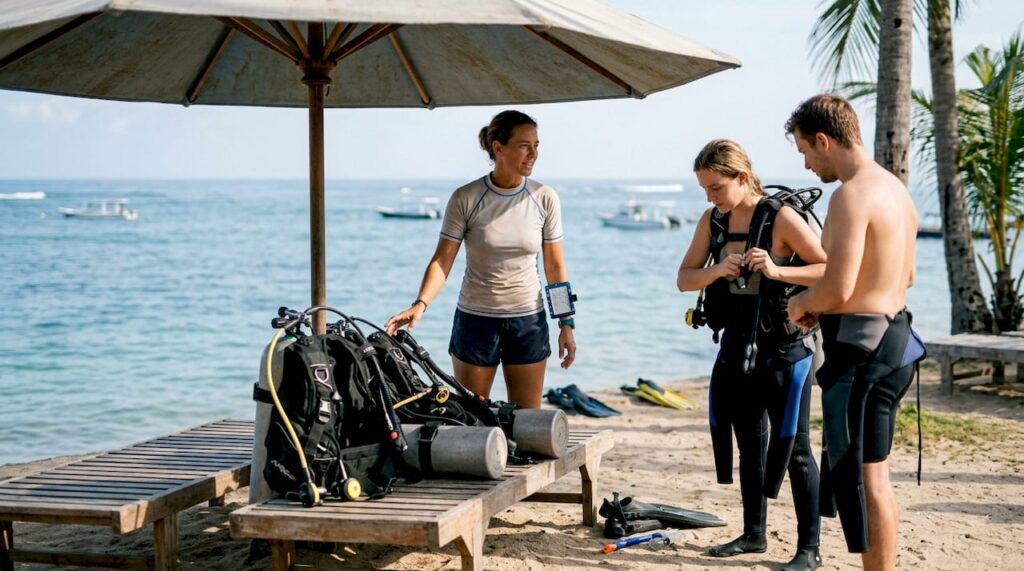
TL;DR:
- Check dives verify equipment, skills, and comfort for all divers before exploring Bali’s sites.
- They are structured, shallow, and involve gear checks, skill demonstrations, and safety assessments.
- Participating enhances safety, confidence, and enjoyment, regardless of experience level or certification.
If you have been researching diving in Bali, you have probably come across the term ‘check dive’ and wondered exactly what it means for your holiday. Many divers assume it is just a formality for beginners, or something you can politely sidestep if you have a logbook full of dives. Neither is true. A check dive is a short, purposeful initial dive where you and your instructor confirm your readiness, equipment familiarity, and basic skills before heading to Bali’s best sites. This guide walks you through what a check dive involves, why it matters for every level of diver, and what you can expect from start to finish.
Key Takeaways
| Point | Details |
|---|---|
| Essential safety step | A check dive makes sure all divers are ready for Bali’s unique underwater conditions. |
| Applies to all abilities | Both beginner and experienced divers benefit from a check dive, not just new students. |
| Local policy matters | Most Bali dive operators require check dives—always confirm before your holiday. |
| Boosts dive enjoyment | Completing a check dive raises confidence and prevents surprises during your main dives. |
Understanding the check dive: more than a formality
A check dive is a short, focused dive conducted at the beginning of your diving programme in Bali. It is not a test designed to catch you out. Think of it as a warm-up, a chance to confirm that everything is working as it should before you drop into a vibrant reef or explore a fascinating wreck. It covers your buoyancy control, weighting accuracy, air management, and general comfort in the water.
What surprises many holiday divers is that check dives are not reserved for beginners. The vast majority of reputable Bali dive resorts ask every guest to complete one, regardless of experience level. A diver with 200 logged dives who has not been in the water for eight months needs a check dive just as much as someone doing their first open water session. As buoyancy and weighting checks confirm readiness for both beginners and certified divers, skipping this step introduces unnecessary risk.
Understanding the scuba diving basics behind a check dive helps you appreciate its value. The main objectives typically include:
- Buoyancy assessment: Can you hover comfortably without kicking or grabbing the reef?
- Weighting check: Are you carrying the right amount of weight for your wetsuit and body type?
- Equipment familiarity: Do you know how to operate the specific BCD and regulator provided?
- Air management: Are you breathing steadily and monitoring your gauge correctly?
- Skills review: Can you clear your mask, recover your regulator, and signal to your buddy?
Skipping a check dive, even as an advanced diver, can mean heading into Bali’s sometimes challenging currents without confirming any of the above. That is a risk no responsible operator should take, and none worth diving with will.
“A check dive is not about doubting your ability. It is about setting everyone up for the best possible experience in the water.” This is a philosophy shared by experienced instructors across Amed and the wider Bali diving community.
What happens during a Bali check dive?
With the purpose established, let us examine what really unfolds on a Bali check dive. The process is calm, structured, and far less intimidating than many divers expect. Here is a typical sequence:
- Pre-dive briefing: Your instructor explains the plan, the site conditions, hand signals, and what skills you will demonstrate.
- Equipment assembly: You set up your BCD, attach your regulator, and check your cylinder valve together with your instructor.
- BWRAF buddy check: You run through the buddy check process covering Buoyancy (BCD inflated and working), Weights (correctly positioned and releasable), Releases (all buckles secure), Air (tank open, breathing from regulator), and Final check (mask, fins, computer ready).
- Water entry: A calm, controlled entry, usually a giant stride from a boat or a shore entry from the beach.
- Skill demonstration: You show basic skills such as mask clearing, regulator recovery, and neutral buoyancy in shallow water.
- Monitoring and feedback: Your instructor observes your comfort and control, and offers gentle guidance if needed.
The preparation workflow for a check dive in Bali is designed to be thorough yet relaxed. As BWRAF buddy checks and step-by-step gear confirmation ensure essentials are in place before entry, you can feel confident that nothing important has been overlooked.
| Feature | Check dive | Regular leisure dive |
|---|---|---|
| Duration | 20 to 40 minutes | 45 to 60 minutes |
| Depth | Shallow (3 to 6 metres) | Site dependent (up to 30 metres) |
| Focus | Skills, equipment, comfort | Exploration and enjoyment |
| Instructor involvement | High | Moderate |
| Stress level | Low and supported | Relaxed and independent |
Pro Tip: If you notice anything feels off during the check dive, such as a slightly uncomfortable mask seal or a BCD that inflates differently from what you are used to, speak up immediately. Small adjustments at this stage make a huge difference to your enjoyment on the main dive.
How check dives protect divers and raise holiday confidence
Knowing what to expect, it is crucial to understand the deeper benefits check dives deliver. Beyond ticking a safety box, a well-run check dive actively improves your holiday experience in ways that go far beyond the first few minutes underwater.
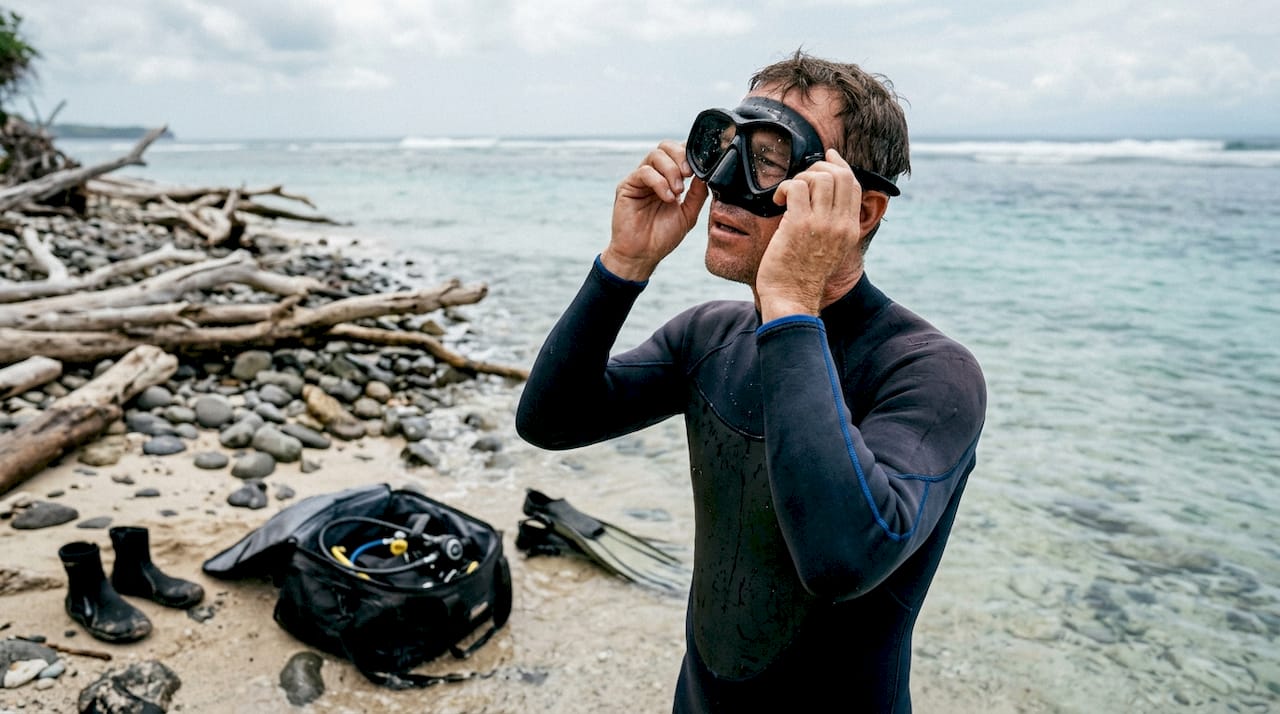
Bali’s diving environment is genuinely unique. Amed’s waters, for example, can present variable visibility, thermoclines, and occasional currents that differ from conditions in the Red Sea or the Caribbean. Even a diver with extensive experience elsewhere may need a moment to adjust. Layered safety in Bali incorporates check dives, buddy checks, conservative depth planning, and skill reviews for all certification levels, creating a system where every diver is properly prepared.
| Safety check | Benefit for beginners | Benefit for experienced divers |
|---|---|---|
| Buoyancy review | Builds confidence in the water | Confirms adjustment after a break |
| Weighting check | Prevents sinking or struggling | Accounts for different wetsuit thickness |
| Equipment familiarisation | Reduces gear-related anxiety | Adapts to unfamiliar rental kit |
| Skill demonstration | Reinforces training | Refreshes muscle memory |
| Instructor assessment | Identifies areas for support | Flags any technique drift |
For less confident divers, the check dive is genuinely reassuring. Knowing that you have already demonstrated your skills in a controlled, shallow setting means you can focus on the incredible marine life rather than worrying about your technique. For divemaster safety training candidates and advanced divers, it is a chance to fine-tune skills that may have slipped slightly.
The main outcomes of a well-conducted check dive include:
- Relaxed, enjoyable dives from the very first session
- Improved buoyancy control and air consumption
- Reduced risk of equipment-related incidents
- Greater trust between diver and instructor
- Better situational awareness in Bali’s specific conditions
Pro Tip: Never feel embarrassed to tell your instructor about any concerns before or during the check dive. Whether it is a fear of depth, a previous bad experience, or simply feeling rusty, sharing this information allows your instructor to tailor the session so you feel genuinely comfortable.
Common myths and questions about check dives in Bali
With the benefits clear, let us address the biggest misconceptions about check dives that circulate among holiday divers.
Myth 1: Check dives are only for beginners.
This is the most common misunderstanding. As common myths about check dives show, the idea that they are only for learners overlooks Bali’s local safety practices entirely. Every diver, regardless of certification, benefits from a structured start to their Bali diving holiday.
Myth 2: A check dive is a test you can fail.
It is not. There is no pass or fail. The check dive is a safety practice, not an examination. Your instructor is there to support you, not judge you.
Myth 3: Experienced divers can simply opt out.
Most reputable Bali dive resort tips make clear that operator policy requires a check dive for all guests. This protects both the diver and the dive centre.
Here is what a check dive can and cannot do:
- Can do: Confirm your readiness, identify equipment issues, build confidence, and set the tone for a great holiday.
- Can do: Give your instructor essential information about how to support you throughout your trip.
- Cannot do: Replace full PADI certification training or substitute for a rescue course.
- Cannot do: Guarantee perfect conditions on every dive, but it does ensure you are as prepared as possible.
“Every diver who walks through our door gets a check dive. It does not matter if they have 500 dives in their logbook. Bali has its own character, and the check dive is how we make sure everyone is ready for it.”
This attitude, shared widely among Bali’s professional diving community, reflects a genuine commitment to safety over convenience.
A diver’s perspective: why check dives matter, insights from Bali
Beyond the facts, it is worth stepping back and considering what seasoned Bali divers really think about check dives. After years of guiding divers through Amed’s reefs and wrecks, we have seen a clear pattern. The divers who embrace the check dive wholeheartedly tend to have the best holidays. The ones who resist it, even politely, sometimes struggle in ways that could have been avoided.
We once guided an experienced diver who had logged over 300 dives but had not been in the water for nearly a year. He was relaxed about the check dive, almost amused by it. Within the first few minutes, we realised his weighting was significantly off for our local conditions and his buoyancy had drifted noticeably. A quick adjustment and a short practice session fixed everything. Without the check dive, that diver would have spent his first proper dive fighting his own equipment instead of watching the reef.
As top operators and experienced instructors believe, check dives set the tone for a safe, enjoyable trip regardless of certification level. We agree completely. Think of the check dive not as a hurdle but as an investment. Thirty minutes of structured preparation can transform the quality of every dive that follows. For advanced open water tips and beyond, that preparation mindset is exactly what separates good divers from great ones.
Ready for your Bali diving adventure?
Now that you understand the real purpose and value of a check dive, you can approach your Bali holiday with genuine confidence. Whether you are taking your very first breaths underwater or returning to the sea after a long break, a check dive is simply the best possible start to your time in the water.
At Bali Dive Cove, we run every check dive with patience, clear communication, and no rush. From beginner-friendly explore Bali dive courses to guided Bali dive packages for certified divers, we are here to make your experience safe, personal, and genuinely memorable. Browse our see Bali dive sites to start planning your ideal trip, or get in touch and we will help you find the perfect programme for your level and interests.
Frequently asked questions
Is a check dive mandatory in Bali?
Most reputable Bali dive centres require a check dive for all guests, regardless of experience, to guarantee safety and ensure every diver is comfortable with local conditions.
What should I expect to do during a check dive?
You will complete basic gear checks, demonstrate core skills such as mask clearing and buoyancy control, and run through the BWRAF buddy system and safety signals with your guide or instructor.
Can experienced divers opt out of a check dive?
Dive operator policy varies, but most insist on a check dive to assess every diver’s current ability. Even divers with many logged dives benefit from confirming their readiness in Bali’s specific conditions.
Does a check dive count towards my PADI certification?
In many Bali PADI courses, the check dive overlaps with your first confined or open water session, but you should always confirm the specifics with your dive centre before arriving.
Is the check dive stressful for beginners?
It is designed to be calm and supportive for beginners, giving you the chance to practise essential skills with a professional instructor before exploring Bali’s more exciting and deeper sites.
