

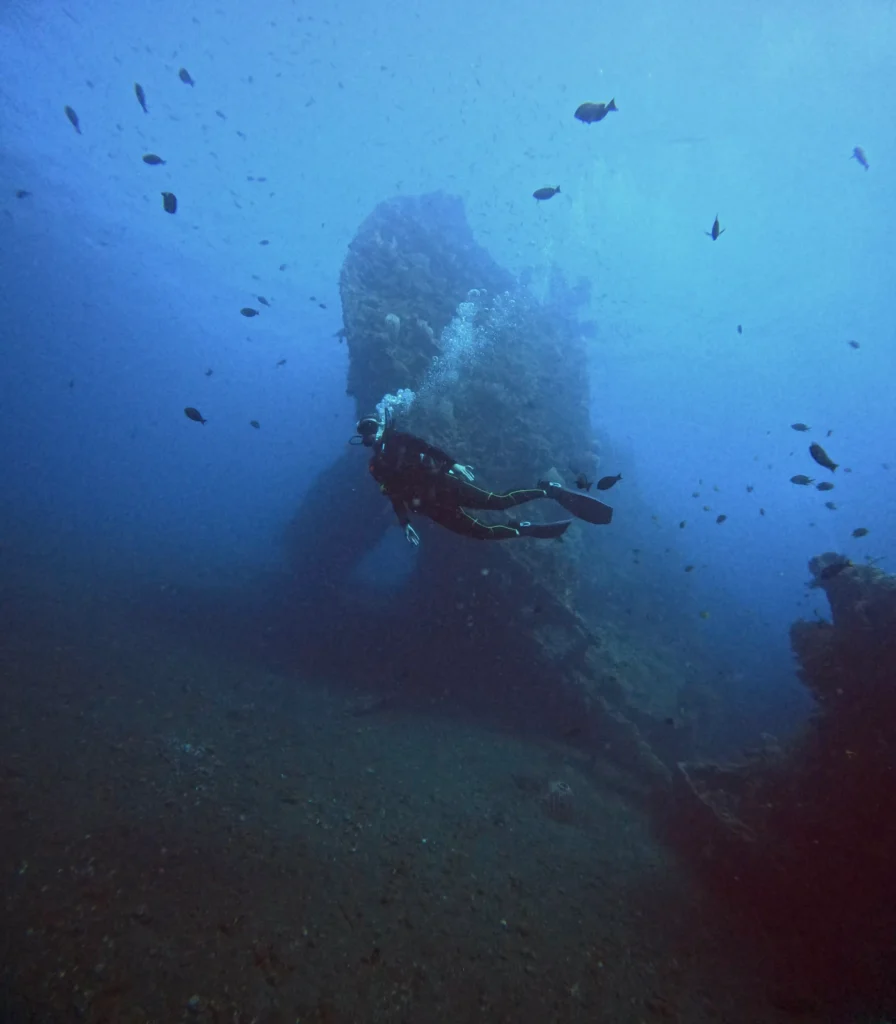
Amed and Tulamben’s underwater wrecks draw divers from around the world. But exploring these sites safely requires more than enthusiasm. Whether you’re newly certified or planning your first wreck dive, understanding the prerequisites, conditions and techniques makes the difference between a memorable dive and a stressful one. This guide walks you through everything you need to know, from certification requirements to post-dive care, ensuring you know how to dive Amed wrecks with confidence and respect for these fascinating underwater sites.
Key Takeaways
| Point | Details |
|---|---|
| Prerequisites and certification | Divers should hold at least a Scuba Diver (12 meter) certification and participate in a guided wreck dive to develop buoyancy control and depth management for wreck environments. |
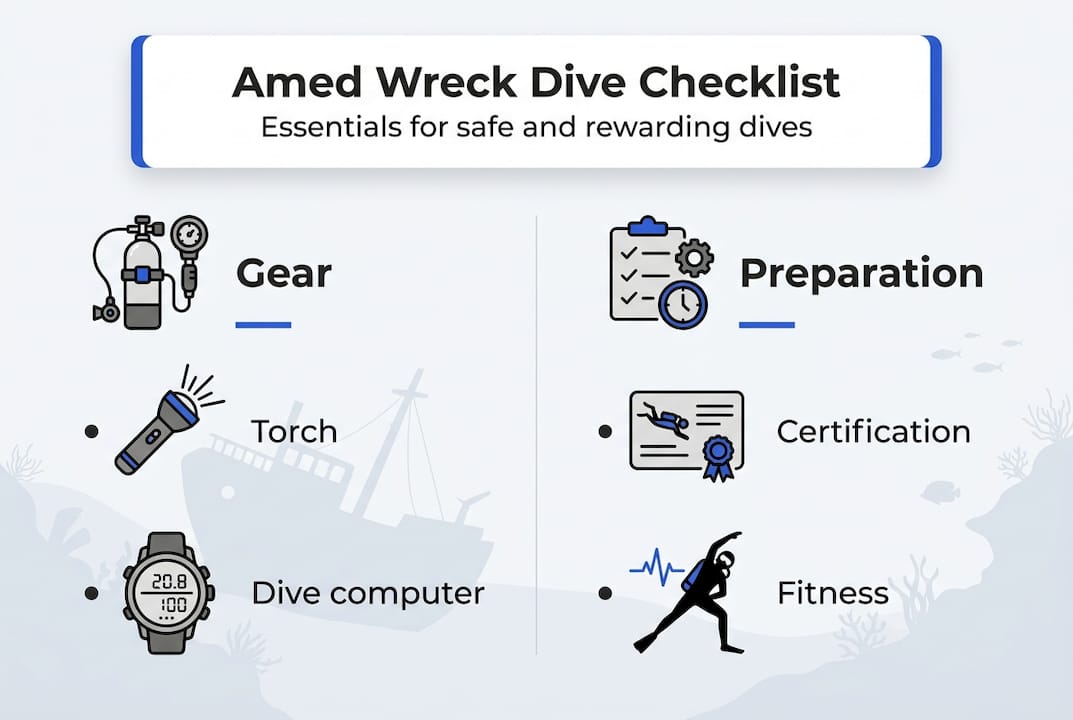
| Equipment for wrecks | Carry standard scuba gear, with recommended additions such as a reliable torch and a surface marker buoy. |
| Environmental conditions | Conditions vary with season and weather, with visibility typically 10 to 25 metres, currents mild to moderate and water around 26 to 29 degrees Celsius. |
| Thorough planning | Thorough planning and the site briefing are essential, including site selection, planned route, depth and time limits, emergency procedures and buddy checks using BWRAF. |
What you need to dive Amed wrecks safely
Before descending to explore Amed’s wrecks, you need the right certification, equipment and physical readiness. Divers should hold at least an Advanced Open Water certification or participate in a guided dive to the wrecks. This ensures you’ve developed proper buoyancy control and depth management skills essential for wreck environments.
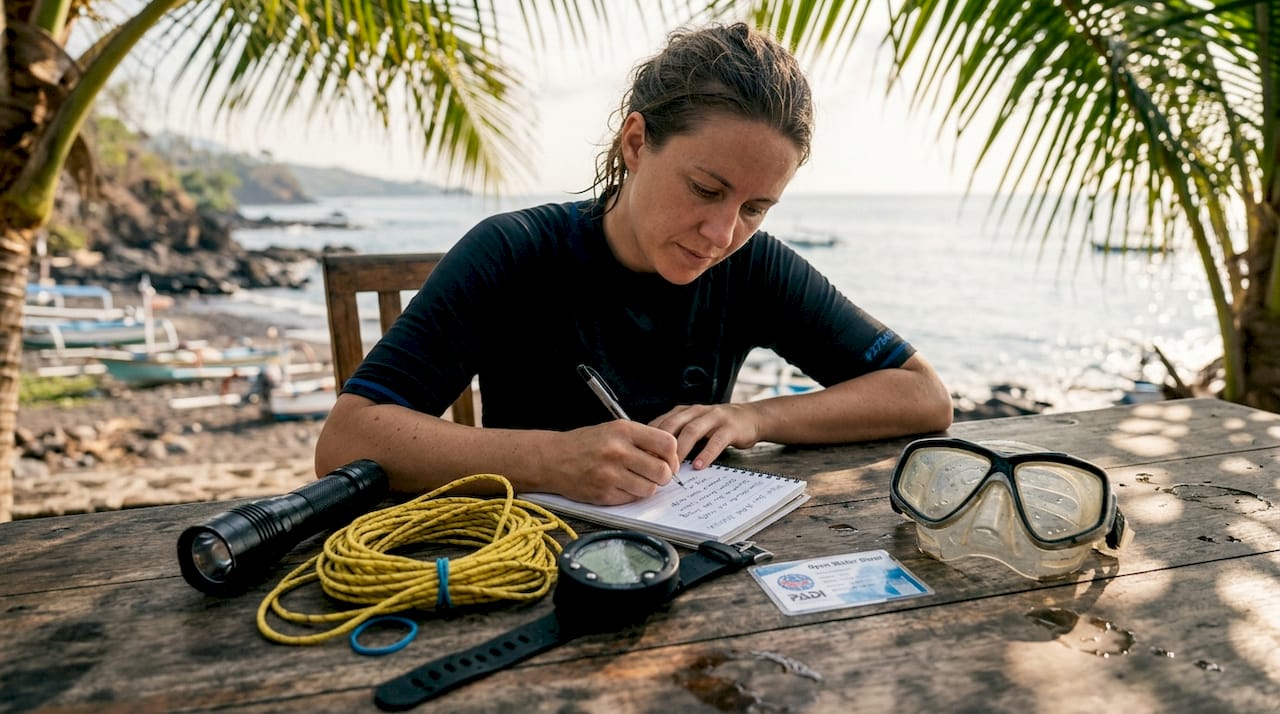
Your equipment checklist should include standard scuba gear plus wreck-specific additions. A reliable torch illuminates dark spaces inside structures. A surface marker buoy signals your position during ascent. A compass helps with navigation. Many divers also add an underwater camera, but prioritise safety equipment first. If you’re completing a PADI course Bali, you’ll practise with this equipment.
| Requirement | Details | Notes |
|---|---|---|
| Minimum certification | Scuba Diver | But Advanced Open Water for deeper wrecks |
| Depth range | 5-40 metres | Varies by specific wreck site |
| Essential equipment | Dive computer, full standard equipment | Torches and SMBs are recommended |
| Physical fitness | Moderate to good | Comfortable swimming and finning |
| Medical clearance | Complete dive medical questionnaire | Doctor’s clearance only required if indicated |
Environmental conditions at Tulamben and Amed’s wrecks vary throughout the year. Visibility typically ranges from 10 to 25 metres depending on recent weather, while currents are usually mild to moderate. Water temperature sits around 26 to 29 degrees Celsius, making a 3mm wetsuit comfortable for most divers. Always check with experienced operators who monitor daily conditions and adjust dive plans accordingly.
Planning your dive at Amed wrecks: step-by-step guide
Planning your dive properly is what turns a wreck dive from uncertain to controlled and enjoyable. Amed and Tulamben wrecks are accessible, but they still require clear preparation and awareness of conditions.
1. Choose the right wreck site for your level
Not all wreck dives are the same. Some areas of the USAT Liberty are shallow and suitable for Open Water divers, while deeper sections and other wrecks like Boga require more experience. The Japanese wreck is a shallow wreck, however there can be very strong currents making in not suitable for complete beginners.
Start by selecting a site that matches your certification, recent experience and comfort in the water. If you are unsure, local dive centers will recommend the most appropriate option.
2. Check conditions and timing
Conditions can change daily. Visibility, currents and entry conditions all affect how the dive will feel.
Early morning dives often offer the calmest surface conditions and better visibility, especially at Tulamben. Always confirm conditions with your dive operator on the day rather than relying on general expectations.
3. Attend a detailed dive briefing
A proper briefing is essential for wreck diving. This should cover the entry and exit point, maximum depth, planned route, key features of the wreck and any hazards.
You should also understand where you are allowed to go, especially around swim-throughs or overhead areas. Even on beginner-friendly wrecks, staying within your limits is critical.
4. Plan your route and depth limits
Before entering the water, have a clear plan with your buddy and guide. This includes the route you will take, your turning pressure, and your maximum depth.
Wrecks can be disorienting, so following a simple, agreed route helps you stay oriented and manage your air effectively.
5. Complete your buddy checks
Always perform a full buddy check before entering the water. Using BWRAF (BCD, Weights, Releases, Air, Final check) ensures everything is functioning correctly and reduces the chance of issues during descent.
6. Enter and descend with control
Most wreck dives in this area involve shore entries over volcanic rock. Take your time entering the water and wait for the right moment between waves.
Descend slowly, equalising early and often, and take a moment at depth to confirm buoyancy and surroundings before approaching the wreck.
7. Follow your guide and maintain awareness
Stay close to your guide or buddy throughout the dive. Maintain neutral buoyancy to avoid contact with the wreck or surrounding reef, a skill that is further refined through courses like Peak Performance Buoyancy or Advanced Open Water.
Keep track of your depth, air consumption and position at all times. Even on well-known sites, it is easy to lose orientation without regular checks.
8. Ascend safely and complete your safety stop
When your planned limits are reached, begin a controlled ascent. Deploy your surface marker buoy if required and complete a safety stop at 5 metres for at least three minutes.
Exit carefully, especially in areas with surge, and take your time removing equipment on shore.
Common mistakes and safety tips for wreck diving in Amed
Wreck diving in Amed and Tulamben is accessible for many divers, but small mistakes can quickly impact safety, air consumption and overall enjoyment. Understanding what to avoid is just as important as knowing what to do.
1. Descending too quickly
Many issues start at the beginning of the dive. Rushing your descent can lead to poor equalisation, stress and difficulty controlling buoyancy near the wreck.
Tip:
Descend slowly, equalise early and pause if needed. Taking an extra moment at the start of the dive helps you stay relaxed and in control.
2. Poor buoyancy control around the wreck
Wrecks are fragile environments that have become artificial reefs over time. Poor buoyancy can lead to accidental contact, damaging marine life and reducing visibility.
Tip:
Maintain neutral buoyancy and keep a safe distance from the structure. If buoyancy is something you are still working on, additional practice or a Peak Performance Buoyancy course can make a noticeable difference.
3. Entering swim-throughs without proper training
Some wrecks in the area offer swim-through opportunities, but entering enclosed spaces without the right training or confidence can be risky.
Tip:
Only enter swim-throughs if your guide confirms it is safe and appropriate for your level. If you are unsure, staying outside the structure is still an excellent dive experience.
4. Losing awareness of depth and air
This is the most common mistake we see. It is easy to become focused on the wreck itself and lose track of your dive profile. This can lead to faster air consumption or approaching limits without realising.
Tip:
Check your gauges regularly and communicate with your buddy or guide. Keeping consistent awareness helps you avoid rushed ascents or shortened dives.
5. Poor positioning during entry and exit
Many wreck dives in Amed and Tulamben involve shore entries over rocks with some surge. Poor timing can make entries and exits more difficult than expected.
Tip:
Watch the conditions, listen to your guide and take your time entering and exiting the water. Good timing reduces effort and keeps the dive more comfortable.
6. Touching or disturbing the wreck
It can be tempting to hold onto the wreck for stability or get closer for photos, but this can damage coral growth and disturb marine life.
Tip:
Adopt a “look but don’t touch” approach. Good positioning and buoyancy will allow you to enjoy the wreck without impacting the environment.
7. Skipping proper dive planning
Even on popular sites like the USAT Liberty, skipping a proper plan can lead to confusion underwater.
Tip:
Always follow the dive briefing, understand the route and agree on limits with your buddy or guide before entering the water.
What to expect during your Amed and Tulamben wreck dives
Each wreck in Amed and Tulamben offers a slightly different experience. Understanding what each site feels like underwater helps you choose the right dive and feel more confident before entering the water.
USAT Liberty Wreck (Tulamben)
The USAT Liberty is the most well-known wreck in Bali and often the first wreck dive for many divers. After a shore entry, you descend gradually and swim around 3-5 minutes until the wreck comes into view.
The structure is large and spread across a slope, starting shallow and extending deeper. This makes it suitable for a range of levels, with beginners exploring the outer sections and more experienced divers heading deeper.
Expect:
- A gradual approach with excellent visibility on most days
- Coral-covered structure with a wide variety of marine life
- Open swim-through areas that can be explored with a guide
- Plenty of space, but a layout that can still feel disorienting at first
Early morning dives often offer the calmest conditions and fewer divers. The site is best explored over two dives.
Japanese Shipwreck (Amed)
The Japanese Shipwreck is smaller, shallower and more compact than the Liberty, making it ideal for newer divers or those wanting a more relaxed wreck experience.
You will reach the wreck quickly after descending, and the structure is easy to follow from end to end. Surrounding reef areas also add to the dive, with plenty of marine life around the wreck.
Expect:
- Easy navigation due to the compact size
- Shallow depth and longer bottom time
- A mix of wreck structure and reef
- Mild to strong currents
This site is often combined with a second reef dive nearby.
Boga Wreck (Kubu)
The Boga Wreck is deeper and more structured, making it better suited to divers with more experience or those completing Advanced Open Water.
After descending, the wreck appears more intact and purposefully placed, with clear features and swim-through opportunities. Depth and positioning become more important here.
Expect:
- A deeper profile with shorter bottom time
- More defined structure and points of interest
- Greater focus on buoyancy and air management
- Fewer divers compared to the Liberty
This dive feels more technical, even without entering enclosed spaces.
Marina Srikandi Wreck (Amed)
The Marina Srikandi Wreck is another deeper wreck site and is recommended for Advanced Open Water divers and above. It sits beyond recreational beginner depths, requiring good buoyancy control and awareness.
The wreck is relatively intact and positioned in a way that allows divers to explore along its structure while managing depth carefully.
Expect:
- A deeper dive profile requiring careful air and depth monitoring
- Easy layout
- Few divers and a quieter dive experience
- Surrounded by lots of macro life
This site is best suited to divers who are comfortable with deeper dives and looking to expand their wreck diving experience.
What most divers notice
Across all wreck dives in this area, there are a few common experiences:
- Wrecks feel more immersive than reef dives due to their size and structure
- It can take a few minutes to feel oriented, especially on your first wreck dive
- Marine life is often abundant, as the wreck acts as an artificial reef
- Good buoyancy makes a noticeable difference to how relaxed the dive feels
After the dive, it’s common to log your dive and identify some of the marine life you saw, especially if it’s your first time exploring a wreck.
How to dive Amed wrecks with Bali Dive Cove
Ready to explore Amed’s wrecks with experienced local guides who prioritise your safety and enjoyment? Bali Dive Cove offers comprehensive dive packages designed for everyone from first-time wreck divers to experienced explorers. Our small group approach ensures personalised attention, clear communication, and dives conducted at your pace.
Our instructors bring over 16 years of diving experience and intimate knowledge of Amed’s wreck sites, conditions, and marine life. We’ll guide you through proper planning, equipment preparation, and safe exploration techniques that make your wreck diving experience both educational and memorable. Whether you’re booking guided dives or advancing your skills through our dive courses, we focus on building your confidence whilst maintaining the highest safety standards.
Consider enrolling in our PADI Wreck Diver course to develop specialised skills for wreck exploration, including penetration techniques, wreck mapping, and conservation practices. This certification opens access to more challenging sites and deeper exploration opportunities throughout your diving career. Contact us to discuss which package or course suits your current certification level and diving goals.
Frequently asked questions
What certification do I need to dive Amed wrecks?
You need at least a Scuba Diver certification to explore the shallower sections of wrecks in Amed and Tulamben, such as the outer areas of the USAT Liberty or the Japanese Shipwreck. Advanced Open Water is recommended for deeper sections and sites like the Boga or Marina Srikandi wrecks. If you are unsure, guided dives allow you to explore these sites safely within your limits.
How deep are the wrecks in Amed?
Wreck depths in Amed and Tulamben vary depending on the site. The USAT Liberty starts at around 5 metres and extends to approximately 30 metres, while deeper wrecks like Boga and Marina Srikandi can reach 30 to 40 metres. This range allows both beginner and more experienced divers to enjoy wreck diving at suitable depths.
Can beginners dive the Amed wrecks?
Yes, beginners can dive certain wrecks in Amed and Tulamben. Sites like the USAT Liberty and Japanese Shipwreck have shallow sections that are suitable for Open Water divers when guided. More advanced wrecks and deeper areas are better suited to divers with additional training and experience.
What should I bring for a wreck dive in Amed?
You should bring your standard scuba equipment, including a well-fitting mask, fins, BCD and regulator. Recommended additions include a torch for visibility around the wreck and a surface marker buoy for safety during ascent. Most dive centres will provide all necessary equipment, but it’s important to ensure everything fits comfortably and functions properly.
When is the best time to dive Amed’s wrecks?
Diving is possible year-round. Early morning dives are usually the best time of day, offering calmer surface conditions, better visibility and fewer divers at popular sites like the USAT Liberty.
