


Many travellers assume dive group size is only a small detail when booking a Bali scuba trip. In reality, it can have a big impact on your safety, confidence, and overall experience underwater. Whether you are taking your first breaths beneath the surface or exploring Amed’s reefs, understanding how group size affects a dive helps you choose the right operator. If you are still new, this guide to open water diving in Bali is a helpful place to start. Smaller groups often mean more personalised guidance and closer supervision, while larger groups can limit the level of attention each diver receives. This guide explains what is dive group size, why it matters, and how to choose the right option for your Bali diving plans.
Key takeaways
| Point | Details |
|---|---|
| Definition and ranges | Dive group size refers to the number of divers per guide, typically ranging from 4 to 8 in Bali. |
| Safety implications | Smaller groups allow closer supervision, quicker responses, and better overall risk management underwater. |
| Experience quality | Small groups offer a more personalised pace, improved marine life encounters, and better opportunities for learning and photography. |
| Choosing wisely | Choose a group size based on your experience, comfort, and safety priorities, not just price. |
Understanding dive group size: definition and typical ranges
Dive group size is the number of divers per guide on a dive. It influences how closely you are supervised, how smoothly the dive runs, and how easy it is to communicate underwater.
In Bali, dive group sizes typically range from 2 to 8 divers per guide, although some operators offer private or semi-private dives with fewer participants.
Groups are usually organised based on a mix of factors. Certification level is one of the biggest, as newer divers need closer supervision than experienced ones. Confidence and recent dive experience also play a role, with less confident divers benefiting from smaller groups. Conditions at the dive site matter too. Stronger currents, deeper profiles, or more complex dives often require tighter group control. Visibility, site layout, and even the time of year can all influence how groups are structured.
Smaller groups offer clear advantages. With only four divers to monitor, a guide can stay closer, spot issues early, and respond quickly. There is more time for individual feedback on buoyancy and positioning, and communication is much easier to manage. This kind of setup helps build confidence, especially for divers who are new to Bali or still developing their skills.
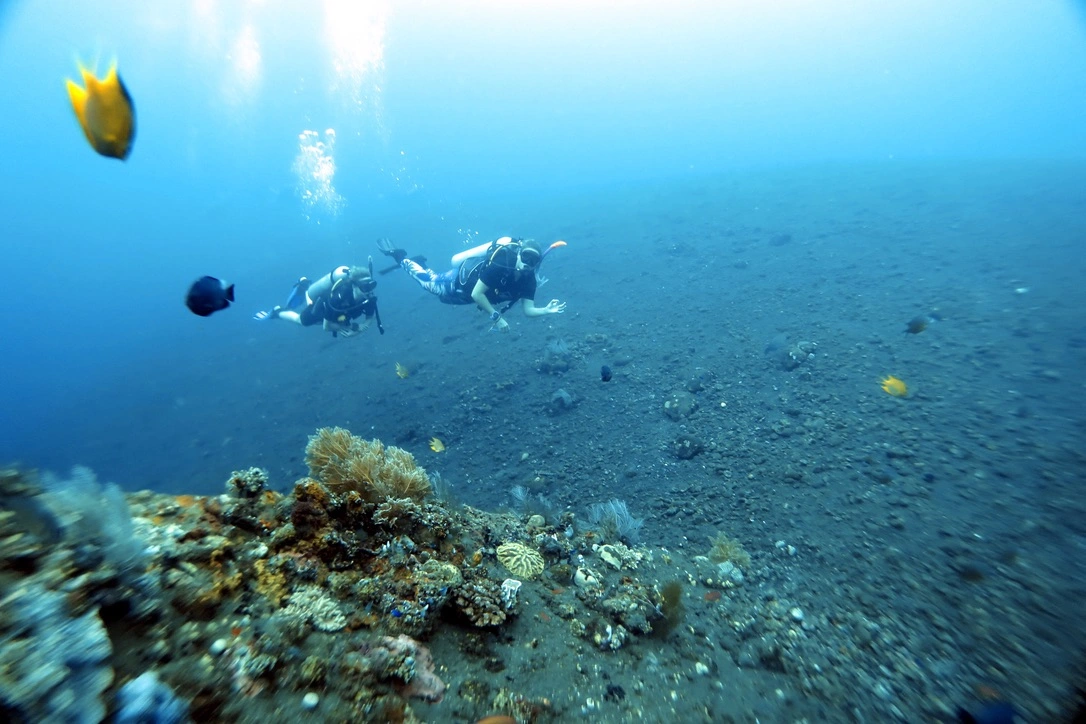
Larger groups may be more economical for operators, but they spread a guide’s attention across more divers. With eight people in the water, the group naturally becomes more spread out, making it harder to keep everyone within easy visual range. Communication is less clear, and the guide has to manage a mix of skill levels at the same time. Understanding these differences helps set realistic expectations when booking dives in Bali.
Key factors that influence how groups are organised include:
-
Certification level and number of logged dives
-
Diver confidence and experience in similar conditions
-
Dive site characteristics such as depth and current
-
Seasonal conditions, including visibility and water movement
-
Operator policies and available staff
Why dive group size matters for safety and supervision
Safety underwater depends on how well a guide can monitor each diver. The role of the guide is critical here, which is why understanding the role of a PADI instructor helps explain how supervision works underwater. In larger groups, that attention is spread thinner, making it easier for issues like low air, poor buoyancy, or signs of stress to go unnoticed. A divemaster managing eight divers has to track more movement, cover more space, and respond to multiple needs at once. This increases the time between a problem starting and the guide being able to assist.
Smaller groups improve safety by allowing guides to stay closer and respond faster. With fewer divers, pre-dive checks are more thorough, buddy pairs are easier to manage, and it is much simpler to maintain visual contact throughout the dive. If something does go wrong, the guide can reach the diver quickly and deal with the situation before it escalates.
Most training organisations and operators set maximum group sizes for this reason. While limits can vary depending on the dive and location, the principle is consistent. As group size increases, the level of supervision decreases.
Smaller groups also help divers feel more comfortable in the water. A guide who can stay nearby, offer reassurance, and adjust the pace of the dive helps prevent small concerns from turning into stress or panic. When divers feel confident, they communicate better, make calmer decisions, and ultimately dive more safely.
Pro tip: Always ask about group size before booking. Operators who prioritise safety will be clear about their limits and how they manage their divers.
Key safety benefits of smaller groups:
-
Faster identification of issues such as low air or equipment problems
-
Better communication between guide and divers
-
More control over the group throughout the dive
-
Greater flexibility to adapt the dive plan if needed
How dive group size affects your overall scuba experience
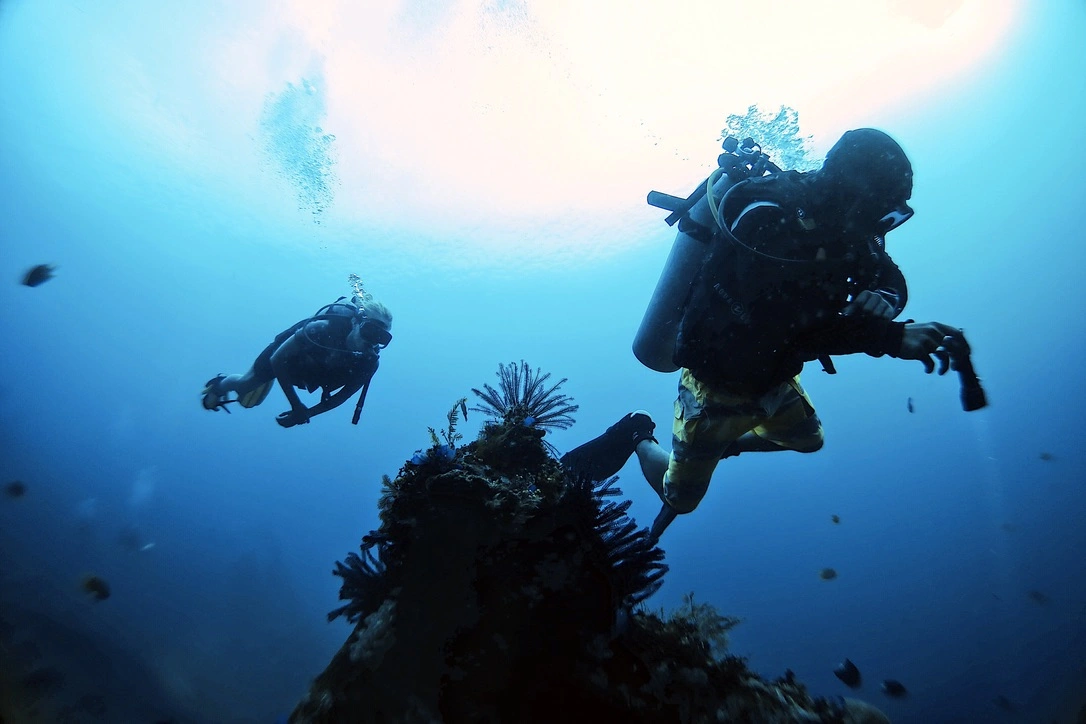
Beyond safety, group size has a big impact on how enjoyable your dive feels. Smaller groups create a more relaxed, flexible experience where the dive can be adapted to the people in it. A guide with fewer divers can adjust the pace, spend more time at interesting sightings, and choose routes that suit the group’s ability and interests.
For divers interested in photography, smaller groups make a noticeable difference. With fewer people around, you have more space to position yourself, take your time with shots, and avoid being rushed. Guides can also point out smaller subjects and give tips to help you get the best angles.
Marine life encounters also improve in smaller groups. Fewer divers means less noise, less movement, and less disturbance. This makes it easier to approach shy species like octopus, seahorses, and nudibranchs, and allows you to observe natural behaviour rather than watching animals retreat.
Smaller groups also create a better overall atmosphere. Communication is easier, the dive feels less rushed, and you are more likely to connect with your guide and other divers. This often carries through after the dive, with more meaningful conversations about what you saw and experienced.
Key benefits of smaller dive groups:
-
A pace that matches your comfort and skill level
-
More time at marine life sightings without pressure to move on
-
More opportunities for individual feedback and guidance
-
A quieter, less crowded underwater environment
-
Better communication and a more relaxed overall experience
Pro tip: If you are doing a course or building your skills, smaller groups make a big difference. More feedback and closer supervision will help you improve faster and feel more confident in the water.
Comparing dive group sizes: small vs medium vs large groups
Different group sizes offer different experiences, so it helps to understand the trade-offs before booking your dives in Bali.
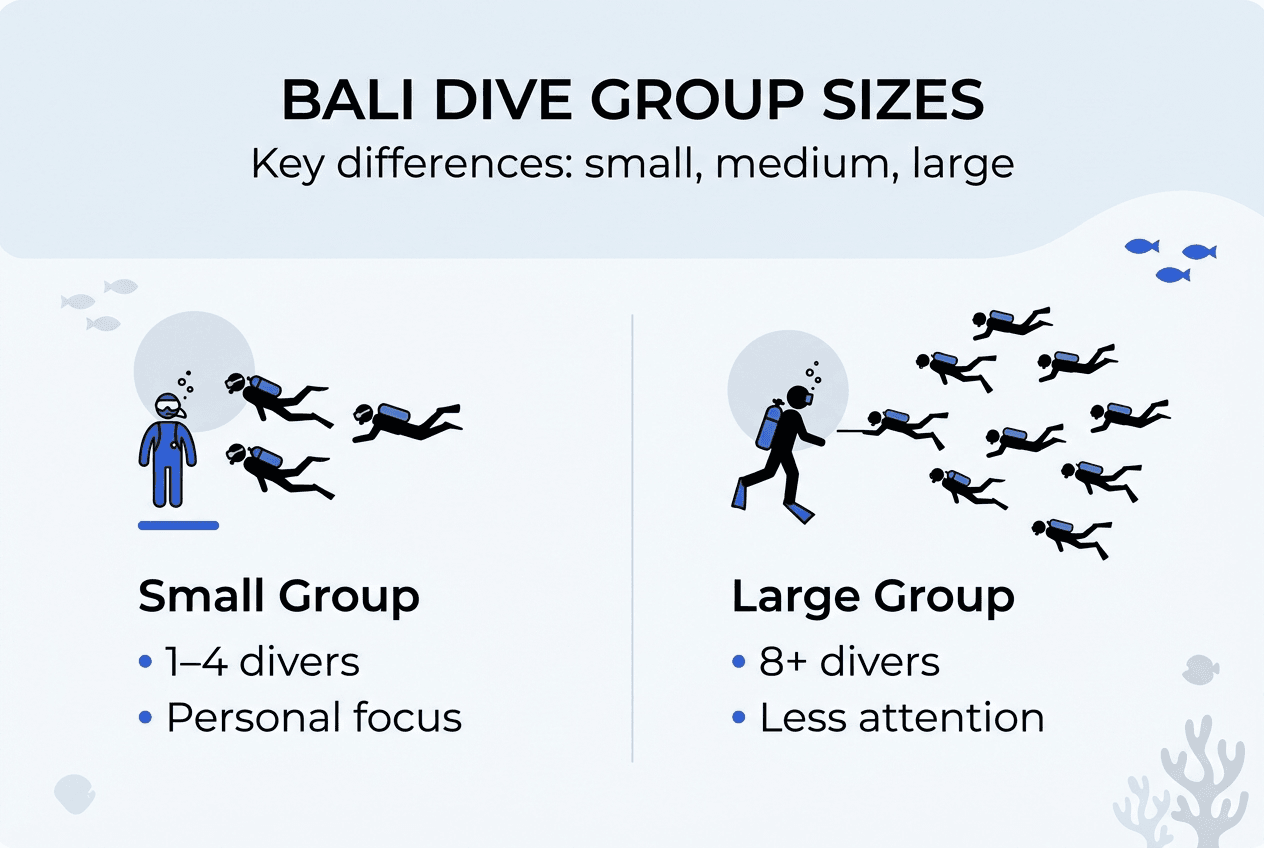
Small groups (4 or fewer divers) offer the highest level of supervision, flexibility, and overall dive quality. Your guide can stay close, adjust the pace to suit you, and spend more time on marine life sightings or skill development. This is the ideal setup for most divers, especially beginners, those building confidence, or anyone who wants a more relaxed and personalised dive.
In many parts of Bali, smaller groups are priced higher because they require more staff per diver. However, some operators prioritise small group diving as part of their standard experience.
Medium groups (5 to 7 divers) are common with some operators, but they come with trade-offs. While still manageable in calm conditions, the guide’s attention is more divided, and the dive becomes less flexible. You may spend more time waiting for the group or moving at a pace that does not suit you.
Large groups (8 or more divers) are typically used by high-volume operators. In these groups, supervision is limited, communication is harder, and the experience can feel more rushed or crowded. These dives are often designed around efficiency rather than individual experience.
| Group size | Divers per guide | Supervision level | Typical cost | Experience impact |
|---|---|---|---|---|
| Small | 4 or fewer | High | Varies (but often premium) | Personalised, flexible, and more relaxed |
| Medium | 5 to 7 | Moderate | Mid-range | Less flexibility, more group-dependent |
| Large | 8 or more | Lower | Budget | Limited attention, more structured and crowded |
- Specific learning goals or skill development needs
- Budget constraints and willingness to invest in premium experiences
- Desire for social interaction versus solitude
- Type of dive site and complexity of conditions
Choosing the right dive group size for your Bali diving adventure
Choosing the right group size comes down to your experience, confidence, and what you want from your dive.
If you are newer to diving or still building confidence, smaller groups make a big difference. With fewer divers, your guide can stay closer, give more feedback, and adjust the dive to suit your pace. This helps you feel more relaxed in the water and makes it easier to develop your skills.
Even for experienced divers, smaller groups often lead to a better overall experience. You have more flexibility, less waiting around, and more time to focus on the dive itself rather than the group.
Medium and larger groups are often used by high-volume operators, mainly to keep costs lower and move more divers through the schedule. While this can work in very calm conditions, it usually means less flexibility, less individual attention, and a more structured dive.
Rather than focusing only on price, it is worth considering how the dive will actually feel. A well-managed small group often leads to a smoother, more enjoyable experience from start to finish.
Before booking, it is always a good idea to ask a few simple questions:
-
What is your maximum group size?
-
Do you group divers by experience level?
-
Can I request a smaller group if needed?
-
How do you manage mixed abilities within a group?
Clear answers to these questions usually reflect how much attention an operator puts into the dive experience.
Pro tip: Group size is one of the easiest ways to improve your dive experience. Choosing a smaller group often means better supervision, more flexibility, and a more relaxed dive overall.
Plan your perfect Bali dive with the right group size
Choosing the right group size is one of the simplest ways to improve your diving experience in Bali.
Smaller groups allow for closer supervision, more flexibility, and a pace that suits you. Whether you are learning to dive or already have experience, having a guide who can stay close and adapt the dive makes a noticeable difference.

Across Bali’s dive sites, from coral reefs in Amed to well-known wrecks in Tulamben, conditions and dive styles can vary. Some sites are naturally better suited to smaller groups, especially when visibility or layout varies. Choosing the right location is just as important, which is why the right dive site selection in Bali plays a key role. Being in a smaller group makes it easier to adjust to those differences, spend more time on what interests you, and enjoy the dive without feeling rushed.
At Bali Dive Cove, most dives run at a ratio of 2 divers per guide, with a maximum of 4 guests in a group. This allows for a more relaxed pace and consistent supervision without needing to separate divers across multiple groups.
If you are planning your trip, it is worth choosing an operator that keeps group sizes small as part of how they run their dives, not as an add-on.
You can explore different dive options and see how dives are organised across our Bali dive sites to help plan your trip.
Frequently asked questions
What is dive group size in scuba diving?
Dive group size refers to the number of divers assigned to one guide during a dive. It affects how closely you are supervised, how the dive is managed, and how much flexibility you have underwater.
What is the ideal dive group size for beginners?
Beginners should aim for groups of four or fewer. Smaller groups allow for closer supervision, more guidance, and a more relaxed pace, which helps build confidence and improve skills safely.
How do dive operators in Bali manage group sizes for safety?
Most operators in Bali organise groups based on experience level, dive site conditions, and visibility. Groups are usually kept between four and eight divers per guide, with smaller groups used for beginners or more challenging dives.
Can I request a smaller dive group when booking in Bali?
Yes, many operators allow you to request a smaller group, depending on availability. Some run smaller groups as standard, while others offer it as an option. It is always best to ask in advance when booking.
Does dive group size affect marine life encounters?
Yes, smaller groups tend to have better marine life encounters. Fewer divers create less noise and disturbance, making it easier to approach marine life and observe natural behaviour.
Are smaller dive groups safer?
In most cases, yes. Smaller groups allow guides to stay closer, monitor divers more effectively, and respond more quickly if something goes wrong.
Do smaller dive groups cost more in Bali?
In many cases, smaller groups can cost more because they require more guides per diver. However, some operators include small group diving as part of their standard approach rather than charging extra.
What dive group size is typical in Bali?
Most dive operators in Bali run groups of around four to eight divers per guide, depending on the site and conditions. Some operators focus on smaller groups for a more personalised experience.
